
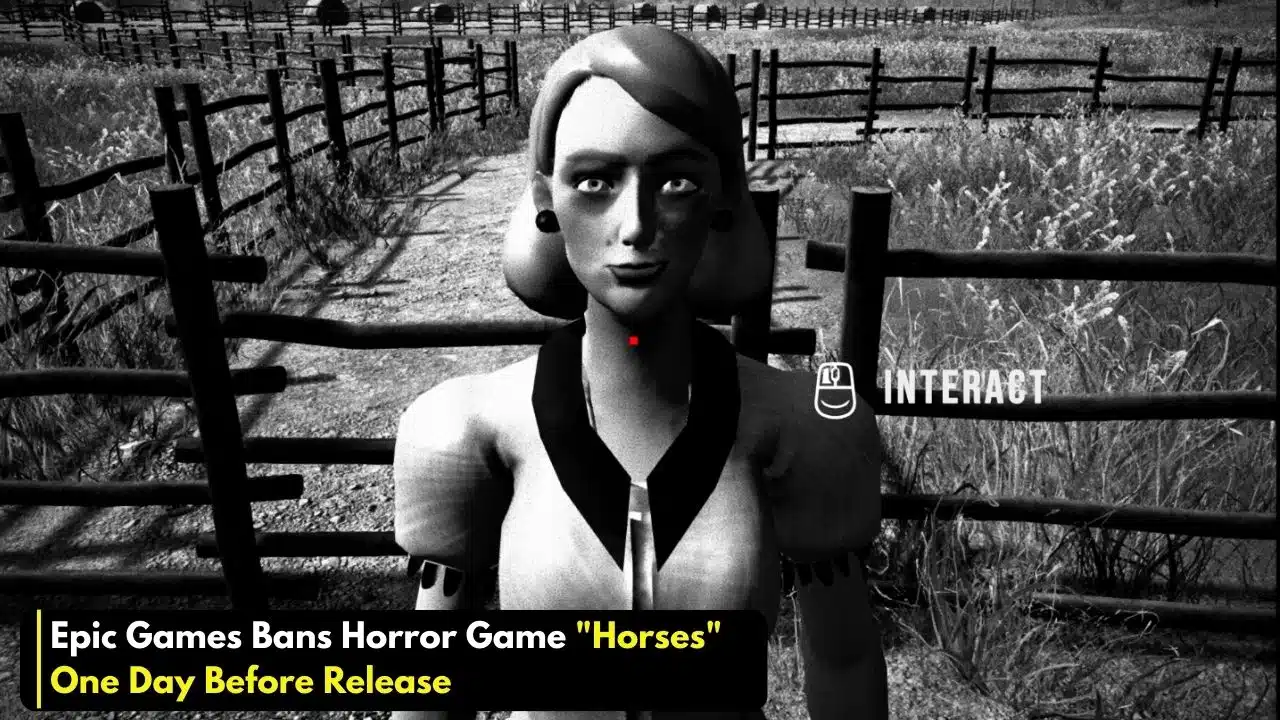
Epic Games has made a controversial last-minute decision to ban the indie horror game Horses from its storefront, just one day before its scheduled release. This move follows a similar ban by Steam earlier in the week, and has sparked heated debate within the gaming community about censorship, platform policies, and the treatment of provocative art in digital marketplaces.
The Sudden Ban: What Happened?
On December 1, 2025, Santa Ragione, the Italian developer behind Horses, received an email from Epic Games stating that the game would not be allowed on the Epic Games Store due to violations of its content guidelines—specifically, for “inappropriate content” and “hateful or abusive content”. The decision was communicated at 5 pm CET, just 24 hours before the game was set to launch. The email did not provide specific details about which content was deemed problematic, only broad and “demonstrably incorrect claims” about guideline violations, according to Santa Ragione.
Santa Ragione filed an appeal, but it was rejected 12 hours later with no further explanation. Epic Games indicated that the game could be updated to comply with its policies, but did not specify what changes would be required. With the release deadline looming, the developer was unable to make any meaningful revisions.
Epic’s Content Policies and the IARC Rating
Epic Games cited its content guidelines, which prohibit explicit or frequent depictions of sexual behavior, as well as content that promotes abuse (including animal abuse). The company also stated that an International Age Rating Coalition (IARC) questionnaire filled out by Epic during its review resulted in an Adults Only (AO) rating for Horses, a rating that Epic does not permit on its storefront except in rare cases involving blockchain or NFT technology.
Santa Ragione disputes this, noting that the studio had already completed the IARC questionnaire as part of the submission process and received a PEGI 18 and ESRB M (Mature) rating, both of which are still displayed on the Epic Games Store’s coming soon page for Horses. The developer questions why Epic would redo the questionnaire after the game had already been approved for release, with the final achievements-ready build greenlit 18 days prior to launch.
The Game’s Content and Developer’s Defense
Horses is a first-person narrative horror game that explores disturbing themes, including violence, abuse, and power dynamics, using surreal imagery and symbolism. The game features pixelated nudity and brief, censored sexual sequences, with all nudity fully obscured and no explicit sexual acts depicted. According to Santa Ragione, there are only four brief sexual sequences in the entire three-hour gameplay, two of which occur off-camera. The developer maintains that the game is a critique of violence and abuse, not a promotion of it, and that all content is stylized and unrealistic.
Santa Ragione also emphasized that the game does not contain explicit or frequent depictions of sexual behavior, and that the pixelation and censorship were specifically implemented to comply with platform guidelines. The studio further clarified that the game does not promote any form of abuse, including animal abuse, and that it is intended as a strong critique of such themes.
Community and Industry Reaction
The ban has ignited a firestorm of discussion among gamers, developers, and industry commentators. Many have criticized Epic Games for its lack of transparency and the timing of the decision, which came just hours before release after weeks of approval and promotion. Critics argue that the move undermines trust in platform review processes and raises concerns about arbitrary censorship, especially when other games with more explicit content are allowed on the same storefronts.
Santa Ragione expressed frustration over the lack of clear communication and guidance from Epic, noting that the developer is left unsure of what changes would be required to meet the platform’s standards. The studio also pointed out the irony of being banned for content that is less explicit than what is commonly found in other games distributed by Epic and Steam.
The Impact on Indie Developers
The ban has significant implications for indie developers, particularly those working on provocative or controversial projects. Santa Ragione estimates that the combined bans from Steam and Epic Games Store have cost the studio over $100,000 in lost revenue and marketing, and has put the future of the project in jeopardy. The developer has called for greater transparency and consistency from digital storefronts, arguing that arbitrary and last-minute bans can be devastating for small studios with limited resources.
The situation has also highlighted the challenges faced by indie developers in navigating the complex and often opaque content policies of major platforms. Many developers feel that the lack of clear guidelines and inconsistent enforcement makes it difficult to predict whether a game will be approved for distribution, especially when dealing with mature or controversial themes.
Where Can Players Find Horses?
Despite the bans from Steam and Epic Games Store, Horses is still available for purchase on other platforms, including GOG, Itch.io, and the Humble Store. Humble has opted to distribute the game via DRM-free direct download, bypassing the Epic Store keys that were originally planned. This has allowed the developer to reach a limited audience, but the loss of access to two of the largest PC storefronts has significantly reduced the game’s potential reach and sales.
Broader Implications for Game Censorship
The Horses ban is the latest in a series of high-profile cases where digital storefronts have removed or banned games for controversial content. These incidents have sparked ongoing debates about the role of platforms in policing artistic expression, the balance between protecting users and supporting creative freedom, and the need for more transparent and consistent content policies.
Critics argue that the current system often favors commercial interests over artistic expression, with platforms making arbitrary decisions based on public perception or pressure from payment processors rather than clear, objective guidelines. The Horses case has also raised questions about the impact of platform bans on indie developers, who may lack the resources to challenge decisions or adapt to sudden changes in policy.
Final Words
The last-minute ban of Horses by Epic Games has highlighted the challenges faced by indie developers in navigating the complex and often opaque content policies of major digital storefronts. The lack of transparency and clear communication from Epic has fueled criticism and debate within the gaming community, with many calling for greater consistency and fairness in platform review processes. While Horses remains available on alternative platforms, the bans from Steam and Epic Games Store have significantly impacted the game’s reach and the developer’s ability to recover from the financial and reputational damage.
As the industry continues to grapple with issues of censorship and artistic freedom, the Horses case serves as a cautionary tale for developers and a reminder of the need for more transparent and supportive policies for creators working on provocative or controversial projects.