

Ever watched a show where everyone is panicking, but one guy just stands there, hands in his pockets, looking like he’s waiting for a bus? That’s Shuntarō Chishiya in Alice in Borderland. While other players are screaming, he’s calculating odds.
I look at Chishiya and see a system optimizer, not just a survivor. He treats death games like debugging code, unemotional, precise, and logical. You might wonder: Does Chishiya die? Does this cold approach actually work until the end, or does his luck finally run out?
Here is the reality: Chishiya survives not because he fights hard, but because he thinks differently. In this analysis, we’ll break down his “game theory” style of survival, the specific math he used to beat the King of Diamonds, and the truth about his fate in Season 2.
So, grab a coffee (or a cookie, if you know the Jack of Hearts reference), and let’s break down the data and Chishiya’s Survival Strategy.
Chishiya’s Role in Alice in Borderland
Chishiya acts as the show’s chaotic variable. Played by Nijirō Murakami with a terrifyingly calm demeanor, he represents pure logic in a world of emotion. While the protagonist Arisu plays with his heart, Chishiya plays with a surgeon’s scalpel.
This isn’t an accidental trait. Before the Borderland, he was a pediatric surgeon (or intern, depending on the adaptation). He watched hospital politics decide who lived or died based on donations rather than fairness. This experience stripped him of his empathy long before the games began.
“I was interested to see how you’d act when you were pushed to the brink. That’s all.”
He serves as a foil to the other characters. Where they see tragedy, he sees data points. For US viewers accustomed to heroes who save everyone, Chishiya is a jarring reminder that sometimes, the guy who cares the least lives the longest.
Key Elements of Chishiya’s Survival Strategy
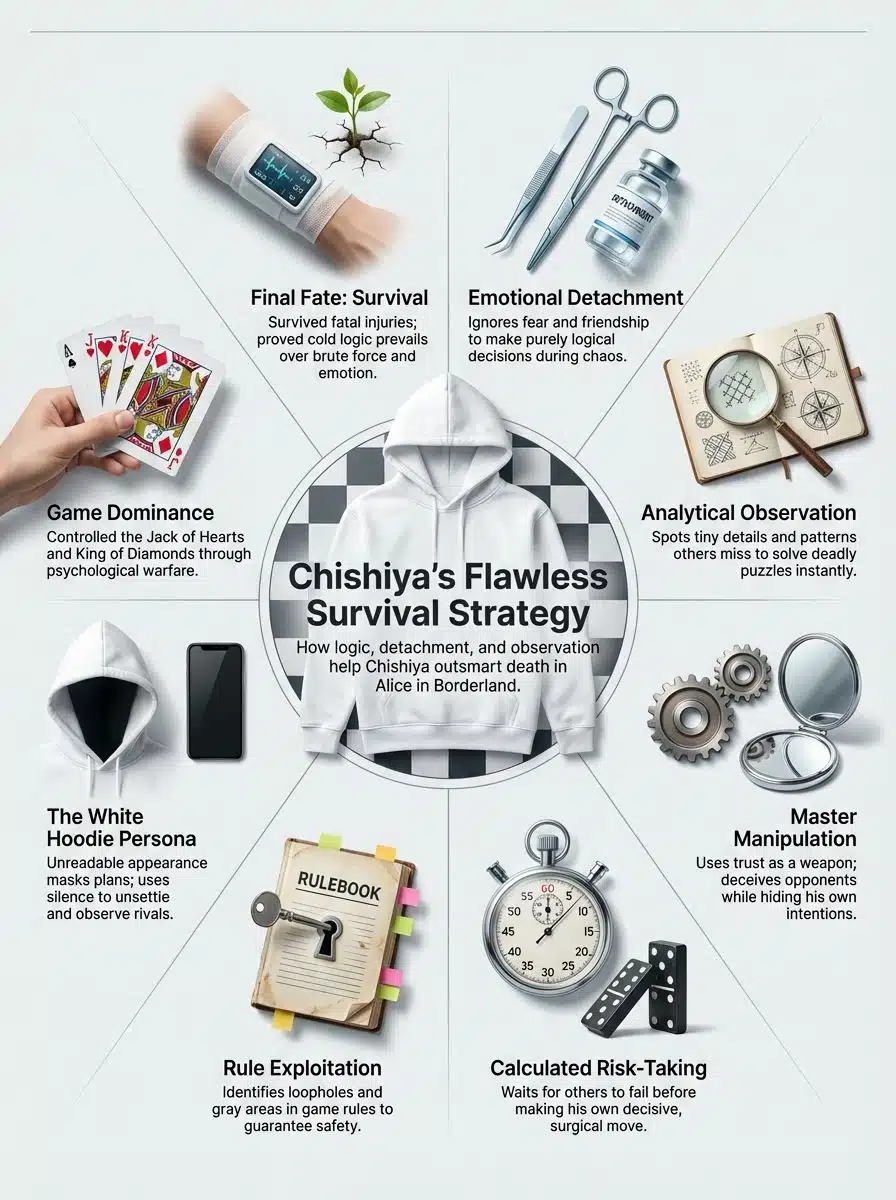
Chishiya treats survival like a game of chess. He doesn’t just react to the board; he anticipates the opponent’s next three moves. His strategy relies on four distinct “system features” that give him an unfair advantage.
Emotional Detachment
In high-pressure engineering projects, panic is the enemy of progress. Chishiya has mastered this. During the Five of Spades “Tag” game, he didn’t try to save the team. He used them as bait to locate the “Horse” (the tagger’s base).
Most players freeze when they see a gun or a tiger. Chishiya’s pulse barely rises. He understands that fear consumes energy, energy he prefers to save for thinking. By detaching himself from the value of human life, including his own, he removes the fear of death from his decision-making process.
Analytical Observation
Chishiya notices the variables others ignore. It reminds me of a wicketkeeper in cricket, watching the batsman’s feet, not just the ball.
In the Jack of Hearts (Solitary Confinement) game, he didn’t just play by the rules; he analyzed the social dynamics. While others formed hysterical cliques, he watched for subtle non-verbal cues. He noticed how Jack (Enji Matsushita) was communicating with his partner using a hidden system involving cookie packets in the canteen.
He sees the “glitch” in the system while everyone else is focused on the user interface.
Manipulation and Betrayal
Chishiya views trust as a tool, not a bond. He used Arisu’s naive desire to help people against him, setting him up during the Beach arc to steal the cards. He knew Arisu would take the moral high road, and he banked on it.
This is a classic “social engineering” hack. He identifies what people want: safety, validation, a hero, and feeds it to them until they lower their defenses. Then, he strikes.
Strategic Risk-Taking
This is where he differs from a pure coward. Chishiya takes massive risks, but they are calculated probabilities.
In the King of Diamonds game, he didn’t play it safe. He gambled his life on a single psychological read of his opponent. It’s like betting your entire budget on a single stock because you know the CEO’s personality flaws. He puts himself in checkmate positions on purpose, knowing it’s the only way to force a stalemate or a win.
The “White Hoodie” Persona
His outfit is a deliberate choice. In a gritty, dirty world, he wears pristine white. It makes him highly visible, yet he moves like a ghost.
The hoodie acts as camouflage in plain sight. It signals, “I have nothing to hide,” which ironically hides his true intentions. It disarms opponents who expect a threat to look armored or aggressive. In a sea of tactical gear and beachwear, the guy in the comfortable hoodie looks like he’s just passing through.
Analysis of Chishiya’s Performance in Crucial Games
The real test of his “code” came in the face card games. These weren’t just physical tests; they were logic puzzles designed to break you.
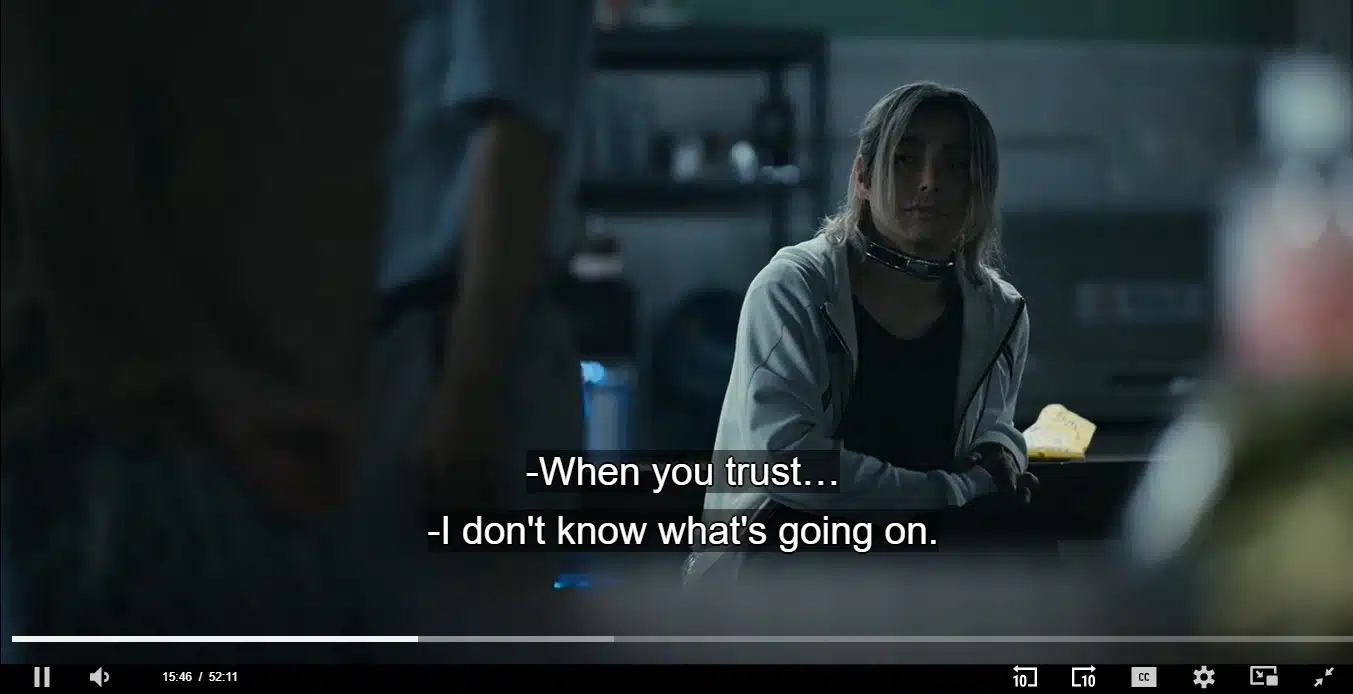
The Jack of Hearts Game
This game was a trust exercise from hell. Players had to identify the suit on the back of their own collar every hour. If they guessed wrong, the collar exploded. You had to trust others to tell you the truth.
Chishiya’s winning algorithm was simple:
- Step 1: Observe the outliers. He identified who was too calm.
- Step 2: Isolate the variable. He tortured Jack (Enji) psychologically by cutting off his information supply.
- Step 3: Execute. He didn’t need to kill Jack physically; he just needed to ensure that Jack couldn’t verify his own suit.
He turned a game of “trust” into a game of “information control.”
The King of Diamonds Game
This is the highlight of Season 2. Chishiya faced Kuzuryu (The King of Diamonds) in a game called “Beauty Contest.”
The Math: Players pick a number between 0 and 100. The average of all numbers is multiplied by 0.8. The person closest to that target number wins. The loser is doused in aqua regia (sulfuric acid).
The Strategy: Logic dictates that everyone should pick 0 (the Nash Equilibrium). If everyone picks 0, the average is 0, the target is 0, and everyone ties. But Chishiya realized Kuzuryu wasn’t playing for math; he was playing for ideals. Kuzuryu wanted to decide the value of a life.
| Feature | Chishiya’s Approach | Kuzuryu’s Approach |
|---|---|---|
| Goal | Win by forcing a choice | Find moral fairness |
| Tactic | Picked 100 (Logical Suicide) | Picked 0 (The “Perfect” Answer) |
| Outcome | Forced the King to choose death | Accepted death to save ideals |
Chishiya chose 100. This destroyed the average, forcing the target number up. It forced Kuzuryu to make a choice: pick a number to kill Chishiya, or let himself die. Chishiya gambled that the King, a former lawyer haunted by injustice, wouldn’t be able to “murder” him directly. He was right.
Did Chishiya Die? Breaking Down His Fate
This is the question that lights up the message boards. After seeing him bleeding out, many fans assumed the worst.
Events Leading to His Final Moments
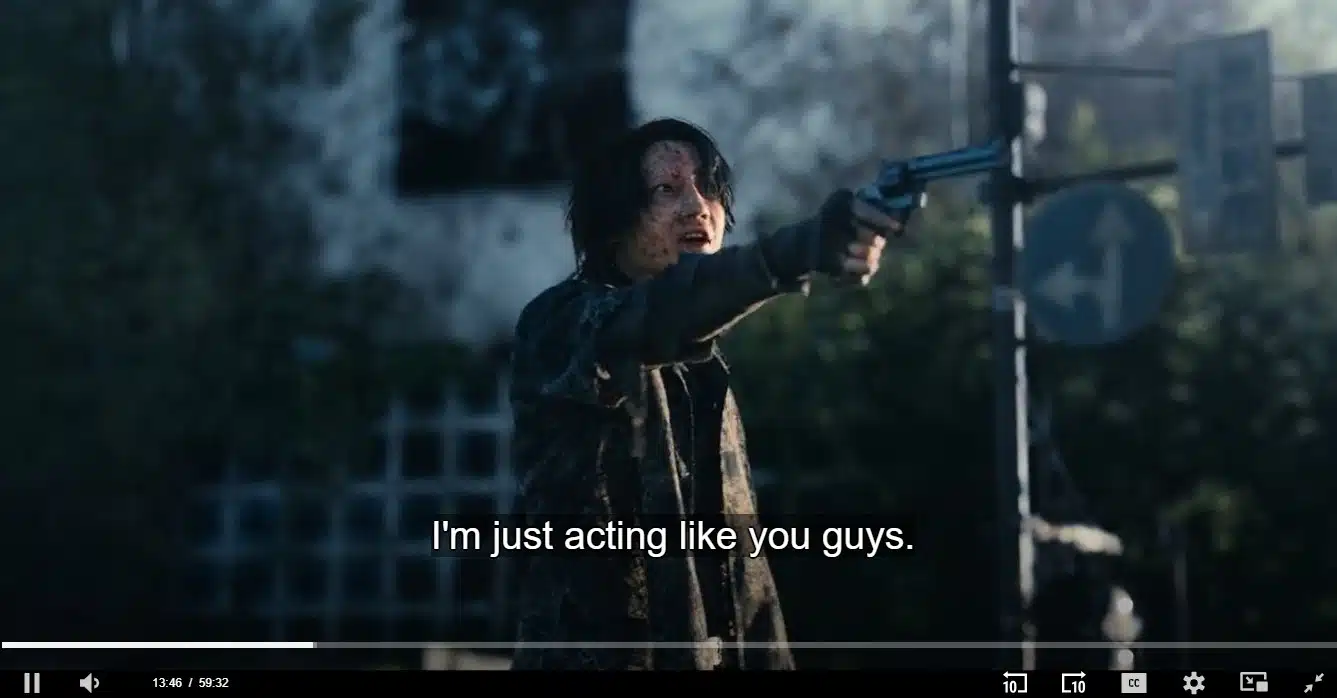
In the final chaos, Chishiya runs into Niragi, the gun-toting psychopath. It’s a shootout between the man who wants to destroy everything and the man who cares about nothing.
Chishiya takes a bullet protecting Usagi. This is a massive “character patch” update; for the first time, he acts on instinct to save someone else. He ends up slumped against a car, bleeding from a gunshot wound, looking like he’s taking a nap while the King of Spades slaughters everyone else.
Does Chishiya Die? [Spoiler Alert]
Here is the confirmation: Chishiya does not die.
After Arisu clears the final game, all surviving players are offered a choice: become a permanent citizen of Borderland or decline. Chishiya, lying next to Niragi, declines. He wakes up in a hospital in the real world (Tokyo). The “meteorite” disaster was the real-world cause of their collective near-death experience.
In his final scene, we see him in a hospital bed. The experience has changed him. He is no longer just a cold observer; he has discovered a sliver of appreciation for life. He might even return to being a doctor who actually cares.
Lessons from Chishiya’s Survival Strategy
You don’t have to be in a death game to use Chishiya’s methods. In business or daily life, his principles hold up.
- Control your inputs: Don’t let panic dictate your actions.
- Observe the system: Look for the “hidden rules” that everyone else is missing (like the cookie packets).
- Take calculated risks: Sometimes the safest move (picking 0) is the most dangerous, and the crazy move (picking 100) is the only way to win.
Final Words
Chishiya proved that in a game of monsters, the most dangerous thing you can be is the smartest guy in the room. He didn’t survive because he was strong; he survived because he paid attention. Whether you are managing a crisis at work or just trying to get through a tough week, take a page from his book: stay cool, watch the data, and maybe wear a comfortable hoodie.





















