

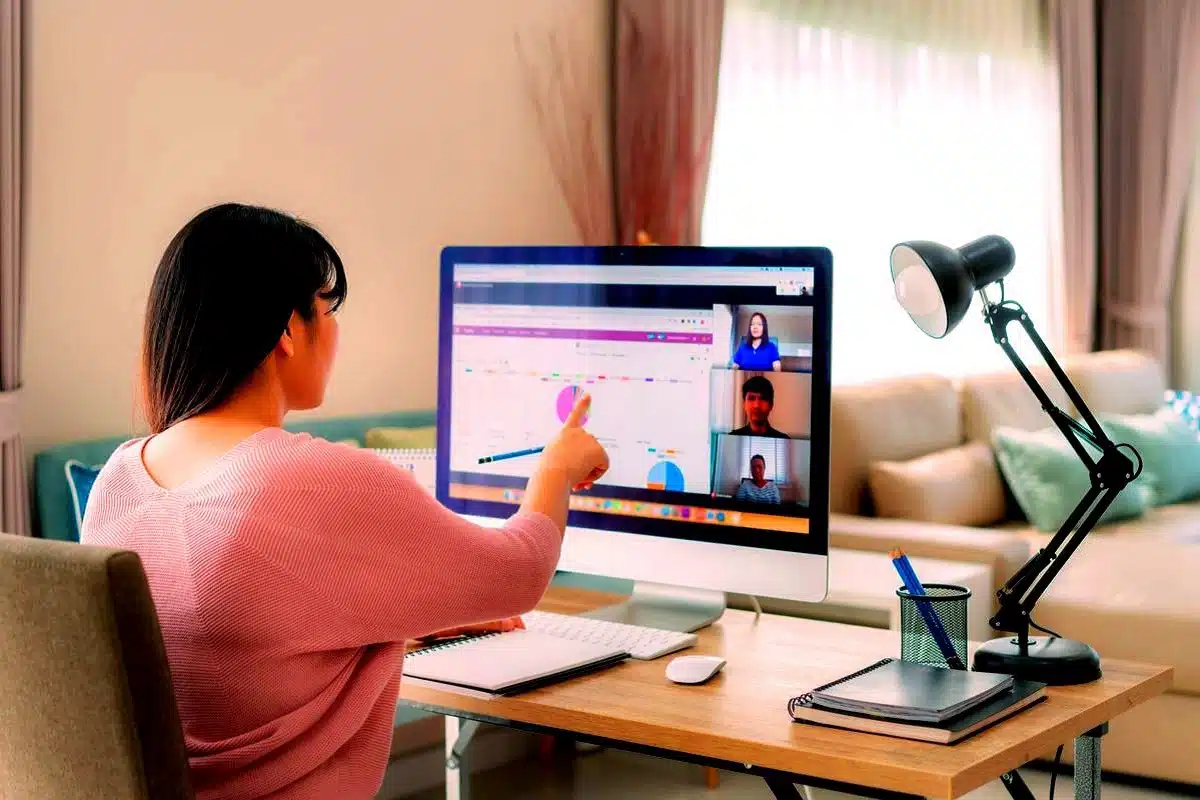
One of the almost-immediate impacts of COVID-19 was the switch millions of businesses made to remote working arrangements. Companies that had for almost two decades resisted employees working from home suddenly found that they could accommodate it. It turns out that people don’t need someone looking over their shoulder to get work done, to the surprise of no one but helicopter managers.
As the pandemic wore on, remote working arrangements had tangible effects on the way businesses and people ran their lives. Businesses sold their big office buildings or let their leases lapse. Individuals built permanent offices into their homes. Online insurance that covers homes and their contents even had to be reevaluated upon renewal based on the home’s extra features and uses.
But while the pandemic hasn’t quite ended, we have returned to a state of relative normalcy. So, in light of this, what have we learned from remote working, and what will come next? Is remote working the new normal or are we reverting to type?
The Benefits of Remote Work
An important lesson many corporations learned quite early on in the pandemic is that there are benefits to remote work, both for employers and employees. The benefits for employees are more clear-cut. People get to avoid spending hours in transit and can rather spend that time on leisure activities or with the family. With tourism open again, workers can travel the world without having to take leave.
The benefits for employers have to do with a major change in how employees’ work is measured. For far too long, managers focused more on the timecards of their reporters than on their output. Underperforming workers got by because they clocked in and out at the right times. High achievers were not appreciated for their output.
When working remotely, monitoring how much time a person spends at their desk is impractical. In order to satisfy their managers, people have had to produce output, and that has become a far more useful way of measuring performance. Productivity has increased in many companies even though employees may be working shorter hours.
However, while the benefits are significant, there are also downsides to working from home.
The Downsides of Remote Work
The downsides of remote work are not as easy to define as the benefits. This is because many of them have to do with emotion or abstract concepts. Here are the major issues that have been noticed.
Employee Mental Health
Employee mental health has been a growing topic of concern for decades now. There are many companies that offer B2B services for employees with mental health concerns. They are sold to employers as ways to increase productivity while taking care of staff. The pandemic – and remote work – has taken us back a few steps.
There are a number of reasons some employees struggle with mental health when working remotely. Aside from the lack of in-office interventions from mental health startups, there is a sense of isolation that comes from not leaving home during the week. Employees who live alone, in particular, are at risk, as they may see no one in person for days at a time. Since employees don’t ‘return home at the end of the day, they may even stretch their work hours out far longer.
Self-esteem issues are also connected to remote work. In a capitalist system, many people get validation from work. While they may still be doing the actual work from home, they do not dress the part or get to experience the workplace culture that has become a fundamental part of their lives. They can stay in bed all day without showering or getting dressed and no one needs to know.
Workplace Culture
Workplace culture is not just something that benefits the mental health of employees. Rather, it is a way for companies to live according to their values. The workplace becomes a space in which the goals and ambitions of the company are felt and developed. It is a way of getting employees to buy into the ethos of the company they work for, rather than simply doing a job.
When employees work from home, generating a workplace culture is difficult, if not impossible. Events can be organized, with people meeting over Zoom, but this gives individuals a lot of opportunities to show face while their minds are elsewhere. Without making active participation compulsory (which itself would be a fruitless task), there is no way to spread workplace culture through the screen.
Conclusion
So, is remote working the best way to proceed or should we return to normal? Unfortunately, there is no way we can accurately answer this question as of yet. It may take years before we have enough data to properly assess the impact of remote working. As yet, while studies do show remote work to be effective, we cannot fully appreciate how much people may have to sacrifice because of it.























