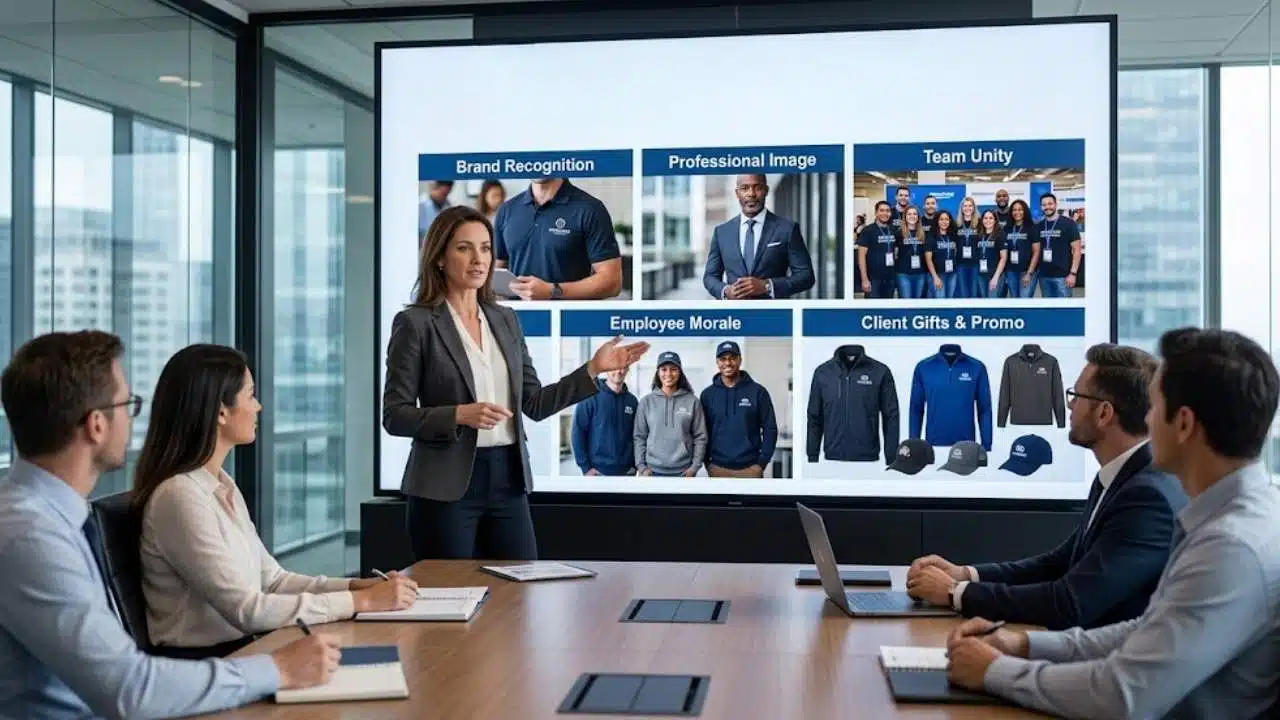
Corporate branding is no longer confined to websites, business cards and advertising campaigns. Customers encounter companies through employees, events, social media, packaging and everyday interactions, so maintaining a recognizable identity across those touchpoints has become increasingly important.
That is where custom clothing can play a strategic role. When designed around an established brand identity rather than treated as inexpensive promotional merchandise, company apparel can reinforce recognition while also serving practical business purposes.
It Creates a Consistent Visual Identity
Strong brands are recognizable because their visual elements remain consistent. Logos, colors, typography and design systems work together to create an identifiable presence. Employee apparel can extend those same principles into physical spaces. A sales team attending a conference in coordinated company shirts, jackets or polos is immediately easier to identify than a group dressed without any visual connection.
Consistency is particularly useful at trade shows and public events, where customers may encounter several businesses competing for attention at the same time.
It Turns Employees into Visible Brand Ambassadors
Employees regularly move through places where traditional advertising may never appear. They commute, attend industry events, visit customers and participate in community activities. When custom clothing is attractive enough to be worn voluntarily, every one of those situations can create another brand impression.
This does not mean covering every garment with an oversized logo. Subtle embroidery, recognizable colors or a distinctive design can often communicate more effectively while making employees more comfortable wearing the clothing outside work. The important distinction is between clothing employees tolerate and clothing they genuinely want to wear.
It Strengthens Team Identity
Corporate apparel also has an internal function. A coordinated clothing program can help employees feel that they belong to a larger group, particularly during conferences, company retreats, launches and onboarding events. This can be especially useful for hybrid or distributed teams that have fewer opportunities for face-to-face interaction.
Branded clothing can create a shared visual identity without requiring employees to have identical personal styles. A company might offer several apparel options while maintaining the same logo treatment, colors or design language. That flexibility can make branded apparel more practical and more likely to be used.
It Makes Events More Productive
Trade shows and corporate events are crowded environments. Attendees may pass dozens of booths and meet hundreds of people during a single day.
Distinctive employee clothing makes it easier for prospects to recognize who belongs to a company. It also creates visual continuity between the booth, marketing materials and representatives.
That can reduce friction for customers who want to ask a question. Instead of searching for an employee or wondering who represents the business, they can identify the team immediately. For companies attending multiple events, a consistent apparel system can also help reinforce recognition from one event to the next.
It Can Communicate Company Values
Clothing does not have to communicate only a company name. Design choices can reinforce the organization’s personality and priorities. A sustainability-focused business might choose fabrics and production methods consistent with its environmental positioning. A creative agency may favor fashion-forward designs rather than traditional corporate polos.
This is why merchandise should be developed from the same brand guidelines used elsewhere. The goal is not simply to put a logo on fabric, but to make the clothing feel like a natural extension of the brand.
A modern company with a minimalist visual identity, for example, may undermine that positioning with loud or poorly designed apparel.
Final Takeaway
Corporate clothing becomes more valuable when it is treated as part of the brand system rather than an afterthought. The strongest programs combine recognizable design, employee usability and strategic distribution, allowing apparel to reinforce both the public identity of the company and the culture inside it.