
The cryptocurrency world is filled with complex terms and jargon that can be overwhelming for beginnersBefore diving into the next essential crypto terms, it’s crucial to understand how these foundational concepts interact within the broader blockchain ecosystem.
Whether you’re dealing with transactions, security measures, or investment strategies, each of these terms plays a key role in shaping your crypto journey. Learning these Crypto Terms Every Beginner Should Know will equip you with the knowledge needed to make confident and informed decisions in this fast-evolving space.
In this article, we will explore Crypto Terms Every Beginner Should Know to help you build a strong foundation in cryptocurrency terminology. By the end, you’ll be well-equipped to engage with the crypto ecosystem effectively and make better financial decisions.
Essential Crypto Terms Every Beginner Should Know
Understanding cryptocurrency requires familiarizing yourself with key terms that define the industry. These Crypto Terms Every Beginner Should Know will help newcomers navigate the complexities of digital assets, transactions, and blockchain technology.
By grasping these foundational concepts, you can make smarter investment decisions and avoid common pitfalls in the crypto space.
1. Cryptocurrency
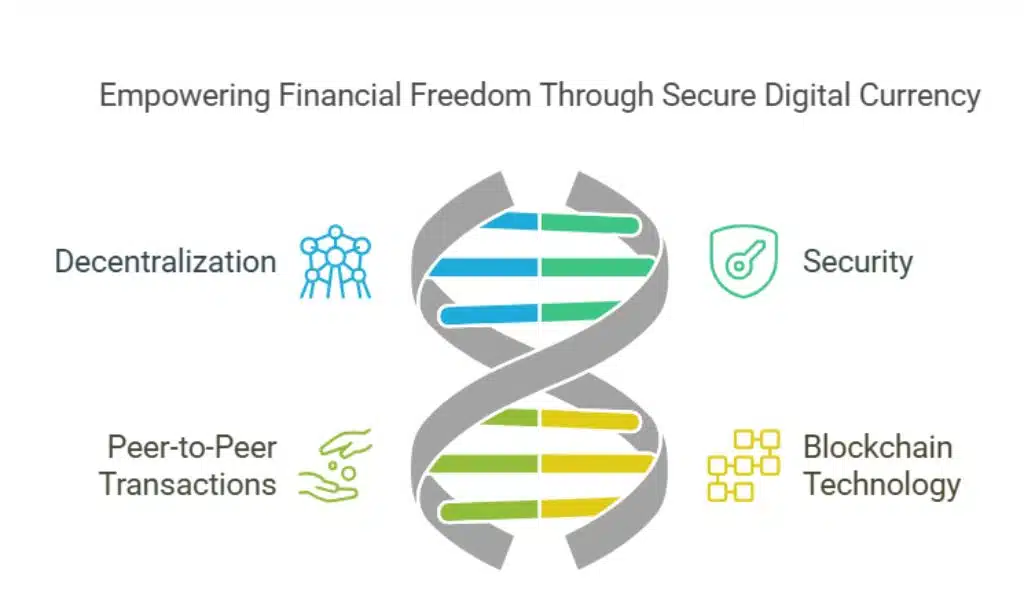
Cryptocurrency is a digital or virtual currency that uses cryptographic techniques for security and operates on decentralized blockchain networks. Unlike traditional money, cryptocurrencies offer users greater control over their funds, enabling direct peer-to-peer transactions without intermediaries like banks.
Key Features:
- Decentralized: Unlike traditional fiat currencies, cryptocurrencies are not controlled by central banks.
- Immutable: Transactions recorded on a blockchain cannot be altered or reversed.
- Borderless: Cryptos can be sent anywhere globally without intermediaries.
- Scarcity: Many cryptocurrencies have a fixed supply, such as Bitcoin’s 21 million cap.
Popular Cryptocurrencies:
| Name | Symbol | Key Feature |
| Bitcoin | BTC | First cryptocurrency, store of value |
| Ethereum | ETH | Smart contract functionality |
| Litecoin | LTC | Faster transactions than Bitcoin |
| Cardano | ADA | Energy-efficient blockchain |
2. Blockchain
A blockchain is a decentralized and distributed digital ledger that records transactions across multiple computers. This technology underpins cryptocurrencies by ensuring transparency and security in digital transactions.
How It Works:
| Step | Process |
| Step 1 | Transactions are initiated and grouped into blocks. |
| Step 2 | Each block is cryptographically linked to the previous one. |
| Step 3 | Transactions are verified through consensus mechanisms like Proof of Work (PoW) or Proof of Stake (PoS). |
| Step 4 | A new block is added to the blockchain permanently. |
Real-World Applications:
- Financial transactions (e.g., Bitcoin and Ethereum transactions)
- Supply chain management (e.g., IBM’s Food Trust blockchain)
- Smart contracts that execute automatically when predefined conditions are met
- Voting systems ensuring transparent and tamper-proof elections
3. Wallet (Crypto Wallet)
A crypto wallet is a digital tool that allows users to store, send, and receive cryptocurrencies securely. A key part of Crypto Terms Every Beginner Should Know, wallets ensure safe transactions and asset management.
Types of Wallets:
| Type | Description | Example |
| Hot Wallets | Internet-connected; accessible from anywhere. | MetaMask, Trust Wallet |
| Cold Wallets | Offline storage for added security. | Ledger, Trezor |
Choosing the Right Wallet:
- Use hot wallets for daily transactions.
- Store long-term holdings in cold wallets for better security.
- Always back up your private keys.
- Consider multi-signature wallets for enhanced security.
4. Private Key & Public Key

Cryptographic keys used to facilitate and secure cryptocurrency transactions. These keys ensure security and ownership in the crypto space, making them a critical part of Crypto Terms Every Beginner Should Know.
| Key Type | Function |
| Private Key | A secret code that grants access to crypto funds. Never share it. |
| Public Key | A unique address for receiving crypto transactions. |
How They Work Together:
- You generate a public key from your private key.
- People send crypto to your public key.
- You use your private key to sign and authorize transactions.
5. Exchange
A platform where users can buy, sell, and trade cryptocurrencies. Exchanges act as digital marketplaces for crypto transactions, making them essential in Crypto Terms Every Beginner Should Know.
Types of Exchanges:
| Type | Description | Example |
| Centralized Exchange (CEX) | Managed by a third party. | Binance, Coinbase |
| Decentralized Exchange (DEX) | Peer-to-peer trading without intermediaries. | Uniswap, PancakeSwap |
Factors to Consider When Choosing an Exchange:
- Security – Does it have strong security measures?
- Liquidity – High liquidity ensures faster trades.
- Fees – Compare transaction fees before trading.
- Regulation – Check compliance with legal requirements.
6. Decentralization
Decentralization refers to the transfer of control and decision-making from a centralized entity (individual, organization, or government) to a distributed network. This principle underlies blockchain technology and cryptocurrencies, promoting transparency and security.
Benefits of Decentralization:
| Benefit | Description |
| Security | Less vulnerable to hacking since no single entity controls the system. |
| Transparency | Transactions are recorded publicly on the blockchain. |
| Censorship Resistance | Governments and corporations cannot easily manipulate the system. |
Real-World Applications:
- Bitcoin operates without a central authority.
- Decentralized Finance (DeFi) enables financial services without intermediaries.
- Decentralized Applications (DApps) function on blockchain networks.
7. Smart Contracts
Smart contracts are self-executing contracts with the terms of the agreement written into code. These contracts run on blockchain networks, eliminating the need for intermediaries and ensuring trustless transactions.
How They Work:
| Step | Process |
| Step 1 | The agreement is coded into the blockchain. |
| Step 2 | When predefined conditions are met, the contract executes automatically. |
| Step 3 | The blockchain verifies and records the transaction. |
Use Cases:
- Finance: Automating loan agreements.
- Real Estate: Smart property transfers.
- Gaming: In-game assets managed through blockchain.
- Supply Chain: Automated vendor payments upon delivery confirmation.
8. Mining & Staking
Mining and staking are two methods used to validate transactions and secure blockchain networks. Both mechanisms play a crucial role in cryptocurrency operations.
Mining (Proof of Work – PoW):
| Feature | Description |
| Process | Miners solve complex mathematical puzzles to validate transactions. |
| Reward | Miners receive new coins as a reward. |
| Energy Use | High energy consumption due to intensive computational work. |
| Example | Bitcoin mining |
Staking (Proof of Stake – PoS):
| Feature | Description |
| Process | Users lock up cryptocurrency to validate transactions and earn rewards. |
| Reward | Earn passive income by staking coins. |
| Energy Use | More energy-efficient than mining. |
| Example | Ethereum 2.0, Cardano |
Takeaways
The cryptocurrency world can seem intimidating at first, but learning these Crypto Terms Every Beginner Should Know will provide a strong foundation for navigating it successfully.
Whether you’re trading, investing, or simply exploring, understanding these key concepts will help you make informed decisions. Stay updated, continue learning, and embrace the opportunities that crypto offers!