Dealing with plumbing issues can be a headache. Whether it’s a clogged drain in your home or a water pipe problem in an office, the solutions aren’t always the same. Plumbing systems vary greatly between homes and commercial buildings, and knowing the differences is key.
For instance, commercial properties often handle higher water usage daily than residential homes. This means their plumbing fixtures and maintenance needs differ too. In this blog, we’ll break down how commercial plumbing stands apart from residential plumbing to help you understand these systems better.
Keep reading to learn what sets them apart!
Scale and Scope of Plumbing Systems
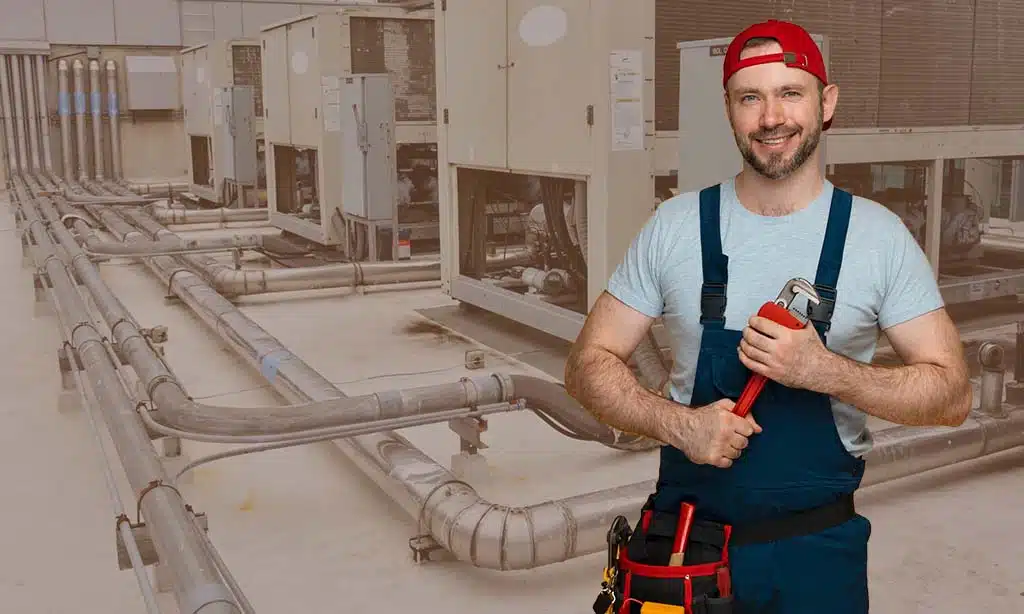
Commercial plumbing systems handle bigger setups, like boilers and industrial-grade pipes. Residential systems stick to basic needs, such as kitchen sinks and showerheads.
Larger systems in commercial plumbing
Plumbing systems in commercial buildings are massive. These systems handle dozens of sinks, toilets, urinals, and showers daily. Larger pipes are common to manage high water pressure and heavy usage.
Steel pipes or industrial-grade PVC piping make these systems more durable.
Water supply and waste disposal must flow smoothly even with constant use. Big properties like shopping malls often include extra features—sprinklers for fire safety or grease traps in kitchens.
Maintenance is frequent due to wear-and-tear from higher traffic compared to residential homes. A leaky pipe in a commercial building can feel like opening Pandora’s box for plumbing technicians.
Smaller, simpler systems in residential plumbing
Homes usually need fewer pipes, fixtures, and valves. Most have just a few sinks, toilets, showers, and washing machines. These systems handle lower water pressure compared to industrial-grade pipes in commercial buildings.
PVC piping is common in residential plumbing due to its durability and cost-effectiveness. Water heaters for homes are smaller since demand is lighter. Repairs like fixing clogged drains or leaky faucets are straightforward tasks for plumbing technicians in residential settings.
Usage Demands
Commercial plumbing gets pushed to its limits daily, handling constant activity. Residential systems take it easy by comparison, facing far less wear and tear during use.
High usage frequency in commercial properties
Plumbing in commercial buildings faces heavy use daily. People rely on dozens of sinks, toilets, and showers in offices, malls, and schools. This constant demand puts pressure on plumbing systems and water supplies.
‘A small leak can sink a great ship.’ – Benjamin Franklin
High traffic means more wear on plumbing fixtures like pumps or water heaters. Maintenance and repairs happen often to keep systems running smoothly.
Lower usage in residential settings
Residential homes use plumbing systems less often than commercial buildings. A typical house may have just a few sinks, toilets, and showers. With fewer people using them daily, these systems face less strain.
Water heaters in homes also handle smaller loads. They heat water for a family rather than dozens of employees or customers. Less frequent use means residential pipes and fixtures usually last longer before needing repairs or replacements.
Complexity of Systems
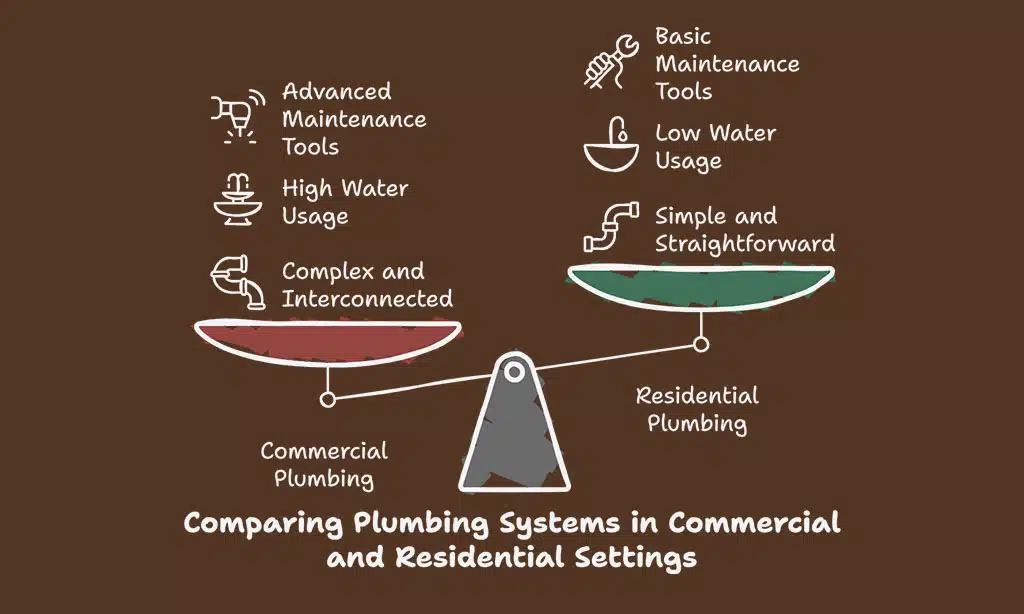
Commercial plumbing is like a spiderweb, with pipes crisscrossing through multiple floors and rooms. Residential systems are simpler, often just running water from point A to B.
Advanced and interconnected systems in commercial plumbing
Plumbing systems in commercial buildings are complex and massive. They often include dozens of sinks, toilets, showers, and water pipes working together. These systems must handle high water pressure and heavy daily usage without failing.
Pipe inspection cameras help find leaks or blockages quickly.
Automated tools keep these systems running smoothly. Smart dashboards track repairs and maintenance schedules to prevent issues like clogged drains or broken pipe fittings. Plumbing technicians sometimes use industrial-grade pipes instead of basic PVC piping for better durability in these setups.
Straightforward systems in residential plumbing
Residential plumbing systems are simple compared to commercial setups. Homes usually have only a few sinks, toilets, and showers. They don’t handle as much daily water usage or waste disposal as commercial buildings.
Pipes in houses are often PVC pipes due to affordability and durability. Water heaters for homes are smaller because families need less hot water than businesses do. Residential systems rarely require advanced, interconnected layouts like those found in large offices or stores.
Regulatory Requirements
Commercial plumbing follows strict rules to keep people safe and water clean. Residential systems face simpler guidelines but still need proper checks.
Strict codes and inspections for commercial plumbing
Plumbing codes for commercial buildings are strict. These rules keep people safe and water clean. Commercial plumbing systems face more checks than residential ones. Inspectors check pipes, fixtures, and drainage to meet standards like fire codes or the Americans with Disabilities Act.
Heavy daily use in these systems demands strong materials like industrial-grade pipes. A single mistake could risk health or cause damage. Regular inspections catch issues early, saving money on big repairs later.
Following the rules also prevents fines and keeps businesses running smoothly.
Simplified regulations for residential plumbing
Residential plumbing follows less strict rules compared to commercial systems. Homes usually need fewer inspections and simpler permits. For example, installing a water heater or fixing clogged drains in residential homes often requires basic compliance with local plumbing codes.
The smaller scale of these systems makes the process easier for homeowners and plumbing technicians. PVC piping, common in residential settings, is also cheaper and easier to install than industrial-grade pipes used in commercial buildings.
This saves time and lowers expenses during plumbing installation or repair work.
Equipment and Tools
Commercial plumbing demands heavy-duty tools for tough jobs. Residential work sticks to basic, everyday gear.
Industrial-grade equipment for commercial plumbing
Large pipes and industrial-grade equipment handle the heavy tasks in commercial plumbing systems. These setups often include water heaters for multiple floors, large drainage systems, and advanced waste disposal units.
Many commercial buildings require dozens of sinks, toilets, or showers that need durable fixtures.
Tools for these jobs are stronger than those used in residential plumbing. Plumbers might use hydro jetting machines to clear clogged drains or specialized cameras to inspect hard-to-reach areas.
PVC piping is common for its strength and resistance to wear over time. Industrial equipment can also deal with higher water pressure compared to smaller, simpler home systems.
Standard tools for residential plumbing
Pipe wrenches grip and turn pipes of different sizes. Plumbers use PVC cutting tools to trim piping for water systems or waste disposal. A plunger clears clogged drains fast, while a drain snake solves deeper blockages.
Plumbing technicians rely on tape measures for precise pipe fittings and thread seal tape to stop leaks in connections. Basic hand tools like screwdrivers, channel locks, and adjustable wrenches are also essential for plumbing repair or plumbing installation work in residential homes.
Maintenance Needs
Commercial systems need check-ups often, like a car that runs all day. Residential ones can take it easy, with fewer demands.
Frequent maintenance for heavy-duty commercial systems
Heavy-duty commercial plumbing systems take a beating. Commercial buildings handle high water pressure, constant usage, and large waste disposal needs every day. This strain makes frequent plumbing maintenance essential to prevent costly issues like clogged drains or leaks.
Many fixtures in these systems, such as industrial-grade pipes and water heaters, need regular checks to stay reliable.
Plumbers often inspect dozens of sinks, toilets, and showers in one property during routine servicing. They also clean grease traps or replace worn-out parts faster than in residential homes due to higher demand.
Preventative maintenance can avoid major repairs later by catching problems early in busy systems like these.
Less frequent maintenance for residential systems
Residential plumbing systems face less strain. Homes usually have fewer sinks, toilets, and showers—just enough for family use. Daily usage is lower compared to bustling commercial buildings with heavy traffic.
Plumbing fixtures in houses are simpler. Fewer connected parts mean less wear and tear. PVC piping or standard water heaters generally last longer under normal household conditions.
Homeowners can often go years before needing major plumbing repair or replacement.
Takeaways
Commercial and residential plumbing have clear differences. Commercial systems are bigger, handle more use, and require tougher materials. Residential setups are smaller and less complex but still need care.
Each system demands skilled plumbers who know the right tools and methods. Need help with your plumbing? Call a professional today!
FAQs
1. What is the main difference between commercial and residential plumbing?
Commercial plumbing systems handle larger, more complex setups in buildings like offices or malls. Residential plumbing focuses on smaller systems in homes.
2. Why do commercial buildings need industrial-grade pipes?
Commercial buildings experience higher water pressure and usage, so durable materials like industrial-grade pipes are necessary to prevent frequent repairs.
3. How does water heating differ between residential and commercial properties?
Residential homes often have small water heaters, while commercial buildings need larger systems for high demands, especially in places like restaurants or hotels.
4. Are building codes stricter for commercial plumbing than residential?
Yes, commercial plumbing must follow stricter building codes to meet health and safety standards due to public use.
5. Why is maintenance more demanding for commercial plumbing systems?
With heavy daily use and extensive waste disposal needs, regular maintenance prevents clogged drains and contamination of drinking water.
6. Do plumbers require different skills for residential versus commercial work?
Yes, working on large-scale fixtures in a business setting requires specialized knowledge about inventory management, advanced tools, and specific regulations compared to home repairs or installations.