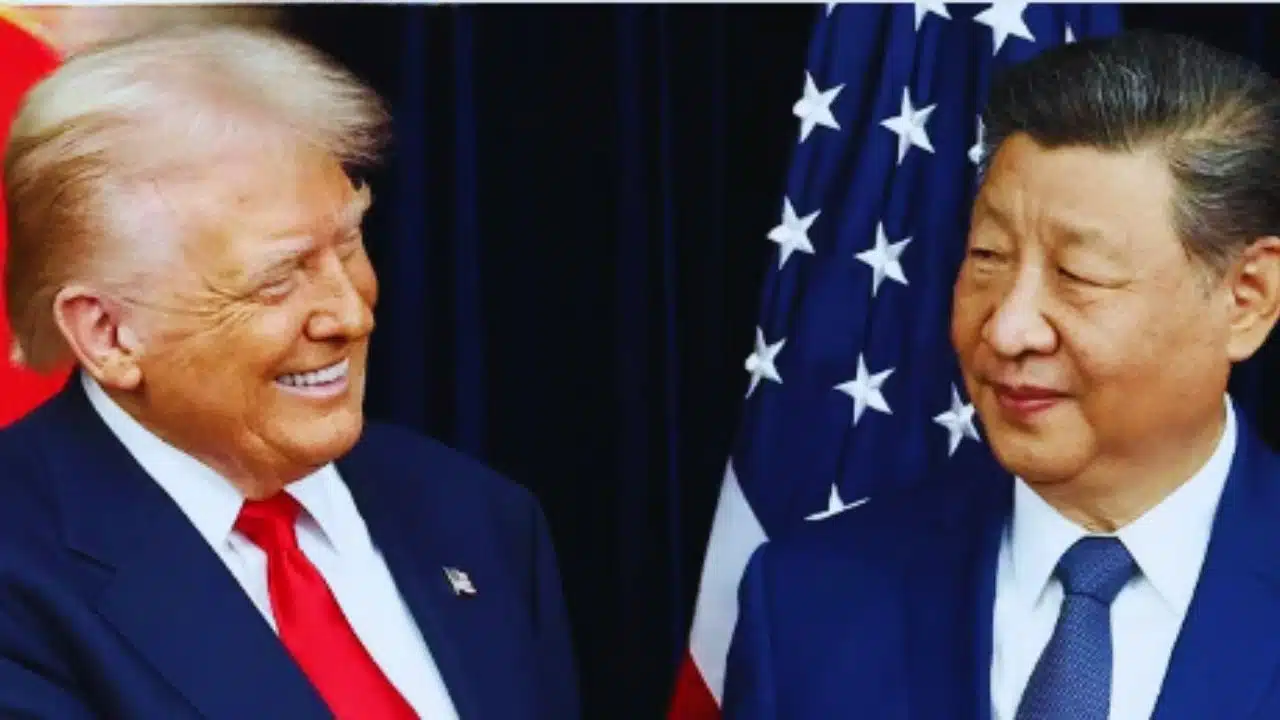
China has implemented new export restrictions on 13 specific chemicals commonly used as precursors in the production of fentanyl, a highly potent synthetic opioid responsible for the majority of overdose deaths across the United States. This action, announced by the Chinese Ministry of Commerce and other government agencies on November 10, 2025, requires exporters to obtain special licenses before shipping these substances to the United States, Mexico, and Canada. The move is widely viewed as a direct fulfillment of commitments made in a recent trade deal between U.S. President Donald Trump and Chinese President Xi Jinping, aimed at addressing the ongoing fentanyl crisis that has claimed over 100,000 American lives each year, according to data from the U.S. Government Accountability Office.
These precursor chemicals, which include various piperidine derivatives and other compounds that serve as building blocks for synthetic opioids, were added to China’s export control list under the Export of Precursor Chemicals to Specific Countries Regulations. Previously, such stringent licensing applied only to high-risk destinations like Myanmar, Laos, and Afghanistan, but the inclusion of North American countries marks a significant expansion. The regulations, part of China’s broader Foreign Trade Law and export control regime, now mandate government approval for any shipments of these 13 items to the newly designated regions, while exports to other parts of the world face less restrictive oversight. This targeted approach allows Chinese authorities to monitor and prevent the diversion of these chemicals for illicit purposes, such as fueling the operations of Mexican cartels that synthesize and traffic fentanyl into the U.S.
State broadcaster CCTV reported the details of the announcement, emphasizing that the changes took effect immediately and are designed to enhance global drug control efforts. U.S. officials have long accused Chinese chemical manufacturers of being primary suppliers of these precursors, which are legally produced for industrial and pharmaceutical uses but often get rerouted through underground networks. By imposing these controls, Beijing is signaling a shift from defensive rhetoric—where it has previously blamed U.S. domestic demand for the crisis—to proactive regulatory measures that could disrupt the supply chain at its source. Independent analyses from organizations like the Brookings Institution note that while enforcement will be key, this step represents a rare instance of bilateral progress on a deeply contentious issue.
Background on the Trump-Xi Summit and Trade Deal
The new export controls emerge from a landmark agreement forged during a face-to-face meeting between President Trump and President Xi Jinping on October 30, 2025, held on the sidelines of the Asia-Pacific Economic Cooperation (APEC) summit in Busan, South Korea. The nearly two-hour discussion, which Trump later described to reporters aboard Air Force One as rating a “12” on a scale of 0 to 10 for its productivity, followed months of escalating trade tensions that had disrupted global supply chains and rattled markets. Negotiations had been building since preliminary talks in Madrid earlier in the year, involving key U.S. figures like Treasury Secretary Scott Bessent and U.S. Trade Representative Jamieson Greer, who engaged with Chinese Vice Premier He Lifeng.
At the core of the deal was a mutual commitment to de-escalate economic hostilities while tackling non-trade issues like the fentanyl epidemic. The White House released a detailed fact sheet on November 1, 2025, outlining China’s pledges in addition to curbing precursor exports, Beijing agreed to suspend its expansive export controls on rare earth elements—such as neodymium, dysprosium, and praseodymium—essential for U.S. manufacturing in sectors like electric vehicles, defense technology, and semiconductors. China also committed to issuing general licenses for these materials, effectively lifting restrictions imposed since 2023 that had sparked fears of shortages in the U.S. In exchange, the U.S. promised to facilitate greater market access for American agricultural products, particularly soybeans, with China vowing to purchase at least 12 million metric tons in the final two months of 2025 and 25 million metric tons annually through 2028. Other concessions included resuming imports of U.S. sorghum and hardwood/softwood logs, and halting retaliatory tariffs on items like chicken, wheat, corn, cotton, pork, beef, fruits, vegetables, and dairy products.
The agreement also addressed technology frictions, with China agreeing to end countermeasures against U.S. chipmakers, such as export bans on gallium, germanium, antimony, and graphite. These materials are vital for semiconductor production, and their restriction had been a major point of leverage in the trade war.Donald Trump highlighted the deal’s breadth during his post-summit remarks, noting it would benefit American farmers hit hard by previous Chinese retaliations—soybean exports to China had plummeted by over 70% since early 2025 due to tit-for-tat tariffs. Chinese state media portrayed the summit as a “win-win” for both nations, with Xi emphasizing stable economic ties amid global uncertainties. Experts from Fudan University, including analyst Wu Xinbo, described the outcome as a pragmatic pivot from confrontation to cooperation, potentially setting the stage for Trump’s planned state visit to China in April 2026.
U.S. Response: Tariff Cuts and Reciprocal Measures
In direct response to China’s actions on fentanyl precursors, the United States announced a significant reduction in tariffs on Chinese imports tied to the drug trade. Effective November 10, 2025, the fentanyl-specific levy—originally imposed at 10% via executive order on February 1, 2025, and doubled to 20% on March 3, 2025—was halved back to 10%. This adjustment, detailed in a White House fact sheet and Executive Order 14357, applies universally to Chinese goods, including those from Hong Kong and Macao, and lowers the average tariff rate on all Chinese imports from 57.6% to 47.6%. For context, this rate remains higher than the 50% applied to imports from Brazil and India but marks the first major de-escalation since Trump’s second term began.
The tariff hikes in early 2025 were explicitly linked to the fentanyl crisis, with Trump arguing that economic pressure was necessary to compel Beijing to act against precursor shipments. The initial 10% duty was framed as a tool to “stem the flow of precursor chemicals to known criminal cartels and shut down money laundering by transnational criminal organizations.” The escalation to 20% came after the administration deemed China’s early responses inadequate, amid reports of continued precursor exports. Now, with the rollback, exemptions continue for certain items under 50 USC 1702(b), such as personal goods, donations, and informational materials, ensuring the measures target commercial trade without overly burdening individuals. The U.S. Court of International Trade upheld the legality of these executive actions in a May 2025 ruling, providing a solid legal foundation for the adjustments.
Beyond tariffs, the deal includes a one-year suspension of port fees and other non-tariff barriers affecting maritime trade between the two countries. China reciprocated by pausing countermeasures against U.S.-linked vessels, including five subsidiaries of South Korea’s Hanwha Ocean Co., and exempting them from fees on routes involving American ports. This mutual pause, effective immediately, eases logistical costs for shippers and signals thawing relations in the shipping and logistics sectors. The White House emphasized that these steps align with President Trump’s comprehensive anti-narcotics strategy, which also involves border fortifications, naval interdictions of drug boats—such as recent operations targeting Venezuelan routes—and international law enforcement partnerships. Spokesperson Anna Kelly reiterated in a statement to media outlets that the administration would “continue to do everything in its power to destroy the scourge of narcoterrorism.”
The Fentanyl Crisis and Its Geopolitical Ramifications
The fentanyl trade has evolved into a major flashpoint in U.S.-China relations, intertwining public health, border security, and economic policy. Fentanyl, a synthetic opioid up to 100 times more potent than morphine, is primarily manufactured in clandestine labs in Mexico using precursors sourced largely from China. Once synthesized, it’s smuggled across the U.S. southern border, contributing to a staggering toll: the Centers for Disease Control and Prevention reported over 76,000 fentanyl-related overdose deaths in 2024 alone, with projections for 2025 even higher. U.S. lawmakers, including those on Capitol Hill’s China caucus, have scrutinized Beijing’s role since 2024, pushing legislation like the FEND Off Fentanyl Act to impose sanctions on Chinese entities involved in precursor production.
Trump’s approach has been multifaceted, blending tariffs with diplomatic pressure. In early 2025, he expanded the justification for duties on China, Mexico, and Canada to encompass not just trade imbalances but also drug trafficking, arguing that porous borders facilitated the influx. Beijing has consistently denied direct responsibility, pointing to lax U.S. demand-reduction efforts and the role of American pharmaceutical companies in opioid proliferation. However, recent developments, including FBI Director Kash Patel’s low-profile visit to Beijing last week for discussions on fentanyl and law enforcement, suggest a willingness to collaborate. Chinese Foreign Ministry spokespeople confirmed awareness of such engagements but provided no further details, while U.S. sources described the trip as productive in aligning regulatory frameworks.
Analysts from think tanks like the Brookings Institution highlight that while the precursor controls are a positive step, challenges persist. Enforcement gaps in China, where small-scale chemical firms operate with minimal oversight, could undermine the restrictions. Moreover, the global nature of the supply chain means precursors might reroute through third countries. The U.S. has bolstered its own efforts with increased funding for the Drug Enforcement Administration and Customs and Border Protection, including advanced scanning technology at ports of entry. Congressional reports from 2024 underscore China’s historical dominance in precursor exports—accounting for over 90% of global supply—making these controls potentially transformative if fully implemented.
Looking ahead, the deal could foster deeper anti-drug cooperation, perhaps through joint task forces or intelligence sharing. Trump’s administration has tied this to broader foreign policy goals, including pressuring regimes like Venezuela’s under Nicolás Maduro, where U.S. naval presence in the Caribbean has intensified to intercept fentanyl-laden vessels. As trade tensions ease, with suspended retaliatory measures on both sides, the focus shifts to verifiable outcomes reduced overdose rates, stabilized supply chains for critical minerals, and revived agricultural exports. Yet, experts caution that sustained political will from both governments will be essential to turn this agreement into lasting progress against a crisis that transcends borders.
The information is collecetd from New York Post and NBC News.