

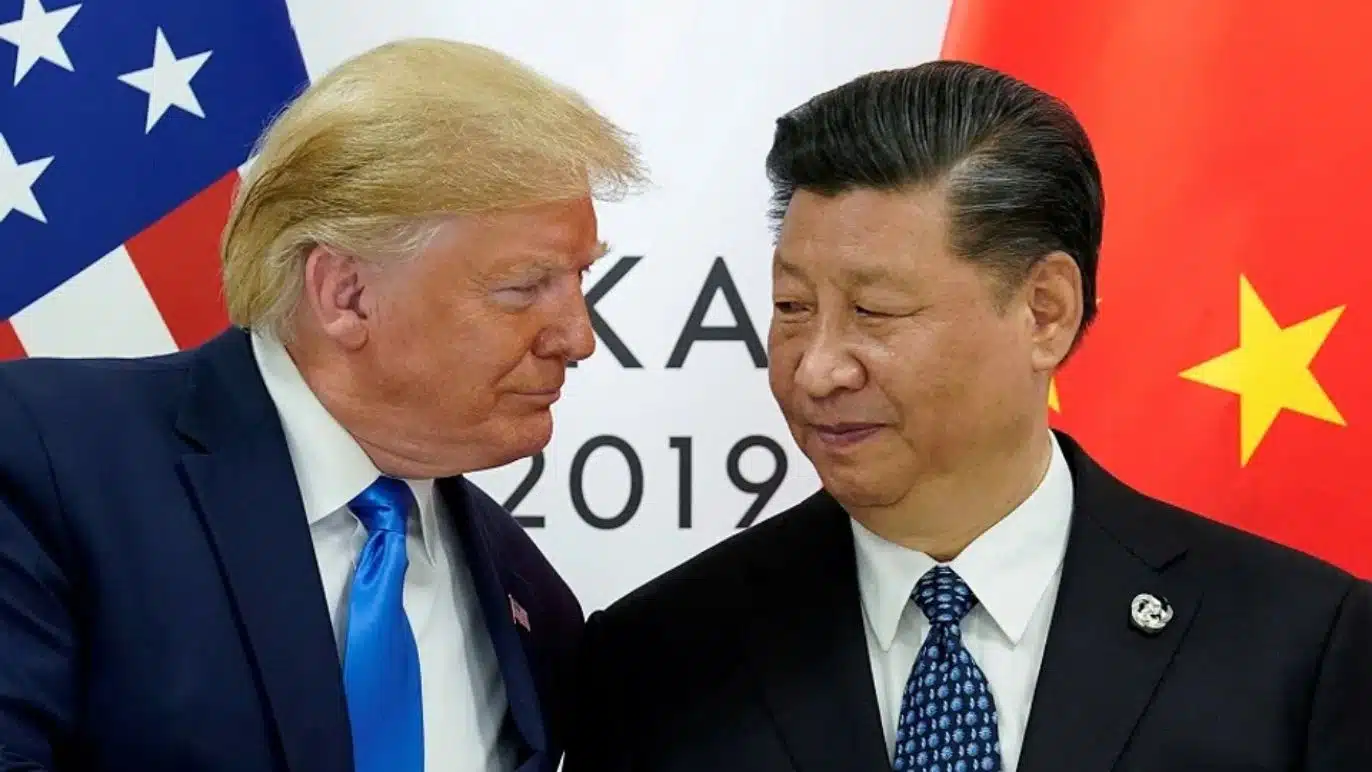
China has responded with strong sanctions against 20 U.S. defense companies and 10 senior executives following Washington’s approval of a record-breaking $11.1 billion arms sale to Taiwan. Despite the escalating tensions, Beijing has reiterated its call for U.S. cooperation and restraint, urging Washington to abide by the one-China principle and avoid actions that could further destabilize the region. The latest developments underscore the delicate balance between diplomatic engagement and the defense of national sovereignty in U.S.-China relations.
China’s Sanctions and Their Impact
Beijing’s sanctions, announced on December 25, 2025, target major U.S. defense firms such as Northrop Grumman Systems Corporation, L3Harris Maritime Services, Boeing’s St. Louis division, and Anduril Industries, among others. The measures include freezing any assets these companies hold within China, banning Chinese organizations and individuals from conducting business with them, and prohibiting the sanctioned executives from entering the country.
The Chinese Foreign Ministry emphasized that these actions are a direct response to the U.S. government’s recent approval of the largest-ever arms package for Taiwan. The sanctions are grounded in China’s Anti-Foreign Sanctions Law, which authorizes Beijing to retaliate against foreign entities deemed to have violated its core interests. The ministry warned that any company or individual involved in arms sales to Taiwan “will pay the price for the wrongdoing” and that China will continue to take resolute measures to defend its sovereignty and territorial integrity.
The U.S. Arms Sale to Taiwan
The U.S. arms package approved by President Donald Trump’s administration includes advanced missile defense systems, fighter jets, and naval vessels, designed to bolster Taiwan’s self-defense capabilities. Under American federal law, the U.S. is obligated to assist Taiwan in maintaining a credible defense, a policy that has been in place across multiple administrations and is seen as a critical component of regional stability.
However, Beijing views any U.S. military support for Taiwan as a violation of the three China-U.S. joint communiqués and a direct challenge to its claim that Taiwan is an inseparable part of China. The scale of the latest arms sale has further inflamed tensions, with China accusing the U.S. of sending dangerous signals to “Taiwan independence” separatist forces and undermining peace and stability in the Taiwan Strait.
China’s Call for U.S. Cooperation
Despite the punitive measures, China has not abandoned its diplomatic outreach. In official statements, Beijing has repeatedly urged the U.S. to honor its commitments, cease arming Taiwan, and avoid actions that could escalate tensions. The Chinese Foreign Ministry stressed that the Taiwan issue is at the very core of China’s core interests and represents a fundamental red line in China-U.S. relations.
China’s position is that any attempt to cross this red line will be met with a firm response, but it also expresses hope that the two countries can work together to manage their differences and prevent a broader conflict. The ministry called on the U.S. to abide by the one-China principle and to stop sending wrong signals to separatist forces, emphasizing that peace and stability in the Taiwan Strait serve the interests of both nations and the broader international community.
Regional and Global Reactions
The sanctions and the underlying tensions have drawn attention from regional and global powers. Türkiye, among other nations, has reiterated its support for respecting the territorial integrity and sovereign choices of states in international relations, aligning with China’s stance on the Taiwan issue. Analysts warn that the situation could escalate into a military confrontation if diplomatic efforts fail, given China’s increased military presence near Taiwan and the U.S.’s commitment to Taiwan’s defense.
The latest U.S. arms sale and China’s response have also sparked debate among international experts. Some argue that the U.S. policy of arming Taiwan is necessary to deter aggression and maintain regional stability, while others caution that such actions risk provoking a stronger Chinese response and could destabilize the broader Asia-Pacific region.
Economic and Strategic Implications
The sanctions are expected to have significant economic implications for the targeted U.S. defense companies, particularly those with substantial business interests in China. Freezing assets and banning transactions could disrupt supply chains, affect joint ventures, and lead to financial losses for the affected firms.
Strategically, the move signals China’s willingness to use economic leverage to defend its interests and send a clear message to the U.S. and other countries. It also highlights the growing importance of economic tools in geopolitical competition, as both China and the U.S. seek to influence each other’s behavior through sanctions and counter-sanctions.
The Path Forward: Diplomacy vs. Confrontation
As tensions mount, the question remains whether diplomacy can prevail over confrontation. China’s call for U.S. cooperation reflects a desire to avoid a broader conflict and to manage the Taiwan issue through dialogue and mutual respect. However, the U.S. is unlikely to abandon its policy of supporting Taiwan’s self-defense, given its strategic interests in the region and its commitment to democratic values.
Experts suggest that both sides need to exercise restraint and engage in meaningful discussions to prevent further escalation. Confidence-building measures, such as high-level dialogues and crisis management mechanisms, could help reduce the risk of miscalculation and foster a more stable relationship.
Final Words
China’s sanctions against U.S. defense companies and executives mark a significant escalation in the ongoing tensions over Taiwan. While Beijing has taken a firm stance to defend its sovereignty, it has also called for U.S. cooperation and restraint, underscoring the delicate balance between national interests and diplomatic engagement. As both countries navigate this complex landscape, the world watches closely, hoping that dialogue and diplomacy can prevail over confrontation and ensure peace and stability in the Taiwan Strait and beyond.





















