


A major lawsuit has been filed against Google by Chegg, a U.S.-based education technology company, accusing the search giant of unfair business practices related to its AI-powered search feature known as AI Overviews. Chegg alleges that Google is using AI-generated summaries to reduce the need for users to visit original content websites, which is causing a decline in traffic to educational platforms like Chegg. The lawsuit, filed in Washington, argues that Google’s practices are eroding the financial sustainability of digital publishing and harming content creators.
Chegg’s Claims Against Google
Chegg, a well-known provider of textbook rentals, homework assistance, and tutoring services, contends that Google’s AI Overviews are negatively affecting its business by keeping users on Google’s search results page instead of directing them to Chegg’s platform. The company states that this practice is reducing website visits, leading to a decline in both subscribers and overall revenue.
According to the lawsuit, Google is leveraging AI-generated summaries in a way that discourages users from clicking on original sources, which is having a detrimental effect on the online publishing industry. Chegg asserts that this trend could eventually lead to a weakened online information ecosystem, where content creators and publishers struggle to sustain their businesses due to diminishing traffic and revenue streams.
The legal filing argues that Google’s use of AI-generated summaries eliminates financial incentives for content publishers, stating, “By offering AI-generated answers sourced from publishers’ content, Google is effectively monopolizing search traffic and depriving publishers of their rightful audience.”
Impact on Chegg’s Business and Strategic Decisions
As a direct consequence of the decline in traffic caused by Google’s AI Overviews, Chegg is now considering major strategic changes, including a possible sale or a transition into a private company. The company’s CEO, Nathan Schultz, indicated that the situation has forced Chegg to rethink its business model due to the significant loss in engagement and customer conversions.
Schultz emphasized that the lawsuit is not just about Chegg’s business but represents a larger concern for the digital publishing industry. He stated, “This lawsuit is about more than Chegg—it’s about the future of digital publishing, the sustainability of educational content providers, and the ability of students to access quality, step-by-step learning instead of low-quality, unverified AI-generated summaries.”
According to Schultz, Google’s AI overviews are not only harming content publishers but are also reducing the quality of information available to users. He claims that Google is forcing publishers into a situation where they must allow their content to be used for AI features, which further disadvantages them by keeping potential visitors on Google’s platform instead of redirecting them to the source.
Google’s Response to the Lawsuit
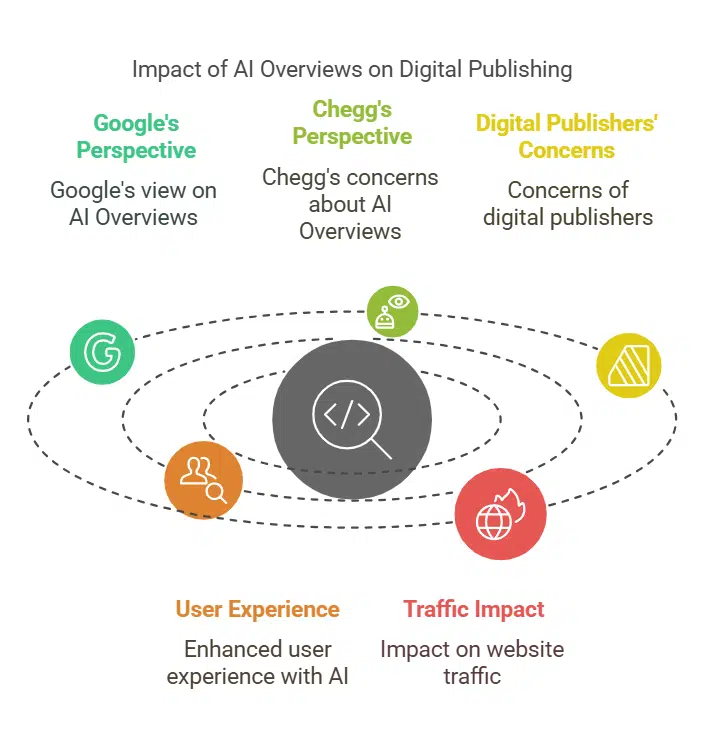
Google has denied the allegations and dismissed Chegg’s claims as baseless. The company argues that AI overviews enhance user experience by making search results more relevant and accessible. Google spokesperson Jose Castaneda responded by stating, “With AI Overviews, people find Search more helpful and use it more, creating new opportunities for content to be discovered. Every day, Google sends billions of clicks to sites across the web, and AI Overviews contribute to increasing traffic to a wider variety of sources.”
Despite Google’s claims, Chegg and other digital publishers argue that AI-generated summaries are replacing traditional search results, thereby reducing direct traffic to original content creators. The broader concern among digital publishers is that AI-generated search results could significantly impact their ability to generate revenue through advertising and subscriptions, which are key business models for many online platforms.
Broader Implications for the Publishing Industry
Chegg’s lawsuit is the latest in a growing number of legal battles between digital publishers and tech giants over the use of AI-generated content. Many content creators and publishers fear that AI tools, such as Google’s AI Overviews, could reshape the digital landscape by reducing the visibility and financial viability of independent publishers.
This is not the first lawsuit filed against Google regarding AI-generated content. Previously, an Arkansas-based newspaper sued Google on similar grounds, accusing the company of using its AI capabilities to undermine news publishers and disrupt traditional media business models. That case is currently being overseen by U.S. District Judge Amit Mehta.
Industry experts warn that if AI-generated summaries continue to grow in prominence, the internet could move toward a model where most users receive information without ever visiting the original sources. This could lead to lower-quality content, fewer incentives for expert-driven publications, and a fragmented information ecosystem where AI-generated results dominate search traffic.
Legal Context and Potential Outcomes
Legal analysts suggest that the outcome of this case could have significant consequences for the future of AI-generated search features and the rights of content publishers. The lawsuit argues that Google is engaging in anti-competitive behavior by conditioning access to its search platform on allowing its AI to scrape and summarize third-party content without fair compensation.
Under U.S. antitrust laws, companies are prohibited from using their dominant position in one market to force competitors or partners into unfair business practices. If the court rules in favor of Chegg, it could set a precedent that requires Google and other search engine providers to adjust how they use AI-generated content in search results.
While the case is still in its early stages, the outcome could shape how AI-powered search evolves and whether digital publishers will have more control over how their content is used in AI-generated summaries.
Chegg’s lawsuit against Google is a major development in the ongoing debate over AI, search engine dominance, and the future of digital publishing. The case raises critical questions about how tech giants should interact with content creators and whether AI-generated summaries should be subject to legal restrictions. As the case progresses, it will be closely watched by digital publishers, policymakers, and businesses that rely on online traffic for their revenue.
For now, the lawsuit underscores a fundamental tension in the digital ecosystem: the balance between making information easily accessible through AI and ensuring that content creators are fairly compensated for their work. The outcome of this case could have far-reaching implications for AI regulations, online business models, and the future of internet search.





















