


Regulatory Technology (RegTech) is revolutionizing compliance in the financial sector, helping businesses manage regulatory requirements more efficiently. As financial regulations become more stringent, companies increasingly turn to RegTech solutions to streamline compliance, mitigate risks, and enhance operational efficiency.
However, despite its transformative potential, implementing RegTech comes with its own set of challenges. From integrating with legacy systems to addressing data security concerns, organizations must overcome several hurdles to unlock the full benefits of RegTech.
This article explores five key challenges in implementing RegTech and provides actionable strategies to address them, ensuring a smooth and successful transition.
1. Understanding the Complexity of Regulatory Requirements

Regulations vary significantly across different jurisdictions, making compliance a complex task for financial institutions operating globally. The landscape is constantly evolving, with updates in anti-money laundering (AML) laws, data protection acts, and Know Your Customer (KYC) requirements.
Failure to comply with regulations can result in hefty fines, reputational damage, and even business shutdowns. As a result, understanding and keeping up with these regulatory changes is one of the biggest challenges in implementing RegTech.
Common Pitfalls in Regulatory Interpretation
- Ambiguities in Legal Language: Regulations often contain complex legal jargon, making interpretation difficult.
- Variability by Region and Industry: Compliance standards differ across industries and regions, requiring a customized approach.
- Frequent Policy Updates: Regulatory frameworks change frequently, necessitating continuous monitoring and adaptation.
How to Overcome This Challenge
- Leverage AI-Driven RegTech Solutions: Many RegTech platforms incorporate artificial intelligence (AI) to track regulatory changes in real time and provide automated compliance updates.
- Consult Regulatory Experts: Working with legal and compliance professionals can help businesses interpret complex regulations accurately.
- Implement a Compliance Management System: A centralized system ensures that all regulatory updates are documented and applied consistently.
2. Integration with Legacy Systems
Many financial institutions operate on legacy systems that were not designed to accommodate modern RegTech solutions. This creates compatibility issues, making integration a significant challenge.
Moreover, organizations may resist technology adoption due to the fear of disrupting existing workflows and incurring high implementation costs.
Key Challenges in System Integration
| Challenge | Description |
| Compatibility Issues | Legacy systems often lack APIs for seamless integration with new RegTech solutions. |
| High Costs | Upgrading infrastructure requires significant investment in hardware, software, and training. |
| Data Migration Risks | Moving data from outdated systems to a RegTech platform can lead to errors and security vulnerabilities. |
| User Resistance | Employees accustomed to traditional compliance methods may be hesitant to adopt new technologies. |
Solutions to Streamline Integration
- Choose RegTech Solutions with API Compatibility: Opt for platforms that can easily integrate with existing systems.
- Adopt a Phased Migration Approach: Gradual implementation reduces disruptions and allows for troubleshooting along the way.
- Invest in Employee Training: Providing hands-on training ensures smooth adoption and minimizes resistance.
- Use Cloud-Based RegTech Solutions: These platforms require minimal infrastructure changes and offer greater scalability.
3. Data Security and Privacy Concerns
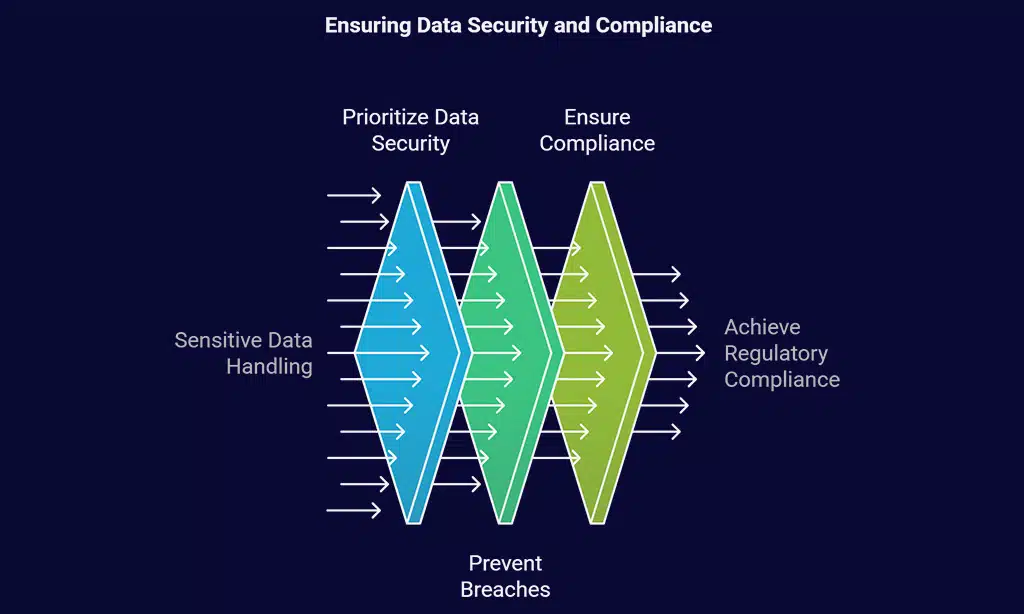
RegTech solutions handle vast amounts of sensitive data, including financial transactions, customer information, and regulatory records. Ensuring data security is a top priority, as breaches can lead to financial loss and regulatory penalties.
Additionally, compliance with data protection laws such as the General Data Protection Regulation (GDPR) and California Consumer Privacy Act (CCPA) is mandatory, adding another layer of complexity to implementation.
Major Risks Associated with Data Security
- Cyber Threats: Hackers target RegTech platforms to steal sensitive financial data.
- Unauthorized Access: Weak authentication measures can expose confidential information.
- Data Storage Vulnerabilities: Poor encryption and inadequate security protocols increase the risk of breaches.
How to Ensure Secure RegTech Adoption
- Implement End-to-End Encryption: Encrypt data both at rest and in transit to prevent unauthorized access.
- Use Multi-Factor Authentication (MFA): Enhance access security by requiring multiple verification steps.
- Regular Security Audits: Conduct periodic risk assessments to identify and mitigate vulnerabilities.
- Ensure Compliance with Data Protection Laws: Align security measures with GDPR, CCPA, and other regulatory frameworks.
4. Cost and ROI Justification
One of the biggest concerns for organizations is the high upfront cost of implementing RegTech solutions. While automation and compliance efficiencies offer long-term benefits, stakeholders often struggle to justify the initial investment.
Breaking Down Cost vs. Benefits
| Factor | Cost Consideration | Benefit |
| Initial Setup | Software licensing, integration costs | Automated compliance, reduced manual workload |
| Training | Employee upskilling expenses | Increased efficiency, fewer compliance errors |
| Maintenance | Ongoing updates, security costs | Long-term cost savings, regulatory risk mitigation |
Strategies to Optimize Cost Efficiency
- Opt for Cloud-Based Solutions: These reduce infrastructure costs and provide flexible payment models.
- Conduct a Cost-Benefit Analysis: Demonstrate long-term ROI through reduced compliance costs and efficiency gains.
- Seek Regulatory Grants or Incentives: Some governments offer financial support for compliance technology adoption.
- Leverage Open-Source RegTech Tools: Some open-source platforms provide cost-effective compliance solutions.
5. Resistance to Change and Adoption Issues
Implementing new technology requires a shift in mindset, which can be challenging for employees and stakeholders. Resistance often stems from a lack of awareness, fear of job displacement, and unfamiliarity with digital compliance tools.
How to Drive Successful Adoption
- Provide Hands-On Training and Support: Educating employees on the benefits of RegTech minimizes resistance.
- Demonstrate Tangible Benefits: Showcasing real-world success stories helps build confidence in the new system.
- Encourage a Culture of Innovation: Leaders should foster a tech-driven compliance mindset within the organization.
- Implement Change Management Strategies: Gradual transitions with clear communication can ease the shift to RegTech.
Takeaways
RegTech has the potential to revolutionize compliance and risk management, but successful implementation requires overcoming key challenges. From regulatory complexity to integration hurdles, organizations must take a strategic approach to ensure smooth adoption.
By leveraging AI-powered solutions, prioritizing cybersecurity, optimizing costs, and fostering a culture of digital transformation, businesses can unlock the full potential of RegTech.
As regulations continue to evolve, staying ahead with innovative compliance strategies is essential for long-term success in the financial sector. Now is the time to embrace RegTech and future-proof your compliance operations.
























