When you hear the word “blockchain,” what’s the first thing that pops into your mind? Bitcoin? Ethereum? Dogecoin? You’re not alone. For many, blockchain technology is synonymous with cryptocurrencies. But here’s the thing – that’s just the tip of the iceberg!
Imagine a technology so versatile it could help track your food from farm to table, secure your vote in an election, protect your digital identity, and even prove the authenticity of that fancy piece of art you’ve been eyeing. Well, that’s a blockchain for you – a digital Swiss Army knife of the 21st century!
In this deep dive, we’re going to explore ten fascinating, real-world applications of blockchain technology that go way beyond digital currencies. We’ll uncover how this revolutionary technology is quietly transforming industries, streamlining processes, and solving complex problems in ways you might never have imagined.
So, buckle up! Whether you’re a tech enthusiast, a curious learner, or a business owner looking for the next big innovation, this guide will open your eyes to the incredible potential of blockchain. Let’s embark on this journey to discover how blockchain is shaping our future, one block at a time!
1. Supply Chain Management: From Farm to Fork
Remember the last time you bit into a juicy apple? Wouldn’t it be great to know exactly where it came from, how it was grown, and every stop it made on its journey to your fruit bowl? That’s exactly what blockchain in supply chain management can do!
How it works:
- Every transaction in the supply chain is recorded as a “block” of data
- These blocks are linked together, forming a chain that can’t be altered
- Anyone with permission can view the entire history of the product
Real-world example:
Walmart has partnered with IBM to use blockchain to track food products. In one test, they tracked mangoes from farm to store. Before blockchain, it took seven days to trace the origin of mangoes. With blockchain? Just 2.2 seconds!
Benefits:
- Enhanced food safety: Quick identification of contaminated products
- Reduced fraud: Harder to slip in counterfeit goods
- Improved efficiency: Less paperwork, faster processes
Fun fact: The global blockchain in the supply chain market is expected to reach $3,314.6 million by 2023, growing at a CAGR of 87% from 2018 to 2023.
2. Healthcare Records: Your Medical History, Secure and Accessible
Imagine moving to a new city and having your entire medical history instantly available to your new doctor, securely and with your permission. That’s the power of blockchain in healthcare!
How it works:
- Medical records are stored as encrypted blocks of data
- Patients have a private key to grant access to their records
- Healthcare providers can quickly access and update records with permission
Real-world example:
Estonia, a digital pioneer, has implemented a blockchain-based system for healthcare records. 99% of the country’s health data is digitised, and 100% of billing is electronic.
Benefits:
- Enhanced security: Reduced risk of data breaches
- Improved patient care: Doctors have access to complete, up-to-date records
- Empowered patients: People have more control over their health data
Did you know? The global blockchain in the healthcare market is projected to reach $890.5 million by 2023, growing at a CAGR of 72.8% from 2018 to 2023.
3. Voting Systems: Making Every Vote Count (Securely)
What if you could vote from your smartphone, knowing your vote is secure and can’t be tampered with? That’s the promise of blockchain-based voting systems!
How it works:
- Each vote is recorded as a transaction on the blockchain
- The system is decentralised, making it harder to hack
- Anyone can check the results, ensuring transparency.
Real-world example:
In 2018, West Virginia became the first US state to use blockchain voting for overseas military personnel. Voatz developed the system, which made it possible to cast votes securely using a smartphone.
Benefits:
- Increased accessibility: Vote from anywhere with internet access
- Enhanced security: Reduced risk of voter fraud
- Faster results: Near-instantaneous vote counting
Interesting stat: A study by the University of Chicago found that blockchain voting could increase voter turnout by up to 5%.
4. Digital Identity: You, Verified
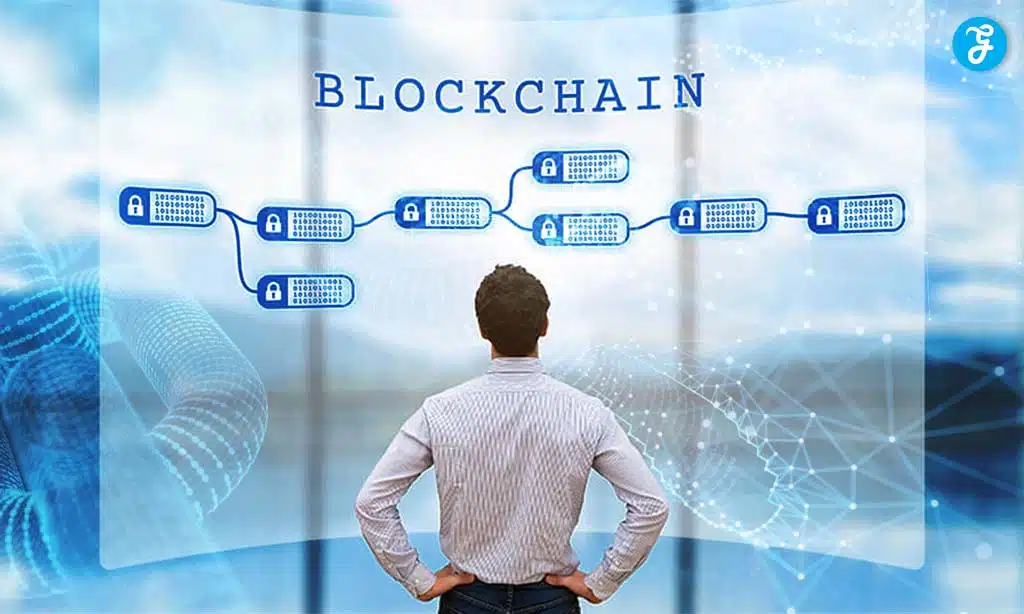
In a world where identity theft is rampant, blockchain offers a secure way to prove who you are online without revealing more information than necessary.
How it works:
- Your identity information is stored on the blockchain
- You control who can access your information and what they can see
- Verification is done through cryptographic proofs
Real-world example:
The government of Zug, Switzerland, has implemented a blockchain-based digital ID system for its citizens. Residents can use this ID to access government services, pay parking fees, and even vote in local referendums.
Benefits:
- Enhanced privacy: Share only the necessary information
- Reduced identity theft: It is harder for criminals to steal your identity
- Streamlined services: Easier access to government and financial services
Did you know? The World Bank estimates that 1 billion people lack official proof of identity. Blockchain could help solve this global challenge.
5. Real Estate Transactions: Goodbye, Paperwork Mountain!
Buying a house is exciting, but the mountains of paperwork? Not so much. Blockchain is set to revolutionize real estate transactions, making them faster, more secure, and less paper-intensive.
How it works:
- Property ownership is recorded on the blockchain
- Smart contracts automate many aspects of the transaction
- All parties have access to the same immutable record
Real-world example:
In October 2018, the first-ever property sale via blockchain was completed in the UK. The £350,000 transaction was settled in just 22 seconds!
Benefits:
- Reduced fraud: Clear, tamper-proof record of ownership
- Faster transactions: No need for lengthy title searches
- Lower costs: Fewer intermediaries needed
Fun fact: The global blockchain in real estate market is expected to reach $1,390.9 million by 2026, growing at a CAGR of 61.4% from 2019 to 2026.
6. Intellectual Property Protection: Safeguarding Your Big Ideas
Got a brilliant idea? Blockchain can help you prove it was yours first!
How it works:
- Creators register their work on the blockchain
- A timestamped record serves as proof of creation
- Smart contracts can manage licensing and royalties
Real-world example:
The U.S. Copyright Office is exploring blockchain for copyright registration and recordation. They’ve partnered with the SAMA (San Antonio Museum of Art) for a pilot project.
Benefits:
- Clear ownership: Immutable record of creation date
- Easier licensing: Automated royalty payments through smart contracts
- Global protection: Blockchain records are borderless
Did you know? The music industry loses $2.7 billion annually due to improper royalty payments. Blockchain could help solve this problem!
7. Energy Trading: Power to the People (Literally)
Imagine selling the excess solar energy from your roof directly to your neighbor. That’s the promise of blockchain in energy trading!
How it works:
- Energy production and consumption are recorded on the blockchain
- Smart contracts facilitate peer-to-peer energy trading
- Transactions are settled automatically
Real-world example:
Brooklyn Microgrid, a project by LO3 Energy, allows residents to buy and sell locally generated solar energy within their community using blockchain technology.
Benefits:
- Promotes renewable energy: and makes small-scale energy production viable
- Reduces costs: Cuts out middlemen in energy distribution
- Increases grid resilience: decentralized energy production is less vulnerable to outages
Interesting stat: The global blockchain in the energy market is expected to reach $6,293.6 million by 2025, growing at a CAGR of 78.4% from 2018 to 2025.
8. Charity and Non-Profit Donations: Transparency in Giving
Ever wondered where exactly your charitable donations go? Blockchain can provide that transparency!
How it works:
- Donations are recorded as transactions on the blockchain
- The flow of funds can be traced from donor to beneficiary
- Smart contracts can automate fund distribution
Real-world example:
The United Nations World Food Programme (WFP) uses blockchain in its “Building Blocks” project to distribute aid to Syrian refugees in Jordan. The system has helped WFP reduce its bank fees by 98%.
Benefits:
- Enhanced transparency: Donors can see how their money is used
- Reduced fraud: Harder to misappropriate funds
- Increased efficiency: Lower administrative costs
Did you know? A study by the Charities Aid Foundation found that 67% of people would be more likely to donate to charity if they could see where their money was going.
9. Digital Rights Management: Giving Credit Where It’s Due
For artists, musicians, and creators, blockchain offers a new way to protect and monetize their work.
How it works:
- Creative works are registered on the blockchain
- Smart contracts manage licensing and royalty payments
- Usage of the work is tracked and recorded
Real-world example:
Musicoin is a blockchain-based music streaming platform that pays artists in cryptocurrency each time their song is played. Artists receive 100% of the streaming revenue, compared to about 70% on traditional platforms.
Benefits:
- Fair compensation: Automated, transparent royalty payments
- Reduced piracy: Easier to track and prove ownership
- New monetization models: Micro-payments for usage
Interesting fact: The global digital rights management market is expected to reach $4.3 billion by 2024, growing at a CAGR of 14.8% from 2019 to 2024.
10. Insurance Claims Processing: Faster, Fairer Payouts
Blockchain is set to streamline insurance claims, making the process faster and more transparent for everyone involved.
How it works:
- Policy details and claims are recorded on the blockchain
- Smart contracts automate claim verification and payout
- All parties have access to the same immutable record
Real-world example:
AXA, a major insurance company, launched Fizzy, a blockchain-based flight delay insurance product. If your flight is delayed, Fizzy automatically issues a payout without you having to file a claim.
Benefits:
- Faster claims processing: Automated verification and payout
- Reduced fraud: Harder to file false claims
- Improved customer satisfaction: Quicker, hassle-free experience
Did you know? The global blockchain in the insurance market is expected to reach $1,393.8 million by 2023, growing at a CAGR of 84.9% from 2018 to 2023.
Summary
As we’ve journeyed through these ten real-world applications of blockchain, one thing becomes crystal clear: we’re just scratching the surface of what this technology can do. From revolutionising supply chains to securing our digital identities, from transforming how we vote to changing how we buy and sell energy, blockchain is reshaping industries and solving problems in ways we could barely imagine a decade ago.
But here’s the exciting part – we’re still in the early days of the blockchain revolution. It’s like we’re back in the early 1990s, just beginning to glimpse the potential of the internet. Who could have predicted back then that we’d one day be streaming movies on our phones or video chatting with friends across the globe?
Similarly, the full potential of blockchain is yet to be realised. As the technology matures and more innovators get their hands on it, we’re bound to see even more groundbreaking applications emerge. Maybe blockchain will help us tackle climate change, revolutionise education, or solve problems we don’t even know we have yet!
For businesses, understanding and leveraging blockchain could be the key to staying competitive in the coming decades. For individuals, it could mean more control over our data, more secure transactions, and new ways of interacting with the digital world.