A growing meal prep kitchen outgrows its spreadsheets somewhere between the third weekly order cycle and the first time a customer asks why their skipped week was still charged the full amount. The next step is a meal prep software comparison, and most operators make it on the monthly price alone. That is the mistake. The subscription is the smaller number. The percentage taken from every order is the one that decides what the business keeps, and on several popular platforms that percentage is passed straight to the customer at checkout — which shows up as a higher cart, not a lower margin, and quietly costs repeat orders.
Four hundred orders a month at a $72 average is $28,800 in revenue. A 1.5% platform fee takes $432 of it every month on top of a $95–$250 subscription. At 1.9% it takes $547. At 2% it takes $576. This article works through those numbers platform by platform, then compares what each of eight alternatives actually charges and who it suits.
The Fee That Decides the Choice
The arithmetic below uses a worked example: 400 orders a month at a $72 average order value. It is not a projection for any particular kitchen; the volume is a chosen figure so the platforms compare on the same basis.
|
Platform |
Monthly platform fee at 400 orders | On top of subscription |
|---|---|---|
| GoPrep (1.5%) | $432 | $95–$249/mo |
| Sprwt (1.5%) | $432 | $250–$950/mo |
| Bottle (1.9%) | $547 | from $19/mo |
| Eat Fresh Tech (2%) | $576 | $149–$600/mo |
| Meal Merchant (0%) | $0 | $99–$999/mo |
Four hundred orders at $72 is $28,800 a month, and the gap between 0% and 1.9% is $6,564 a year before the subscription difference is counted. On GoPrep, Sprwt and Bottle the fee is passed to the customer at checkout or billed to the store; Eat Fresh Tech’s FAQ states the merchant absorbs it. On a passed-through fee the money leaves through the customer’s cart, not the operator’s account, where it is easy to miss and quick to annoy repeat buyers.
Quick Meal Prep Software Comparison: 8 Platforms
Figures below are as published on each vendor’s own site, checked 7 November 2026. “Not published” means the vendor does not disclose the figure publicly. Plan tiers change; verify before purchase.
|
Vendor |
Entry price | Platform fee | Charged to customer? | Orders included | Website |
|---|---|---|---|---|---|
| Meal Merchant | $99/mo | 0% | $0 | Unlimited, every plan | Included |
| GoPrep | $95/mo | 1.5% / 1.35% | Yes — their footnote | 100/mo on Starter | $299 setup + $19/mo |
| Sprwt | $250/mo | 1.5% / 1.35% | Yes | Unlimited | Included |
| Bottle | $19/mo | 1.9% | Yes — 85% pass it on | Unlimited | Included |
| Eat Fresh Tech | $149/mo | 2% falling to 1% | Merchant absorbs it (their FAQ) | Unlimited | Included |
| Happy Meal Prep | On demo | Not published | Not published | Not published | App included |
| Flambia | On demo | 0% stated | Not published | Not published | Included |
| MealTrack | $149/mo (annual) | Not published | Not published | Not published | Not published |
| NutriBot | $99/mo | Not published | Not published | Not published | Not published |
How This Comparison Was Built
Every price here came from the vendor’s own pricing or features page, read on 7 November 2026; where a figure is not published, the table says “Not published” rather than estimating. Tiers and fees change, so check the vendor’s page before buying. Happy Meal Prep and Flambia quote on a call and are partly done-for-you services. Meal Merchant’s own comparison page notes that Bottle’s properties disagree on price: bottle.com lists from $19 plus 1.9% per transaction, while another site by the same company lists $39, $99 and $500 tiers at 3.5%, 2% and 1% fees. The table uses the bottle.com figure.
Meal Merchant
Meal Merchant describes itself as the operating system for meal prep, serving meal prep, catering and meal delivery. The distinction that matters here is structural: it charges no percentage of order value and adds nothing to the customer’s cart.
The economics, using the same 400-order example
At 400 orders a month and a $72 average, a 1.5% platform fee costs $432 monthly. Meal Merchant charges $0 of it, so on the worked example the saving against GoPrep or Sprwt is $5,184 a year, against Bottle $6,564 and against Eat Fresh Tech at 2% $6,912. Card processing is separate and applies everywhere: Meal Merchant Payments runs at 2.99% plus 29¢ on the merchant’s own account, against the 2.9% plus 30¢ competitors’ merchants typically pay through Stripe — about $165 a month, or $1,980 a year, at this volume.
Nine tools, one login
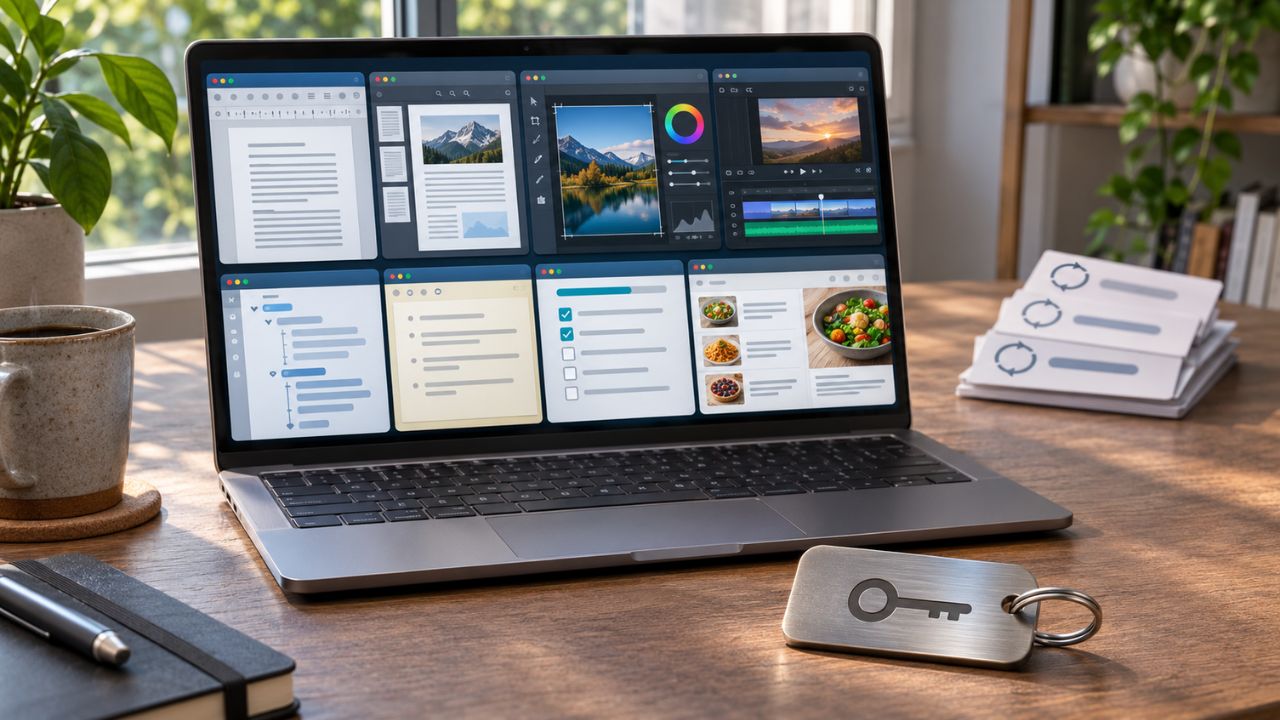
The platform bundles storefront and checkout, subscriptions, kitchen production, customer messaging, payments and tax, CRM, labels, routes and marketing. Six of those are live today: storefront and checkout, subscriptions, kitchen production, customer messaging, payments and tax, and CRM. Labels, routes and the driver app, POS, the catering suite, multiple kitchens and an open API are listed as coming soon and join a plan as they ship. Scale and Enterprise plans list several features under the same “as they ship” label. An operator comparing platforms should price the live product and treat the coming-soon list as roadmap, not as delivered capability.
Plan by plan
Starter is $99 a month with three staff seats, 1,000 texts and unlimited orders. Growth is $199 with ten seats, 2,500 texts and 50 AI food photos a month, adding the AI storefront concierge, the AI food photo studio, the goal-based meal planner, and the blog, SEO and page builder. Pro is $299 with 25 seats, 5,000 texts and 150 photos, adding staff roles and permissions, the AI team assistant and priority support. Scale is $499 with unlimited seats, 10,000 texts and 500 photos, adding delivery, costing and inventory tools as they ship plus dedicated onboarding and migration. Enterprise is $999 with unlimited texts and photos, an account manager and custom processing pricing. Every tier includes unlimited orders, which is where the entry price stops being the interesting number.
Day-to-day operational detail
Below the plan table sit the parts a working kitchen uses daily. Production and packing sheets split orders by breakfast, lunch and dinner with skips and swaps already applied, so Sunday’s sheet shows what actually has to be cooked, not what was scheduled in theory. Subscriptions run with self-serve skip and pause, declined cards are retried automatically, and the storefront runs a documented seven-step subscribe-and-pay path before an order reaches production.
Where it fits
Meal Merchant suits an operator who expects volume to grow and wants the cost of that growth flat in percentage terms. A kitchen doing 100 orders a month will not feel a 1.5% fee much; one doing 400 or 1,000 will. It also fits a business that wants subscriptions, production and delivery in one login — with the caveat that labels and routing are roadmap, not product, today.
GoPrep
Self-serve signup, no startup fees, and a 1.5% application fee on the Starter tier: GoPrep prices at $95 a month for up to 100 orders, and $249 on Pro with unlimited orders at 1.35%. Its own footnote states plainly that the application fee is “passed to your customers, meaning no extra charges for your store,” with the option to absorb or split it instead; cash orders without an online payment method are charged back to the store.
The website is a paid add-on — $299 setup plus $19 a month hosting — and SMS reminders cost a further $15 a month plus 8¢ a text. For a smaller operation that wants clean checkout and free onboarding, this works well until it outgrows the 100-order Starter cap; past that volume it moves to the Pro tier and unlimited orders.
Sprwt
Three tiers set the entry point here: Sprout at $250, Bloom at $500 and Orchard at $950 a month, with a 1.5% application fee on the lower two and 1.35% on Orchard. SMS runs at 7¢ across all three, and ordering systems rise from two on Sprout to five on Orchard. Several features, including proposals and retail POS, are gated behind a sales call. Third-party reporting has noted a possible charge of up to $1.75 per order reaching the customer. Few kitchens need this much capability on day one. It earns its $250-plus monthly base at multi-location scale, and costs a first-year operation more than it returns.
Bottle
Lowest subscription in this comparison, highest published fee: Bottle starts at $19 a month and takes 1.9%. Its FAQ states 85% of Bottle users pass the fee on, so for most customers the real cost shows up in the cart, not on the invoice. There is no setup fee and processing runs through Stripe.
Pricing across Bottle’s own properties is inconsistent — bottle.com lists from $19 plus 1.9%, while another site run by the same company lists $39, $99 and $500 tiers at 3.5%, 2% and 1%. The appeal here is the smallest possible monthly commitment and a guided launch. The trade is a percentage of every order leaving the business once volume builds.
Eat Fresh Tech
The fee falls as the price rises — 2% on Starter, 1.5% in the middle, 1% at the top — across tiers at $149, $299 and $600 a month. Its FAQ states the fee is charged to the merchant, not the diner, which keeps it on the operator’s statement instead of the customer’s checkout.
The Starter plan omits some features the higher tiers carry, so at volume the real comparison is the middle tier, not the headline $149. Operators who would rather keep the customer-facing price clean and watch their fee percentage fall tier by tier will get the most from this one.
Happy Meal Prep
No pricing is published. Launch, Scale and Enterprise are scoped on a demo call, month to month with no long-term contract, and a branded native iOS and Android app is included rather than sold as an add-on.
Because no figure is published, this platform cannot be compared on cost in this article. It fits an operator who wants a branded mobile app as a core requirement and is willing to go through a sales process to scope the plan. Because part of the offer is done-for-you, expect the quoted price to cover service as well as software.
Flambia
A stated 0% platform fee, with the price itself set on a fit call rather than published. Flambia is an operator-built platform supporting multi-brand and multi-currency setups, aimed at kitchens adding a prepaid meal plan line to an existing operation. A separate $197 entry playbook is sold alongside.
Flambia is the one platform in this comparison that matches Meal Merchant’s 0% platform fee, which is worth stating plainly: no platform fee on orders is a strong differentiator against the majority of the market, but it is not unique. An established kitchen adding prepaid meal plans to idle weekday capacity is the natural buyer here, provided it is willing to work through a scoping call before any number appears.
MealTrack
Built by Applied Visions, MealTrack runs Starter at $149 a month billed annually ($199 monthly), Growth at $249 annual ($399 monthly) and Scale at $375 annual ($599 monthly). Subscription ordering sits in Growth, not the entry tier, which matters for a business built on recurring orders.
Setup is self-serve through subscription checkout; there is no demo gate. Order fulfilment and delivery scheduling at a predictable annual price are the draw, with the Growth tier needed for subscription flows. The platform fee is not published on the pricing page.
NutriBot
A 14-day free trial opens the door at $99 a month, with the product built around meal prep alongside diet catering. Its site emphasises recipe, meal and menu creation around macro and food-cost requirements, and portion sizing across meal types.
It publishes no platform fee on its pricing page, so the full cost at volume cannot be established from public information. Where margin depends on macro accuracy and food-cost control, this is the one to trial first — and the 14-day window makes that possible before any commitment.
What Each Platform Costs in Year One
Using published figures only, and a 400-order month at $72 for the fee column:
|
Platform |
Year-one software cost | Platform fee at 400 orders/mo |
|---|---|---|
| Meal Merchant | $99 × 12 = $1,188 | $0 |
| GoPrep | $899 annual + $299 setup + $228 hosting = $1,426 | $5,184 |
| Sprwt | $250 × 12 = $3,000 | $5,184 |
| Bottle | $19 × 12 = $228 | $6,564 |
| Eat Fresh Tech | $149 × 12 = $1,788 | $6,912 |
The software column alone makes Bottle look cheapest and Sprwt the most expensive. Add the fee column and the order reverses: Bottle’s low subscription carries the highest published fee, and Meal Merchant’s mid-range subscription carries none. MealTrack and NutriBot are excluded from the fee column because neither publishes a platform fee, and Happy Meal Prep and Flambia quote on a call; including them would mean inventing a number.
Which Platform Fits Your Kitchen
A first kitchen at low order volume wanting the smallest commitment: Bottle, on the $19 subscription, if the 1.9% fee and the customer-facing add-on are acceptable at that volume. Past a few hundred orders a month the percentage starts to matter, and Meal Merchant fits a growing operation because the cost of growth stays flat and the fee does not reach the customer’s cart. Sprwt suits an established multi-location business with a software budget that wants the widest toolkit, accepting the $250-plus monthly base as the price of capability. Eat Fresh Tech fits an operator who prefers to absorb the fee and see it fall across the tiers. Happy Meal Prep fits a kitchen that wants a branded mobile app as a core requirement and will scope the plan on a call. Flambia fits an established kitchen adding prepaid meal plans to existing capacity and prepared to be scoped first. MealTrack fits a business whose priority is fulfilment and delivery scheduling at a known annual figure. NutriBot fits a kitchen where macro accuracy and food-cost control decide the margin.
Frequently Asked Questions
Does Meal Merchant really charge 0% on orders?
Yes. Its pricing page states 0% platform fee on orders at any volume and $0 added to the customer’s order, with card processing at 2.99% plus 29¢ through Meal Merchant Payments on the merchant’s own account. The 0% applies to the platform fee, not to card processing, which applies on every platform in this comparison.
What does “passed to your customers” mean on a competitor’s fee?
It means the platform’s percentage is added to the customer’s total at checkout, instead of being deducted from the operator’s margin. GoPrep states this in its pricing footnote; Bottle’s FAQ says 85% of its users pass the fee on. The effect is a higher cart for the customer and, over time, a risk to repeat orders. Some platforms let the merchant absorb or split the fee instead.
Do I need a separate website?
On most platforms in this comparison the website is included. GoPrep is the exception: a front-end website is a paid add-on at $299 setup plus $19 a month hosting. Meal Merchant includes the storefront and adds blog, SEO and page-building tools from the Growth tier.
Why do some platforms not publish pricing?
Happy Meal Prep and Flambia quote on a call, which is common where the product includes setup or done-for-you work that varies by kitchen. Such comparison is cost-blind until the call happens, which is why a platform that publishes every figure is easier to evaluate before committing.
What the Fee Structure Decides
The subscription price is the visible number and the one most meal prep software comparison articles stop at. The platform fee is the one that scales with the business, and it is why two platforms with similar monthly prices cost different amounts by year end. On the worked example, a 400-order month separates Meal Merchant from the 1.9% and 2% platforms by $6,564 to $6,912 a year, and from the 1.5% platforms by $5,184 — before the subscription difference is counted.
A 0% platform fee is a strong position against the majority of this market, though not a unique one: Flambia states 0% as well, and any operator should confirm the current figure on the vendor’s own page before buying, because tiers and fees change faster than comparison articles. What the fee axis decides, in the end, is how much of each order the operator keeps as the business grows — and that is a question a monthly price list does not answer on its own.