

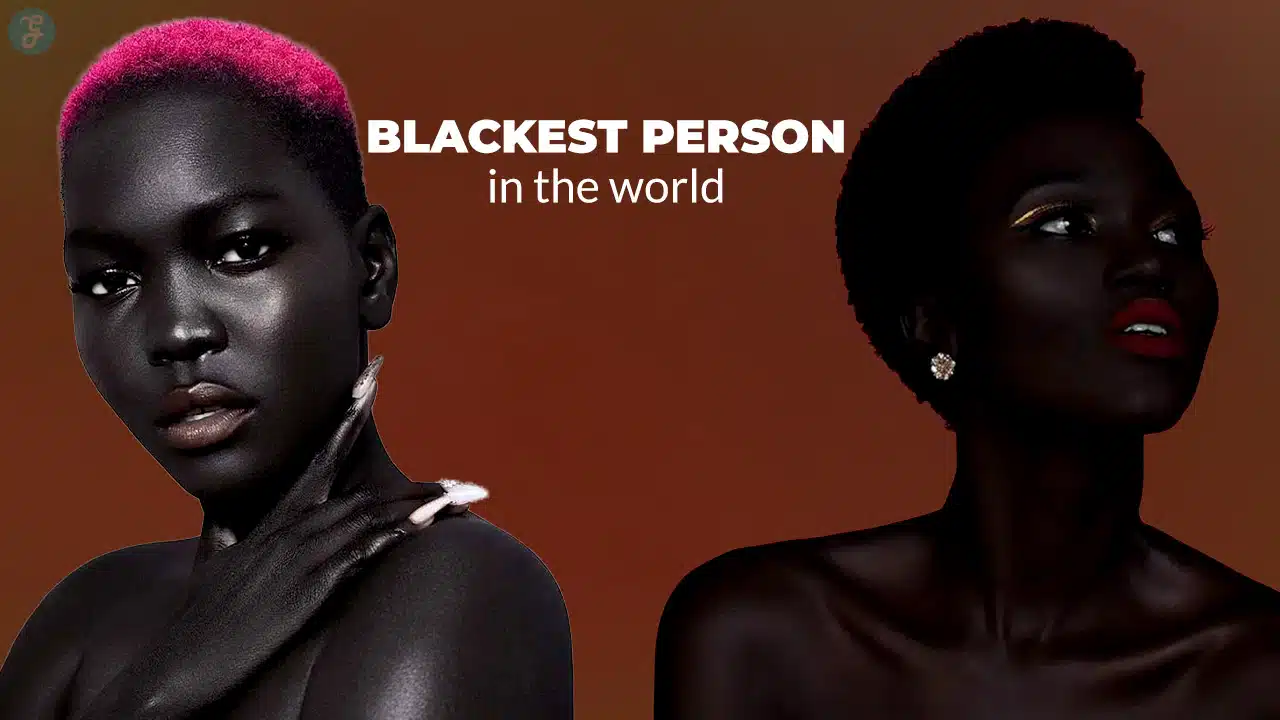
Have you ever wondered who holds the title of the “Blackest Person in the World”? Some people naturally possess skin tones so dark and rich that they leave others in awe. In this post, we’ll explore fascinating stories about individuals with the darkest skin and why it matters.
Keep reading—you don’t want to miss this!
Key Takeaways
- The “Blackest Person in the World” title often refers to an unnamed African man with extremely dark skin due to high melanin levels. This is common in people near the equator.
- Nyakim Gatwech, a South Sudanese model known as the “Queen of Darkness,” celebrates her deep skin tone and challenges beauty norms. She inspires self-love and diversity in fashion.
- Khoudia Diop, called the “Melanin Goddess,” overcame bullying for her dark skin and became a successful Senegalese model promoting confidence and embracing unique beauty.
- Dark skin reflects cultural roots and provides natural protection from sunlight through melanin. However, global beauty trends continue to favor lighter tones over darker ones.
- Models like Nyakim Gatwech fight stereotypes by proudly displaying their heritage, encouraging more representation of diverse skin tones worldwide.
Who Is the Blackest Person in the World?
An African man, whose identity remains unknown, is often named the darkest-skinned person in the world. His viral image shows an extraordinarily deep brown skin tone that sets him apart.
This level of pigmentation comes from high melanin levels, common among people close to the equator.
Despite rumors, Nyakim Gatwech does not hold any Guinness World Record for being the blackest woman. The title isn’t officially recognized by any organization. Skin color varies widely across ethnic groups in Africa, but this unnamed man’s complexion has stunned many worldwide.
Next are some notable individuals known for their beautiful dark skin tones…
Notable Individuals With the Darkest Skin
Some people have skin so dark, it looks almost otherworldly. Their striking beauty and rich pigmentation leave many in awe.
Nyakim Gatwech
Nyakim Gatwech, a South Sudanese model, is celebrated for her deep skin tone. Known as the “Queen of Darkness,” she wears this title with pride. Her dark complexion has redefined beauty standards, sparking conversations on diversity in fashion and media.
Despite facing prejudice and color shaming early in life, Nyakim rose above hate. Social media played a huge role in boosting her confidence.
Her bold mantra inspires many: “Black is bold, black is beautiful, black is gold.” Nyakim challenges Westernized ideals of beauty that often ignore darker skin tones. Fans love her unapologetic attitude and radiant presence.
Today, she’s an icon who represents African heritage and self-love worldwide.
Khoudia Diop
Khoudia Diop, a Senegalese model, is celebrated for her deep dark skin tone. Born in Senegal, she faced bullying as a child because of her appearance. Instead of bowing to the negativity, she embraced her striking color and found strength in it.
Her beauty caught attention worldwide. She entered the modeling industry and gained fame quickly. Known as the “Melanin Goddess,” Khoudia shattered stereotypes surrounding dark-skinned women.
Her confidence inspired many others to love their skin—a bold move in global beauty standards often dominated by lighter tones.
The Significance of Dark Skin in Global Beauty Standards
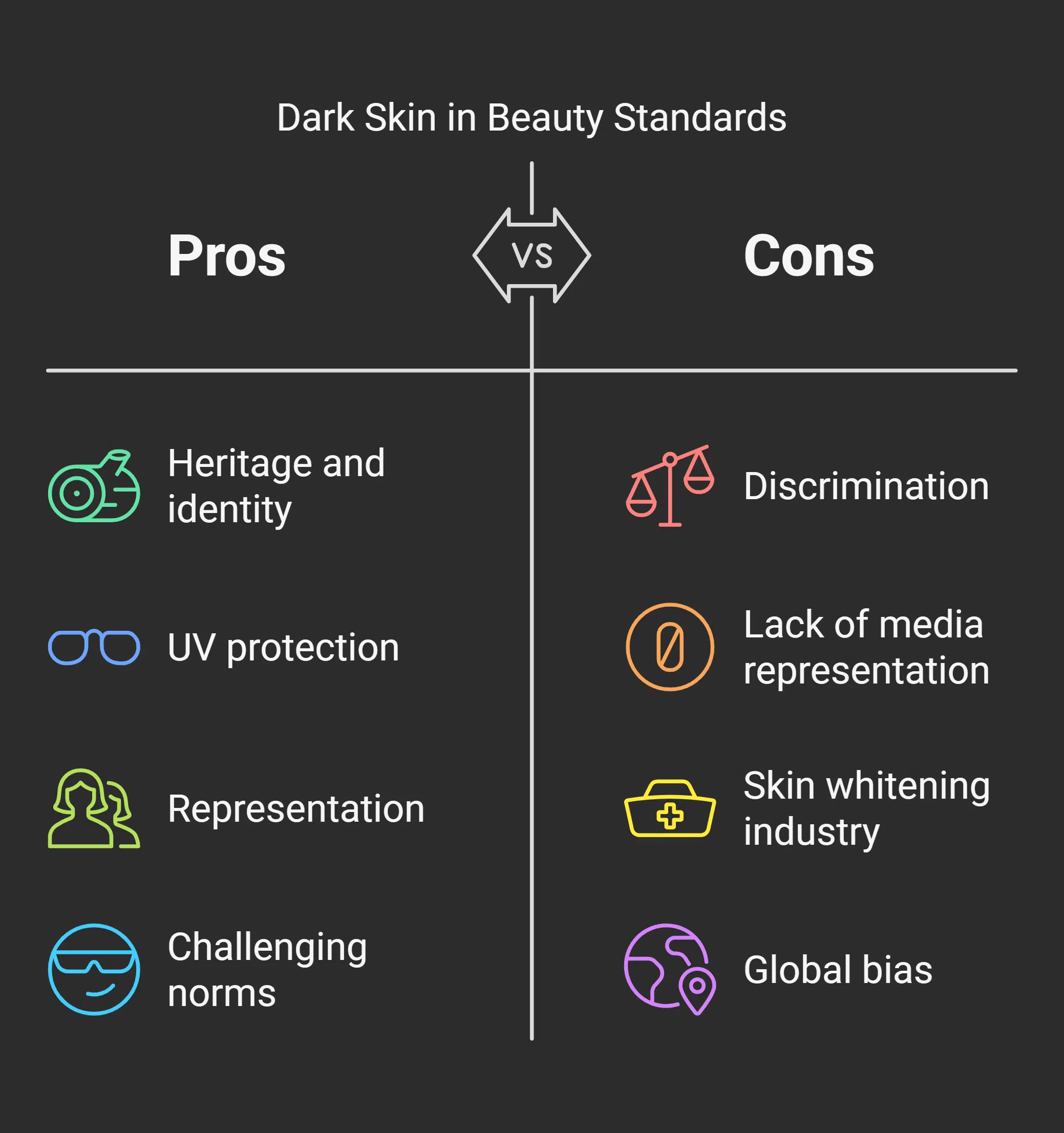
Dark skin carries deep meanings tied to heritage and identity. It reflects the ancestral roots of many ethnic groups, particularly in African countries near the equator, such as Guinea and Ethiopia.
People with darker skin tones owe their pigmentation to high levels of melanin. This natural shield protects against ultraviolet radiation from sunlight. Yet, global beauty trends often ignore this richness and favor lighter skin tones instead.
Western media frequently promotes ads featuring light-skinned models, leaving fewer spaces for representation of individuals with the darkest skin color.
Discrimination based on skin tone still exists worldwide today, affecting millions across regions like Asia, Africa, and even the United States. Skin whitening products remain a billion-dollar industry despite growing calls for inclusivity in beauty standards.
Models like Nyakim Gatwech challenge these norms by embracing their dark color proudly. Her South Sudanese descent inspires others to celebrate diverse shades without fear or hesitation.
Next comes a look at how unique people exemplify extraordinary hues across Earth’s surface!
Takeaways
The beauty of Black skin is unmatched. People like Nyakim Gatwech and Khoudia Diop show the world how stunning dark skin can be. Their confidence inspires many to embrace their heritage.
Skin tone tells a story of culture, strength, and identity. Celebrating diversity brings us closer together as humans.
FAQs
1. Who is considered the darkest person in the world?
The title of having the darkest skin tone often goes to individuals with high melanin levels, like Nyakim Gatwech, a well-known American model from South Sudanese descent who went viral for her stunning dark skin.
2. What causes such dark skin tones?
Dark skin color comes from an increased amount of melanin, which protects against UV radiation. Ethnic groups in African countries like Somalia and Namibia are known for their rich pigmentation due to genetic traits passed down by ancestors.
3. Are there specific countries with the darkest populations?
Yes, African nations such as Kenya and parts of Oceania like Melanesia rank among places where people have some of the darkest skin tones due to their environment and heritage.
4. How has society viewed darker skin historically?
Darker-skinned individuals have faced racism and stereotypes tied to race or ethnicity throughout history. However, movements within Black communities now emphasize beauty, pride, and aesthetic value in darker complexions.
5. Why is Nyakim Gatwech so famous for her dark complexion?
Nyakim’s striking appearance helped her gain attention on social media under “queennyakimofficial.” Her confidence inspired others while she worked as a brand ambassador advocating for self-love across various ethnic groups.
6. Can science explain why some people have very dark pigmentation?
Yes! Skin pigmentation varies based on genetics and environmental adaptation over time—like how carbon nanotube arrays absorb light entirely; similarly, melanin absorbs sunlight efficiently while protecting human bodies from harm caused by ultraviolet rays or infrared heat exposure seen through thermography studies!





















