

The architectural landscape of 2025 has moved beyond simple energy efficiency to embrace regenerative design—homes that not only use fewer resources but actually contribute to the local ecosystem. From 3D-printed earth shelters to co-living “timber seeds,” the most inspiring residential projects this year prove that high-performance living is no longer a niche luxury; it is a scalable necessity for a climate-resilient future.
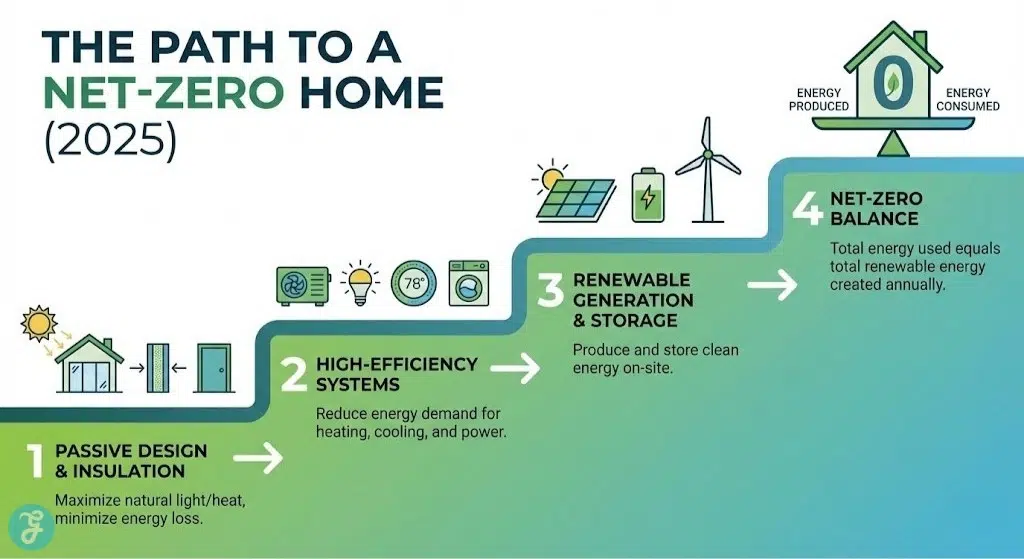
As we move deeper into 2026, these homes stand as functional blueprints. To find the best sustainable home designs 2025, one must look for the integration of carbon-sequestering materials, “passive-first” engineering, and smart grids that turn individual houses into active energy producers for their neighborhoods.
How We Chose Our Top 10 List?
Our 2025 selection process focuses on “Whole Life Carbon” (WLC) metrics—measuring both the energy used to build the home and the energy used to run it. We prioritized projects that achieved certified status (like Passivhaus or LEED Platinum) while delivering exceptional aesthetic and social value.
We applied the following weightings to our research and comparison:
| Criteria | Weighting | Focus Area |
| Operational Efficiency | 40% | Net-zero or Net-positive energy performance (Passivhaus focus) |
| Material Innovation | 30% | Use of carbon-sequestering, local, or upcycled materials |
| Site Integration | 30% | Biophilic design, water management, and adaptive reuse |
10 Best Sustainable Home Designs 2025
The following residential projects represent the most significant breakthroughs in architecture, balancing carbon-negative goals with modern living standards.
1. The Seed Cohousing (Kirsty Maguire Architects)
Located in a constrained woodland garden near Dundee, Scotland, The Seed is a “timber seed” designed for two households. It serves as a masterclass in Passivhaus engineering on a site with restricted solar gain, proving that performance-led design can overcome difficult environmental conditions.
Special Features:
-
Built almost entirely from timber to minimize embodied carbon.
-
Meets Passivhaus Classic standards despite low solar availability.
-
Designed for multi-generational co-living to optimize resource sharing.
Things to Consider:
-
The co-living model requires a specific lifestyle commitment.
-
Initial construction costs for Passivhaus standards can be 5-10% higher.
-
Compact layout focuses on efficiency over sprawling square footage.
Best for: Families seeking high-performance co-living in challenging climates.
2. Goldsmith Street (Mikhail Riches)
As a large-scale housing development for the Norwich City Council, Goldsmith Street has redefined affordable housing. This 93-home project is built to full Passivhaus standards, providing light-filled, community-focused spaces where energy bills are a fraction of the national average.
Special Features:
-
Largest social housing project in the UK to achieve Passivhaus certification.
-
Community-led design with integrated play areas and car-free streets.
-
High-performance windows and airtightness leading to extreme energy affordability.
Things to Consider:
-
High-density design may not appeal to those seeking rural isolation.
-
Strict maintenance protocols are required to preserve the airtight envelope.
-
Standardized aesthetic to keep costs affordable for public delivery.
Best for: Local authorities and urban planners looking for net-zero social housing models.
3. Casa da Levada (Tsou Arquitectos)
Winner of the Architizer A+ Sustainability Award, this Portuguese home is a triumph of adaptive reuse. By integrating modern sustainable technology into an existing stone structure, the architects managed to preserve the site’s history while achieving 2025-standard energy performance.
Special Features:
-
Radical use of local stone and recycled materials.
-
Integrated solar array designed to blend into the traditional roofline.
-
Natural cross-ventilation system that eliminates the need for mechanical cooling.
Things to Consider:
-
Adaptive reuse of stone can involve high labor costs for restoration.
-
Limited window size in older structures can impact natural daylighting.
-
Best suited for Mediterranean or temperate climates.
Best for: Homeowners wanting to blend heritage architecture with modern eco-technology.
4. Hidden Stone House (A1 Arquitectura Avanzada)
This earth-sheltered home in Ecuador uses the ground’s stable temperature for natural insulation. By partially submerging the structure, the architects created a thermal sanctuary that maintains a constant comfortable temperature without any active heating or cooling systems.
Special Features:
-
Earth-sheltered design provides superior thermal mass and storm resilience.
-
Biophilic layout with living green roofs that manage stormwater.
-
Use of local volcanic stone for a carbon-neutral exterior.
Things to Consider:
-
Earth-sheltering requires expert waterproofing and drainage planning.
-
Interior lighting must be carefully managed with skylights and clerestories.
-
Higher initial excavation costs compared to standard slab construction.
Best for: Individuals seeking ultimate privacy and passive climate control.
5. EcoCube (Modular Prefab)
The EcoCube has become the gold standard for sustainable prefab in 2025. Manufactured in a controlled factory environment to reduce waste by 80%, this modular home uses a frame of recycled steel and bamboo-composite panels to deliver an A+ energy rating in a fraction of the time of a site-build.
Special Features:
-
3D-printed components that minimize material waste.
-
Smart home OS integrated at the factory for real-time energy monitoring.
-
100% recyclable building envelope at the end of the home’s life.
Things to Consider:
-
Design is modular and less customizable than traditional builds.
-
Requires site access for large delivery vehicles and cranes.
-
Foundation requirements vary significantly based on local soil.
Best for: Urbanites and remote workers seeking a fast, zero-waste housing solution.
6. Rural Green House (onSITE)
Set in Bordeaux, France, this project rethinks the suburban home. It uses “right-tech” solutions—utilizing an earth mound on the north side for insulation and a high-performance wooden terrace on the south to manage solar gain naturally.
Special Features:
-
Earth-mound insulation strategy for north-facing protection.
-
Collaborative design focused on the shared identity of the local community.
-
Low-tech mechanical systems that are easy and cheap to maintain.
Things to Consider:
-
Requires a site large enough for landscape-based insulation (mounds).
-
The “low-tech” approach requires more manual adjustment of windows/shades.
-
Focuses on regional vernacular over futuristic high-tech looks.
Best for: Families seeking a “right-tech” sustainable home that is easy to manage.
7. Mhaga Homes (TAWAH)
Located in Tanzania, these homes are a benchmark for social and environmental sustainability. Built using eco-friendly materials and traditional techniques, the project focuses on training local women in construction skills, providing dignified housing for the elderly while sequestering carbon.
Special Features:
-
Built using compressed earth blocks and locally sourced renewable materials.
-
Zero-carbon construction process with no industrial machinery.
-
Socially restorative model that empowers female builders.
Things to Consider:
-
Labor-intensive construction process.
-
Specifically designed for rural, tropical environments.
-
Materials require regular maintenance to protect against heavy rainfall.
Best for: Rural development projects focusing on community empowerment and eco-building.
8. Sublustrum Lab (Sanei + Hopkins)
Dubbed “Housestead,” this experimental home in the UK serves as a “laboratory for a living prototype.” It tests the limits of carbon-neutral materials like hempcrete and recycled glass in a real-world, multi-generational family setting.
Special Features:
-
Features a “mechanical core” that manages greywater and heat recovery.
-
Experimental use of mycelium and straw-bale insulation panels.
-
Located within an Area of Outstanding Natural Beauty (AONB) with zero site impact.
Things to Consider:
-
As a “lab,” it features systems that may require specialized monitoring.
-
High-concept architecture that may feel experimental rather than “cozy.”
-
Significant investment in custom-fabricated sustainable parts.
Best for: Eco-innovators looking for a prototype of the future of home building.
9. Stealth House (Apollo Architects)
This Tokyo-based home uses a “Stealth” approach to sustainability—high-tech eco-systems hidden behind a minimalist, brutalist facade. It uses a thermal-mass concrete structure paired with advanced AI-driven shading to maintain a perfect indoor climate in a dense urban setting.
Special Features:
-
AI-optimized louvers that adjust to sunlight and wind in real-time.
-
Integrated vertical garden that cools the urban heat island effect.
-
Secret rooftop solar farm hidden from street view.
Things to Consider:
-
High-tech sensors and AI systems require ongoing technical support.
-
Concrete has high initial embodied carbon (partially offset by longevity).
-
Minimalist Japanese aesthetic can feel sterile to some.
Best for: Urban professionals seeking a high-tech, private sanctuary in the city.
10. Origin House (A-01)
The “No Footprint Wood House” is a modular prototype that can be configured to be completely off-grid. In 2025, it has become the preferred choice for eco-tourism and remote living, using a system of interlocking wooden parts that allow for 100% natural ventilation.
Special Features:
-
100% FSC-certified wood construction with no glue or toxic resins.
-
Elevated on stilts to minimize ground impact and handle flooding.
-
Open floor plan designed to maximize the stack effect for cooling.
Things to Consider:
-
The open design is less suited for extremely cold or noisy environments.
-
Elevated stilts require specific engineering for seismic or high-wind zones.
-
Best suited for tropical or temperate, nature-focused sites.
Best for: Eco-resorts or individuals seeking a minimal-impact, off-grid retreat.
Sustainable Home Market Overview 2025
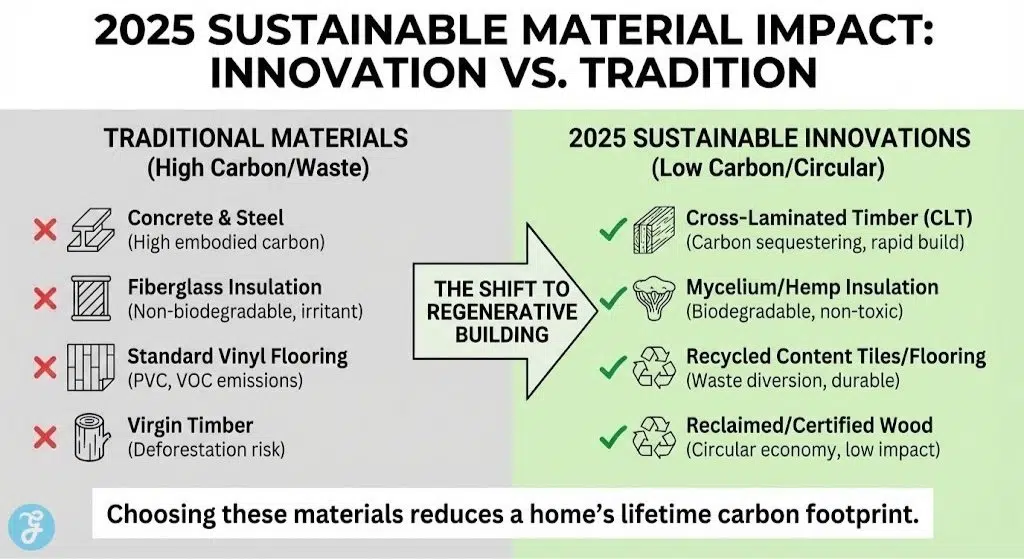
The 2025 market is defined by the “Quiet Luxury” of high-performance building envelopes. The ultra-minimalist “all-white” aesthetic has been replaced by warm, earthy textures like rammed earth, cross-laminated timber (CLT), and mycelium-based insulation. Prefabricated “kit homes” have also hit a record market share, offering guaranteed airtightness at lower costs.
| Project Name | Location | Primary Innovation | Core Sustainability Stat |
| The Seed Cohousing | Scotland, UK | Low-solar timber co-living | Meets RIBA 2030 targets |
| Casa da Levada | Portugal | Adaptive stone reuse | Solar-integrated masonry |
| Goldsmith Street | Norwich, UK | Large-scale social Passivhaus | £150 annual energy bills |
| EcoCube Prefab | Global/Modular | Recycled Steel & Bamboo | 80% waste reduction |
| Hidden Stone House | Ecuador | Biophilic earth-sheltering | Natural thermal regulation |
How Should You Choose The Best Option For You
Choosing the right sustainable design depends on your climate and lifestyle priorities:
-
For Cold Climates: Prioritize Passivhaus designs like The Seed or Goldsmith Street for thermal efficiency.
-
For Rural/Nature Sites: Look for earth-sheltered or regenerative models like Hidden Stone House or Origin House.
-
For Urban Infill: Consider High-Tech/Modular solutions like EcoCube or Stealth House to maximize space and energy.
-
For Historic Preservation: Opt for Adaptive Reuse like Casa da Levada to maintain character while going green.
Recap:
| Category | Top Pick | Primary Reason |
| Energy Efficiency | Goldsmith Street | Proving Passivhaus works at scale for a low budget. |
| Social Impact | Mhaga Homes | Empowering women and the elderly through eco-building. |
| Climate Resilience | Hidden Stone House | Using the earth to survive extreme weather and heat. |
| Material Innovation | EcoCube | Leading the charge in zero-waste modular construction. |
Wrap-Up
The best sustainable home designs 2025 show that we are moving away from houses that simply “consume less” toward homes that “restore more.” Whether it’s through the social empowerment of local builders or the technical brilliance of a net-zero social housing project, these homes provide the inspiration needed to build better for 2026 and beyond.





















