A startup can look polished from the outside and still lose customers in the inbox. One missed ticket, one slow reply, one confused handoff between sales and support, and the customer starts wondering whether the product is as reliable as the pitch. That is why choosing the Best Customer Support Tools matters early, even before you have a large support team.
Choosing the right Best Customer Support Tools early on can significantly impact your startup’s ability to retain customers and respond effectively to their needs.
The right support platform helps founders organize customer questions, track issues, build a knowledge base, automate repetitive replies, and understand where customers struggle. The wrong tool creates its own problems: expensive seats, too much setup, weak reporting, messy handoffs, and features your team will not use.
The selection of the Best Customer Support Tools should be based on your specific business needs and customer interaction styles.
This guide compares eight practical customer service tools for startups, SaaS teams, support teams, and founders who need better customer conversations without buying enterprise complexity too early.
This guide highlights the Best Customer Support Tools that are tailored for startups and emerging businesses.
Selection Criteria for the Best Customer Support Tools
Understanding the features of different Best Customer Support Tools will help you make an informed decision.
Customer support software should make the team faster and the customer calmer. For startups, the best choice is not always the most advanced platform. It is the tool that matches the current support volume, team size, channels, and customer expectations.
Finding the Best Customer Support Tools is essential as it directly affects customer satisfaction and loyalty.
Here are the filters used to compare these support platforms:
| Criteria | Why It Matters for Startups |
| Startup suitability | The tool should work for small teams, founder-led support, and early customer success workflows. |
| Pricing flexibility | Startups need free trials, free plans, or entry-level plans that do not punish early growth. |
| Ease of setup | A support tool should not take weeks to launch before the team can answer customers. |
| Ticket management | Customer issues should be easy to assign, track, prioritize, and resolve. |
| Collaboration features | Founders, support agents, product teams, and engineers should be able to share context. |
| Integrations | The tool should connect with CRM, Slack, project management, ecommerce, analytics, or other startup SaaS tools. |
| Scalability | The platform should support growth from a small inbox to a structured support operation. |
| Automation | AI replies, routing, macros, workflows, and saved responses can reduce repetitive work. |
| Reporting and analytics | Teams need visibility into response time, ticket volume, customer issues, and support quality. |
| Overall value | The software should improve customer experience, not just add another item to the founder tool stack. |
Who This Guide Is For
This article is for startup founders, SaaS operators, support teams, customer success leads, ecommerce teams, and small businesses choosing help desk software for the first time. It is also useful if your startup currently handles support through Gmail, Slack, shared inboxes, or scattered spreadsheets and needs a cleaner system.
8 Best Customer Support Tools for Startups and SaaS Teams
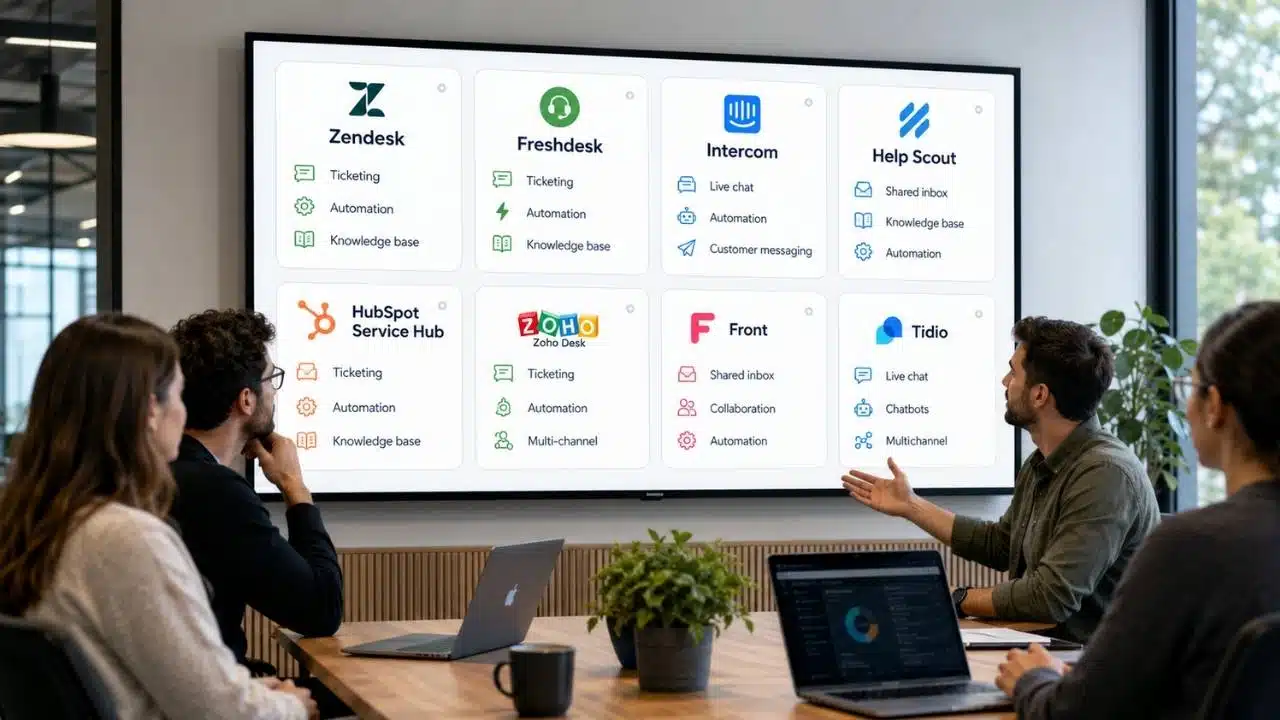
We have researched the Best Customer Support Tools available to ensure you find the right fit for your team.
The tools below are not all built for the same kind of company. Some are better for SaaS support. Some are better for live chat and AI automation. Some are better for simple email support, and others are built for scaling customer service operations.
The goal is to help you choose the right support platform based on your customer volume, support channels, budget, and stage.
1. Zendesk
Zendesk is one of the most established customer support platforms for teams that need scalable ticketing, automation, AI support features, reporting, and omnichannel customer service. It is a strong option for startups that already handle meaningful support volume or expect to scale quickly. Zendesk’s official pricing page positions its support plans from $19 per month, and Zendesk also offers a 14-day free trial with no credit card required.
Best Feature/For:
With the right selection of Best Customer Support Tools, you can streamline operations and improve customer communication.
- Best for startups that need scalable help desk software with strong ticketing and automation.
- Strong fit for SaaS teams expecting support volume to grow quickly.
Key features:
- Ticketing, AI-powered support workflows, reporting, automation, omnichannel support, knowledge base options, and integrations.
- Useful for teams that need structured customer service processes instead of a basic shared inbox.
Why We Chose It:
The importance of selecting the right Best Customer Support Tools cannot be understated in fostering effective customer relationships.
-
- Zendesk is built for support teams that need room to scale.
When choosing the Best Customer Support Tools, consider your team’s unique workflow and customer needs.
-
- It has strong ticketing depth for managing growing support queues.
Integrating the Best Customer Support Tools with your existing systems will enhance your team’s efficiency.
- Its automation and AI features can reduce repetitive support work.
- It integrates with many business tools, which helps when support connects with sales, product, and operations.
Things to consider:
- It may feel heavier than needed for very small teams.
- Costs can rise as startups need more advanced features, AI tools, or additional agents.
Best startup fit:
- Scaling SaaS startups, customer support teams, B2B software companies, and teams that need a mature support system.
2. Freshdesk
Freshdesk is a practical help desk platform for startups that want ticketing, automation, collaboration, knowledge base tools, and support reporting without jumping straight into enterprise software. It is often a good fit for teams moving from shared inboxes to structured customer service tools. Freshworks’ official pricing page says Freshdesk has a free program for two users, with paid plans starting at $15, making it accessible for small teams testing support workflows.
Best Feature/For:
Always evaluate how the Best Customer Support Tools you consider align with your business objectives.
-
- Best for startups that want affordable ticketing and support automation.
- Strong fit for small teams graduating from email-based support.
Identifying the Best Customer Support Tools can help you scale your support efforts as your startup grows.
Key features:
- Ticket management, team collaboration, knowledge base, automation, reporting, and omnichannel options depending on plan.
- Useful for organizing support requests from email, web, chat, and other channels.
Why We Chose It:
As a SaaS startup, incorporating the Best Customer Support Tools is crucial for maintaining engagement with users.
- Freshdesk balances useful help desk features with startup-friendly access.
- It is easier to adopt than many heavier support systems.
- The free program helps very small teams test support structure before paying.
- It works well if your startup may later use other Freshworks products.
Things to consider:
- Advanced omnichannel, AI, and automation features may require higher plans or separate Freshworks products.
- Teams should compare Freshdesk and Freshdesk Omni carefully before buying.
Best startup fit:
- Early-stage SaaS teams, small support teams, founder-led customer service, and startups needing structured ticketing.
3. Intercom
Utilizing the Best Customer Support Tools will allow your team to manage customer inquiries more effectively.
Intercom is a strong customer support platform for startups that care about live chat, in-app messaging, AI support, onboarding, and conversational customer engagement. It is especially useful for SaaS companies that want to support users inside the product instead of relying only on email tickets. Intercom’s pricing page positions its Essential plan for individuals, startups, and small businesses, with Intercom and Fin AI Agent included in its customer service platform pricing model.
Best Feature/For:
- Best for SaaS startups that want chat, AI support, and in-product customer conversations.
- Strong fit for product-led growth teams and onboarding-focused startups.
Key features:
- Live chat, shared inbox, Fin AI Agent, help center, customer messaging, routing, automation, and customer engagement tools.
- Useful for reducing repetitive support questions and guiding users inside the product.
Why We Chose It:
- Intercom is strong for startups where support, onboarding, and product adoption overlap.
- Its AI-first support direction makes it useful for teams trying to control ticket volume.
- It supports real-time conversations better than traditional ticket-only tools.
- It can help SaaS teams turn support into retention and product education.
Things to consider:
- Pricing can become harder to predict when AI resolutions, seats, and advanced features scale.
- It may be too much for startups that only need basic email ticketing.
Best startup fit:
- SaaS startups, product-led teams, onboarding-heavy products, and companies that rely on in-app customer communication.
4. Help Scout
Help Scout is a clean customer support platform built around shared inboxes, live chat, knowledge base support, workflows, reporting, and team collaboration. It is a strong option for startups that want human, email-first support without making the customer experience feel like a ticket number. Help Scout’s pricing page lists its Standard plan at $25 per user per month and includes features like multiple inboxes, live chat, Messenger, knowledge bases, basic workflows, saved replies, and AI Inbox assistant.
Best Feature/For:
- Best for startups that want simple, customer-friendly email and chat support.
- Strong fit for teams that want a support tool people can learn quickly.
Key features:
- Shared inbox, live chat, knowledge base, saved replies, workflows, reporting, company management, and integrations.
- Helpful for teams that want support conversations to feel personal while still being organized.
Why We Chose It:
-
- Help Scout is easier to manage than many complex help desk platforms.
- It gives startups a clean balance of support structure and human tone.
- Its saved replies, workflows, and knowledge base features help reduce repetitive work.
- It integrates with tools such as HubSpot, Jira, Linear, Aircall, and other services through its app ecosystem.
Choosing the Best Customer Support Tools will greatly enhance your startup’s customer service capabilities.
Things to consider:
- It may not be the best fit for teams that need deep call center features or heavy enterprise controls.
- Larger support teams may need higher plans for advanced reporting, permissions, and scale.
Best startup fit:
- SaaS startups, customer success teams, small support teams, service startups, and founder-led companies that value simple customer service tools.
5. HubSpot Service Hub
HubSpot Service Hub is a good customer support choice for startups already using HubSpot CRM, marketing, or sales tools. Its biggest advantage is customer context: support teams can work from the same customer platform that sales and marketing use. HubSpot’s Service Hub product page lists a free tier with contact management, ticketing, and team email, while its help desk page says the free tier includes essential ticketing, shared inbox, live chat, and basic integrations.
Best Feature/For:
- Best for startups that want support connected with CRM, sales, and marketing.
- Strong fit for teams already using HubSpot or planning to publish a related guide on Best CRM Tools for Startups.
Key features:
- Ticketing, shared inbox, team email, live chat, contact management, automation on paid plans, reporting, and CRM-connected customer context.
- Useful when support conversations should inform sales, retention, onboarding, and account management.
Why We Chose It:
- HubSpot connects support with the wider customer journey.
- It helps startups avoid separating sales data from support data too early.
- The free support tools are useful for teams getting started.
Things to consider:
-
- More advanced service features may require paid plans.
- Startups not using HubSpot CRM may find a standalone support platform easier.
Invest in the Best Customer Support Tools to ensure consistent and reliable responses to your customers’ queries.
Best startup fit:
- HubSpot users, inbound SaaS startups, CRM-connected support teams, and startups that want sales, marketing, and support in one customer platform.
6. Zoho Desk
Zoho Desk is a strong value-focused support platform for startups that want ticketing, multichannel support, knowledge base tools, automation, and reporting inside the Zoho ecosystem. It is especially useful for bootstrapped teams already using Zoho CRM, Zoho Books, or Zoho Projects. Zoho’s official pricing page says the Zoho Desk Free Edition offers three user licenses, and its free help desk page says the free software supports email, web forms, and self-service portals in one interface.
Best Feature/For:
- Best for budget-conscious startups that want structured support.
- Strong fit for teams already using Zoho’s business software ecosystem.
Key features:
- Email ticketing, web forms, self-service portal, knowledge base, macros, reporting, automation, and Zoho integrations depending on plan.
- Useful for startups that need help desk software without a high starting cost.
Why We Chose It:
- Zoho Desk gives small teams a practical free entry point.
- It works well when support needs to connect with CRM, finance, and operations inside Zoho.
- Its ticketing and self-service features are enough for many early support teams.
- It offers good value for startups that need structure but must watch software spend.
Things to consider:
- The interface may feel less modern than some newer support platforms.
- Teams outside the Zoho ecosystem should compare integrations before committing.
Best startup fit:
-
- Bootstrapped startups, small support teams, Zoho users, SaaS founders, and budget-sensitive customer service teams.
Customer feedback through the Best Customer Support Tools can guide product development and improvements.
7. Front
Front is a customer operations platform that blends shared inbox, ticketing, team collaboration, automation, and analytics. It works especially well for startups where support involves collaboration across sales, success, operations, and product, not just traditional ticket handling. Front’s official pricing page lists its Starter plan at $25 per seat per month, up to 10 seats, with shared inbox and ticketing, AI topics, automation rules, basic analytics, and a no-code public knowledge base.
Best Feature/For:
- Best for startups that need collaborative support across departments.
- Strong fit for teams where customer conversations involve support, sales, success, and operations.
Key features:
- Shared inbox, ticketing, workflow automation, internal collaboration, analytics, knowledge base, and AI add-ons.
- Useful for keeping customer-facing teams aligned around the same conversations.
Why We Chose It:
- Front is strong when support is not isolated from the rest of the business.
- It helps teams collaborate around customer emails without losing ownership.
- It works well for B2B startups where customer communication is relationship-heavy.
- Its shared inbox model feels more natural than traditional ticketing for some teams.
Things to consider:
- Per-seat pricing can add up for growing teams.
- Startups that need simple support only may find Front more than they need.
Best startup fit:
- B2B startups, customer success teams, operations-heavy teams, agencies, and startups where customer communication crosses departments.
8. Tidio
Tidio is a customer support and live chat platform that fits startups needing fast website chat, chatbots, help desk features, and AI-assisted customer communication. It is especially useful for small businesses, ecommerce sites, and startups that want to answer visitor questions before they become lost leads. Tidio’s official pricing page says users can try Tidio for free, stay on a free plan forever, and test premium features during a free 7-day trial without a credit card. Its FAQ says the free plan includes 10 operators, 50 conversations, and 100 unique Flows visitors per month.
Evaluate the integration abilities of the Best Customer Support Tools to align with your customer management strategies.
Best Feature/For:
- Best for startups that need live chat and lightweight AI support quickly.
- Strong fit for ecommerce, service businesses, and small SaaS websites.
Key features:
- Live chat, help desk, chatbot flows, AI agent options, visitor tracking, integrations, and customer messaging tools.
- Useful for answering questions on-site and reducing repetitive support requests.
Why We Chose It:
- Tidio is easy to launch for teams that need chat support fast.
- The free plan makes it approachable for early-stage startups.
- It works well when support and lead capture overlap.
- Its chatbot and automation tools can help small teams handle common questions.
Things to consider:
- Conversation and automation limits matter, so startups should check plan caps carefully.
- It is better for chat-led support than complex multi-team help desk operations.
Best startup fit:
- Small businesses, ecommerce startups, early SaaS websites, founder-led teams, and companies needing quick customer service tools.
An Overview of the Best Customer Support Tools Before You Choose
The best support platform depends on your customer volume, product type, and service model. A SaaS startup with in-app onboarding may need Intercom. A bootstrapped team may prefer Zoho Desk or Freshdesk. A founder-led B2B startup may choose Help Scout or Front because the customer relationship matters as much as the ticket.
Overview Comparison Table
Use this snapshot to narrow your options before testing two or three tools. Pricing notes are intentionally general where plans change often, so confirm current limits and add-ons on official pages before purchasing.
Survey results can indicate which Best Customer Support Tools are most favored among users.
| Tool | Best For | Main Strength | Startup Fit | Pricing Note | Ease of Use |
| Zendesk | Scaling support teams | Mature ticketing and automation | Growing SaaS and support teams | Free trial available; paid plans scale by features | Medium |
| Freshdesk | Affordable help desk setup | Ticketing and support workflows | Early-stage and small support teams | Free program available for small teams | Easy to medium |
| Intercom | SaaS chat and AI support
Consider customer testimonials when evaluating the Best Customer Support Tools for your startup. |
In-app messaging and AI agent support | Product-led SaaS startups | Paid plans include seat and AI outcome considerations | Medium |
| Help Scout | Human email and chat support | Simple shared inbox and knowledge base | Small SaaS and service teams | Paid plans start per user; free trial available | Easy |
| HubSpot Service Hub | CRM-connected support | Support tied to sales and marketing data | HubSpot users and inbound startups | Free tier available; paid plans add more service features | Easy |
| Zoho Desk | Budget-conscious support | Free help desk entry and Zoho ecosystem | Bootstrapped startups | Free edition available for small teams | Medium |
| Front | Collaborative customer operations | Shared inbox plus ticketing and analytics | B2B and operations-heavy startups | Paid plans scale by seat | Easy to medium |
| Tidio | Website chat and lightweight AI | Live chat, chatbot, and visitor engagement | Small businesses and ecommerce startups | Free plan and free trial available | Easy |
Our Top 3 Picks and Why
For customer support software, a top three is useful because startup needs vary sharply by support style.
- Freshdesk: Best starting point for startups that want affordable ticketing, basic automation, and a familiar help desk structure.
- Intercom: Best for SaaS startups that rely on in-app messaging, onboarding, chat, and AI-powered support.
- Help Scout: Best for teams that want simple, human support with shared inboxes, knowledge base tools, and clean collaboration.
How to Choose the Right Customer Support Tool for Your Startup

Use insights gained from the Best Customer Support Tools to refine your customer engagement strategy.
A support tool should match how customers actually ask for help. Do not buy a complex omnichannel system if 90% of your support comes through email. Do not choose a basic inbox if your users need live chat, product guidance, and fast troubleshooting.
The Selection Framework
- Start with your main support channel: Email-first teams may prefer Help Scout, Freshdesk, Zoho Desk, or Front. Chat-first SaaS teams may prefer Intercom or Tidio.
- Match the tool to support volume: A small team can start with a free or simple plan. A scaling SaaS company may need automation, SLAs, reporting, routing, and knowledge base depth.
- Connect support with customer data: If sales, CRM, and support need shared context, HubSpot Service Hub or an integration-friendly platform may fit better.
- Watch future cost, not just entry price: Seats, AI usage, ticket volume, add-ons, automation, and reporting can change the real cost of support platforms.
The Final Checklist
Before choosing one of these customer service tools, check these five points:
- Can your team set it up and answer customers within a few days?
- Does it support your main channels: email, chat, web forms, social, or in-app messaging?
- Can support issues connect with your CRM, project management tool, or product workflow?
- Will pricing still make sense when your customer volume doubles?
- Can you build a knowledge base or self-service workflow before tickets pile up?
Common Mistakes to Avoid When Choosing Support Platforms
The biggest mistake is waiting too long. Many startups delay customer support software because the founder can still “manage it manually.” That works until support starts stealing time from product, sales, hiring, and strategy.
Another mistake is choosing based on brand name alone. Zendesk may be excellent for scaling support, but too heavy for a three-person team. Tidio may be perfect for chat-led support, but not enough for complex B2B SaaS ticket routing. The best tool is the one that matches your current customer reality.
Startups also underestimate support data. Customer questions reveal product confusion, onboarding gaps, pricing friction, bugs, and missing documentation. If your support tool does not help organize those signals, your product team may keep guessing.
Finally, avoid separating support from the rest of your stack. Customer support should connect with CRM, analytics, project management, and your broader founder tool stack.
Which Customer Support Tool Should Your Startup Choose?
Different startup types need different levels of support structure. Use this as a shortcut before creating your final shortlist.
The ultimate goal is to choose the Best Customer Support Tools that work best for your unique startup environment.
| Startup Type | Best Match | Why |
| Solo founder | Tidio, Zoho Desk, Help Scout | Simple enough to launch quickly without heavy setup. |
| Small SaaS team | Freshdesk, Help Scout, HubSpot Service Hub | Good balance of ticketing, inbox management, and customer context. |
| Product-led SaaS startup | Intercom, HubSpot Service Hub | Stronger for in-app support, onboarding, and customer engagement. |
| Scaling support team | Zendesk, Freshdesk | Better fit for automation, reporting, and larger ticket volumes. |
| Bootstrapped startup | Zoho Desk, Freshdesk, Tidio | Free or affordable entry points for early support structure. |
| B2B customer success team | Front, Help Scout, HubSpot Service Hub
Regularly review the performance of the Best Customer Support Tools to ensure they meet evolving customer needs. |
Better for relationship-heavy support and cross-team collaboration. |
| Ecommerce startup | Tidio, Freshdesk, Intercom | Good fit for chat, order questions, automation, and customer engagement. |
How This Fits Into Your Startup SaaS Stack
Customer support software is not a separate corner of the business. It touches sales, onboarding, retention, product development, customer success, and finance. A ticket may become a product bug, a churn warning, a CRM note, a feature request, or a renewal risk.
SaaS tools every startup needs and naturally link to your CRM guide using the anchor Best CRM Tools for Startups. Support tools and CRM tools work closely together because both manage customer relationships from different angles. The CRM tracks leads, deals, accounts, and customer history, while the support platform tracks questions, issues, complaints, and resolutions.
A smart startup SaaS stack should not feel like a random list of subscriptions. Your CRM, support platform, project management system, analytics tool, email marketing software, and accounting platform should work together well enough that customer context does not disappear between teams.
Better Support Is Not More Software. It Is Less Customer Confusion
The uncomfortable truth is that many startups do not need more support agents at first. They need clearer onboarding, better documentation, cleaner product messaging, and fewer recurring product problems. A support tool can organize the pain, but it cannot remove the reason customers keep asking the same questions.
The future of the Best Customer Support Tools will be shaped by AI agents, automated ticket summaries, smarter routing, self-service help centers, and deeper CRM integrations. That will help small teams do more with less. But founders should be careful: automation that hides customer frustration is dangerous. The goal is not to deflect every conversation. The goal is to solve the right problems faster.
Choose the tool that fits your current support reality. If you are still early, start simple. If you are growing fast, choose something that can scale. If support drives retention, connect it closely with your CRM and product workflows. The best support platform is the one your team uses consistently and your customers barely have to think about.
Frequently Asked Questions (FAQs) About Best Customer Support Tools
What are the Best Customer Support Tools for startups?
Some of the best options include Zendesk, Freshdesk, Intercom, Help Scout, HubSpot Service Hub, Zoho Desk, Front, and Tidio. The right choice depends on whether your startup needs ticketing, live chat, AI support, CRM integration, or a simple shared inbox.
Is help desk software necessary for an early-stage startup?
Yes, once customer questions become hard to track manually. A founder can manage early support through email for a short time, but help desk software becomes useful when follow-ups, bugs, onboarding questions, and customer history start getting lost.
Which support platform is best for SaaS startups?
Intercom is strong for in-app support and onboarding, while Freshdesk, Help Scout, Zendesk, and HubSpot Service Hub are strong for ticketing and customer service operations. The best choice depends on your support volume, product complexity, and whether you need CRM-connected support.
Should startups choose free customer service tools first?
Staying updated on the latest Best Customer Support Tools will enhance your competitive edge in the market.
Many startups should begin with a free plan or free trial if it covers their real workflow. However, teams should upgrade when they need automation, reporting, team permissions, better integrations, or higher support volume.
How do customer support tools connect with CRM tools?
Ultimately, the right Best Customer Support Tools will set the foundation for exceptional customer experiences.
Support tools track customer issues, while CRM tools track customer relationships, sales activity, and account history. That is why startups should internally connect support content with guides like Best CRM Tools for Startups, especially when building a complete startup SaaS stack.