


Finding ways to connect with family can be challenging. Cutting down screen time or searching for fun activities that everyone likes is hard. Playing games together works well. It’s good for the brain and heart.
Studies show game nights help families grow closer and improve moods. This blog explains how puzzles, board games, or active games can bring your family together and make you all happier.
Let’s start the game!
Boosts Cognitive and Problem-Solving Skills
Playing games with your family is not just fun ; it actually boosts cognitive and problem-solving skills. It enhances strategic thinking and improves memory and focus, making it an engaging way to stimulate the mind.
Enhances strategic thinking
Strategy games like chess and some video games boost your strategic thinking. This skill helps you solve problems in real life, not just in games. Research indicates that engaging in these activities for over seven years can enhance your problem-solving abilities.
These types of games also exercise your brain. While trying to beat an opponent or complete a puzzle, you sharpen your focus and memory. So, including strategy games during family game nights is beneficial for mental sharpness.
Improves memory and focus
Playing games with your loved ones strengthens memory and sharpens attention. Memory games serve as cerebral exercises, potentiating recall skills in both youngsters and adults. Regular participation in these games can augment skills like learning to fasten shoelaces or ride a bicycle.
Games stimulate the brain’s jigsaw-solving and inventive thought sections. Indulging in these activities with dear ones doesn’t just offer enjoyment but also fosters critical reasoning abilities seamlessly.
These enhancements bolster scholastic performance, making intricate problem-solving tasks less challenging.
Strengthens Emotional Connections
Playing games with your family fosters a deeper emotional connection. It cultivates teamwork and communication, strengthening the bond among family members.
Encourages teamwork and communication
Games encourage family members to work together, similar to a sports team at home. They foster cooperation and planning skills necessary for winning. Through gameplay, both children and adults enhance their communication skills.
Explaining strategies in games improves how families share and understand each other’s thoughts, strengthening emotional bonds.
Builds stronger family bonds
Playing games with your family can bring everyone closer together. It creates a strong bond by encouraging teamwork, communication, and shared experiences. Positive family dynamics contribute to better stress-coping mechanisms and healthier behaviors, making game time an essential element in building lasting connections among family members.
Promotes Mental Well-being
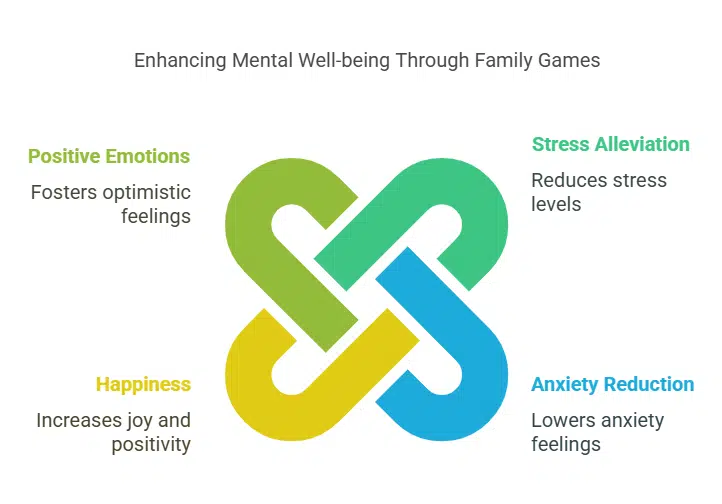
Engaging in games with your family can alleviate stress and anxiety, bringing happiness and laughter into your lives. It promotes positive emotions, which can contribute to your overall mental well-being.
Reduces stress and anxiety
Playing games with your family reduces stress and anxiety. It helps to take your mind off daily worries, making you feel more relaxed and positive. Positive social interactions during gameplay can lift your spirits, boost self-esteem, and enhance happiness levels.
Research has shown that playing games can reduce stress by releasing endorphins and promoting relaxation. This is important because nearly 60% of students experience high stress levels, which affect their academic performance negatively.
Encourages laughter and joy
Playing games with your family is a surefire way to bring laughter and joy into your home. It’s been proven that engaging in these activities reduces stress and enhances everyone’s mood, creating an atmosphere of happiness and relaxation.
These shared experiences provide lasting memories that boost emotional connections among family members, allowing for genuine expressions of selves and deepening the bond between everyone.
Whether playing board games or interactive video games together, the lightheartedness and fun inevitably elicit smiles and giggles. These moments don’t just offer entertainment; they solidify joyful connections within families that last a lifetime, providing mental wellness benefits along the way.
Teaches Valuable Life Lessons
Playing games with your family isn’t just about having fun; it’s also a powerful way to teach valuable life lessons. Through gameplay, children can learn patience and resilience as they navigate challenges and setbacks, fostering important skills necessary for success in the real world.
Develops patience and resilience
Playing games with family members can cultivate important life skills like patience and resilience. Throughout the highs and lows of gameplay, individuals learn to deal with setbacks, wait for their turn, and persevere in the face of challenges.
This aids in the development of endurance, which is essential for managing challenging situations in real life. Additionally, participating in various games allows family members to experience emotions such as frustration or setback within a safe environment, giving them an opportunity to manage these feelings constructively.
Moreover, maneuvering through the intricacies of game rules and strategies teaches individuals how to adapt and stay composed under pressure—an essential skill that translates into everyday life scenarios where unexpected obstacles may arise.
By integrating these experiences into recreational activities like playing games at home with family members, individuals are better prepared to tackle adversities with resilience while maintaining a positive outlook.
Encourages healthy competition
Playing games with your family promotes healthy competition. Participating in friendly rivalry during game nights or competitive sports can enhance self-confidence and teach crucial life skills, such as making quick decisions and responding effectively to others.
Additionally, it fosters resilience, an essential trait for effective leadership that combines strength and adaptability—a valuable asset in various life scenarios. Collaboration in sports also encourages teamwork, leading to enhanced emotional well-being and personal growth.
Thus, encouraging healthy competition within the family through games not only adds enjoyment but also creates opportunities to learn and grow together.
Competitive activities among family members can be enriching experiences that encourage character development while strengthening the bond between parents and children. It also nurtures qualities such as determination, discipline, and perseverance—skills that are beneficial throughout different stages of a person’s life.
Therefore, embracing healthy competition within the family framework through games can be an excellent way to cultivate important social-emotional skills while creating lasting memories.
Enhances Physical and Motor Skills
Playing games with your family isn’t just about fun. It also helps to improve physical and motor skills. Engaging in activities that involve hand-eye coordination, such as tossing a ball or moving game pieces, can help enhance these essential skills in both children and adults alike.
Improves hand-eye coordination
Playing games with your family can enhance hand-eye coordination. Whether it’s rolling dice, shuffling cards, or participating in sports, these activities require precise movements that improve our ability to coordinate what we see with how we move.
Better hand-eye coordination doesn’t just help us perform impressively in games but also has a positive impact on academic performance and physical health.
Improved hand-eye coordination supports both fine and gross motor skills. In fact, it supports various aspects of child development and adult function, such as reflexes, agility, and overall physical health.
Therefore, family game nights are not only enjoyable but also contribute to the development of crucial skills for everyone involved.
Encourages physical activity in certain games
Certain games can get your body moving and active. Whether it’s playing outdoor games like tag or indoor ones like charades that involve physical movement, these activities help in keeping you physically fit.
Engaging in physical play not only aids fitness but also promotes muscle and bone development, enhancing gross and fine motor skills. Furthermore, participating in physical activity through gaming has been shown to stimulate cognitive growth by improving coordination and problem-solving abilities.
It’s a fun way to stay healthy while spending quality time with family.
Physical play helps combat obesity among children as it supports their muscle and bone development through running, jumping, and climbing – all contributing significantly to overall health.
These activities boost gross and fine motor skills crucial for everyday movements such as writing or buttoning clothes. The benefits of engaging in physical activity via games are numerous—from enhanced coordination to improved problem-solving capabilities.
Fosters a Screen-Free Environment

Playing games with your family creates opportunities for face-to-face interaction, fostering a screen-free environment. Encouraging laughter and joy, it reduces dependency on digital devices, promoting quality time together.
Encourages face-to-face interaction
Playing games with family encourages face-to-face interaction, fostering a screen-free environment and reducing dependency on digital devices. Designating screen-free zones helps children develop healthier habits, while planning tech-free activities like treasure hunts and storytelling encourages family bonding and reduces screen temptation.
Analog entertainment, such as board games, fosters critical thinking and problem-solving skills while promoting interaction, enhancing family conversations and building stronger emotional connections.
This kind of interaction creates an opportunity for quality time with loved ones, which can be beneficial in strengthening the emotional bond among all members of the household.
Reduces dependency on digital devices
Playing games with your family helps reduce dependency on digital devices. Technology’s convenience can lead to addiction and negatively affect children’s development. It is important for parents to model healthy device usage and limit screen time, which could otherwise result in excessive device use.
Establishing a daily or weekly screen time allowance helps create a structured environment, preventing overuse of digital devices and fostering authentic childhood experiences and creativity.
Takeaways
Playing games with your family does more than entertain. It also makes you smarter and improves relationships. Jane Smith, a child psychology expert, has spent 20 years observing these effects.
Her research confirms that games enhance cognitive development and emotional well-being.
Games teach problem-solving skills and patience. The process isn’t just about having fun; it’s about learning fairness and respect.
However, too much game time can lead to less physical activity and ignored homework. Jane suggests setting limits on gaming time.
She recommends various games: some challenge the mind, others encourage physical movement, and some are just for fun.
Jane strongly supports family game nights as they offer valuable quality time together.
FAQs on Benefits of Playing Games With Your Family
1. What are some benefits of playing games with your family?
Engaging in games with your family can provide numerous benefits, such as enhancing academic performance and language skills, fostering critical thinking, and even fostering healthier lifestyles. It’s not just fun; it’s also beneficial for your mental health!
2. Can game nights help in reducing stress?
Absolutely! Family game nights can serve as an excellent method to release tension. Whether you’re diving into board games or video games, the laughter and camaraderie can significantly reduce stress levels.
3. Do playing games enhance children’s cognitive development?
Indeed they do! Games often require problem-solving skills, which boost cognitive development. Plus, educational games provide an engaging platform for learning new concepts.
4. How does playing games together benefit relationships within the family?
Game time is quality time! Playing together strengthens bonds by fostering communication skills and empathy among family members — it’s relationship building at its finest.
5. Can playing video or board games lead to physical benefits?
You bet! Fine motor skills get honed while handling game pieces or controllers, plus certain video games encourage movement, leading to healthier lifestyles.





















