Most people struggle with slow, expensive banking. High fees, long wait times, and limited access make traditional finance frustrating. DeFi changes the game by cutting out the middleman.
Decentralized finance uses blockchain technology to put you in control. No banks, no delays—just direct peer-to-peer transactions. You get lower costs, faster service, and full ownership of your money.
Here are 10 key benefits of decentralized finance that beat old-school banking hands down. Keep reading to see how DeFi can work for you.
Key Takeaways
- DeFi cuts out middlemen, lowering costs and speeding up transactions. No banks or brokers mean fewer fees and faster deals through blockchain tech.
- Over 1.7 billion unbanked adults can access finance with just an internet connection and a crypto wallet. No paperwork or credit checks are needed.
- Smart contracts automate transactions, making them transparent and secure. Every deal is visible on the blockchain, reducing fraud risks.
- Users earn passive income through lending, yield farming, or liquidity pools without relying on traditional banks for approval or high fees.
- Global reach lets anyone trade digital assets across borders 24/7—no currency restrictions or delays like in old-school banking systems.
Increased Accessibility for Users
Traditional banks shut out billions of people. DeFi opens doors. With just an internet connection and a crypto wallet, anyone can join. No paperwork, no credit checks.
Over 1.7 billion adults lack bank accounts. DeFi lets them save, borrow, and earn interest. Geography doesn’t matter. A farmer in Kenya can access the same financial tools as a trader in New York.
Blockchain technology makes it possible.
No middlemen slow things down. Peer-to-peer lending cuts wait times. Digital assets move freely across borders. Smart contracts handle the rules. The system works 24/7. No branches, no bankers’ hours.
It’s not perfect. But it’s a start. Financial freedom shouldn’t depend on your ZIP code. DeFi proves it doesn’t have to.
Elimination of Financial Intermediaries

DeFi cuts out middlemen like banks or brokers entirely! Instead smart contracts handle deals automatically on platforms such as Ethereum blockchain. This means lower fees since there are no third parties taking cuts along every step—just direct peer-to-peer interactions between users who set their own terms through code rather than paperwork-heavy processes typical within legacy systems today where delays stack up fast due largely because someone must manually approve each move made inside them first before anything happens at all really…
With traditional setups you pay extra simply so others can oversee what should already work smoothly enough alone anyway – but here everything runs via open-source programs anyone worldwide could audit if desired too which adds another layer beyond mere cost savings alone honestly speaking folks! Plus these automated agreements execute instantly once conditions get met unlike human-operated ones prone sometimes forgetting details mid-process causing headaches nobody wants dealing especially during urgent moments demanding quick action right away now please thank ya very much indeed huh?
Lower Transaction Costs
Traditional finance stacks up fees like hidden layers in a cake. Banks, brokers, and payment processors all take a cut. DeFi slashes these costs by cutting out the middlemen. Transactions happen directly between users on blockchain technology, reducing extra charges.
Peer-to-peer networks power decentralized exchanges and smart contracts. This means fewer fees for moving money or trading assets. A simple crypto transfer might cost pennies compared to steep bank wire fees.
Lower costs mean more money stays in your pocket, not some corporate ledger.
DeFi also avoids pricey paperwork and delays tied to old-school systems. No overdraft fees, monthly account charges, or surprise transaction taxes dragging you down. It’s financial freedom with fewer roadblocks—just you and the open network making deals happen fast and cheap.Financial transactions should be easy, not expensive.
(Keywords used: decentralized finance, blockchain technology, decentralized exchanges, smart contracts)
Enhanced Transparency Through Blockchain Technology
Blockchain technology makes every transaction public and easy to check. Anyone can see the details, which builds trust in decentralized finance (DeFi). Unlike traditional banking, where records are hidden, blockchain puts everything out in the open.
Smart contracts and public blockchains ensure no one can alter past transactions. This immutability stops fraud and keeps data honest. Users hold their own private keys, giving them full control over their crypto assets.
No middlemen mean fewer chances for errors or shady deals.
DeFi runs on open-source code, so anyone can review how it works. No secrets, no hidden fees—just clear, reliable financial services. Transparency isn’t just a feature here, it’s the foundation.
That’s why more people trust DeFi over old-school finance.
Faster Transactions and Settlements
DeFi makes money moves lightning-fast. Forget waiting days for bank transfers. With blockchain technology, transactions settle in minutes, sometimes seconds. This speed shines in cross-border payments, where traditional systems drag their feet.
No middlemen mean no delays clogging up the works.
An internet connection is all you need to tap into this 24/7 system. Traditional banks sleep, but decentralized finance never hits pause. Whether swapping tokens on decentralized exchanges or sending crypto assets globally, the process stays quick as a click.
Smart contracts auto-execute deals, cutting out paperwork and human slowdowns. Faster means cheaper too—every second saved trims costs off financial transactions.
Permissionless Participation
No banks. No paperwork. DeFi lets anyone with a crypto wallet join in, no approval needed. Imagine walking into a bank that never checks your ID or credit score—that’s permissionless participation in action.
The system runs on open-source code and smart contracts, cutting out gatekeepers. People worldwide can trade digital assets, lend crypto, or try yield farming without asking for access first.
Blockchain technology keeps it fair and secure while skipping the red tape of traditional finance.
Greater Control Over Personal Assets
Decentralized finance puts you in the driver’s seat. Unlike traditional banks, DeFi lets you manage crypto assets directly through crypto wallets without middlemen calling the shots.
Your seed phrase acts as the key, meaning no institution can freeze accounts or block transactions.
Blockchain technology makes every move visible yet secure. Smart contracts handle transactions automatically, cutting out paperwork delays. You decide where funds go, when to trade, or how to earn through yield farming.
This system turns financial services into a 24/7 open market you control.
High Potential for Innovation and Customization
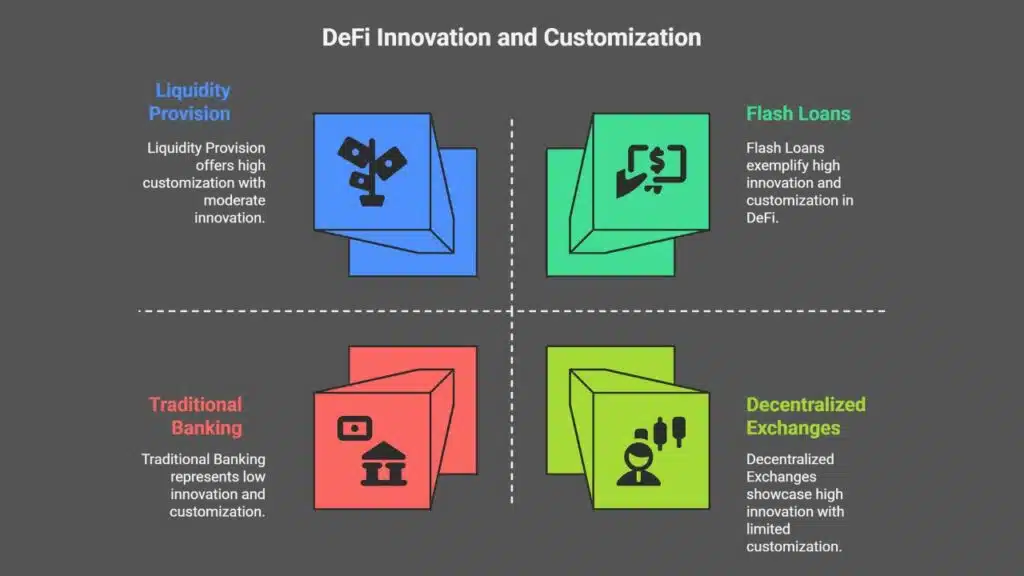
DeFi opens doors for endless creativity. With smart contracts, developers build new tools fast, like decentralized exchanges or prediction markets, without asking for permission.
Open-source code lets anyone improve existing projects, leading to rapid growth. Imagine apps that mix lending, trading, and gaming—all on one platform. The freedom to experiment pushes boundaries daily.
Users also get custom financial solutions. Need a loan? Flash loans settle in seconds with no paperwork. Want passive income? Become a liquidity provider and earn through yield farming.
Unlike banks, DeFi protocols adapt to user needs, not the other way around. You pick the rules, from interest rates to collateral types—no middlemen setting limits. Innovation here isn’t just possible; it’s expected.Blockchain technology keeps everything transparent so trust comes built-in.
Global Reach Without Currency Restrictions
DeFi breaks borders. It allows anyone with internet access to join financial markets, no matter where they live. Traditional banks often block cross-border transactions or charge high fees, but decentralized finance removes these barriers.
Users can trade digital assets or earn through yield farming without worrying about currency conversions. Cryptocurrency exchanges and DeFi protocols operate 24/7, making cash flow easier worldwide.
No permission is needed—just a crypto wallet and an internet connection and you’re set for global trading.
Opportunities for Passive Income Through DeFi Protocols
DeFi protocols unlock easy ways to earn passive income. Users can lend crypto through platforms like Aave or Compound, earning interest without lifting a finger.
Liquidity providers add funds to decentralized exchanges for smoother trades and get a cut of the fees. Yield farming takes it further by letting users stake assets in smart contracts for higher rewards, often paid in tokens.
No banks needed—just a crypto wallet and internet access.
Takeaways
DeFi is changing the game. It puts power back in your hands, cuts out middlemen, and opens doors to global finance. From lower costs to faster trades, the perks are hard to ignore.
Whether you’re lending crypto or earning passive income, DeFi makes finance work for you. Ready to take control? The future of money is here.
FAQs
1. What makes decentralized finance (DeFi) different from traditional finance?
DeFi runs on blockchain technology, cutting out banks. It uses smart contracts to automate financial transactions, making them faster and cheaper.
2. How does DeFi improve financial security?
Unlike traditional systems that rely on passwords, DeFi uses crypto wallets and open-source code. This reduces vulnerabilities, though security audits are still key.
3. Can DeFi handle cross-border transactions better?
Yes. DeFi protocols enable instant cross-border payments without middlemen. No waiting, no extra fees, just smooth global fintech solutions.
4. What’s yield farming, and why is it popular in DeFi?
Yield farming lets liquidity providers earn rewards by lending crypto assets. It’s like high-interest savings, but with digital assets on decentralized exchanges.
5. Is DeFi only for crypto experts?
Not at all. With user-friendly apps like Coinbase Wallet and Web3 tools, even beginners can trade, stake, or explore decentralized applications easily. No command line needed.