

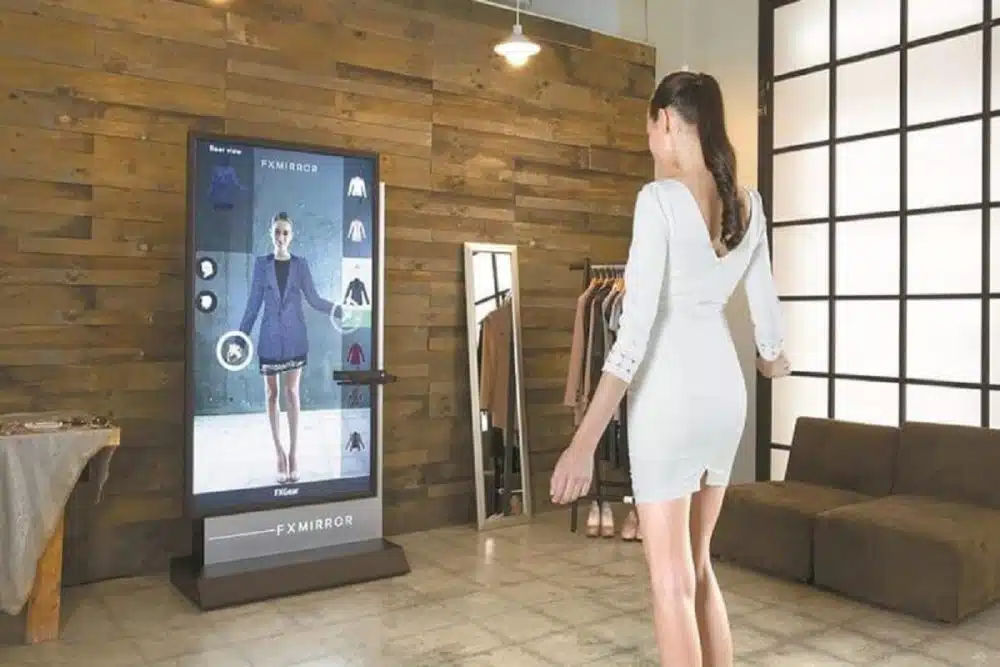
As a part of online marketing, customers’ purchasing patterns have shifted. For their buying needs, people are more and more turning to internet retail businesses.
Meanwhile, this shift in customer behavior is causing a plethora of problems for brands and retailers alike. Companies must surmount several fundamental obstacles with online purchasing to stay profitable in today’s marketplace.
AR clothing try-on is one of the most important ecommerce conversion hacks. Consumers may examine how garments fit personally or a character using virtual try-on technology, enabling us all to practically “try on” things before buying them. This strategy helps to avoid common concerns in traditional e-commerce business units, such as fit concerns and environmental and economic return charges. This report analyzes the many forms of virtual clothing try-on, their benefits and drawbacks, and which businesses use the technique.
What Is A Virtual Try-On, Essentially?
Putting on electronically produced fashion accessories in a computer-mediated environment is a virtual try-on. That implies you could imagine how those goods appear on you or a character, enabling you to determine whether or not they are a nice choice without having to try them on. As a result, virtual try-on technology might allow you to try on items without having to wait for them to arrive or even leave your apartment.
To deliver a realistic experience for users, virtual try-on for clothes integrates image processing techniques, cognitive computing, recommendation algorithms, virtual reality (VR), or augmented reality (AR). When paired with 3D body mapping, AR technology will allow advancements in fashion shop interaction.
What Is A Virtual Try-On, And How Does It Function Properly?
Virtual or AR clothing try-on are available in several different formats. In theory, you have two choices: test virtual clothes at home for an e-commerce transaction or go to a brick-and-mortar store. Since they’re both virtual dressing approaches, they’re effectively the same thing. On the other hand, Distinct approaches may be more suited to different demands.
1. Virtual try-benefits on Minimizing returns.
According to research, clothing on e-commerce marketplaces had a 26% rate of return. The industry’s returns are at an all-time high, with e-commerce expected to grow by 38% by 2021.
Many online shoppers admit to purchasing various copies of the same product to find the best fit, adding to the $900 million in refunds experienced by the e-commerce apparel industry every year.
Consumers may visualize themselves in various designs and dimensions before purchasing augmented reality clothing try-on software, which significantly reduces costly return rates.
2. Customization is being improved.
It’s no wonder that shoppers can not only solve size, fitting, and aesthetic concerns, but they can also discuss alternatives, make alterations, and try on a more significant number of things in a more petite time frame, leading to higher conversion and expenditure. Consumers may utilize augmented reality to see various personalization options and develop something that suits their look and character.
3. Try on with no touching.
Following the COVID-19 pandemic, it’s likely that some individuals would be hesitant to put on clothing in dressing rooms. Consumers may desire new products even after things return to their original because once adjusted, behaviors wouldn’t be the same as it ever was.























