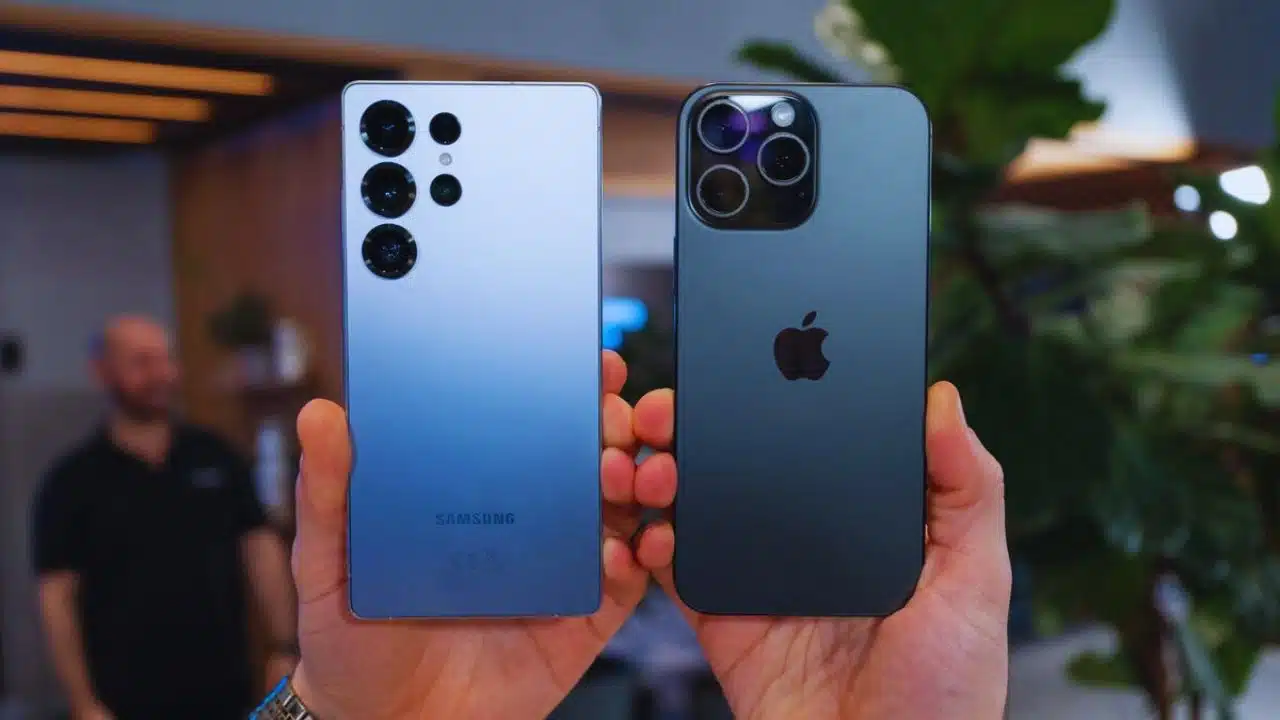
Apple is projected to overtake Samsung Electronics as the world’s largest smartphone maker by volume for the full year of 2025, a critical shift that signals the definitive end of Samsung’s 14-year reign atop the mobile hierarchy.
In a landmark shift for the consumer electronics industry, new intelligence released Wednesday by Counterpoint Research indicates that Apple is on track to capture a 19.4% global market share by the end of 2025. This projection places the Cupertino giant ahead of Samsung in raw unit shipments for a full calendar year—a feat Apple has historically traded for profit margins, but now appears to have conquered on both fronts.
While Samsung reclaimed the quarterly lead earlier in 2025 following the launch of its Galaxy S25 series, the sheer velocity of the iPhone 17 “supercycle” in the second half of the year has reshaped the landscape. Analysts now suggest this is not a temporary blip, but the start of a new era where Apple holds the volume crown through at least 2029.
Quick Take: The 2025 Market Shift
-
The Headline Number: Apple is forecast to hit 19.4% market share, surpassing Samsung’s projected 18-19% range for FY2025.
-
The Growth Gap: Apple is growing at 10% YoY, while Samsung is seeing sluggish growth of 4.6%, largely due to competition from Chinese rivals in the budget sector.
-
The Revenue King: Apple already captures nearly 80% of global smartphone profits; capturing the volume lead consolidates total dominance.
-
The Driver: A massive “replacement cliff”—millions of consumers who bought phones during the 2020–2021 pandemic boom are upgrading now, overwhelmingly choosing iOS.
-
Regional Flip: Apple has hit record market share in India and Southeast Asia, territories once considered Samsung’s impregnable fortresses.
1:How the Hierarchy Flipped
To understand the magnitude of this shift, one must look at the history. Since 2011, when Samsung overtook Nokia, the Korean giant has been the undisputed “Volume King.” Their strategy was omnipresence: a phone for every price point, from the $100 Galaxy A0s to the $1,800 Galaxy Z Fold. Apple, conversely, played the “Premium Game,” rarely selling phones under $400.
However, the global market has fundamentally changed. The “mid-range” market is shrinking, and the “premium” market (phones costing $600+) is the only segment showing significant growth.
The “Premiumization” Phenomenon
Consumers are keeping their phones longer—averaging 3.5 to 4 years in 2025. Because they upgrade less often, they are willing to spend more when they do.
-
Trend: In 2020, premium phones accounted for 25% of global sales. In 2025, that figure has crossed 35%.
-
Impact: This plays directly into Apple’s hands. As users abandon the budget segment, they migrate up the value chain, often skipping mid-range Androids to buy entry-level iPhones (like the iPhone 16 or SE 4) or the flagship iPhone 17.
2. The Catalyst: The iPhone 17 & “Apple Intelligence”
The data from Q3 and Q4 2025 highlights a specific catalyst: the iPhone 17 series.
While critics initially called Apple’s entry into Generative AI “late,” the integration of Apple Intelligence across the entire 2025 lineup has proven to be a masterstroke in driving upgrades.
-
Hardware Parity: Unlike previous years where base models received older chips, the entire iPhone 17 lineup features 12GB of RAM and N-series processors capable of on-device AI.
-
The “Supercycle”: Investment bank Dan Ives of Wedbush Securities labeled this the “biggest upgrade cycle in Apple’s history,” estimating that 300 million iPhones globally had not been upgraded in over 4 years prior to this launch.
“The pent-up demand was a powder keg,” says IDC analyst Nabila Popal. “By delaying the big AI features until 2025, Apple ensured that when the features arrived, the hardware upgrade was mandatory, driving massive unit volume in Q4.”
3. The “Sandwich Effect”: Why Samsung is Sliding
While Apple is winning at the top, Samsung is being attacked from the bottom. This phenomenon is known in the industry as the “Sandwich Effect.”
The Attack from Below (Xiaomi, Transsion, Vivo)
In markets like Africa, Latin America, and Southeast Asia, Samsung is losing ground to aggressive Chinese manufacturers.
-
Transsion Holdings (Tecno/Infinix): Has effectively cornered the African market with high-spec, low-cost devices.
-
Xiaomi: Has successfully targeted the “flagship killer” segment (phones with high specs but lower prices than the Galaxy S series).
Because Samsung relies on these massive volumes of low-margin phones to keep its “Volume King” title, losing share to Xiaomi impacts their total numbers significantly more than it impacts their profits.
The Stagnation of Foldables
Samsung bet its future on foldable phones (Z Fold/Flip series). While they lead this niche, foldables still represent less than 2% of the global market in 2025. They have not yet become the mainstream volume driver Samsung needed to offset losses in the budget sector.
4. Regional Battlegrounds: The Fall of the Fortresses
The 2025 data shows a startling geographic shift. Apple is no longer just a “Western” phenomenon.
India: The New Engine
Perhaps the most damaging blow to Samsung is occurring in India. Once a Samsung stronghold, Apple has aggressively expanded its manufacturing and retail footprint in the country.
-
Statistic: Apple’s volume share in India hit 9% in Q3 2025, a historic high, while its value share (revenue) in the country tops 28%.
-
Strategy: By manufacturing the iPhone 17 Pro locally in India from day one, Apple avoided high import tariffs, making the devices slightly more accessible to the growing Indian upper-middle class.
China: Holding the Line
Despite a resurgence of “nationalist buying” favoring Huawei, Apple has stabilized its position in China in late 2025. Frequent price discounts on platforms like JD.com and Tmall during “Singles Day” (11.11) helped move millions of iPhone 16 and 17 units, preventing the collapse many analysts feared.
| Region | Market Trend (2025) | Winner |
| North America | Continued Consolidation | Apple (Dominant) |
| Western Europe | Slow Growth, Premium Shift | Apple |
| India | Rapid Premiumization | Apple (Growth Leader) |
| Latin America | Budget Competition | Samsung / Xiaomi |
| Africa | Low-End Volume War | Transsion / Samsung |
5. Industry Expert Voices
We spoke to supply chain insiders to verify the production signals behind these forecasts.
Ming-Chi Kuo, Supply Chain Analyst (Paraphrased):
“Supply chain orders for iPhone 17 components have not seen the usual Q1 cuts we expect. This indicates Apple anticipates demand to sustain well into early 2026. Conversely, Samsung Display has slightly lowered its utilization rate for Galaxy A-series panels, confirming a slowdown in their budget volume.”
Counterpoint Research Director, Jeff Fieldhack (Direct Quote):
“The stickiness of the iOS ecosystem is the ultimate moat. Once a family has an iPhone, a Watch, and shares an iCloud subscription, the barrier to switching back to Android is incredibly high. In 2025, we are seeing the lowest Android-to-iOS churn rate in history, but a high rate of Android users switching to iPhone.”
6. What This Means for the Future (2026-2029)
If these projections hold, the mobile landscape is entering a period of consolidation.
-
Samsung’s New Strategy: Samsung is likely to stop chasing volume for vanity’s sake. Expect them to cut clutter in the Galaxy A series and focus heavily on the S26 and Fold lines to protect profitability rather than market share.
-
The “Slim” Future: Rumors of an “iPhone 17 Air” or “Slim” model arriving mid-cycle or in 2026 suggest Apple is looking to disrupt form factors again, potentially challenging Samsung’s design leadership.
-
Android Fragmentation: With Samsung weakening, the Android market becomes more fragmented. Google (Pixel) and Chinese OEMs will fight fiercely for the non-Apple consumer, likely leading to aggressive pricing wars that benefit consumers.
Conclusion: The Completed Climb
For 14 years, industry observers would say, “Samsung sells more, but Apple earns more.” That distinction allowed both companies to claim victory.
In 2025, that comfortable truce is over. Apple has effectively scaled the final peak. By capturing the volume lead while maintaining high prices, Apple has achieved a level of market dominance that is rare in the history of consumer electronics. As we look toward 2026, the burden of proof shifts to Samsung: Can they innovate their way back to the top, or is the era of the Galaxy fading into the sunset?