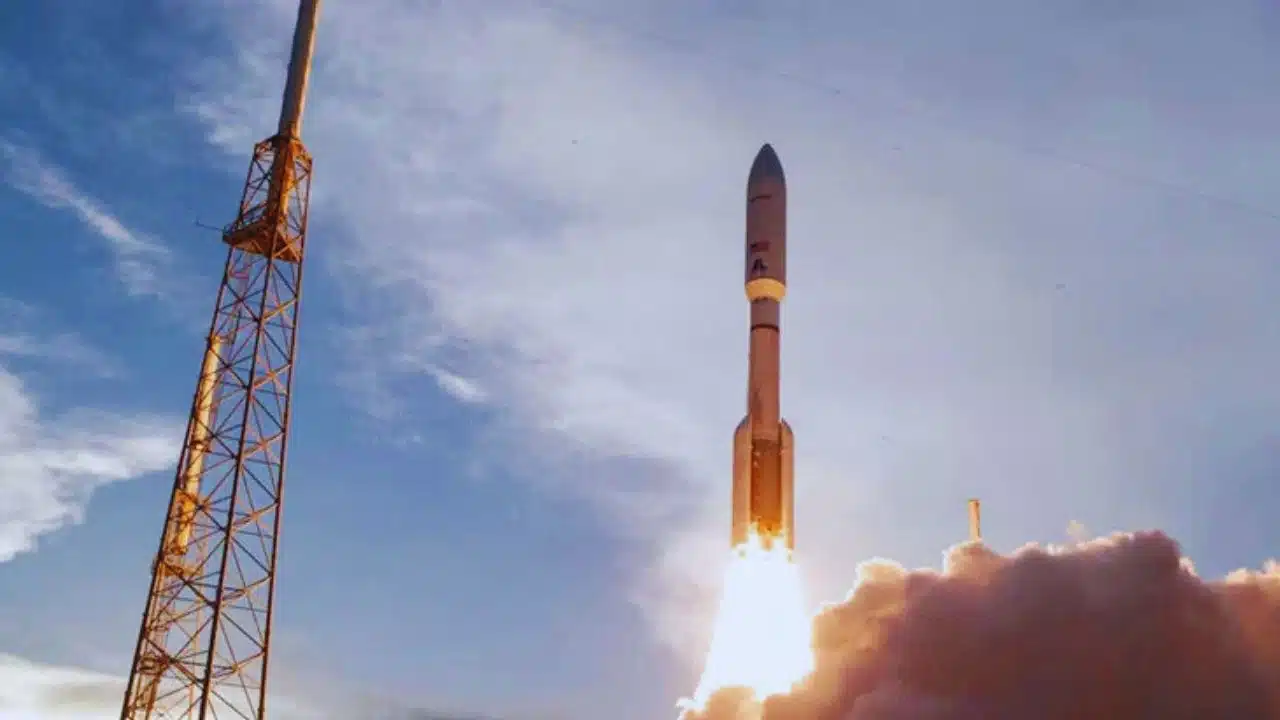
Amazon officially launched its first full batch of Project Kuiper satellites on Monday, April 28, 2025, marking a bold step into the satellite internet sector and setting up a direct rivalry with SpaceX’s Starlink, the dominant player in the market.
A New Era for Amazon: Project Kuiper Atlas 1 Takes Flight
After a delay due to unfavorable weather conditions, Amazon’s long-awaited Project Kuiper launch finally took place on Monday evening from Cape Canaveral Space Force Station in Florida. The mission, named Kuiper Atlas 1 (KA-01), lifted off at 7:01 PM local time (2301 GMT) aboard a United Launch Alliance (ULA) Atlas V rocket, successfully deploying 27 operational satellites into low Earth orbit (LEO).
This is Amazon’s first major deployment following two successful prototype satellite launches in late 2023, which helped the company validate its technology in space.
The ULA rocket – a collaboration between aerospace giants Boeing and Lockheed Martin – carried the satellites to an orbital altitude of approximately 400 miles (630 kilometers) above Earth.
According to ULA and Amazon, weather conditions were about 75% favorable at the time of launch, allowing the mission to proceed without issues.
What is Project Kuiper?
Project Kuiper is Amazon’s $10 billion satellite initiative aimed at creating a global broadband internet network, especially to reach underserved and remote communities. The project intends to launch a total of 3,236 satellites into LEO to compete directly with Elon Musk’s Starlink and other satellite internet ventures like OneWeb (UK/Europe) and China’s Guowang constellation.
Amazon describes the project as part of its long-term commitment to closing the global digital divide, offering affordable, fast, and reliable internet across the globe, from rural towns in the U.S. to remote areas in developing countries.
According to an official statement from Amazon, services are expected to go live by the end of 2025.
Competing with Starlink: The Industry Leader
Amazon’s entry comes at a time when SpaceX’s Starlink, which began launching satellites in 2019, has become the clear leader in satellite internet.
As of April 2025:
-
Starlink has deployed over 8,000 satellites, with more than 7,000 active.
-
It serves 4.5 to 5 million customers worldwide, including residential users, businesses, maritime vessels, and military operations.
Starlink’s infrastructure has proven critical in conflict zones and natural disasters. For example:
-
It provided emergency connectivity in Ukraine during the Russian invasion.
-
It restored communication in Morocco following the devastating earthquake of 2023.
Starlink’s strategic importance has even extended into geopolitics, as Elon Musk’s decisions on satellite use in war zones have directly influenced battlefield communications, sparking global debate.
Pricing, Availability, and Amazon’s Promise
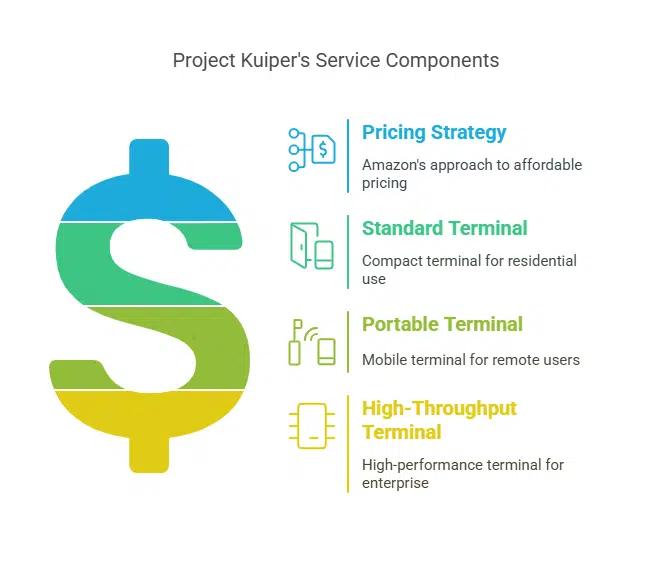
While Amazon has not yet disclosed the pricing for Project Kuiper’s internet service, company executives suggest that the pricing model will likely reflect Amazon’s “affordable-first” strategy, staying in line with its broader brand identity as a cost-effective service provider.
In terms of hardware, Amazon is developing three types of user terminals, including:
-
A compact standard terminal for residential users.
-
A portable version for mobile and remote users.
-
A high-throughput terminal for enterprise and government customers.
All terminals will be powered by Amazon-designed chips known as Prometheus, optimized for high-bandwidth performance.
A Race Against Time: FCC Deadlines and Launch Plans
To comply with the U.S. Federal Communications Commission (FCC) licensing conditions, Amazon must:
-
Deploy at least 50% of its 3,236 satellites by July 2026.
-
Complete the entire constellation by July 2029.
To meet these targets, Amazon has booked more than 80 rocket launches across multiple providers:
-
United Launch Alliance (ULA)
-
Arianespace (France)
-
Blue Origin – Jeff Bezos’s own aerospace company
-
SpaceX – Surprisingly, despite being a competitor
Amazon’s aggressive schedule reflects the urgency to roll out services globally and secure market share in a rapidly evolving sector.
Addressing Concerns: Space Congestion and Light Pollution
The rapid growth of LEO satellite networks has raised important environmental and scientific concerns, particularly regarding:
-
Orbital congestion and risk of collisions
-
Interference with astronomical observations
-
Space debris management
To mitigate these issues, Amazon has collaborated with astronomers and regulators. Notably, the new Kuiper satellites are equipped with:
-
Special anti-reflective coatings to reduce their brightness
-
Designs that minimize visibility from Earth’s surface
Astronomers have welcomed these steps but warn that increased satellite launches—regardless of best practices—still threaten long-exposure observations and ground-based telescopes.
Global Satellite Internet: A Crowded Battlefield
Beyond Starlink and Project Kuiper, the satellite internet race now includes:
-
OneWeb: Backed by the UK government and Bharti Global
-
Telesat Lightspeed: A Canadian satellite project focusing on enterprise customers
-
Guowang: China’s ambitious satellite network, aligned with state interests
Each competitor is racing to dominate low-latency internet delivery in sectors ranging from maritime shipping, aviation, disaster response, defense, and education.
Political Implications: Tech Giants in Space Diplomacy
The increasing role of private corporations in global connectivity has created new geopolitical dynamics. Elon Musk’s dual roles as a tech entrepreneur and informal geopolitical actor have come under scrutiny, especially concerning:
-
His interactions with Ukrainian officials
-
Public commentary on the Israel-Palestine conflict
-
Alleged influence over U.S. and global policy via Starlink
Project Kuiper’s expansion may bring similar scrutiny upon Amazon and Jeff Bezos, especially if the company becomes a significant connectivity provider in politically sensitive regions.
What This Means for the Future
Amazon’s successful launch of its first Project Kuiper batch marks a major turning point not just for the company, but for the future of global internet access. As more satellites are launched and new services come online, consumers around the world — especially in rural, remote, and underserved areas — may soon have access to affordable, fast, and reliable broadband powered from space.
However, with benefits come challenges: space traffic management, political entanglements, and environmental impacts must be addressed as the skies above Earth become ever more crowded.
Project Kuiper may be late to the game, but with Amazon’s resources, global footprint, and logistical expertise, it could still reshape the industry in a way only a few players can.