

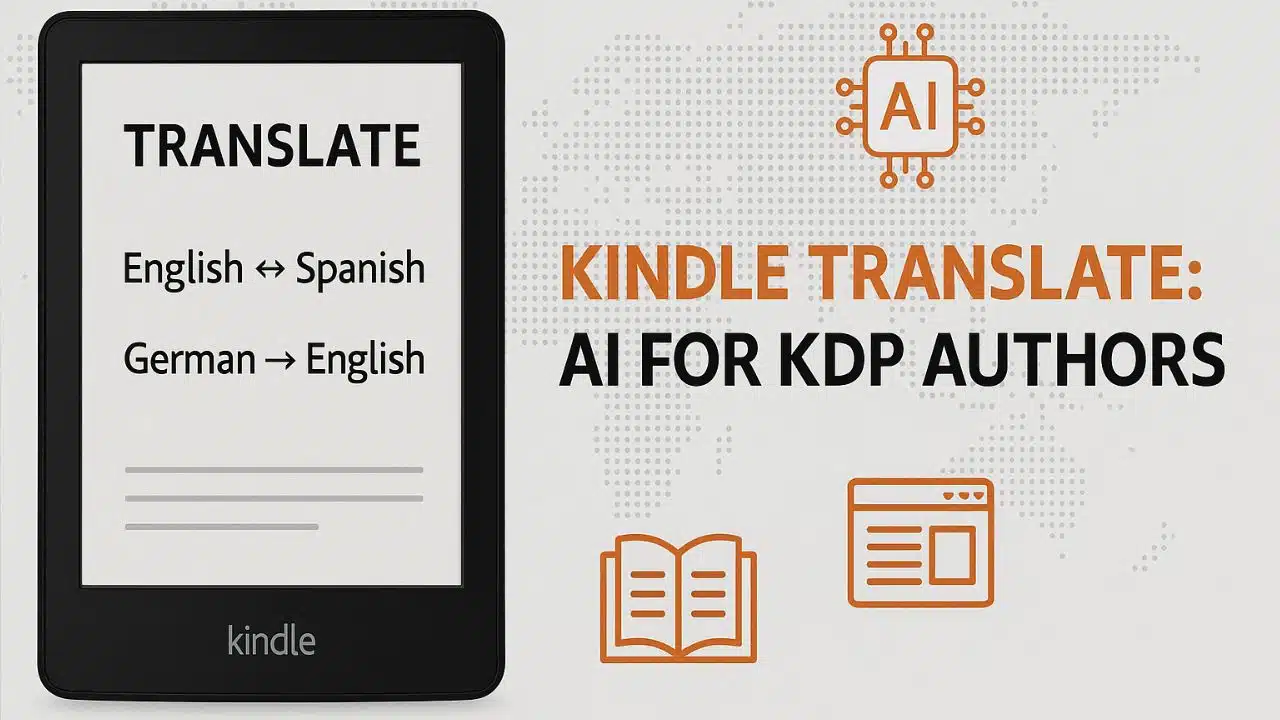
Amazon has introduced Kindle Translate, an AI-powered translation feature built into Kindle Direct Publishing (KDP). The service is in beta and currently supports English ↔ Spanish and German → English. Amazon’s stated rationale is straightforward: less than 5% of titles on Amazon are available in more than one language, leaving a large share of books effectively locked to a single market. By lowering translation costs and setup friction, Amazon aims to help independent and self-published authors reach readers across additional storefronts without needing a separate production pipeline for each language.
At launch, the service emphasizes transparency and control. Translated editions will be clearly labeled as “Kindle Translate” so readers know they’re viewing AI-assisted translations. Authors can preview the translation before publishing, and they can decline it if the output isn’t ready for release. During the beta period, Amazon is offering the translation feature at no cost to participating authors, which removes a common barrier for small teams and first-time publishers who struggle to fund professional translation upfront.
Amazon notes that AI translation can introduce errors, and it acknowledges the limits of AI for nuance-heavy writing. While the company says outputs are “automatically evaluated for accuracy” before publication, it has not provided a detailed description of that process. Because of that, authors who don’t speak the target language—or who write in categories where tone and style are crucial—should still plan for human review to ensure quality. This caution is especially relevant for fiction, poetry, literary nonfiction, and any book where regional idiom, voice, or cultural references carry the meaning.
How Kindle Translate works for authors and readers
Inside the KDP portal, authors can opt to create a translated edition from an existing manuscript. The workflow follows familiar KDP steps:
- Select language pair from the beta set.
- Generate and preview the AI translation to evaluate whether it’s publication-ready.
- Set pricing for the translated edition just as you would for any other KDP title.
- Publish the translated version as a distinct product page that’s flagged as a “Kindle Translate” title.
Authors retain the ability to manage translated editions alongside their original titles. This includes updating metadata, adjusting prices, and tracking performance. Amazon also confirms that translated books can be enrolled in KDP Select under the usual terms and will be included in Kindle Unlimited if the author opts in. That means translated editions can benefit from page-read economics and recommendation systems in the regions where they’re available.
On the reader side, product pages for AI-translated books carry a visible label and allow sample previews, so readers can gauge translation quality before they buy or borrow. This disclosure is intended to build trust and set expectations—particularly important in genres where style drives value. Transparency also helps readers who actively prefer human translations or who want to support specific translators make informed choices.
Benefits, trade-offs, and what to do next
Benefits. For many indie authors, the biggest advantages are speed and cost. Translation has historically required a specialized partner and budget, which can delay or prevent international releases. Kindle Translate removes upfront translation fees during beta and places the tool directly in the KDP pipeline, letting authors experiment with backlist titles first and expand to new markets without overhauling their workflows. The English–Spanish pair in both directions covers a large global audience, and German → English opens a path for German-language authors to reach English-speaking markets.
Trade-offs. AI translation is not a universal replacement for human experts. It may miss idioms, cultural references, humor, and voice, which are central to many categories. Amazon’s undetailed accuracy checks should not be treated as a full editorial review. Authors who don’t speak the target language should still plan a human validation pass—even a focused proofread—before release. Readers will see the “Kindle Translate” label, and negative reviews tied to translation quality can harm long-term discoverability, so a light post-editing step is prudent.
Practical next steps for authors
- Prioritize candidates: Start with nonfiction or voice-light titles where clarity matters more than literary style. Then test select fiction titles with a human post-editor.
- Inspect the preview carefully: Check names, dates, measurements, quotations, and chapter headings. Ensure the table of contents, captions, and front/back matter render correctly in the target language.
- Localize metadata: Beyond the manuscript, refine title, subtitle, description, and keywords in the target language to improve search and relevance.
- Track performance: Monitor sales, Kindle Unlimited page reads, return rates, and reviews by marketplace. Use early data to decide which additional titles justify translation.
- Plan for quality: If you lack in-house language expertise, line up a native-speaker editor for a quick quality pass—especially for genres where voice and nuance matter most.
Amazon indicates that more language pairs will be added over time and that the feature is still beta—both availability and pricing could evolve. As the tool improves, expect tighter integration with KDP metadata workflows and recommendation systems. For now, Kindle Translate offers a low-barrier way to test multilingual demand, provided authors combine it with sensible editorial checks to maintain reader trust.
The Information is Collected from The Verge and Engadget.





















