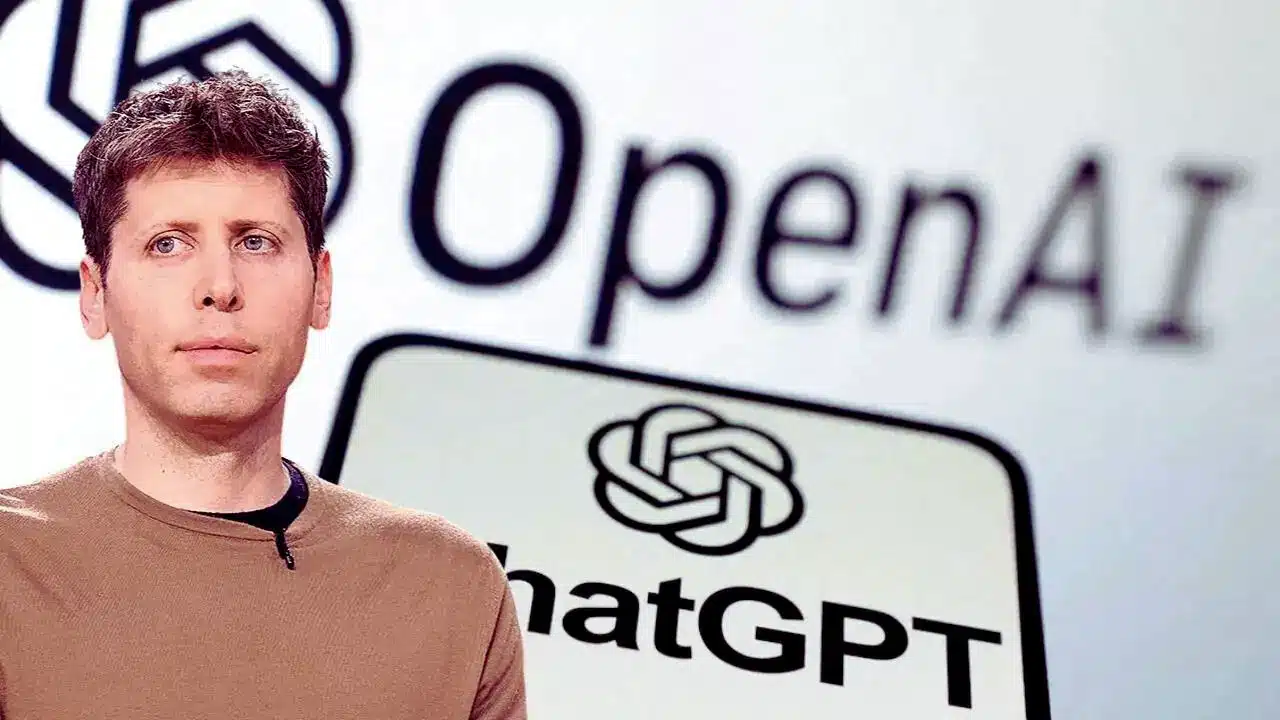
OpenAI CEO Sam Altman has described Apple, not Google, as the company’s most significant long‑term rival in artificial intelligence, arguing that the next phase of the AI race will be decided through devices rather than software alone.
His comments come as OpenAI faces growing pressure from Google’s Gemini models and concentrates resources on strengthening ChatGPT and building new AI hardware.
Lead and context
Altman’s remarks were made during a private lunch with journalists in New York in early December 2025, where he argued that OpenAI’s main long‑term competition will come from Apple’s control of devices and ecosystems rather than Google’s AI models. According to reports summarizing that meeting, he framed the contest as a battle over how AI is embedded into hardware people use every day, not just a race to produce the most powerful cloud‑based model. The comments followed an internal “code red” directive at OpenAI, in which Altman ordered teams to pause side projects for several weeks and focus on improving ChatGPT as Google’s Gemini 3 model gained ground in benchmarks and user adoption.
Altman’s shift in rhetoric comes against the backdrop of a deep partnership between Apple and OpenAI, which began when Apple announced it would bring ChatGPT into its operating systems and Siri at its developers conference in June 2024. Apple later rolled out software updates in late 2024 that allowed Siri to pass complex queries to ChatGPT, putting OpenAI’s technology in front of hundreds of millions of device owners while promising strict privacy safeguards and on‑device controls. This makes Apple simultaneously a key distribution partner and, in Altman’s view, the company best positioned to challenge OpenAI’s ambitions in AI‑powered consumer experiences.
Strategy: Apple versus Google
Altman’s argument is that whoever controls the AI‑first hardware that people carry and wear every day will ultimately control how consumers experience advanced models, which puts Apple’s tightly integrated devices at the center of the long‑term battle. OpenAI has already invested heavily in this direction, including a multibillion‑dollar acquisition in May 2025 of an AI device startup co‑founded by former Apple design chief Jony Ive, and the recruitment of senior Apple hardware figures such as Tang Tan and Evans Hankey to design a “family” of AI‑centric products. Reports indicate the combined team has sketched out more than a dozen serious product ideas and is targeting a first wave of devices around late 2026, aimed at reimagining everyday human‑computer interaction beyond the smartphone form factor.
To support this push, OpenAI has hired more than 40 hardware engineers from Apple in recent weeks, spanning disciplines such as cameras, wearables, robotics and audio technology. Analysts and insiders say this talent migration has weakened parts of Apple’s internal AI efforts, even as the company explores external models like Google’s Gemini to power future upgrades to Siri and its “Apple Intelligence” services. The result is a complex three‑way dynamic in which Apple and OpenAI are partners on current products, potential rivals in future device categories, and both are still responding to Google’s rapid advances in model performance.
Although Altman names Apple as the primary long‑term rival, Google remains OpenAI’s most direct challenger in the near term because its Gemini 3 model has overtaken ChatGPT on prominent public leaderboards and is quickly adding users. OpenAI’s internal data reportedly still shows its upcoming model generation ahead of Gemini, but Altman’s code‑red memo underscores how seriously the company takes Google’s gains and how determined it is to protect ChatGPT’s lead among hundreds of millions of weekly users. In this framing, Google is the immediate competitive threat in cloud AI services, while Apple is the strategic threat in owning the devices and platforms where those services will live.
Timeline, outlook and sources
Altman’s comments fit into a broader two‑year shift in which Apple, OpenAI and Google have each tried to reposition themselves at the center of consumer AI. The table below summarizes key milestones that set the stage for Altman calling Apple, not Google, OpenAI’s biggest rival.
| Date / period | Event | Key players | Significance |
| June 2024 | Apple announces a partnership to integrate ChatGPT into iOS, iPadOS and macOS, allowing Siri to route complex queries to OpenAI’s model. | Apple, OpenAI | Marks Apple’s public entry into generative AI via a high‑profile OpenAI deal, giving ChatGPT access to a vast device base. |
| December 2024 | Apple releases software updates that activate ChatGPT integration with Siri and other apps for supported iPhones, iPads and Macs. | Apple, OpenAI | Turns the partnership into a live consumer feature, embedding OpenAI’s technology into everyday Apple user workflows. |
| May 2025 | OpenAI acquires an AI hardware startup co‑founded by former Apple designer Jony Ive for around $6.5 billion, bringing in key Apple hardware veterans. | OpenAI, Jony Ive, former Apple execs | Signals OpenAI’s commitment to building its own AI devices and competing directly in hardware design. |
| Late 2025 | Google’s Gemini 3 surpasses ChatGPT on an influential AI leaderboard, prompting Altman’s internal code‑red memo to refocus teams on improving core ChatGPT quality. | OpenAI, Google | Highlights intense model competition and triggers OpenAI’s short‑term sprint to stay ahead of Google in benchmarks and user perception. |
| Early December 2025 | At a lunch with journalists in New York, Altman identifies Apple as OpenAI’s main long‑term competitor and stresses that AI battles will be won through devices, not software alone. | OpenAI, Apple | Publicly reframes the competitive map, positioning Apple’s device ecosystem as the ultimate threat even while Google applies immediate pressure. |
| Target: late 2026 | OpenAI and its ex‑Apple hardware team aim to launch new AI‑centric devices that rethink how people interact with computers beyond phones and PCs. | OpenAI, former Apple designers and engineers | Sets a timeline for when OpenAI expects to challenge Apple more directly on the hardware front. |
Looking ahead, the AI race is likely to hinge on how seamlessly advanced models are woven into hardware, operating systems and daily habits, rather than on raw model scores alone. Altman’s decision to single out Apple as OpenAI’s biggest rival underlines a belief that whoever best marries AI with devices and design will shape the next era of computing, even as Google’s Gemini keeps the pressure on OpenAI to keep improving its core technology.