

For years, the narrative has been the same: if you want to shop sustainably, you have to be rich. We’ve all scrolled past the $120 organic cotton t-shirts and $250 hemp jeans, sighed, and quietly tabbed back over to a fast fashion site because—let’s be real—rent is due.
But the landscape of ethical fashion has shifted dramatically in 2024 and 2025. A new wave of brands has emerged with a mission to democratize sustainability, proving that you don’t need a luxury budget to build an ethical wardrobe.
This guide isn’t just a list; it’s a deep dive into 7 affordable sustainable clothing brands that are genuinely ethical. We are talking about price points comparable to Zara, H&M, or Gap, but without the human rights violations and environmental devastation.
The “Affordability” Paradox: Why Is Ethical Fashion Usually Expensive?
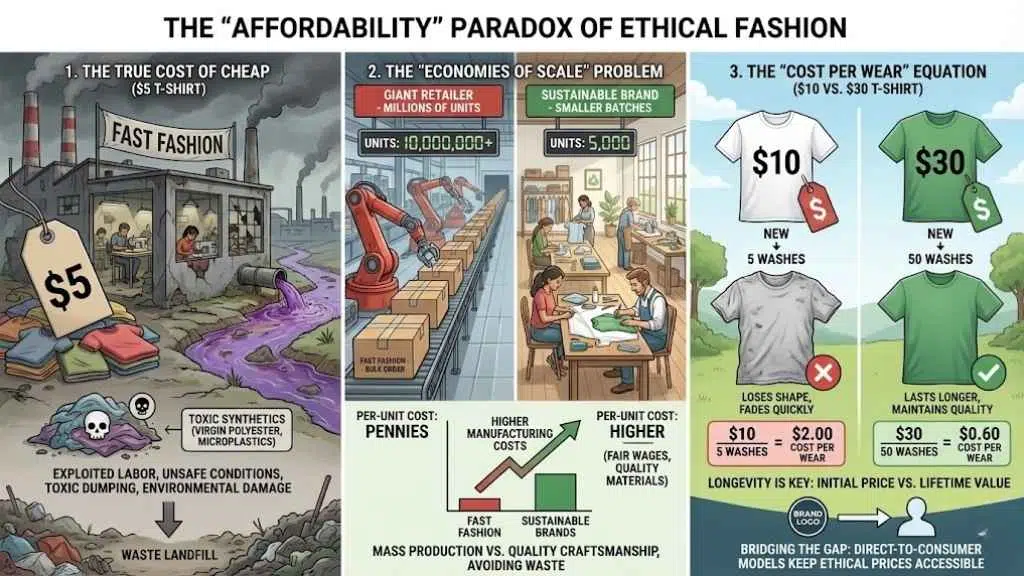
Before we look at the brands, it is crucial to understand what you are paying for when you buy a $5 t-shirt versus a $30 one. Understanding this helps you spot the difference between a good deal and a “too good to be true” scam.
1. The True Cost of Cheap
When a t-shirt costs $5, the economics simply do not work unless someone, somewhere, is being exploited. Fast fashion relies on:
- Slave or Sweatshop Labor: Paying garment workers pennies per hour in unsafe conditions.
- Toxic Synthetics: Using cheap, petroleum-based fabrics like virgin polyester that shed microplastics.
- Zero Waste Management: Dumping toxic dyes directly into local rivers.
2. The “Economies of Scale” Problem
Sustainable brands often produce in smaller batches to avoid waste. Giant retailers order millions of units at once, driving their per-unit cost down to pennies. Ethical brands order in the thousands, meaning their manufacturing costs are naturally higher.
3. The “Cost Per Wear” Equation
Affordability is not just about the price tag; it’s about longevity.
- Fast Fashion Tee: Costs $10. Loses shape after 5 washes. Cost per wear: $2.00.
- Sustainable Tee: Costs $30. Lasts for 50 washes. Cost per wear: $0.60.
The brands listed below have managed to bridge this gap. They use direct-to-consumer models to cut out the middleman, keeping prices low while maintaining high ethical standards.
How We Defined “Affordable” and “Sustainable”
To ensure this list is practical and trustworthy, every brand selected had to meet specific criteria. We didn’t just pick brands that say they are green; we looked for receipts.
| Criteria | Standard |
| Affordability ($) | Basics under $30; Denim/Sweaters under $60. |
| Affordability ($$) | Basics $30–$50; High-quality pieces under $100. |
| Materials | Organic Cotton, Hemp, Tencel™, Recycled Fibers (No virgin polyester). |
| Labor Ethics | Fair Trade Certified™, WRAP, or B Corp status. |
| Transparency | Publicly disclosed factory lists and supply chains. |
Top 7 Affordable Sustainable Clothing Brands
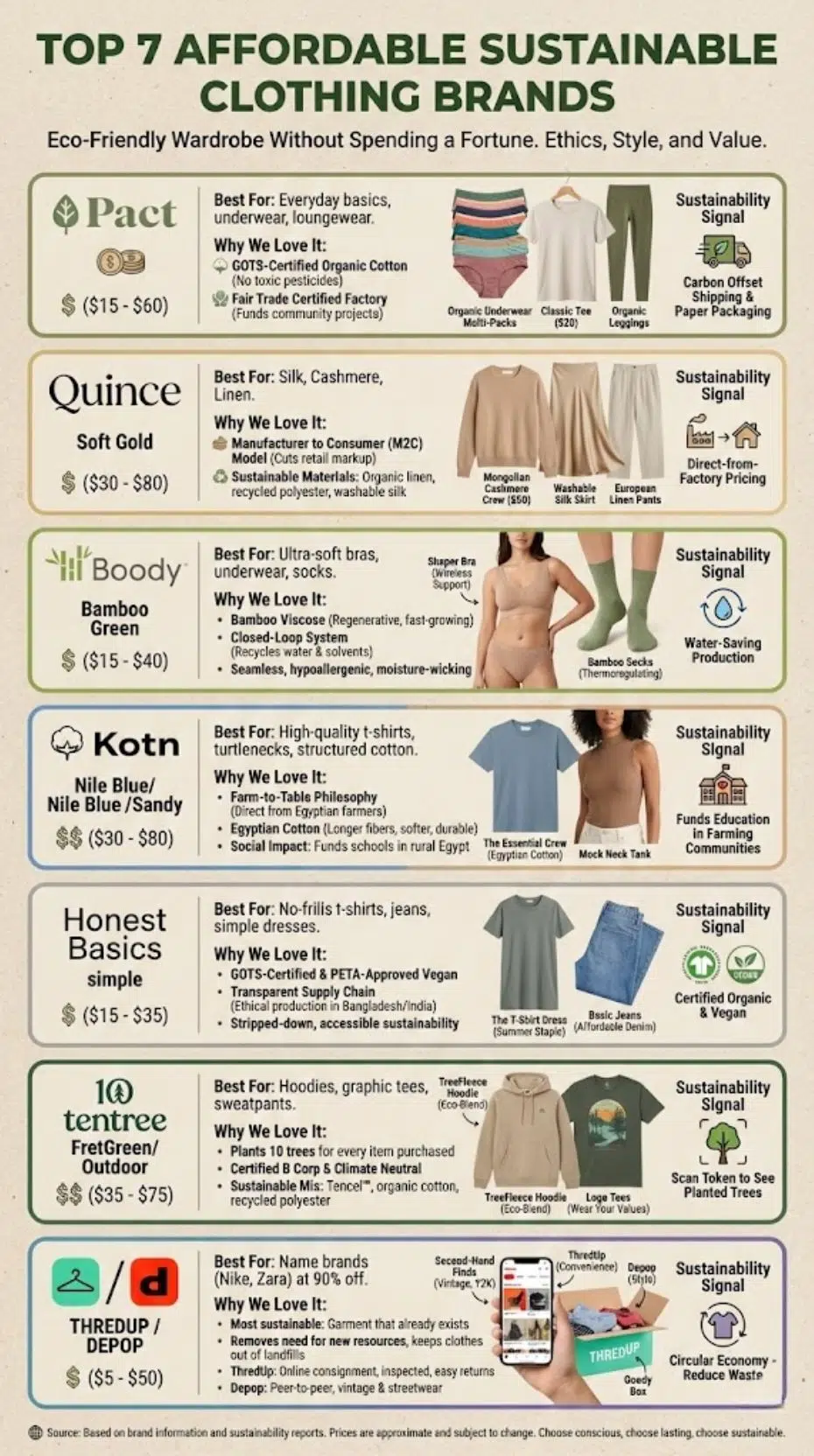
Finding affordable sustainable clothing brands that don’t compromise on ethics or style used to be a challenge, but the market has finally caught up to consumer demand. We’ve done the heavy lifting to curate a list of companies that prove you can build an eco-friendly wardrobe without spending a fortune. From organic cotton basics to recycled activewear, here are the best options for conscious consumers looking to save money and the planet simultaneously.
1. Pact (The Organic Cotton King)
Best For: Everyday basics, underwear, and loungewear.
Price Range: $ ($15 – $60)
If you are looking to replace your entire drawer of basics—underwear, socks, undershirts, and leggings—without spending a fortune, Pact is the gold standard. Based in Boulder, Colorado, they have become one of the most recognizable names in affordable eco-fashion.
Why We Love It
Pact is almost entirely focused on GOTS-certified organic cotton. This certification is rigorous; it ensures that the cotton is grown without toxic pesticides and that the people processing it are treated fairly.
They also partner with Fair Trade USA compliant factories. This means that for every product sold, a premium goes back to the workers to fund community development projects like childcare or disaster relief.
Key Items to Try:
- The Classic Tee: Often on sale for around $20, this fits better and feels softer than standard cotton tees.
- Organic Leggings: Thick, opaque, and durable. A solid alternative to synthetic activewear.
- Underwear: Breathable organic cotton is better for hygiene, and Pact sells affordable multi-packs.
Sustainability Signal: Pact allows you to offset the carbon footprint of your shipping at checkout, and they use paper-based packaging instead of plastic poly-mailers.
2. Quince (Luxury for Less)
Best For: Silk, Cashmere, and Linen.
Price Range: $ ($30 – $80)
Quince has disrupted the market with a unique business model: Manufacturer to Consumer (M2C). By shipping goods directly from the factories to your doorstep, they cut out supply chain layers, warehousing costs, and retail markups.
Why We Love It
Quince makes “investment pieces” accessible. Sustainable silk and cashmere are usually reserved for the wealthy, but Quince offers washable silk skirts and Mongolian cashmere sweaters for $50–$60.
While their transparency isn’t as chemically detailed as Pact (they focus more on the “factory direct” narrative), they do prioritize sustainable materials like organic linen, recycled polyester, and mulberry silk.
Key Items to Try:
- Mongolian Cashmere Crew: $50. (Comparable quality usually retails for $120+).
- Washable Silk Skirt: A versatile piece that uses less water and energy to maintain than traditional dry-clean-only silk.
- European Linen Pants: Perfect for summer, made from flax which requires zero irrigation.
Note on Transparency: Quince is great for materials and price, but if your primary concern is strict third-party labor audits (like Fair Trade), they are slightly less transparent than brands like Kotn or Pact.
3. Boody (Bamboo Basics)
Best For: Ultra-soft bras, underwear, and socks.
Price Range: $ ($15 – $40)
If you hate the feeling of stiff cotton or scratchy wool, Boody is the answer. They specialize exclusively in bamboo viscose, a fabric derived from organically grown bamboo.
Why We Love It
Bamboo is a “regenerative” crop. It grows incredibly fast, requires no pesticides, and uses significantly less water than cotton. Boody uses a closed-loop system to process the bamboo, which recycles the water and solvents used in production so they don’t leak into the environment.
Their clothing is seamless, hypoallergenic, and moisture-wicking, making it a fantastic affordable alternative to synthetic activewear or intimate apparel.
Key Items to Try:
- Shaper Bra: Wireless, comfortable support that costs less than most Victoria’s Secret bras.
- Bamboo Socks: These are thermoregulating, keeping feet cool in summer and warm in winter.
4. Kotn (Farm-to-Table Fashion)
Best For: High-quality t-shirts, turtlenecks, and structured cotton.
Price Range: $$ ($30 – $80)
Kotn is a Canadian B Corp that operates with a “farm-to-table” philosophy, but for clothes. They work directly with cotton farming families in the Nile Delta of Egypt, cutting out the middlemen to ensure the farmers get a fair price and the customer gets a lower cost.
Why We Love It
The quality of Egyptian Cotton is legendary—it has longer fibers, making it softer and more durable than standard cotton. Kotn’s pieces feel substantial and luxurious.
Kotn is also deeply invested in social impact. They have built multiple schools in rural Egypt to combat the illiteracy rates in the farming communities they work with. When you buy a shirt, you are literally funding education.
Key Items to Try:
- The Essential Crew: A slightly boxier, more fashionable cut than Pact, made from silky Egyptian cotton.
- Mock Neck Tank: A staple piece that looks professional enough for work but feels like loungewear.
5. Honest Basics (The Budget Option)
Best For: No-frills t-shirts, jeans, and simple dresses.
Price Range: $ ($15 – $35)
Honest Basics was founded with one goal: to make sustainability accessible to everyone. They are based in Europe but ship internationally. They have stripped away everything unnecessary—marketing fluff, complex designs, seasonal trends—to focus on core items.
Why We Love It
They are GOTS-certified and PETA-Approved Vegan. It is rare to find a brand at this price point (t-shirts often under $20) that maintains such high certifications. They are transparent about their supply chain, with production based in Bangladesh and India under strict ethical supervision.
Key Items to Try:
- The T-Shirt Dress: A summer staple that is easy to style and incredibly cheap for organic cotton.
- Basic Jeans: Honest Basics offers some of the most affordable sustainable denim on the market.
6. Tentree (Eco-Warrior Streetwear)
Best For: Hoodies, graphic tees, and sweatpants.
Price Range: $$ ($35 – $75)
Tentree is for the outdoor lover who wants their clothes to do good. As the name suggests, they plant 10 trees for every item purchased. To date, they have planted over 100 million trees.
Why We Love It
Tentree uses a mix of sustainable materials, including Tencel™, organic cotton, and recycled polyester. They are a Certified B Corp and Climate Neutral Certified.
Their style is distinctively “Pacific Northwest”—think cozy hoodies, nature-inspired graphics, and joggers. It’s perfect for hiking, camping, or just lounging.
Key Items to Try:
- TreeFleece Hoodie: Made from a blend of Tencel, organic cotton, and recycled polyester. It is incredibly soft and durable.
- Logo Tees: Wear your values on your sleeve (literally).
Tech Tip: Each item comes with a unique code (a “token”) that you can scan to see exactly where your 10 trees were planted.
7. ThredUp / Depop (The Second-Hand Wildcard)
Best For: Name brands (Nike, Madewell, Zara) at 90% off.
Price Range: $ ($5 – $50)
The most sustainable garment is the one that already exists. Buying second-hand removes the need for new resources entirely and keeps clothes out of landfills.
ThredUp (For Convenience)
ThredUp is an online consignment store. You don’t deal with individual sellers; you buy directly from ThredUp, which has inspected and photographed the items.
- Pros: huge inventory, easy returns, “Goody Box” styling service.
- Cons: You can’t ask questions about fit to a previous owner.
Depop (For Style)
Depop is like Instagram for thrifting. It’s peer-to-peer, meaning you buy from other people.
- Pros: amazing for vintage, Y2K trends, and unique streetwear.
- Cons: Shipping can be slower, and returns depend on the individual seller.
Affordable Sustainable Clothing Brands: Price vs Ethics
| Brand | Average Tee Price | Best For | Top Certifications |
| Pact | $20 – $25 | Basics & Underwear | GOTS, Fair Trade |
| Quince | $20 – $30 | Cashmere & Silk | Oeko-Tex, BSCI |
| Boody | $20 – $40 | Bamboo Intimates | WRAP, Ecocert |
| Kotn | $30 – $45 | Elevated Cotton | B Corp, Direct Trade |
| Honest Basics | $15 – $25 | The absolute cheapest | GOTS, Vegan |
| Tentree | $35 – $45 | Hoodies & Active | B Corp, Climate Neutral |
| ThredUp | $5 – $20 | Everything | Circular Economy |
Tips for Building a Sustainable Wardrobe on a Budget
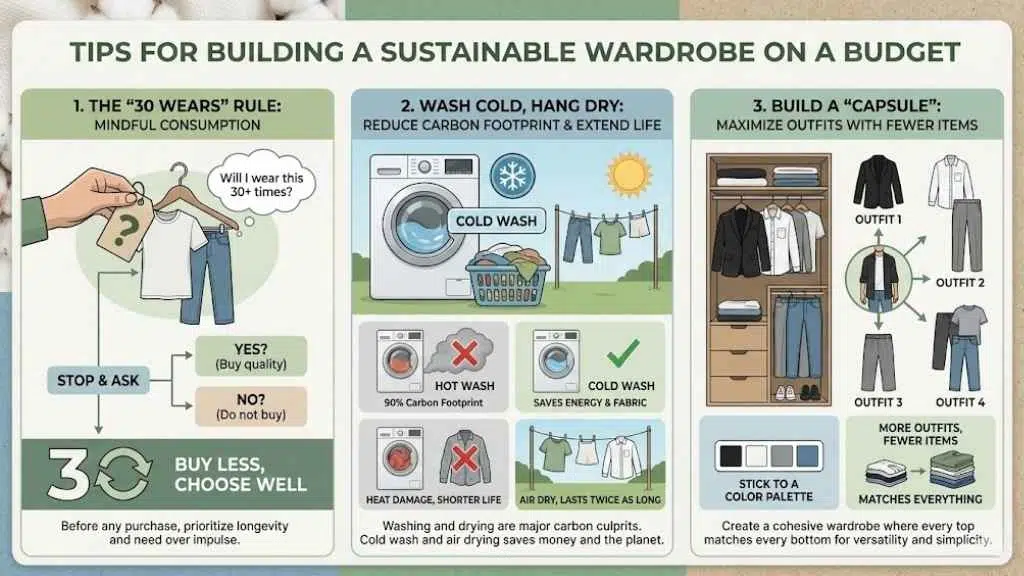
Switching to ethical fashion doesn’t mean throwing out your old clothes. That would be wasteful! Here is how to transition slowly without going broke.
1. The “30 Wears” Rule
Before buying anything (even from a sustainable brand), ask yourself: “Will I wear this at least 30 times?” If the answer is no, do not buy it. Sustainability starts with buying less.
2. Wash Cold, Hang Dry
90% of a garment’s carbon footprint happens after you buy it—in the washing and drying phase.
- Washing in cold water saves energy and prevents fabric from shrinking or fading.
- Air drying prevents heat damage, making your clothes last twice as long. This saves you money on replacements.
3. Build a “Capsule”
Stick to a color palette (e.g., black, white, gray, and denim). This ensures that every top matches every bottom, giving you more outfit combinations with fewer items.
Final Thoughts
Every time you buy a $5 shirt from a fast fashion giant, you are voting for a system that exploits workers and pollutes the planet. Every time you buy from a brand like Pact, Kotn, or Tentree, you are voting for fair wages, clean water, and a better future.
The transition doesn’t have to happen overnight. Start with your next purchase. Whether it’s a pair of socks from Boody or a second-hand jacket from ThredUp, you have the power to change the industry—one affordable, sustainable choice at a time.





















