OpenAI, the renowned artificial intelligence research laboratory, reportedly allocates approximately $700,000 daily to sustain the operations of their groundbreaking language model, ChatGPT.
The price does not encompass additional AI offerings such as GPT-4 and DALL-E2. Currently, the venture is persevering solely due to Microsoft’s substantial $10 billion financial backing.
OpenAI on the Brink of Bankruptcy as ChatGPT Fails
OpenAI, the renowned AI studio that played a pivotal role in initiating discussions about AI among the general public, faces significant challenges that could potentially jeopardize its future.
According to a report, Sam Altman’s AI development studio, known for its AI chatbot ChatGPT, is facing potential bankruptcy as it strives to establish itself as a leading player in generative AI.
OpenAI reportedly incurs a staggering daily expenditure of approximately $700,000 to sustain the operations of its AI service, ChatGPT. In current development, it has come to light that Sam Altman’s OpenAI is experiencing a significant depletion of its financial resources.
In a surprising turn of events, OpenAI’s ambitious efforts to monetize GPT-3.5 and GPT-4 have fallen short, leaving the company unable to reach a break-even point in revenue. Despite their best intentions, OpenAI’s financial situation remains precarious. The current situation is becoming increasingly concerning.
Many people signed up when OpenAI and ChatGPT first launched, but that number has steadily decreased over the past few months. SimilarWeb’s user base decreased by 12 percent, from 1.7 billion to 1.5 billion, between June and July 2023. Users accessing OpenAI’s APIs are not reflected in these numbers, representing ChatGPT website visitors.
The APIs provided by OpenAI are also contributing factors. To create their own AI chatbots, several businesses that discouraged employees from utilizing ChatGPT are now purchasing access to OpenAI’s APIs.
As pointed out by Analytics India Magazine, the catch is that several open-source LLM models are available for use and redistribution without worrying about the license. This means they can be modified to fit the needs of individual businesses and their unique use cases.
Sam Altman vs. Open AI: The Conflict
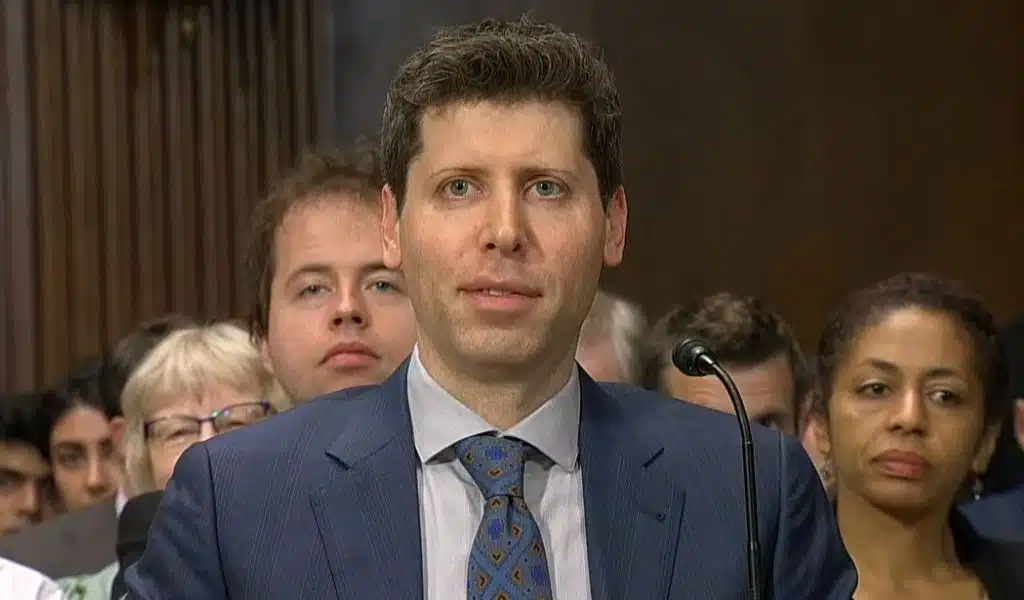
Sam Altman’s recent public pronouncements and OpenAI’s recent move toward profitability suggest several things. OpenAI does, whereas Altman probably wouldn’t. Sam Altman has made multiple public remarks effectively saying that AI, if unfettered by the government, will be harmful. At the same time, OpenAI routinely pumps additional money toward making their GPT LLMs more powerful and clever.
Altman has been a strong advocate for establishing standards for the creation of AI. Many of Altman’s previous predictions about the impact of AI on the labor market have proven accurate.
There are others in the IT industry who would go so far as to claim that Altman is having a Frankenstein moment, where he is feeling guilty about the monster he has created.
However, OpenAI has been exploring alternative methods of monetizing their GPT-4 LLMs. However, it hasn’t been able to turn a profit yet. Since the introduction of ChatGPT, losses have accumulated to $540 million.
OpenAI has been able to stay afloat and operate for now, thanks to the $10 billion investment from Microsoft and other venture capital firms. Despite this, OpenAI’s projected annual revenue of $200 million in 2023 and $1 billion in 2024 looks optimistic in light of its growing losses.
Can OpenAI Afford to Keep ChatGPT Running?
Altman acknowledged in December 2022, just months after launch, that the cost of operating the AI company and ChatGPT was eye-popping high, so the company decided to monetize it. According to reports, OpenAI incurs daily operating expenses of approximately $700,000. Microsoft and other recent investors are currently covering these costs. However, the recurring expenses and OpenAI’s inability to generate sufficient revenue rapidly will create a challenging situation if OpenAI does not turn things around.
Related Read: 4 Key Takeaways from the Speech of Sam Altman
While Google and Meta are frequently cited as OpenAI’s primary competitors, Musk and xAI are often overlooked. Musk’s longstanding involvement with AI is primarily due to Tesla. However, since ChatGPT went as viral as it did, Musk has made significant strides in AI. Initially, he declared publicly that he would create a competing chatbot dubbed “TruthGPT” that would be less biased and hallucination-prone than OpenAI’s ChatGPT.
Enterprise GPU Shortages Remain a Problem for AI Businesses
Adding to the situation’s complexity is the persistent scarcity of enterprise-grade GPUs. Amidst the ongoing US-China Tech war, a noteworthy development has emerged as Chinese AI and internet companies swiftly acquire enterprise-level GPUs via intermediaries. Several individuals have even established direct collaborations with prominent AI chip manufacturing companies.
In a groundbreaking report by the South China Morning Post (SCMP), it has been unveiled that several prominent Chinese tech companies have made substantial investments in NVIDIA, a leading global technology company. These companies have reportedly placed orders for the highly sought-after A800 and A100 AI-Chips, amounting to an astonishing $5 billion. The delivery of these cutting-edge chips is expected to be completed by 2024, marking a significant milestone in the advancement of artificial intelligence technology in China.
In a recent statement, Altman, the spokesperson for the company, highlighted the significant challenge posed by the scarcity of GPUs in the market. Altman states this scarcity impedes the company’s efforts to improve and train new models. In a recent trademark filing, OpenAI has revealed its plans to forge ahead with the training of models, as evidenced by their application for the trademark ‘GPT-5’. In its relentless pursuit of progress, ChatGPT has encountered a significant setback – a noticeable decline in its output quality.
The confluence of mounting financial losses, a dwindling user base, the persistent struggle to generate sustainable and substantial revenue, and a noticeable decline in the quality of their flagship product all point to a singular and undeniable conclusion. OpenAI finds itself in a precarious situation, grappling with significant challenges as it seeks to secure profitability promptly.