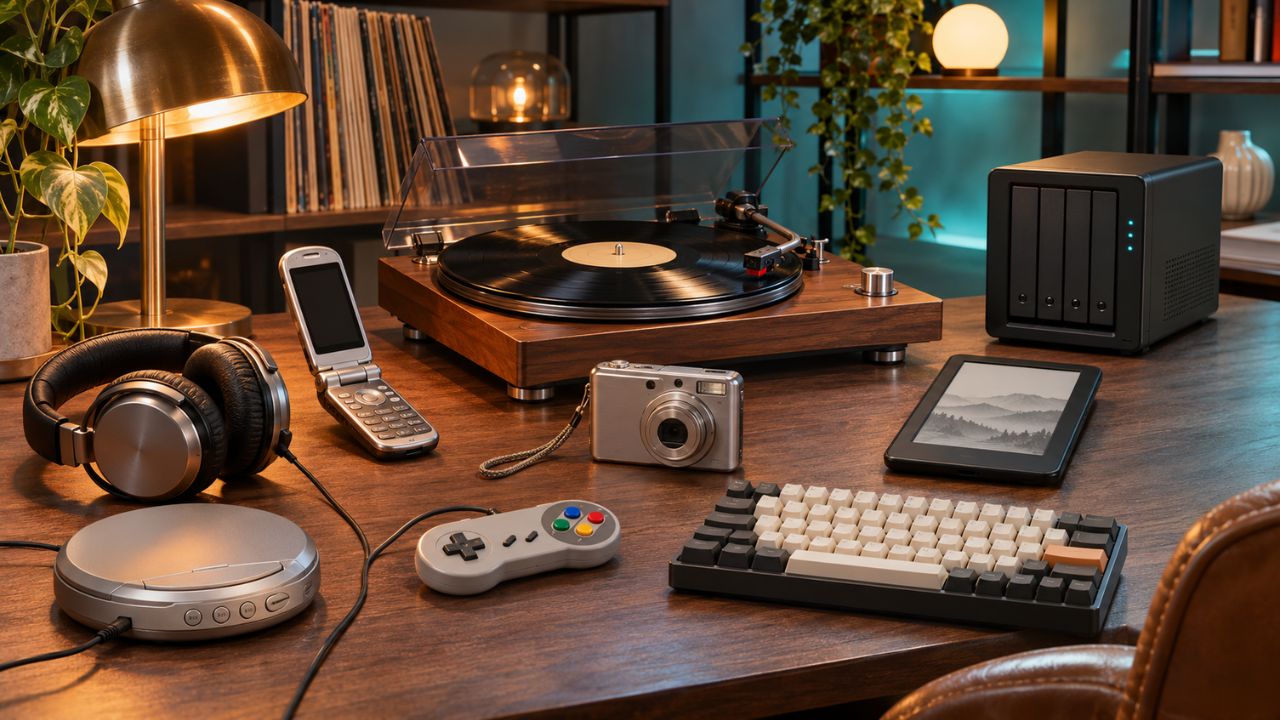
A record player, a flip phone, and a point-and-shoot camera now share an unlikely advantage: each does less than a smartphone. That limitation is becoming valuable.
People are not abandoning modern technology. They are choosing older formats for particular jobs, listening without notifications, taking photographs more deliberately, owning media permanently, or keeping personal files under their control. The most interesting old technologies making a comeback also combine familiar ideas with useful upgrades such as 4G, USB-C, wireless syncing, and modern storage.
This is not a return to the past. It is a more selective approach to the future.
Why Are Old Technologies Making a Comeback Now?
Nostalgia helps, but it does not explain the whole trend. Older devices often offer clearer ownership, fewer distractions, easier repair, or a more satisfying physical experience. Some also solve new problems created by subscriptions, cloud dependence, and devices designed to do everything at once.
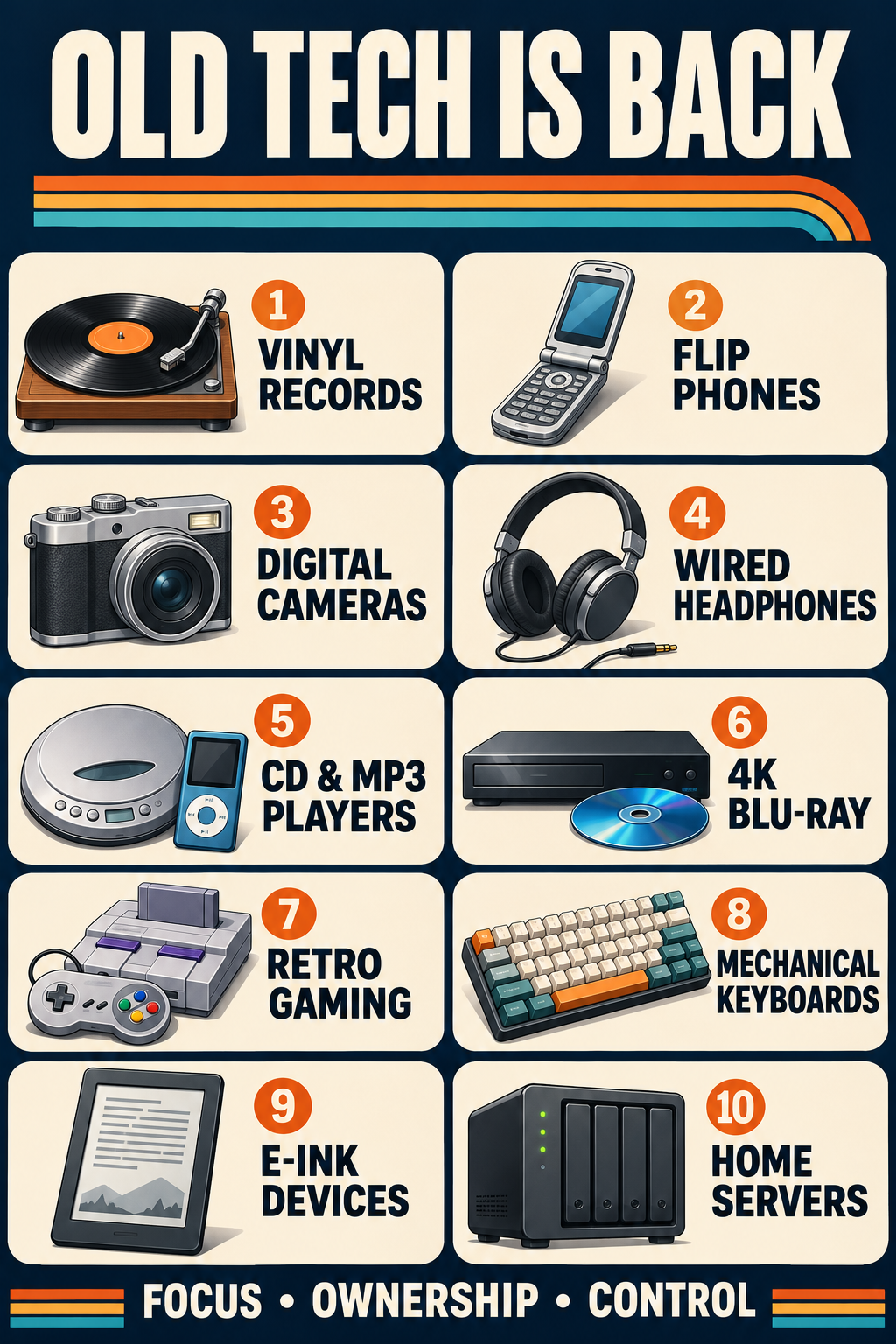
| Technology | What modern users value |
|---|---|
| Vinyl records | Ritual, artwork, and physical ownership |
| Dumbphones | Fewer distractions and longer battery life |
| Dedicated cameras | Intentional photography and optical controls |
| Wired headphones | Reliable sound without charging |
| CD and MP3 players | Offline listening and owned libraries |
| 4K Blu-ray | Consistent quality and permanent access |
| Retro gaming hardware | Original controls and focused play |
| Mechanical keyboards | Tactile feedback and repairable parts |
| E-Ink devices | Low-glare reading with fewer interruptions |
| Home servers and NAS | Local storage and personal control |
The comeback is strongest when an old idea addresses a current frustration. These 10 examples show how that pattern is playing out.
1. Vinyl Records and Turntables
Vinyl is the clearest measurable comeback on this list. According to the RIAA’s 2025 year-end report, US vinyl revenue rose 9.3% to $1 billion, marking a nineteenth consecutive year of growth.
A record asks the listener to choose an album, place it on the turntable, and stay with it. Large artwork, liner notes, and a visible collection make music feel less temporary than a queue inside an app.
Vinyl is not automatically warmer, better, or cheaper. Pressing quality, speakers, cartridge setup, and record condition all matter. Anyone reviving an older player should also check the turntable stylus and cartridge before playing valuable records. The format works best for listeners who enjoy the ritual as much as the music.
2. Dumbphones and Flip Phones
Feature phones are returning as tools for digital boundaries. Modern versions may include 4G calling, basic cameras, Bluetooth, and limited apps, but they do not encourage the endless switching that defines smartphone use.
Some people use one as a weekend phone. Parents may choose one as a child’s first device, while travelers and outdoor workers value long standby time and simple controls.
The trade-off is real. Banking apps, QR codes, navigation, ride services, and two-factor authentication can make a smartphone difficult to replace completely. A distraction-free phone makes the most sense when its limits match the user’s routine, not when those limits create a safety or access problem.
3. Dedicated Digital Cameras
Smartphone cameras made casual photography effortless, yet compact and interchangeable-lens cameras are finding fresh interest. Younger photographers are especially drawn to point-and-shoot models that produce a distinct look without filters.
A dedicated camera separates photography from messages and social feeds. Physical dials, optical zoom, a real shutter button, and removable storage can make the process more deliberate. Some newer compacts add wireless transfer, while instant cameras turn the result into a physical object.
This revival does not mean every old camera is a bargain. Batteries, proprietary cables, memory-card limits, and scarce repairs can turn a cheap purchase into an awkward one. It helps to understand how earlier tech gadgets changed everyday life before deciding whether a vintage model or a modern compact better fits the job.
4. Wired Headphones
Wired headphones are becoming attractive again because they remove small but persistent problems. They do not need pairing, firmware updates, or a charged battery. They also avoid Bluetooth delay, which matters for gaming, recording, and video editing.
The category is not frozen in the past. New USB-C earphones and headphones work directly with current phones and laptops, while studio-style models still use familiar 3.5 mm or larger connectors. Replaceable cables and ear pads can extend the life of better-built models.
A cable can snag, and many phones no longer include a headphone jack. Still, wired audio offers predictable performance. Repairing or repurposing equipment also fits the broader effort to upcycle old gadgets instead of throwing them away.
5. Portable CD and MP3 Players
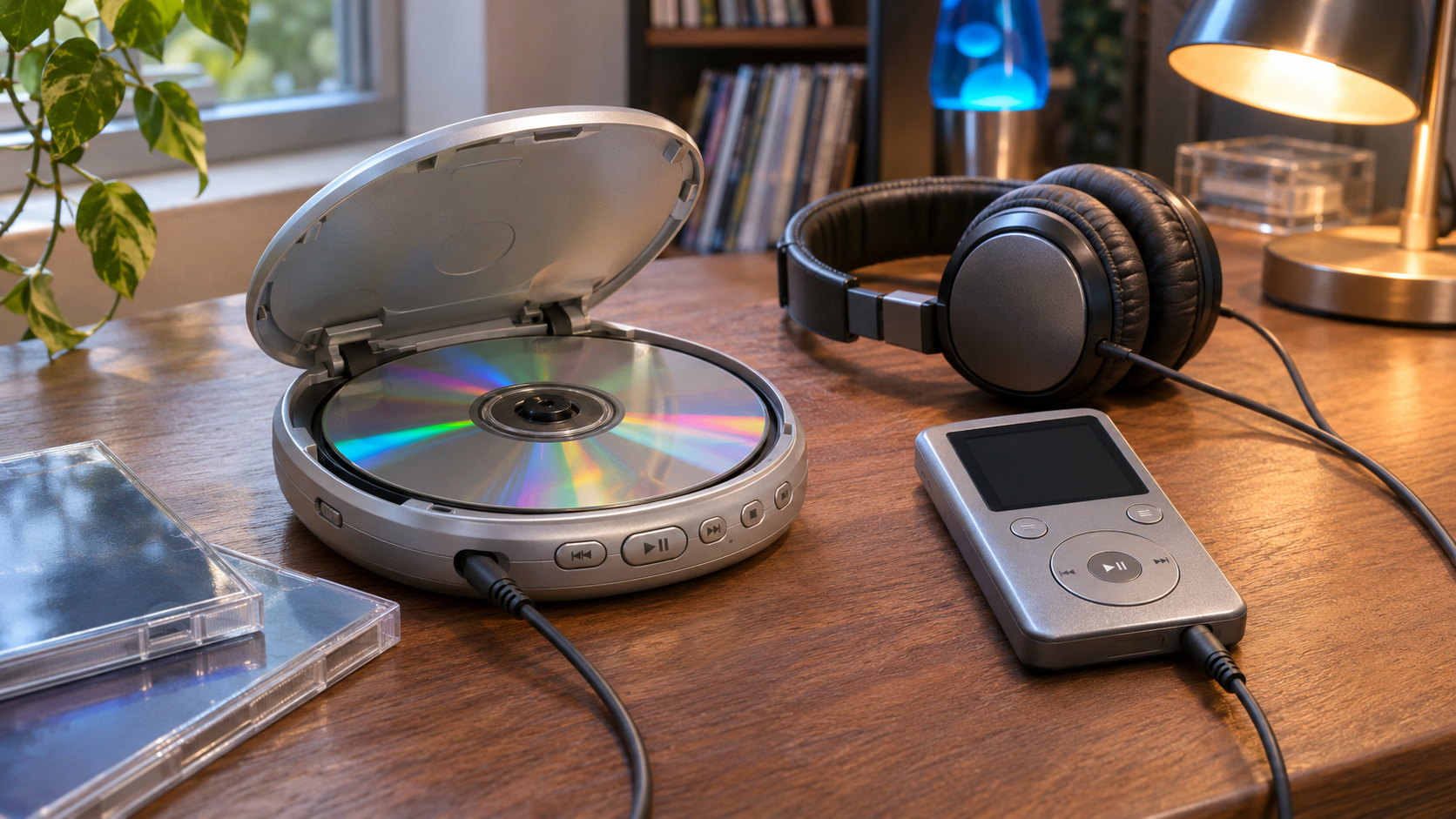
Portable CD players and dedicated MP3 players are reappearing in small but visible niches. Their appeal is simple: they play music without notifications, a mobile-data connection, or a recurring subscription.
An MP3 player can hold a carefully chosen library for exercise, commuting, or a child’s first music device. A CD player lets collectors use discs they already own and explore inexpensive secondhand albums. Neither format is returning at its pre-streaming scale, but both answer a modern concern: access can change when a subscription ends or a title leaves a service.
That difference between access and ownership is worth understanding before building a collection. The same issue appears in digital purchases you could lose, where licensing and account rules may matter as much as the purchase button.
6. 4K Blu-ray and Other Physical Media
Physical video has become a premium niche rather than a mass-market default. For film enthusiasts, that smaller role can still be important. A 4K Blu-ray offers stable picture and sound quality without depending on internet speed, compression changes, or a streaming service’s current catalog.
Collectors also value director commentaries, restored editions, booklets, and packaging. Once purchased, a disc remains available as long as the player and disc still work. That makes physical media useful for favorite films that viewers expect to revisit.
The drawbacks are cost, shelf space, region restrictions, and hardware that is no longer standard in many homes. Buying every release makes little sense for most people. A smaller library of genuine favorites is where the format’s ownership advantage is easiest to justify.
7. Retro Gaming Hardware
Retro games never disappeared, but interest has shifted from casual emulation toward hardware that recreates the original experience. Refurbished consoles, handheld emulation devices, mini systems, and modern recreations all serve players who want quick sessions without battle passes, daily tasks, or constant updates.
Original controllers and displays can also change how a game feels. Older titles were designed around particular button layouts, screen shapes, and timing. That context helps explain the wider retro gaming comeback.
Buyers should check video outputs, controller condition, replacement parts, and game prices before starting a collection. Downloading game files from unofficial sources can raise copyright concerns, too. Official reissues or personally backed-up games are the safer route.
8. Mechanical Keyboards
Mechanical keyboards returned first through gaming and enthusiast communities, then moved into ordinary offices. Users can choose switches for a light, heavy, smooth, or tactile feel, while hot-swappable boards make it possible to replace a faulty switch without discarding the keyboard.
Customization is part of the appeal, but durability matters more. Detachable cables, replaceable keycaps, and accessible parts can keep one board useful for years. A well-chosen mechanical keyboard for programming can also make long typing sessions more consistent.
Mechanical does not automatically mean ergonomic or quiet. Some switches are loud, and a tall case may require a wrist rest. Layout, key weight, desk height, and typing habits matter more than trend-driven accessories.
9. E-Ink and Digital Paper
E-Ink is less a revived relic than an older display idea entering a stronger second act. E-readers remain its best-known use, but the technology now appears in note-taking tablets, color readers, shelf labels, signs, and low-power dashboards.
Unlike a typical LCD or OLED screen, an E-Ink display reflects ambient light and uses very little power while the image remains unchanged. That makes it comfortable for long reading sessions and practical for information that does not need rapid animation. Devices such as E-Ink tablets also combine handwriting and document storage without turning every page into a notification panel.
Refresh speed, muted color, and higher prices still limit the technology. It is excellent for reading and focused notes, but not a universal replacement for a tablet or laptop.
10. Home Servers and NAS Devices
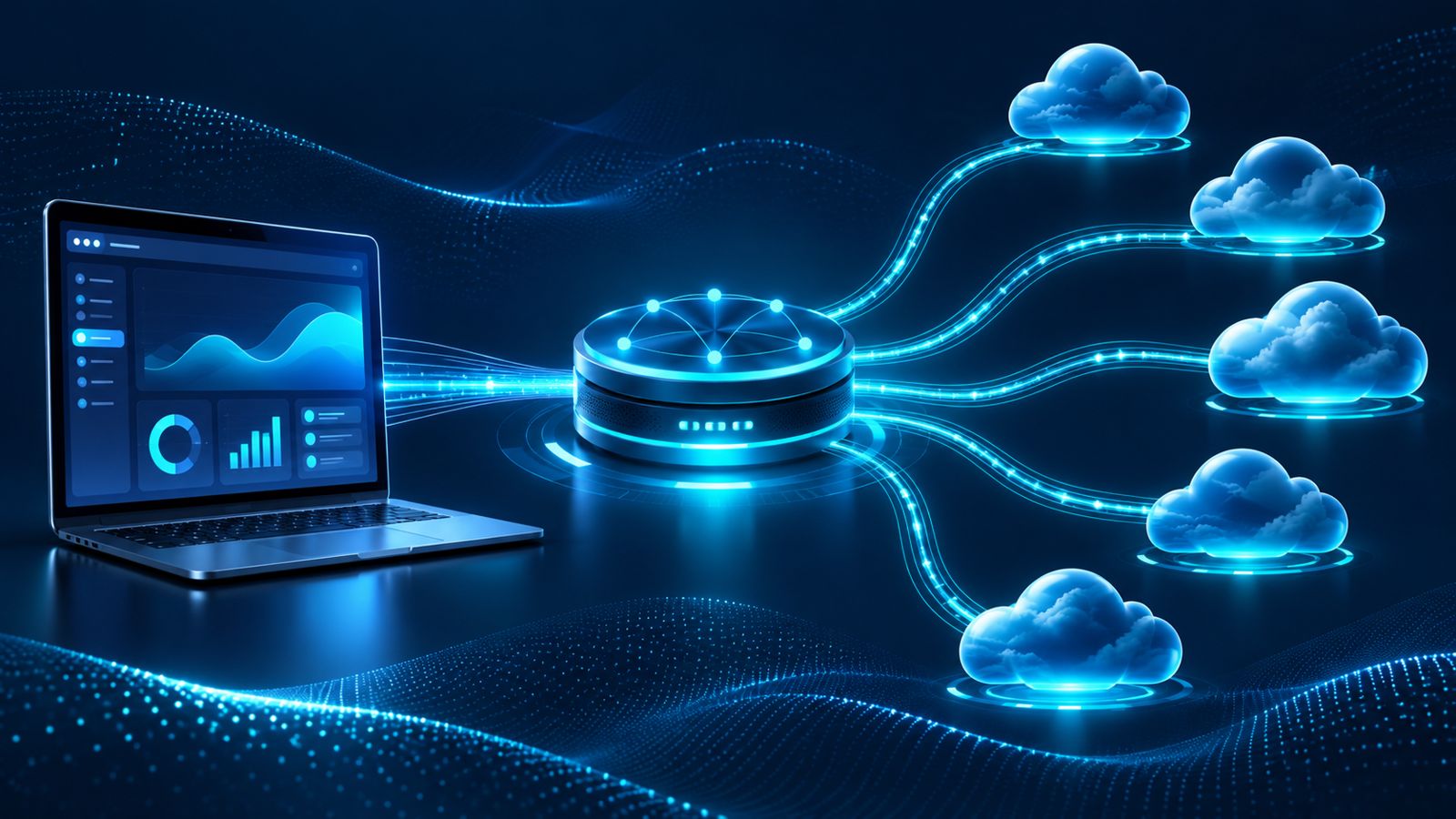
Home servers once demanded spare computers, command-line knowledge, and plenty of patience. Modern network-attached storage, or NAS, has made the idea far more approachable. A small box can centralize photos, documents, media, and device backups for a household or small team.
The new appeal is control. Users can keep important files on hardware they own, reach them remotely, and run selected services without depending entirely on a large cloud platform. Beginners can explore self-hosted apps that replace subscriptions before deciding how much maintenance they are ready to accept.
Local control does not remove risk. Drives fail, accounts can be compromised, and a fire or theft can affect every device in one location. A NAS should be part of a backup plan, not the whole plan. Understanding cloud sync versus backup helps prevent that expensive mistake.
Why This Old-Tech Comeback May Last
The strongest revivals do not ask people to reject progress. They preserve one useful quality—ownership, focus, tactile control, repairability, or privacy — and remove some of the inconvenience with modern components.
That is why the old technologies making a comeback are unlikely to replace smartphones, streaming, or cloud services. They do not need to. Their future lies in doing one job clearly, giving people a choice when an all-in-one device or subscription no longer feels like the best answer.
Frequently Asked Questions about Old Technologies Making a Comeback
Why are old technologies becoming popular again?
Many offer physical ownership, fewer distractions, easier repair, or a more focused experience. Nostalgia attracts attention, but practical value usually determines whether the comeback lasts.
Is retro technology better than modern technology?
Not in every situation. Older technology can be better for a specific task, such as offline listening or distraction-free reading, while modern devices remain more convenient for communication and connected services.
Which old technology has made the biggest comeback?
Vinyl has the clearest long-term commercial revival. Its growth has continued for years, supported by collectors, new releases, and listeners who value physical music.
What should I check before buying old technology?
Check parts availability, battery condition, compatible cables, storage formats, repair options, and whether the device still works with current networks or computers. A low purchase price can hide a high restoration cost.