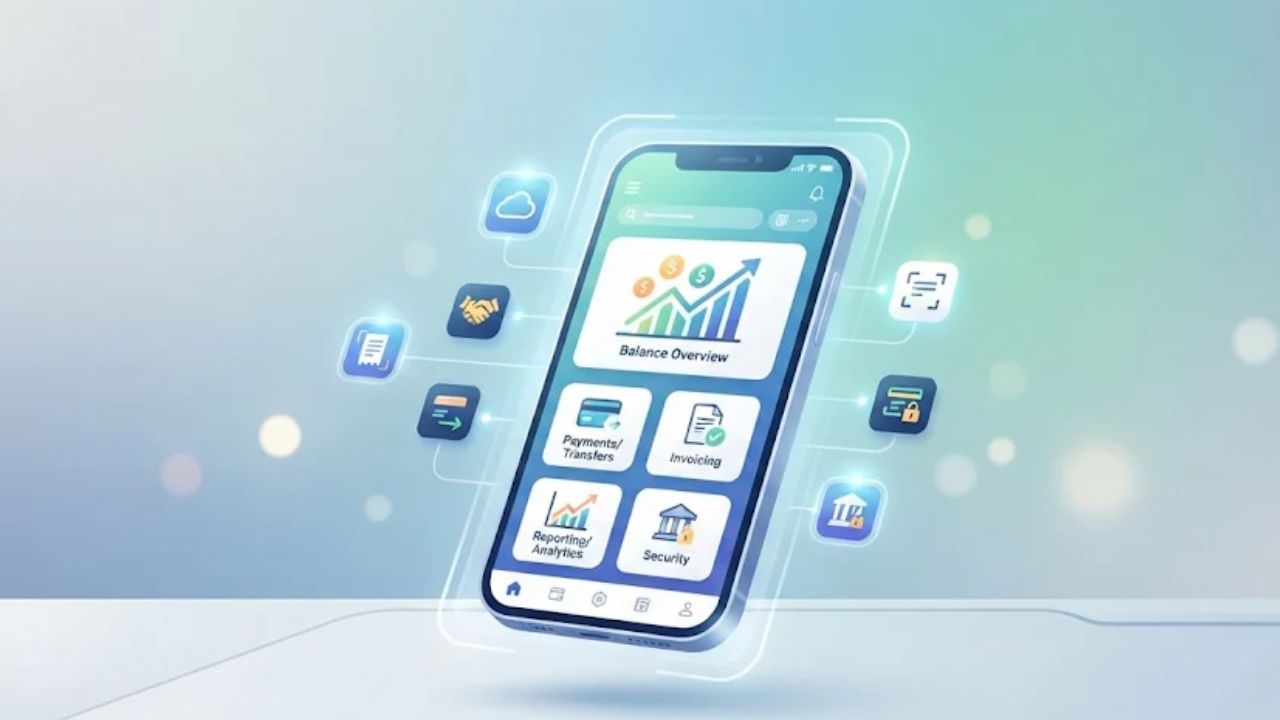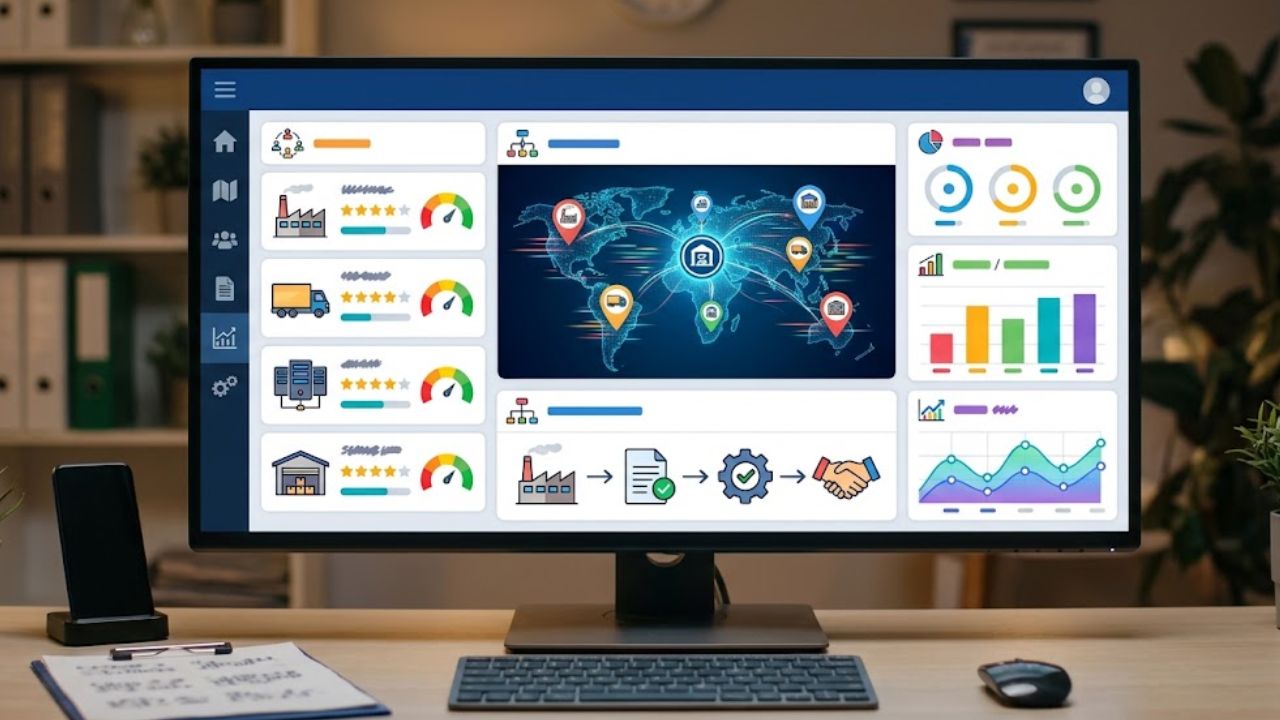
A low ACH transaction rate can look compelling until an invoice is returned, a customer needs to authorize a debit, or a finance team spends hours matching deposits to open invoices. For a US B2B service business, the better choice depends on the whole collection process, not the advertised rate alone.
Start by distinguishing customer-initiated bank payments from ACH debits that pull funds under authorization. Then compare onboarding, billing, fees, returns and reconciliation for your actual customers. This research-based comparison draws on provider documentation; we did not test the products or submit live payments.
The scale of the payment rail is considerable. Nacha’s 2025 network statistics report 8.08 billion business-to-business ACH payments. That figure includes many types of B2B transactions; it is not a count of payments made through the services below.
How We Selected the Tools
Each provider publicly documents a way for eligible businesses to collect ACH payments from customers or process ACH-enabled invoices. We assessed the documented collection workflow, suitability for service invoices and meaningful limits. Inclusion is independent of sponsorship and the order is not a hands-on performance ranking. Check eligibility, current fees, account terms and payment timing before signing up.
| Tool | Potential fit | Important limitation |
|---|---|---|
| GoCardless | Recurring bank debit collection | Confirm integration and account requirements |
| Stripe | Configurable online collection | Billing and verification can carry separate costs |
| Helcim | Invoices and recurring billing | Enable ACH and obtain authorization |
| Square Invoices | Invoice-led collection | ACH is offered via eligible invoices |
| QuickBooks Payments | Businesses already using QuickBooks | Product and plan terms vary |
| Stax Pay | Configurable invoice payment methods | Account must support ACH; confirm pricing |
| Authorize.net eCheck | Gateway-based ACH processing | Approval, fees and recordkeeping need review |
| Payoneer | Eligible B2B payment requests | US ACH payer eligibility and service restrictions apply |
1. GoCardless: Recurring Bank Debit Collection
GoCardless documents one-off and recurring ACH pull payments through its dashboard, API and supported integrations. It can suit a service firm collecting regular retainers when clients are willing to authorize debit collection.
Its US Standard pricing page lists 0.5% plus $0.05 per domestic transaction with a $5 cap, excluding sales tax. Confirm the current plan, integration and any return fees. A lower per-payment rate does not establish the total cost of an accounting workflow.
Why a team might choose it: A service business that bills the same retainer each month can use GoCardless to collect authorized bank debits and connect the collection process to supported accounting software. That makes it a useful option when the team wants a dedicated bank-payment workflow rather than building one itself.
Best for: Businesses with repeat clients that are comfortable authorizing recurring bank payments.
2. Stripe: Configurable Online Payment Workflows
Stripe offers ACH Direct Debit and supports invoicing or custom integrations. It may fit businesses that want to connect online collection to existing software or offer more than one payment method.
Its published US ACH Direct Debit rate is 0.8% capped at $5 per successful charge. Billing, verification and other services can add costs depending on the setup. ACH debit also needs proper customer authorization; do not treat a bank-account number alone as consent.
Why a team might choose it: Stripe gives a business room to start with invoicing and explore a more customized payment experience as its requirements grow. For example, a software-enabled consultancy can compare a hosted workflow with an integration that fits its existing customer process.
Best for: Teams seeking flexible online collection and willing to check the cost of the billing and verification features they use.
3. Helcim: Invoicing and Recurring Bank Payments
Helcim documents ACH collection through invoicing, recurring billing, payment pages and its virtual terminal. A firm wanting invoices and bank payments in one workflow can examine whether those tools cover its needs.
ACH must be enabled and the customer must authorize the debit. Helcim’s US fee disclosure lists 0.5% plus $0.25 for an approved ACH transaction below $25,000; confirm current caps, return fees, transaction limits and eligibility for your account.
Why a team might choose it: Helcim brings several collection paths into the same service. A studio that sends a project invoice today and bills a monthly support contract later can investigate both invoice-based and recurring ACH options without assuming they work identically.
Best for: Service firms looking for invoicing and recurring payment tools alongside bank-payment acceptance.
4. Square Invoices: Invoice-Led Collection
Square allows eligible customers to pay invoices by ACH bank transfer alongside other supported payment methods. It can be practical for a small service team that already prepares its invoices in Square.
Square’s published fees vary by plan and payment method. Compare the current invoice plan, minimums and any caps instead of assuming one rate applies to every account. An invoice payment option is not evidence that every other Square workflow supports ACH.
Why a team might choose it: Square puts the payment choice in the invoice experience. That can make sense for a small team already sending Square invoices and wanting eligible clients to see an ACH option when they pay.
Best for: Businesses that prefer a straightforward invoice-led collection process and already use or are considering Square.
5. QuickBooks Payments: Collection Within an Accounting Workflow
QuickBooks Payments lets eligible customers pay invoices by ACH bank payment. Firms already working in QuickBooks may value keeping billing and payment records close to their accounting process.
Compare the total subscription and payment costs for the specific QuickBooks product and account. Fee caps and available features can differ across offerings. Confirm whether the customer’s payment method and your preferred reconciliation workflow are supported.
Why a team might choose it: When invoices are already prepared in QuickBooks, accepting an eligible bank payment through that workflow can reduce the need to manage a separate invoicing process. Before choosing, check exactly how your version records deposits and matches them to invoices.
Best for: Existing QuickBooks users who want to evaluate bank payments within their accounting setup.
6. Stax Pay: Control Payment Methods on Invoices
Stax documents ACH, card or both as invoice payment options where the account supports them. It also documents scheduled invoices and saved payment methods, making it worth reviewing for a team that wants configurable recurring billing.
Obtain the applicable plan and processing terms and review how authorization, autopay and failed payments work. Stax’s documentation notes that saved methods can enable autopay for recurring invoices, so the customer-facing setup deserves careful review.
Why a team might choose it: Stax lets eligible accounts configure whether an invoice accepts ACH, cards or both. A firm with different customer preferences can review whether that choice fits its billing policy and recurring invoice setup.
Best for: Teams that want to control payment options within an invoice-based workflow.
7. Authorize.net eCheck: ACH Through a Payment Gateway
Authorize.net’s eCheck service supports ACH transactions for customers with US bank accounts. Its documentation describes recurring prearranged payments as one supported use, making it relevant to firms with a gateway-centered payment workflow.
eCheck approval, gateway and merchant-account arrangements, applicable fees, settlement and authorization recordkeeping all need confirmation. A gateway is one part of the process; check how it connects to the invoicing and bookkeeping tools your team uses.
Why a team might choose it: An established business using a payment gateway can evaluate eCheck as an additional way to accept eligible US bank payments. It may be useful when the gateway already forms part of the company’s online payment process.
Best for: Businesses comfortable managing gateway and merchant-account arrangements and checking ACH approval requirements.
8. Payoneer: Payment Requests for Eligible Business Clients
Payoneer’s payment request service lets eligible businesses attach or create an invoice and request payment from clients. Its documentation lists ACH bank debit as an option for US payers, alongside other payment methods.
Check whether both the receiving business and the client qualify, and confirm service, currency, withdrawal and processing fees. An international payment request and a domestic recurring ACH debit are not interchangeable workflows.
Why a team might choose it: Payoneer combines payment requests with multiple potential payment methods. An eligible service provider working across borders can examine whether a US client can use ACH debit while the provider manages the resulting balance and withdrawal through its Payoneer account.
Best for: Eligible B2B service providers who need payment requests for US clients as part of a broader international workflow.
A Practical Cost Comparison
Consider a hypothetical firm collecting ten $2,000 invoices each month. At GoCardless Standard’s published domestic transaction rate, each invoice reaches the stated $5 cap: ten successful payments would produce $50 in transaction charges before taxes, returns, add-ons or other fees. At Stripe’s published 0.8% rate with a $5 cap, the same simplified calculation is also $50 in processing charges before any billing, verification or other fees. These are illustrations, not quotes or predictions; pricing and eligibility can change.
Now add the costs the headline rate omits: software subscription, invoicing charges, bank verification, failed payments, staff reconciliation time and the cost of changing tools. If a customer pays by card instead, use the applicable card rate rather than the ACH rate.
Questions to Ask Before Choosing
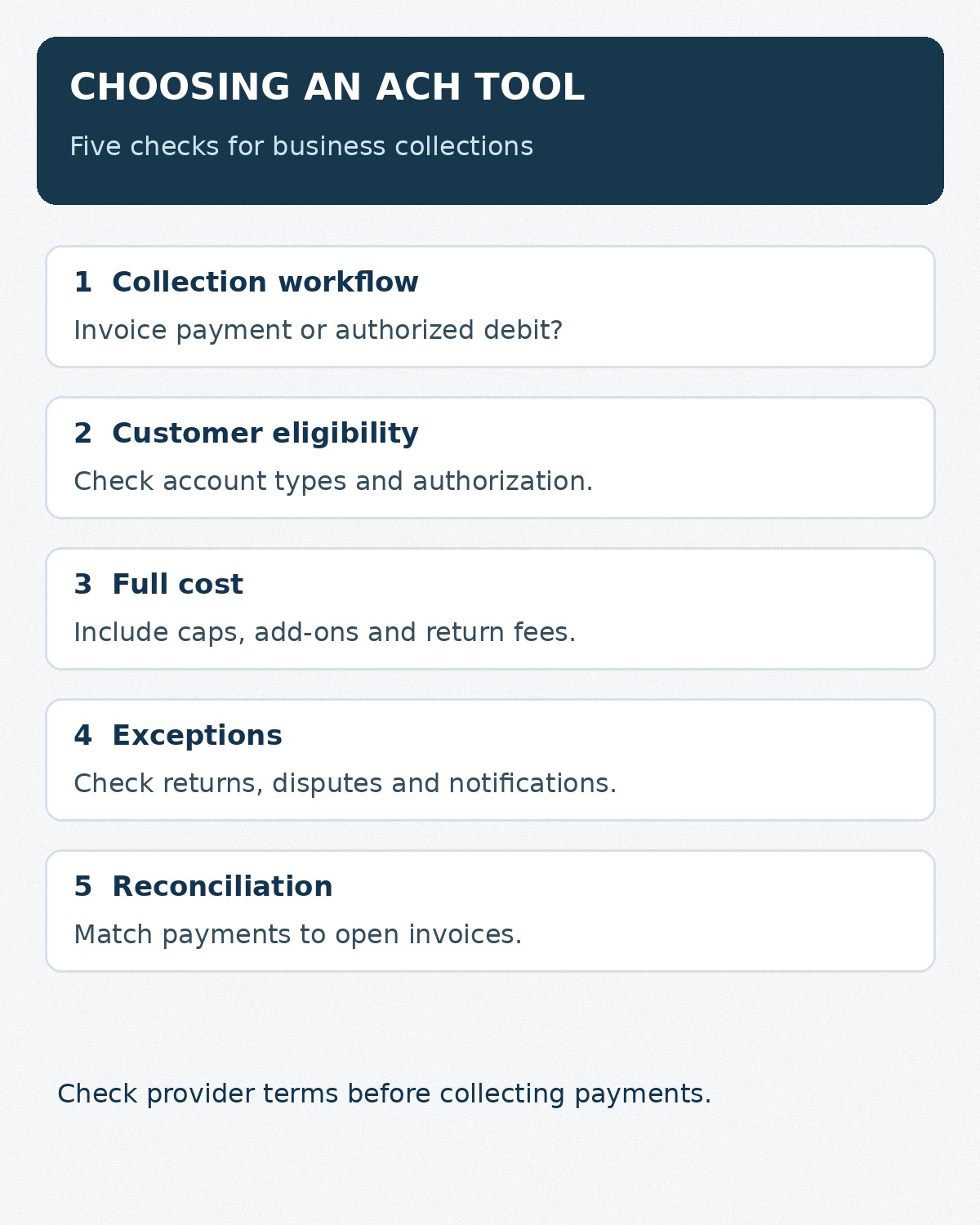
- Will the customer initiate each invoice payment, or authorize a recurring debit?
- Which customers and account types are eligible, and how is authorization recorded?
- What are the complete fees, caps, return charges and subscription requirements?
- How are returns, disputes and changes in bank details handled?
- How will the team match payments to invoices and investigate exceptions?
ACH payments may be returned after initiation, so payment status and reconciliation should form part of the operating procedure. Stripe’s ACH terms describe customer authorization and returns for its service; requirements depend on the provider, transaction and applicable network rules.
For more context, see Editorialge’s guide to payment tools for freelancers and its comparison of cross-border payment options. Select the tool that fits how customers actually pay, then verify the terms and exception process before moving live collections.