If you’re choosing your first machine learning course, the main question is whether you want to understand the ideas, write code, or study the mathematics behind the models. The best free machine learning courses cover all three, but no single course is ideal for every learner. A beginner who has never coded will need a different starting point from someone already comfortable with Python.
I selected these courses and learning materials for their free access, clear subject coverage, and usefulness to different skill levels. Some are structured lessons; others are university materials for independent study. Free access does not always include a certificate or instructor support, so check the provider’s current terms before enrolling.
How I Chose These Free Machine Learning Courses
I looked for courses and curricula that teach machine learning directly, explain who they suit, and provide a meaningful way to study the material. The list includes self-paced lessons, interactive exercises, open university coursework, and practical coding projects. It is not a ranking of certificates or a promise that any course will make someone job-ready on its own.
10 Best Free Machine Learning Courses
The best free machine learning courses range from beginner-friendly introductions to advanced university materials. Some help you understand AI without coding; others teach you to build and evaluate models with Python. Use this list to compare course levels, formats, and prerequisites, then choose one that fits your experience and gives you room to practice.
1. Google Machine Learning Crash Course
Best starting point for: Learners with some Python and math
Format: Self-paced modules, videos, visualizations, and exercises
Google’s Machine Learning Crash Course (MLCC) is the strongest all-round choice for learners ready to combine explanations with practice. Its self-contained modules cover regression, classification, neural networks, large language models, production systems, and fairness. You can follow the recommended order or jump to a subject you want to review.
One useful exercise is to run a linear regression programming activity, then change the inputs and observe how the model’s predictions respond. The exercises run in Google Colab, so you can work in a browser without first configuring a local machine.
MLCC focuses on machine learning concepts; it is not a complete tutorial on every machine learning programming interface. Python, algebra, and statistics will make the lessons easier, though the course also provides preparation guidance.
2. Kaggle Learn: Intro to Machine Learning
Best for: Building and evaluating a first model
Format: Short tutorials with coding exercises
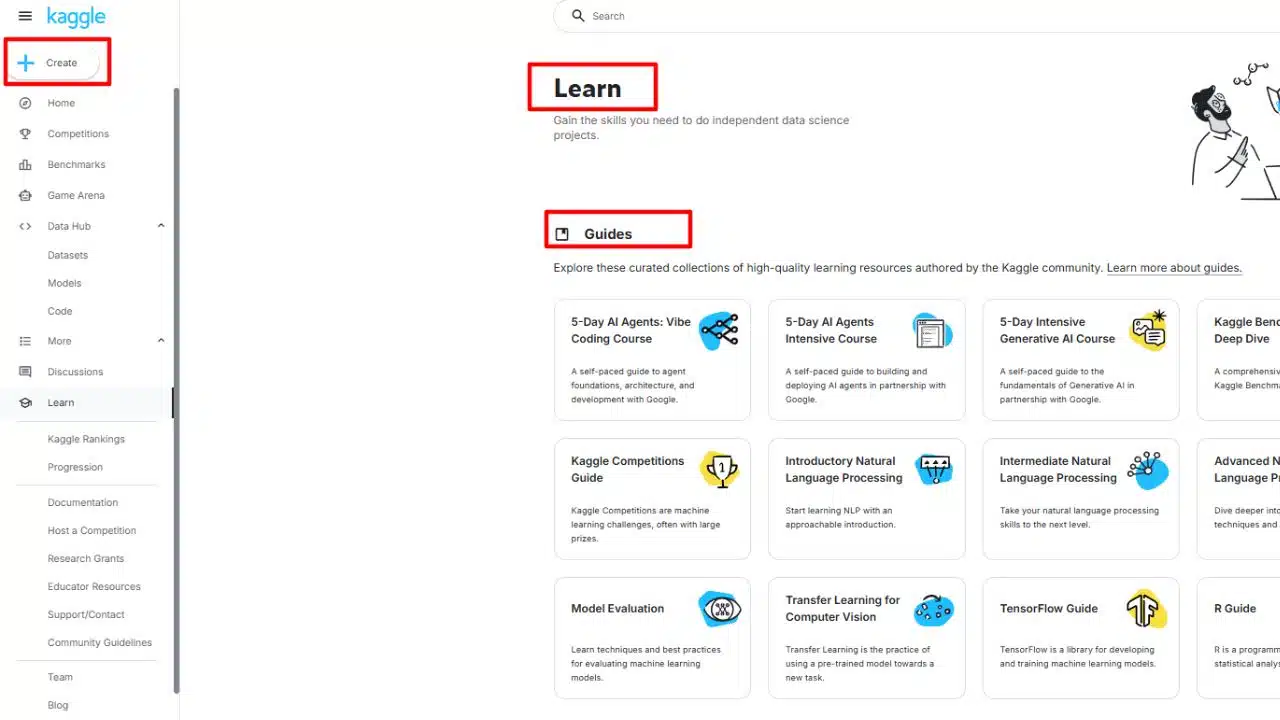
Kaggle’s introductory course moves from data exploration to a first model, then covers validation, overfitting, and random forests. Kaggle lists it as a no-cost course and estimates about three hours to complete.
A practical exercise is to build the course’s first model, then use its model-validation lesson to check how well it performs on data it has not seen. That second step matters: a model that appears accurate on its training examples may not perform as well on new data.
The short format is convenient, but it can encourage rushing. Change a few values and explain what happened before moving to the next lesson. Among the best free machine learning courses for hands-on beginners, this one has a particularly low setup burden.
3. Microsoft Machine Learning for Beginners
Best for: A longer, structured introduction to classic machine learning
Format: Open curriculum with lessons, quizzes, assignments, and projects
Microsoft’s curriculum is arranged as 12 weeks of lessons and focuses on classic machine learning, primarily with Python and Scikit-learn. It includes written guidance, quizzes, assignments, and projects. Examples draw on data from different parts of the world.
The structure is useful if you want a study plan instead of a set of disconnected tutorials. It asks for more commitment than a short course, and you’ll need to set up a computer to work through notebooks. Basic Python is recommended.
Choose this route if you want to build a foundation over several weeks. If you only want a quick introduction, start with Kaggle or Google MLCC first.
4. MIT OpenCourseWare: Introduction to Machine Learning (6.036)
Best for: University-style study
Format: Free course materials and learning activities
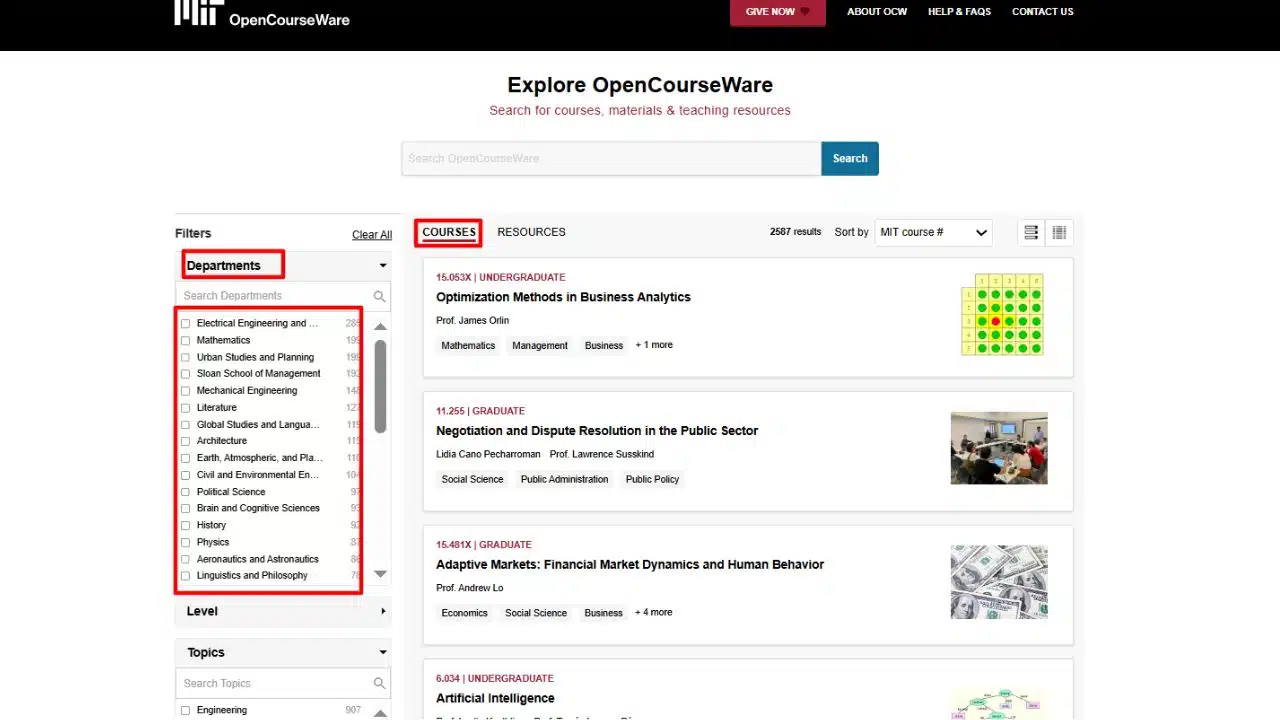
MIT’s 6.036 course covers supervised and reinforcement learning, including applications to images and temporal sequences. The materials are available through MIT’s Open Learning Library, which can be used without enrolling.
This is a more demanding option than a short beginner tutorial. It suits learners who are comfortable with programming and mathematical reasoning and who can study independently. If the notation and exercises feel like a wall, build more Python and math experience before returning.
5. University of Helsinki and MinnaLearn: Building AI
Best for: Understanding how machine learning fits into AI
Format: Free online course with interactive material
Building AI introduces machine learning and neural networks in the context of the broader field of artificial intelligence. The course itself is free; an electronic certificate is available for a fee.
Its value is conceptual breadth. It helps learners understand what machine learning is doing inside AI, rather than focusing only on how to run a Python library. Some exercises become more technical, so learners without coding experience may want to begin with the Introduction to AI course first.
6. Fast.ai: Practical Deep Learning for Coders
Best for: Programmers ready to build deep learning projects
Format: Free lessons, notebooks, and an accompanying book
fast.ai takes an application-first approach, with material on computer vision, natural language processing, and other practical problems. The course is free, but it is not aimed at people who have never written code. fast.ai recommends coding experience—preferably in Python—and at least high-school-level mathematics.
This is a better next step after programming basics than a first-ever introduction to machine learning. Learners should expect to experiment with notebooks and work through errors as part of the process. If your immediate goal is classical methods such as regression and decision trees, choose Microsoft or Kaggle before moving to deep learning.
7. MIT OpenCourseWare: Machine Learning (6.867)
Best for: Learners ready for technical depth
Format: Lecture notes, problem sets, exams, and solutions
MIT’s 6.867 materials cover foundational methods such as linear regression, classification, boosting, support vector machines, hidden Markov models, and Bayesian networks. The course includes assignments that can help you test whether you understand the ideas beyond their definitions.
There is an important limitation: the course is from Fall 2006. It remains useful for studying foundational concepts, but it should not be treated as a guide to current software tools or recent developments. Try it after an introductory course, especially if you want more mathematical detail.
8. Stanford CS229: Machine Learning course materials
Best for: Learners with a strong technical foundation
Format: Public course notes and materials
Stanford’s CS229 materials cover machine learning and statistical pattern recognition, including supervised and unsupervised methods, neural networks, and support vector machines. The materials also address practical considerations in machine learning projects.
This is advanced self-study material, not a gentle entry course. Linear algebra, calculus, probability, and programming experience will make it more manageable. Stanford course materials can vary by year, so follow one syllabus rather than piecing together notes from several versions.
For learners comparing the best free machine learning courses at university level, CS229 is a demanding resource—not the obvious first choice.
9. Kaggle Learn: Intro to Deep Learning
Best for: A first look at neural networks
Format: Interactive coding lessons
Kaggle’s deep learning course is a natural follow-up to its general machine learning course. It introduces neural networks through short lessons and coding exercises. Python fundamentals will help.
Deep learning is only one part of machine learning. Before taking this course, make sure you understand basic model evaluation and why a simpler approach can sometimes be a better fit. Otherwise, neural networks may seem like the default solution to every problem.
10. Elements of AI: Introduction to AI
Best for: Beginners who want a conceptual start
Format: Free, self-paced online course
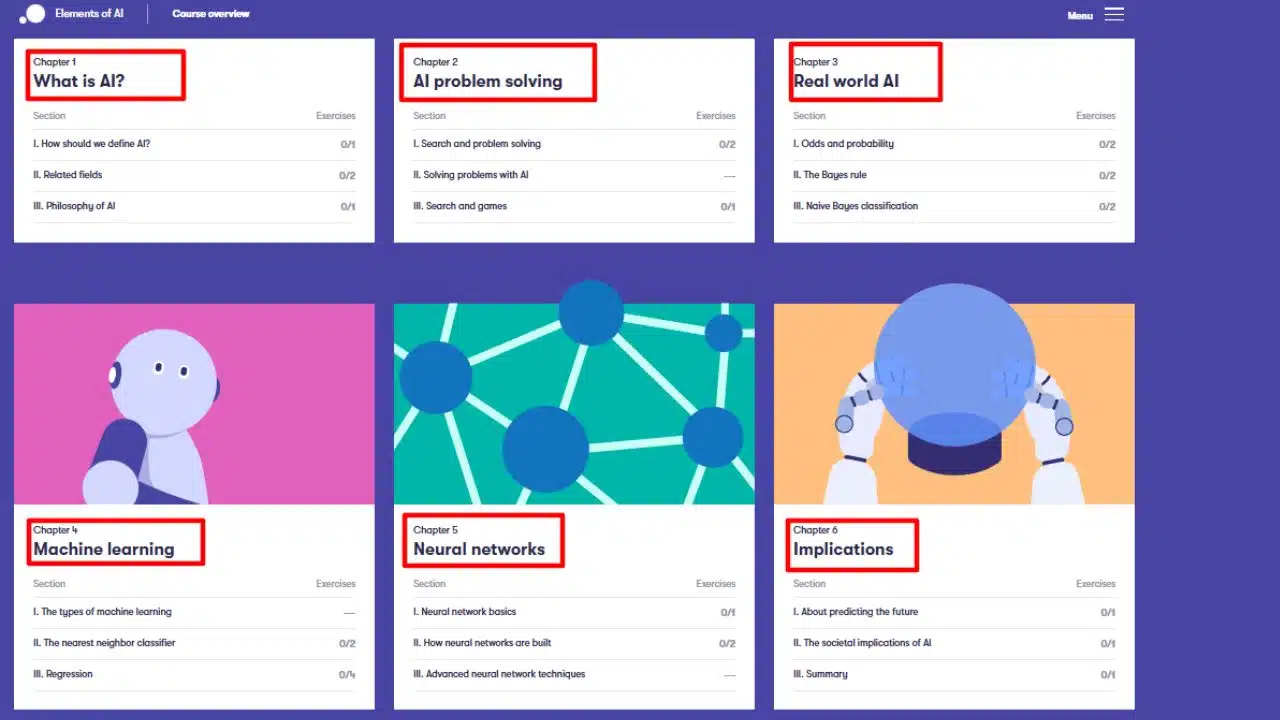
Elements of AI, created by the University of Helsinki and MinnaLearn, introduces AI for a broad audience and includes machine learning among its topics. It does not require advanced mathematics or programming.
That accessibility is also its limit: it is more conceptual than coding-focused. Use it to learn the vocabulary and basic ideas, then move to Kaggle, Microsoft, or Google MLCC if you want to train models. It is one of the best free machine learning courses for understanding the field before starting technical practice.
Choosing a Course That Fits
- New to AI and coding: Begin with Elements of AI.
- Know some Python and want to build a model: Try Kaggle Learn: Intro to Machine Learning.
- Want a multi-week study path: Choose Microsoft’s curriculum.
- Want concepts and practical exercises together: Start with Google MLCC.
- Already code and want deep learning: Consider fast.ai.
- Ready for university-level theory: Work through MIT 6.036 or Stanford CS229.
You do not need to complete every course. Pick one that matches your current skills, finish its exercises, and then build a small project using a dataset you care about. That gives you something concrete to explain and helps reveal which topics you need to revisit.
Final Thoughts
The best free machine learning courses are the ones you can finish and apply. Start with a course that fits your current level, not the one with the most intimidating syllabus. If you’re new, build a foundation before taking on advanced university materials. If you already code, prioritize practice and model evaluation over collecting more course links.
A useful next step is simple: choose one course, schedule time for its exercises, and keep notes on what you can explain and what still feels unclear. Practice—not the course title—will show you where your understanding is growing.
Frequently Asked Questions (FAQs)
Can I learn machine learning for free?
Yes. The options here provide free learning materials or exercises. Certificates and instructor support may cost extra, so check the provider’s terms before enrolling.
Do I need Python before starting?
Not for every option. Elements of AI is intended for a broad audience without a technical background. For coding-focused courses, basic Python will make it easier to follow along.
Which course is suitable for an absolute beginner?
Elements of AI is a gentle conceptual introduction. If you already know some Python and want to build a model, Kaggle Learn’s introductory course is a practical starting point.
Do free courses provide certificates?
Policies vary. Building AI offers an electronic certificate for a fee. Other courses may provide free materials without a certificate; check the individual course page for current details.