Finding the best VPN for privacy and speed comes down to independent audits, zero-logs transparency, and real-world connection retention. While most providers promise unthrottled bandwidth and high-grade encryption, performance varies significantly under actual testing.
Proton VPN is the best overall VPN for privacy and speed, delivering Swiss legal protection alongside audited, high-throughput connections. For users prioritizing maximum download speeds, NordVPN leads with its custom NordLynx protocol. If minimizing personal data collection is your primary goal, Mullvad sets the standard with its account-number-only model.
The right service depends on your specific focus: maximum speed for streaming and gaming, anonymous registration for ultimate security, or reliable encryption across all your devices.
How We Chose the Best VPN for Privacy and Speed
The ranking gives the most weight to:
- Independent examinations of apps, infrastructure or no-logs controls
- WireGuard or another credible high-performance protocol
- Kill switches, private DNS and leak protection
- Useful coverage across North America, Europe and Asia-Pacific
- Clear device limits, plan restrictions and renewal terms
Speed results are supporting evidence, not permanent verdicts. Server distance, congestion, hardware, protocol and the user’s internet provider can all change the outcome.
What VPN Comparisons Often Miss
A VPN does not remove the need for trust. It shifts part of that trust from an internet provider or local network to the VPN company. An audit can reduce uncertainty, especially when it examines working infrastructure, but it only confirms what auditors observed during a particular period.
Brand choice is also less varied than it appears. ExpressVPN, Private Internet Access and CyberGhost belong to Kape Technologies. NordVPN and Surfshark operate separately within the same wider corporate group. Ownership alone does not settle the privacy question, but readers should know who ultimately controls the service.
Location changes the decision too. The best VPN for privacy and speed on a London fiber connection may perform differently from the same service in Dhaka, Singapore or regional Australia.
1. Proton VPN: Best Overall Balance
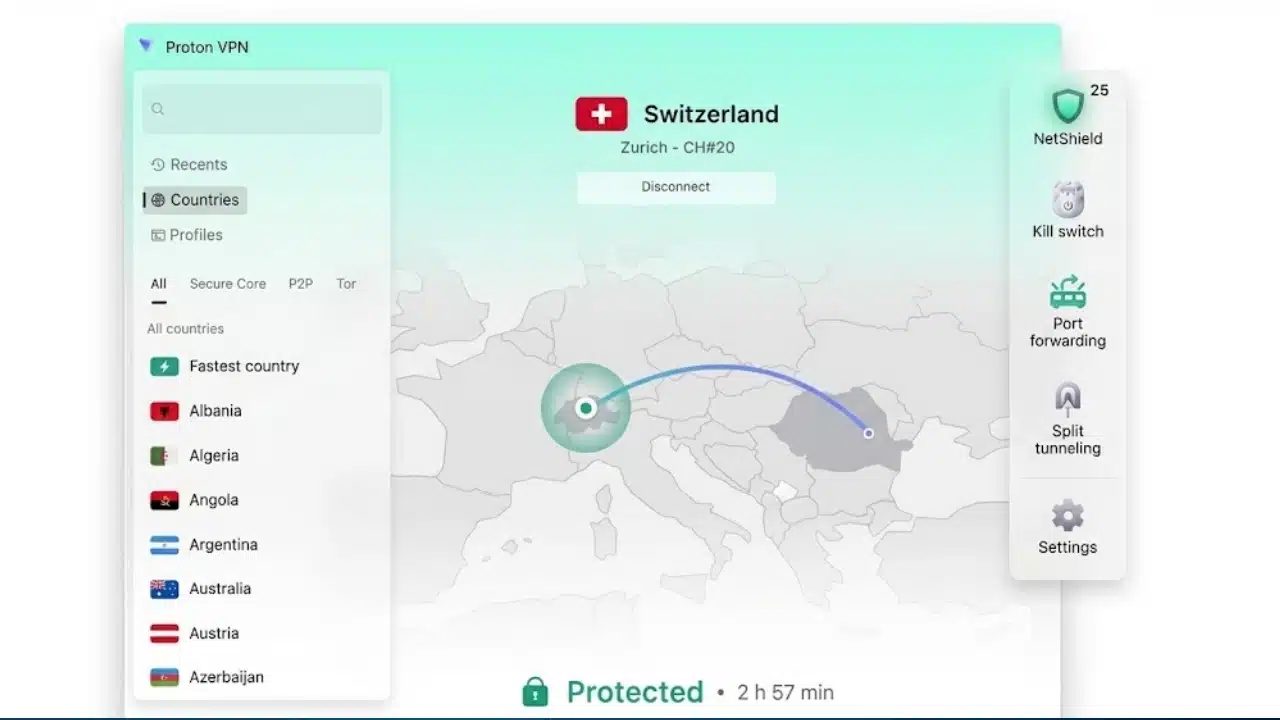
Proton VPN takes first place because it combines strong privacy engineering with competitive performance and unusually accessible evidence. Its apps are open source, and Securitum completed a fifth consecutive annual examination of its no-logs infrastructure in 2026.
The paid Plus plan supports 10 connections, WireGuard and Secure Core routing. Secure Core sends traffic through a hardened Proton-controlled server before it reaches the selected exit country. It is valuable for higher-risk connections, but unnecessary for routine streaming because the second route can add latency.
Proton Free currently provides unlimited data, one connection, and access to a 10-country server pool. Limited server selection makes it better for ordinary browsing than location-specific streaming.
2. NordVPN: Strongest Speed-First Choice
NordVPN is the better choice for frequent video calls, gaming, streaming, and large downloads. NordLynx, its WireGuard-based protocol, keeps connection overhead low, while the broad network improves the chances of finding a nearby server.
Its no-logs practices have undergone six outside assessments. NordVPN also finished first in Artifact Security’s 2026 evaluation of five major providers. That controlled test strengthens its speed credentials, but it does not guarantee first place on every network.
One subscription covers 10 devices. Ignore the oversized discount percentage at checkout and compare the total initial payment with the stated renewal amount.
3. Mullvad: Best for Minimal Account Data
Mullvad does not ask for an email address, username or conventional password. Instead, it generates a numbered account. That reduces the personal information attached to registration before a connection is even made.
Pricing is unusually straightforward at €5 per month, with no long-term discount. An account covers five devices, and the apps support WireGuard. Mullvad also commissions recurring app and infrastructure assessments.
Payment privacy varies. Cash, cards, PayPal, bank transfers and cryptocurrencies do not leave identical records. There is also no port forwarding. Readers mainly interested in accessing changing streaming catalogs will find Proton VPN, NordVPN or ExpressVPN more convenient.
4. Surfshark: Best for Many Devices
Surfshark’s main advantage is simple: it permits unlimited simultaneous connections. A household can protect multiple computers, phones and supported streaming devices without counting active sessions.
The service uses WireGuard and RAM-only servers across 100 countries. Deloitte examined its no-logs controls in 2023 and 2025.
Surfshark is often sold through low introductory offers. Check the complete charge, contract length and later renewal rate before committing. MultiHop is available, but routing through two servers is unnecessary when speed is the priority.
5. ExpressVPN: Easiest for Frequent Travelers
ExpressVPN suits travelers who would rather press one button than manage protocol settings. Its network reaches 113 countries and 214 locations, including useful coverage across Asia-Pacific.
Its open-source Lightway protocol was rewritten in Rust and examined by Cure53 and Praetorian. KPMG also reviewed its RAM-based TrustedServer system and privacy controls in 2025.
Device limits now vary by tier: 10 on Basic, 12 on Advanced and 14 on Pro. Paying for a higher tier solely for more connections makes little sense when Surfshark and PIA impose no simultaneous-device limit.
6. IVPN: Strong Privacy With a Smaller Network
IVPN is aimed at readers who value transparency more than a huge location list. It publishes its ownership and team, asks for no email address, open-sources its apps and has commissioned annual security audits since 2019.
Its dedicated bare-metal gateways cover 41 countries. At the time of writing, the Standard plan costs $6 monthly or $60 annually, covers five devices and includes Multi-hop, AntiTracker and obfuscation.
IVPN does not guarantee streaming compatibility or provide port forwarding. Those limitations make it niche, but they are clearly disclosed.
7. Private Internet Access: Best for Advanced Controls
Private Internet Access offers more control than most mainstream alternatives. Its open-source apps support WireGuard, OpenVPN, split tunneling, custom DNS settings and an advanced kill switch.
There is no simultaneous-device limit. Port forwarding is available on selected locations, though not on US servers. PIA covers 91 countries and every US state, but some international choices use virtual locations. The physical server may therefore sit outside the country represented by its IP address.
PIA completed its third Deloitte review in 2025. It is particularly useful for Linux users, P2P traffic and custom routing. Someone seeking a simple connect button will not need most of its settings.
8. Windscribe: Most Useful Flexible Free Plan
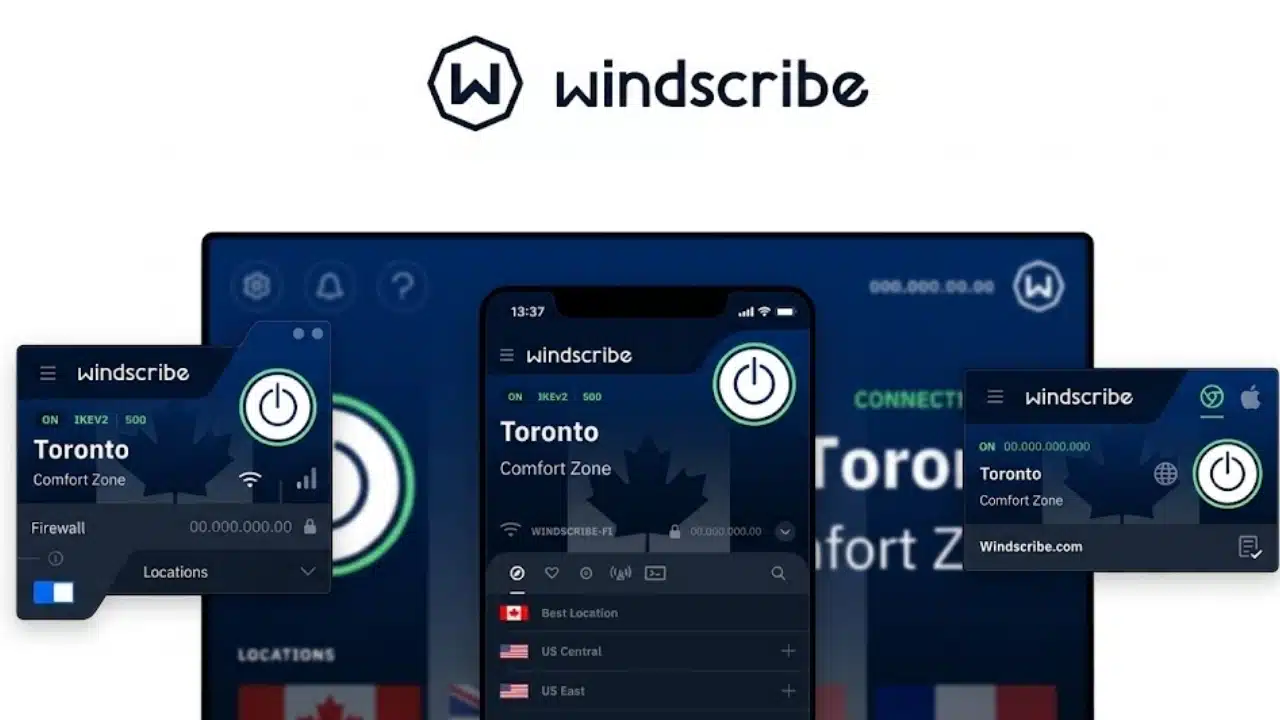
Windscribe currently provides 10GB of free monthly data with a confirmed email address and 2GB without one. It permits unlimited personal devices and supports WireGuard, OpenVPN, Stealth and WSTunnel.
Packetlabs reviewed Windscribe’s FreshScribe server architecture in 2024. The system was still being introduced during that assessment, but Windscribe completed its network-wide rollout in November 2025. Earlier desktop and mobile app assessments are also publicly documented.
The free allowance is useful for travel or occasional public Wi-Fi. Regular video streaming can exhaust it quickly.
9. CyberGhost: Best for Simple Server Filters
CyberGhost organizes parts of its network around streaming, gaming and P2P activity. This reduces the trial and error involved in choosing a server.
It covers 100 countries and 125 locations, although several are virtual. The service supports WireGuard, uses RAM-only servers and allows seven connections. Deloitte completed a third examination of its no-logs systems in 2025.
CyberGhost is approachable, but its device allowance feels restrictive beside Surfshark and PIA. Its Romanian NoSpy servers are the more interesting option for readers who want infrastructure managed directly by the provider.
Final Thoughts
Do not choose a VPN from one speed chart or a large introductory discount. Start with the provider that fits the real use case, then use its refund period to test the nearest server, a distant location and any services that matter.
Check video calls, banking sites, streaming apps, sleep-and-wake reconnection and the kill switch. If the connection becomes annoying, it will eventually be disabled. The best VPN for privacy and speed is the trustworthy service that performs reliably on the networks and devices where it will actually be used.
Frequently Asked Questions
Does a VPN make internet use anonymous?
No. A VPN can hide an IP address and prevent a local network or internet provider from directly seeing browsing destinations. Cookies, account logins, browser fingerprinting, GPS permissions and malware can still identify someone.
Can a VPN prevent bandwidth throttling?
It may help when an internet provider slows a recognizable category of traffic. It cannot fix congestion, weak Wi-Fi, a restrictive data allowance or an inherently slow broadband connection.
Which VPN protocol is usually fastest?
WireGuard is the sensible first choice on most devices. NordLynx and Lightway pursue similar performance goals. OpenVPN remains useful when network compatibility or censorship resistance matters more than maximum speed.
Can a personal VPN replace an employer’s work VPN?
No. A company VPN provides access to workplace systems and follows organizational security rules. Running a consumer VPN alongside it can create routing conflicts, so remote workers should follow their employer’s setup instructions.