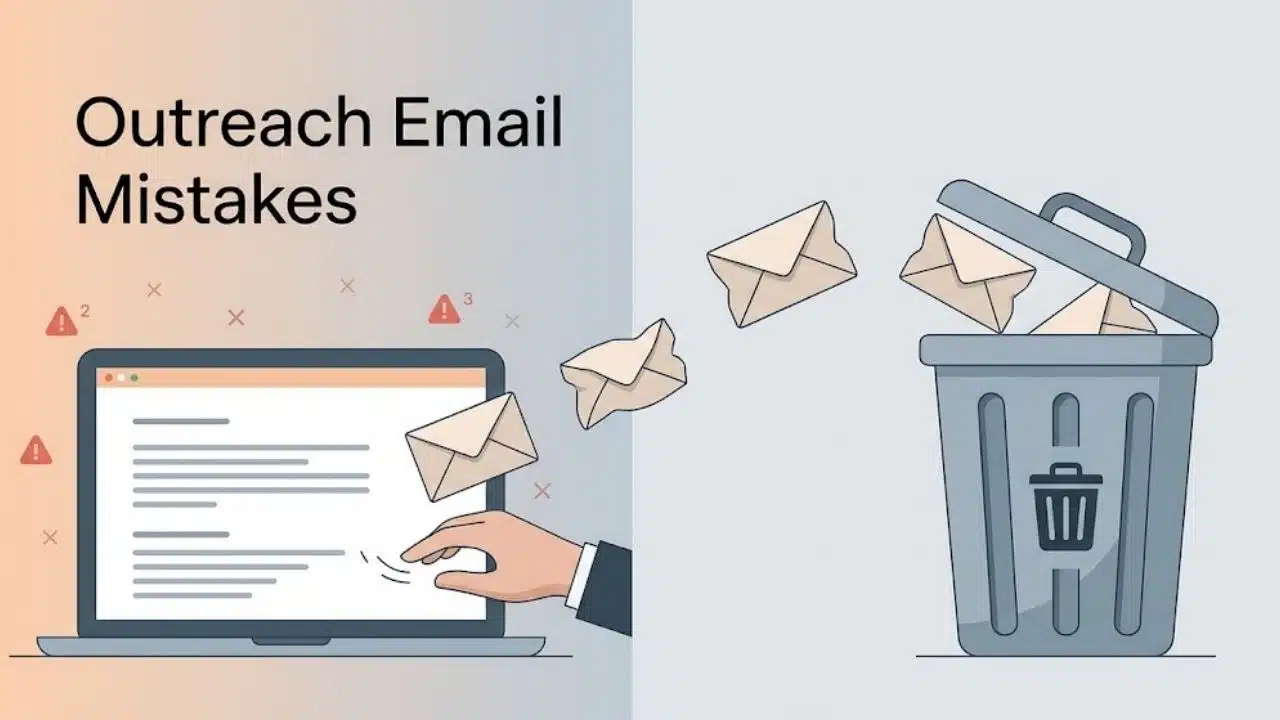
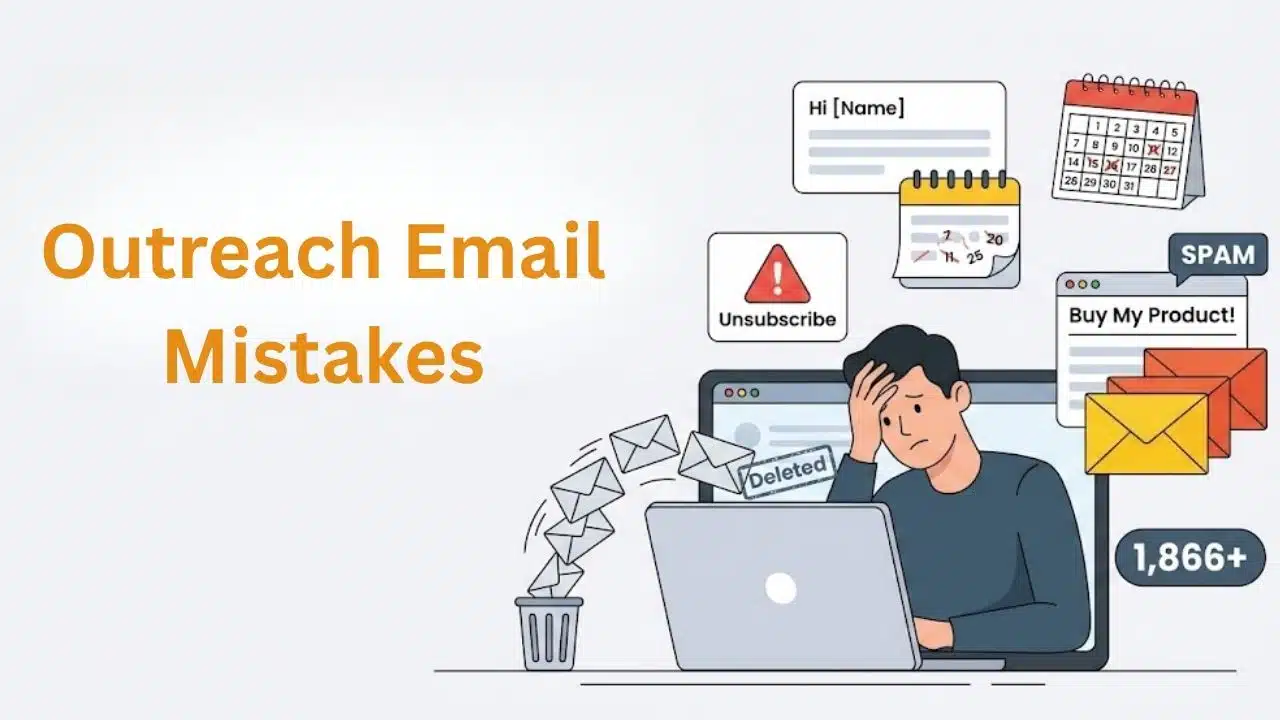
A recipient rarely needs to read a full message to reject it. A weak subject line, a generic compliment, or an oversized ask can trigger an instant deletion within seconds.
Most outreach email mistakes happen because messages focus on what the sender wants rather than what the recipient needs. Whether you are pitching media, building links, or running cold sales, every target prospect evaluates three core questions: Is this relevant? Is it credible? Is responding worth my effort?
Avoiding these common errors requires shifting from blast messaging to high-value targeting. Fixing your subject lines, personalizing contextually, offering clear value, and optimizing deliverability will immediately improve open rates, engagement, and conversions across all cold outreach campaigns.
How These Outreach Email Mistakes Are Ranked
The order follows the point at which each mistake damages the campaign. Poor targeting comes first because it makes every later improvement irrelevant. Personalization, copy, and follow-ups affect what happens after a contact has been selected. Deliverability and compliance come last in the list, but they are not minor concerns. They determine whether the message reaches the inbox and whether the campaign should be running in its current form.
This is not a ranking by popularity. It is the order in which an outreach campaign should be audited.
What Outreach Templates Cannot Fix
A better template cannot rescue an offer with no clear value. An editor does not need another broad guest post on a subject the publication has already covered. A website owner has little reason to alter a published page simply because someone wants a backlink. A sales prospect will not book a meeting because a platform has a long feature list.
Before rewriting the email, examine what the recipient gains from the proposed exchange. Strong copy can make a worthwhile offer easier to understand. It cannot make an ordinary announcement newsworthy or turn a promotional article into an essential resource.
1. Contacting Someone Without a Strong Relevance Match
Poor targeting is the most damaging mistake on this list. Once the wrong person has been selected, personalization and polished copy become decoration.
This problem is easy to spot in media outreach. A journalist who once mentioned artificial intelligence is not automatically interested in every AI product launch. Recent articles, stated beats, publication format, location, and the types of sources they quote provide better evidence of fit. A 2025 summary of Muck Rack’s journalist research reported that 73% rejected pitches because they were not relevant to their coverage area.
Link builders often make the same error by treating every page containing a target keyword as a suitable prospect. A page may serve a different audience, compete with the proposed resource, or be maintained by someone without editorial authority. In sales, a relevant job title does not necessarily mean the person owns the budget or workflow involved.
Before adding someone to a campaign, complete this sentence:
This person is relevant because they recently covered, published, managed, or expressed interest in ______.
A broad keyword or loosely related title is not enough. Smaller, well-qualified lists usually provide more useful information than large campaigns filled with questionable contacts.
2. Using Personalization That Proves Nothing
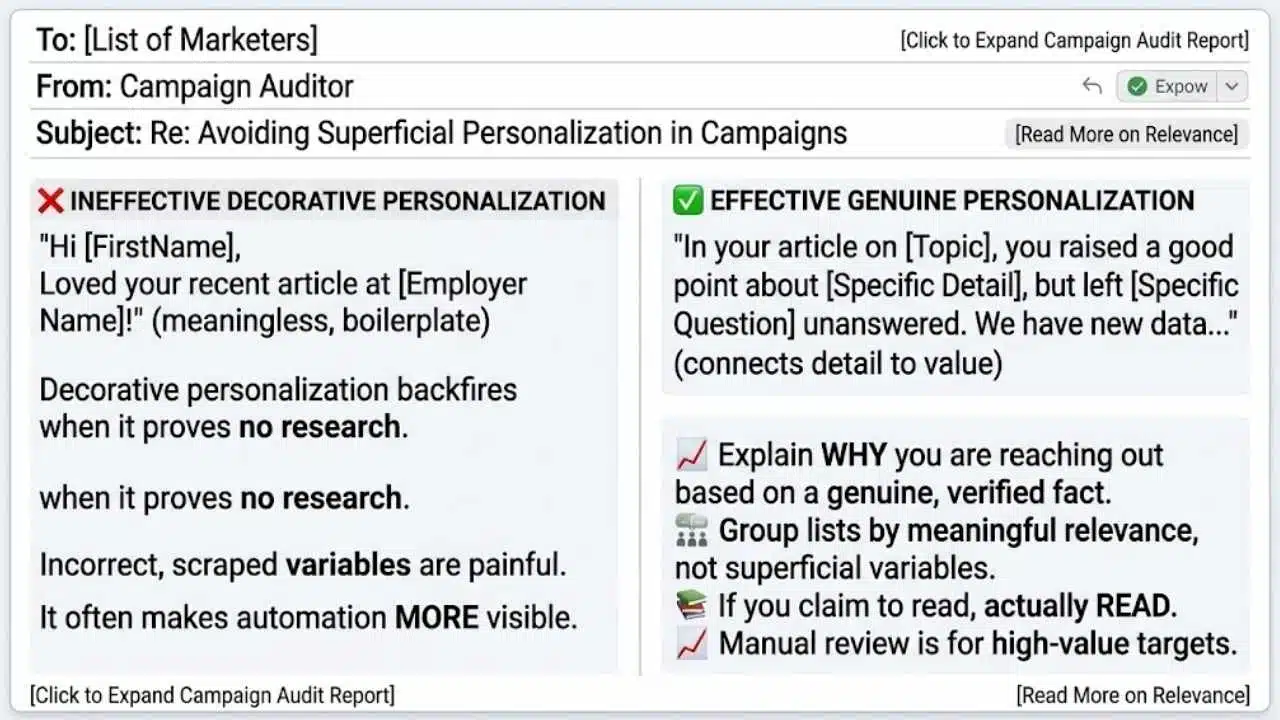
“Loved your recent article” is not meaningful personalization. Neither is placing someone’s first name, employer, or podcast title above a generic pitch.
Decorative personalization can make automation more visible, not less. The email mentions a scraped detail and then moves to a request with no connection to it. An incorrect name, old employer, or unrelated article makes the lack of research even harder to ignore.
Useful personalization explains why a specific detail led to the outreach. A media pitch might identify an unanswered question in a recent article and offer relevant data. A sales email could connect a verified company change with a problem the sender can credibly address.
Do not claim to be a regular reader or listener unless that statement is true. For small, valuable lists, the relevance line deserves manual attention. Larger campaigns should be divided by genuine reasons for contact rather than decorated with superficial variables.
3. Writing From Your Own Agenda
A link builder wants a backlink. A salesperson wants a meeting. A founder wants coverage. None of those goals provides the recipient with a reason to respond.
The email has to translate the request into something useful on the other side. An editor may care about original research, credible expert access, a timely local angle, or evidence that supports a developing story. A website owner may consider a resource that corrects outdated information or fills a real gap. A sales prospect needs to recognize a relevant business problem before a product demonstration makes sense.
A weak link-building request might say:
We published a detailed guide and would appreciate it if you added our link.
A more useful version would be:
Your supplier-audit section explains the review process but does not include a downloadable checklist. We created one covering the documents discussed in that section. If it would help your readers, it is available here.
The second version remains promotional, but it gives the editor an editorial reason to consider the resource. It also makes the decision easier: the checklist is either useful for that page or it is not.
Be equally honest about commercial intent. Product-led content should not be presented as independent research unless it genuinely meets that standard.
4. Making the Recipient Work to Understand the Pitch
A long email is not automatically bad. A complicated research pitch may need more context than a request for the correct contact. The problem begins when the recipient has to search for the point.
In a 2025 discussion of journalist preferences, Muck Rack reported that 69% favored pitches under 200 words. The journalists involved also stressed that relevance and substance matter more than obeying a rigid limit. A vague 90-word email can waste more time than a clear 220-word explanation.
For most initial messages, the recipient should be able to identify:
- Why they were contacted
- What is being offered
- Why it may matter to them
- What response is requested
Use one primary call to action. Asking someone to read an article, download a report, watch a demonstration, forward the email, and book a meeting creates several decisions where one would do.
Unexpected attachments add friction as well. A public link, brief summary, or offer to provide supporting material is usually more suitable for first contact. If the material is embargoed or confidential, explain the conditions before asking someone to access it.
5. Hiding the Pitch Behind a Misleading Subject Line
Fake reply prefixes such as “Re:” and “Fwd:” may create an open, but they do so by manufacturing context that does not exist. Google’s sender guidelines tell senders not to use these prefixes unless the email is an actual reply or forward. US law also prohibits deceptive subject lines in commercial messages.
Manufactured urgency has the same weakness. “Final notice,” “urgent request,” and “last chance” should be reserved for situations involving a real deadline or obligation.
A useful subject line gives the recipient enough information to judge relevance. “Original data on remote hiring across 12 markets” is informative if that dataset exists. “Quick question” forces the person to open the email merely to discover its subject.
Cleverness is overrated here. An accurate, specific subject line will not appeal to everyone, but it gives the right recipient a fair reason to look.
6. Turning Follow-Ups Into Automated Pressure
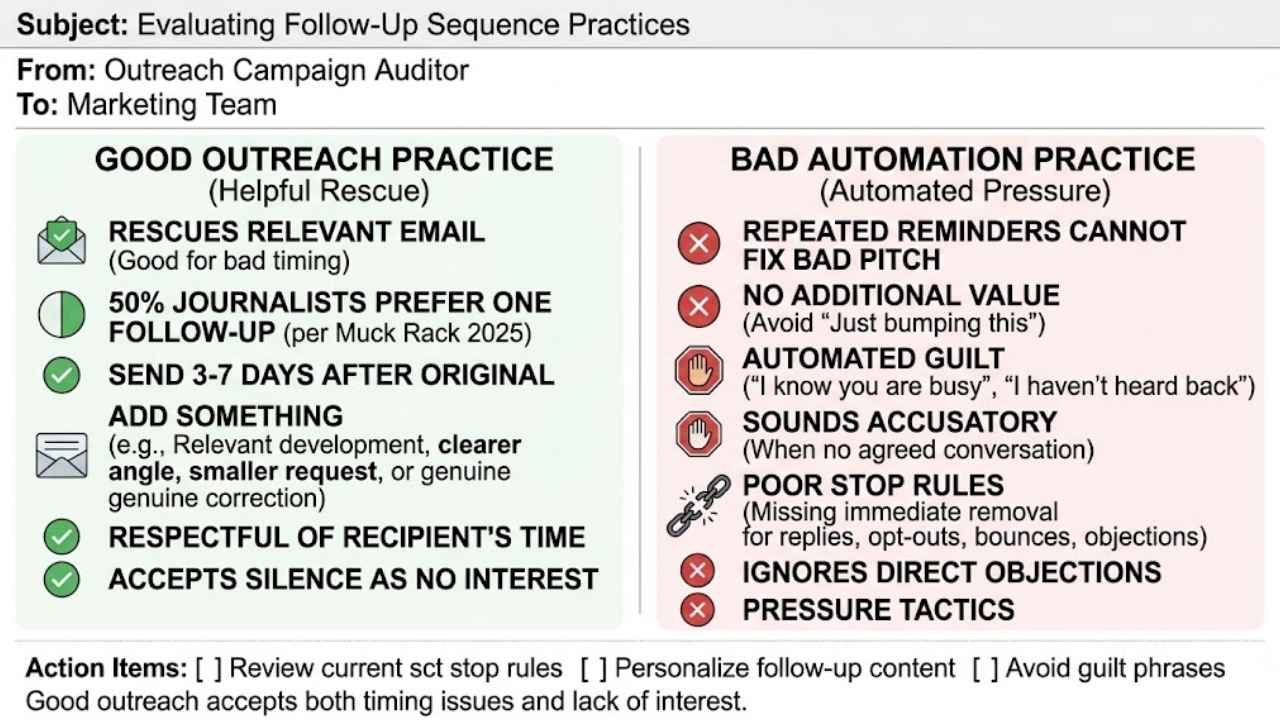
A follow-up can rescue a relevant email that arrived at a bad time. Repeated reminders cannot turn an unsuitable pitch into a good one.
Muck Rack’s 2025 journalist data found that 50% preferred one follow-up, while 51% favored receiving it three to seven days after the original message. Those figures are useful for media outreach, not universal instructions for every campaign.
Cold sales may justify a longer sequence, but additional messages should add something. A relevant development, a clearer angle, a smaller request, or a genuine correction can justify another email. “Just bumping this” does not.
Automated guilt is worse. Phrases such as “I know you are busy” and “I haven’t heard back” can sound accusatory when the recipient never agreed to the conversation.
The sequence also needs working stop rules. Replies, opt-outs, bounces, and direct objections should remove or suppress the contact immediately. Silence may reflect poor timing, but it can also mean there is no interest. Good outreach accepts both possibilities.
7. Sending Before Checking Deliverability and Compliance
The first six mistakes can cause deletion. Technical and compliance failures may prevent the email from being seen at all.
Gmail currently requires senders to personal Gmail accounts to use SPF or DKIM authentication, along with other infrastructure and formatting requirements. Senders delivering more than 5,000 messages per day to personal Gmail accounts face stricter conditions. These include SPF, DKIM, DMARC, domain alignment, and keeping the reported spam rate below 0.3%. Relevant marketing and subscription messages must also support one-click unsubscribe and contain a visible unsubscribe link.
Yahoo maintains its own bulk-sender requirements covering authentication, complaint control, and easy unsubscribing. Microsoft also requires SPF, DKIM, and DMARC from domains it classifies as high-volume senders, using 5,000 messages per day as its published threshold. These providers do not use identical rules, so copying one technical checklist across every sending environment is risky.
Authentication is not only a concern for companies near those thresholds. A small team sending a few hundred carefully targeted emails can still damage its domain reputation through poor configuration, invalid addresses, or high complaint levels. Third-party outreach software does not remove that responsibility.
The legal position depends on the message and jurisdiction.
In the United States, CAN-SPAM covers commercial email and does not exempt business-to-business messages. The primary purpose of the email determines whether it is commercial. Covered messages require accurate sender information and subject lines, identification as advertising, a valid postal address, and a clear opt-out method. Opt-out requests must be honored within 10 business days.
A media pitch, link-building request, and sales email may not always receive the same legal treatment. Their purpose and content matter, which makes blanket claims that “cold email is legal” or “cold email is illegal” unhelpful.
UK rules make another distinction. PECR generally permits unsolicited electronic marketing to corporate subscribers without prior consent. Sole traders and certain partnerships are treated as individual subscribers and receive stronger protection. When a named business address identifies a person, UK GDPR obligations can still apply even if that person works for a limited company.
Before sending, teams should know where contact data came from, authenticate every sending domain, maintain suppression lists, process opt-outs promptly, and remove invalid addresses. Provider rules and national laws can change, so high-volume or international campaigns need current checks rather than a compliance document copied from an old playbook.
A Quick Pre-Send Check
Review a sample of actual campaign records, not only the master template:
- Does each recipient have a defensible reason for being on the list?
- Does the opening explain that reason without a generic compliment?
- Is the benefit specific enough for the recipient to evaluate?
- Is there one clear request?
- Have names, employers, article titles, and other variables been checked?
- Does the subject line describe the message honestly?
- Can the recipient decline further contact without friction?
- Is the sending domain authenticated?
- Will replies, bounces, objections, and opt-outs stop the sequence?
Do this before launch. Finding a broken personalization field after hundreds of messages have been sent is not a useful quality-control process.
The Practical Takeaway
Before sending the next campaign, choose ten contacts at random and ask why each one belongs on the list. Then read the email from that person’s position. If the relevance, benefit, or request cannot be explained plainly, fix the campaign before adjusting subject lines or adding more follow-ups.
The most expensive outreach email mistakes usually begin before anyone starts writing. Better selection, a worthwhile offer, and disciplined sending will do more for the campaign than another polished template.