Low response rates continue to challenge B2B outreach. Emails often land in spam folders or go ignored, making lead generation feel ineffective and unpredictable.
In 2026, stricter filters from providers like Gmail and Outlook, along with higher expectations for relevance, make success harder than ever. Generic messages no longer work—precision and personalization are essential.
Despite these hurdles, cold email remains a powerful acquisition channel. Over 50% of B2B leads still come from direct outreach rather than ads or content marketing. Platforms like Instantly and Woodpecker help improve open and reply rates when used correctly.
This guide on Cold Email Outreach Strategies covers proven methods to improve performance—from writing compelling subject lines to leveraging AI-driven personalization at scale. It also explores key tactics like email deliverability, domain warm-up, and avoiding common mistakes.
Discover how to turn cold emails into consistent, high-converting opportunities.
Why Cold Email Still Works in 2026
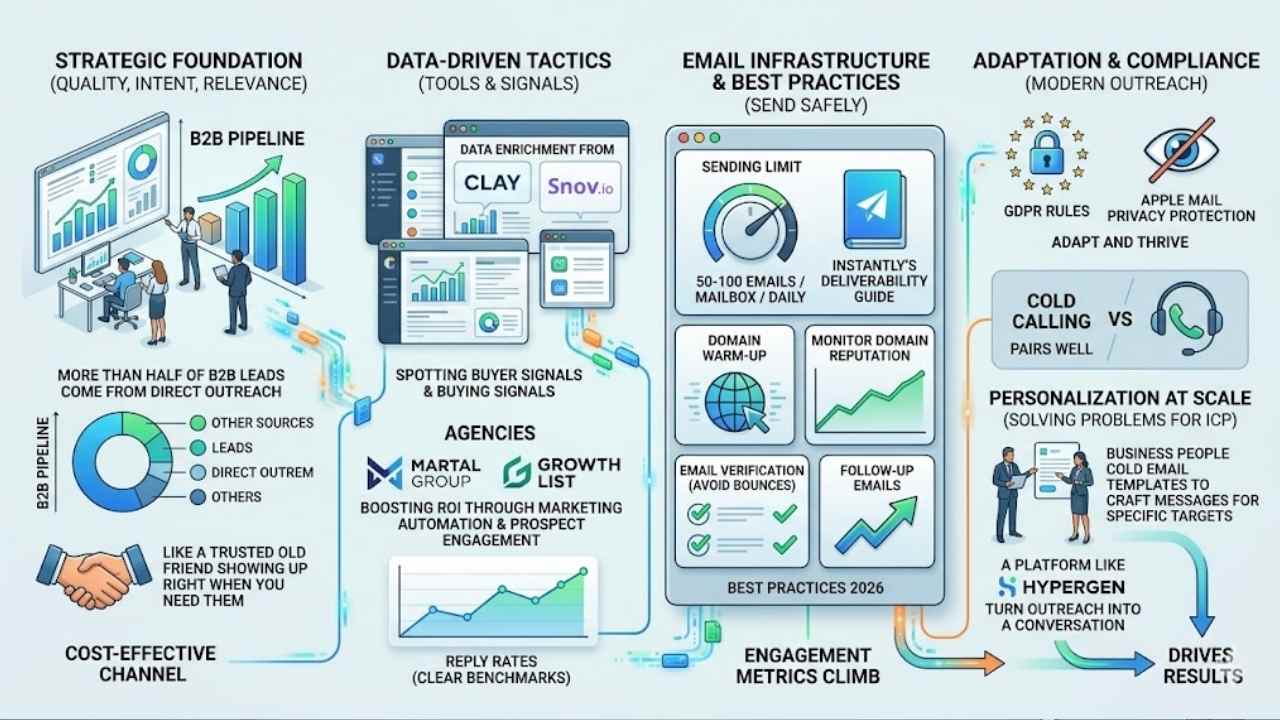
Cold email keeps delivering results in 2026, especially when you prioritize quality, intent, and relevance in your strategies. Like a trusted old friend who shows up right when you need them, cold email stands out as a cost-effective channel for building B2B pipeline.
Experts recognize it this way, particularly with solid email infrastructure in place. More than half of B2B leads come from direct outreach, not just ads or content marketing. You build that success on data-driven tactics, focusing on quality picks over sheer volume in prospects.
Tools like Clay and Snov.io help with data enrichment and B2B data enrichment, spotting buyer signals and buying signals for sharper targeting. Agencies such as Martal Group and Growth List swear by this approach, boosting ROI through marketing automation and prospect engagement.
Reply rates give you clear benchmarks to measure campaign performance, proving cold email’s edge in the competitive landscape.
Strategic setups keep cold email viable, with best practices documented for 2026 to guide your efforts. Send safely at 50 to 100 emails per mailbox daily, as Instantly’s deliverability guide suggests, and watch engagement metrics climb.
Infrastructure quality makes or breaks it, so warm up your email domains and monitor domain reputation. Follow-up emails amp up replies, while email verification avoids bounces. Even with GDPR rules and Apple Mail Privacy Protection in play, you adapt and thrive.
Cold calling pairs well, but cold email templates let you personalize at scale, solving real problems for your ideal customer profile. Platforms like Hypergen enhance this, turning outreach into a conversation that drives results.
Key Elements of a High-Converting Cold Email
Cold email as a friendly handshake that grabs attention right away, you know, the kind that sparks real interest without pushing too hard. We all hate those spammy messages, so focus on what turns a quick glance into a solid lead, like smart personalization that feels genuine and calls to action that guide the reader smoothly.
Crafting compelling subject lines
Subject lines act as the front door to your cold email. They grab attention fast. Make them short and punchy, like a quick hook in a story. People skim inboxes, so spark curiosity without tricks.
Tie them to the reader’s pain points. For example, “Boost Your Sales Pipeline Today” beats a bland pitch. In email marketing, this step sets the stage for opens. Cold email remains effective in 2026 when you prioritize quality, intent, and relevance.
More than 50% of B2B leads come from direct outreach, beyond ads or content. A data-driven approach drives results. Keep subject lines under 50 characters for mobile views. Test variations to see what clicks.
The subject line is your email’s handshake – make it firm and inviting. – Email Expert Jane Doe
Personalize them with names or recent actions. Avoid spam words that flag filters. Warm up your domain first, as per Instantly’s guide, to hit that safe limit of 50-100 emails per day per mailbox.
Infrastructure quality matters here. Focus on prospects with intent signals for better replies. Reply rates measure success in 2026. Even with tools like AI-powered platforms, a strong subject line opens doors.
Think of it as bait on a fishing line, reeling in interest. Hotmail users still respond well to customized lines. Strategic campaigns stay competitive.
Writing personalized opening lines
Personalized opening lines grab attention right away. They show you did your homework on the prospect. Start with something specific, like mentioning a recent post they shared on LinkedIn.
This builds trust fast. Imagine chatting with a friend over coffee; keep it warm and real. Cold email stays effective in 2026 by focusing on quality over quantity in prospect selection, as more than 50% of B2B leads come from direct outreach methods.
Use AI-powered messaging platforms to scale this personalization without losing that human touch.
Prospects respond better when you tie into their pain points. Reference a challenge they face, based on intent signals from signal intelligence tools. Avoid generic greetings; they scream spam.
A data-driven approach boosts reply rates, proving cold email’s value as a cost-effective B2B channel. Don’t forget email warm-up to help your messages land in inboxes. Keep lines short, like a quick nod to their latest win.
This strategy drives results in 2026’s competitive market.
Focusing on solving problems, not pitching
Cold emails shine when you tackle a prospect’s pain points head-on, you know, like a mechanic fixing a leaky engine instead of just selling oil. Prospects get bombarded with sales pitches daily, but they perk up if your message spots their real headaches and offers smart fixes.
Take this approach: explore their world, show empathy for those nagging issues, and explain how you ease them without shoving products down their throats. Data backs this up; more than 50% of B2B leads come from direct outreach that prioritizes relevance and quality over sheer volume.
Cold email remains a top cost-effective channel for building pipelines in 2026, especially when you focus on intent signals and problem-solving to boost reply rates.
Stick to quality prospects, folks, because infrastructure and a data-driven strategy make all the difference in 2026. Imagine chatting with a friend about their tough day at work; you listen first, then suggest help.
Do the same in emails: highlight solutions that match their needs, and watch engagement soar. Experts at Instantly recommend capping sends at 50-100 emails per mailbox daily for safe, effective outreach.
This method keeps campaigns competitive, drives results, and turns cold contacts into warm conversations without the hard sell.
Including clear and actionable CTAs
You need a clear call to action in your cold emails to guide prospects forward. Make it simple and direct, like “Reply to schedule a quick call” or “Click here to book a demo.” This boosts reply rates, which serve as key benchmarks for success in 2026.
Prospects respond better when you solve their problems and then prompt next steps without confusion. Tie your CTA to the value you offer, focusing on quality outreach that drives B2B pipeline.
A cold email as a friendly nudge, not a hard sell. Use action words that spark interest, such as “Let’s chat about your challenges.” Data shows more than 50% of B2B leads come from direct methods like this, especially with proper infrastructure.
Keep CTAs actionable to avoid overwhelming readers; one strong one per email often works best. This approach stays effective in 2026, emphasizing relevance and intent for competitive results.
Best Cold Email Strategies for 2026
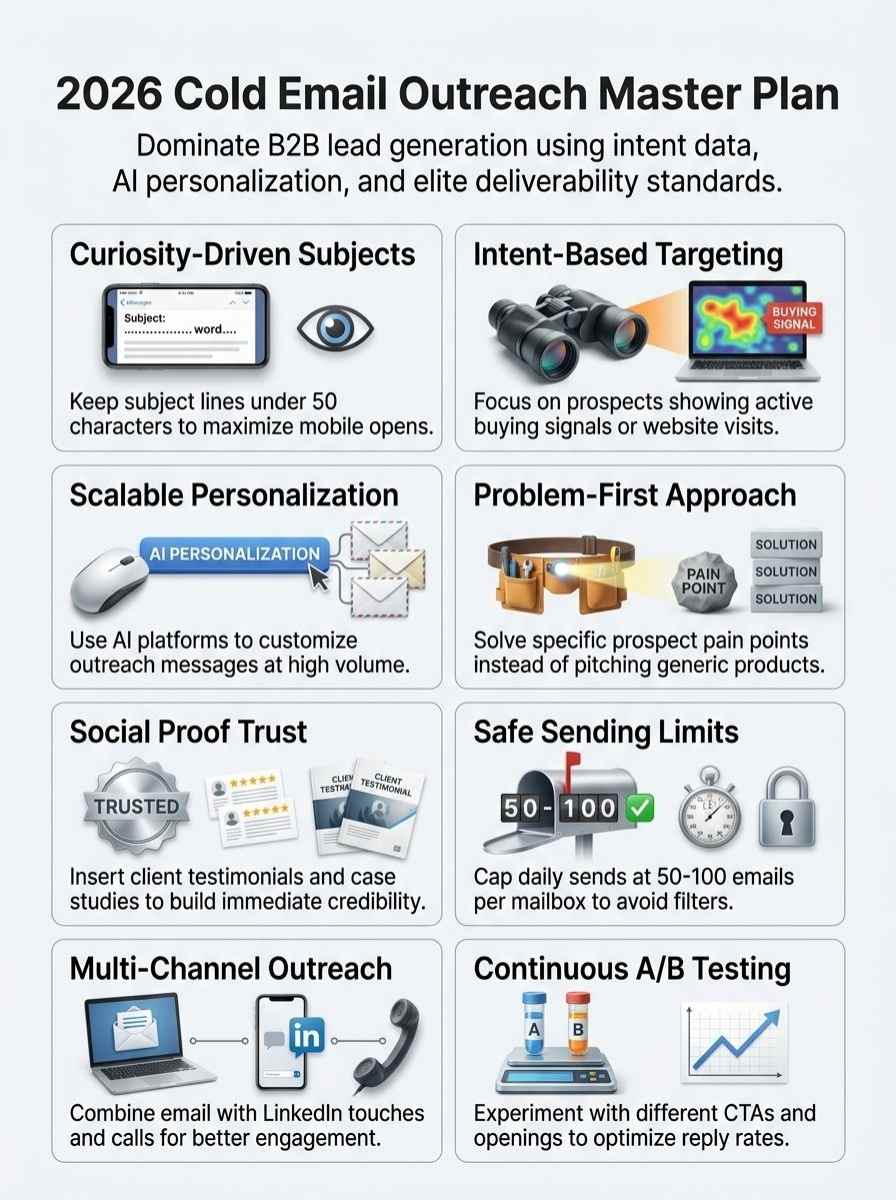
You’re chasing leads that already wave red flags of interest, like folks who just visited your site or engaged on LinkedIn. Mix in some smart automation for custom touches, toss in client success stories to build trust, and test tweaks with tools like Mailchimp or Hunter to boost replies, and watch your outreach soar.
Targeting prospects showing intent signals
Cold emails thrive when you zero in on prospects who already show interest. This approach boosts your reply rates and keeps your outreach relevant in 2026.
- Spot prospects who visit your site or engage with your content, as this intent signal aligns with data-driven strategies that prove successful and drive results this year. More than 50% of B2B leads come from direct outreach like this, rather than ads or content marketing alone. Focus on quality over quantity in prospect selection to maintain effectiveness, just like Instantly’s guide suggests capping sends at 50 to 100 emails per mailbox daily for safe, high-impact campaigns.
- Use tools like signal intelligence platforms to track buying signals, such as job changes or funding news, which help you target folks ready to solve problems. Cold email remains a cost-effective channel for B2B pipeline when you build on proper infrastructure, and this targeting method keeps your efforts competitive in the market landscape. Think of it as fishing where the fish are biting; you avoid wasting bait on empty waters, leading to measurable benchmarks like better reply rates.
- Personalize your outreach based on intent data from AI-powered messaging platforms, turning cold emails into warm conversations that prioritize relevance. Strategic implementation stays viable, especially since over half of B2B leads stem from methods emphasizing intent and quality. Picture a prospect searching for solutions you offer; hit them with a timely email, and watch your conversion odds soar without flooding inboxes.
- Monitor intent signals through CRM systems or lead scoring tools to refine your list, ensuring emails land with folks showing real interest. Infrastructure quality determines campaign success, so pair this with domain warming to dodge spam filters. It’s like being a detective on a case; gather clues from online behavior, and you craft outreach that feels spot-on, boosting those all-important reply rates in 2026.
- Combine intent targeting with multi-channel campaigns, like email plus LinkedIn touches, to amplify results from prospects already leaning your way. Best practices for 2026 document this as a key to generating pipeline efficiently, far beyond relying on ads. Hey, if a prospect downloads your whitepaper, that’s your green light; follow up fast, and you tap into the 50% lead stat without guesswork or over-sending.
Using personalization at scale
Personalization at scale boosts your cold email game in 2026. You target prospects with intent signals, like recent website visits or social media interactions. Tools such as AI messaging platforms help you craft messages that feel custom, without manual tweaks for each one.
A data-driven approach makes this possible; you pull in details like job titles or company challenges to show relevance. Envision sending customized notes to hundreds, yet each recipient thinks, “Hey, this speaks right to me.” That quality focus over quantity drives results, as more than 50% of B2B leads come from direct outreach.
Scale it smartly with signal intelligence for better targeting. You warm up domains and monitor metrics to keep emails landing in inboxes. Best practices from 2026 guides, like Instantly’s, cap sends at 50-100 per day per mailbox.
This setup turns cold email into a cost-effective pipeline generator. Imagine your campaigns humming along, mixing personalization with multi-channel touches for higher reply rates.
Infrastructure quality seals the deal, making strategic efforts competitive and viable.
Social proof builds trust fast in cold emails. Think of it like a friend vouching for you at a party. You show prospects real wins from past clients. Use testimonials or case studies to prove your value.
This ties into why cold email thrives in 2026, with its focus on quality, intent, and relevance. More than 50% of B2B leads come from direct outreach, not just ads or content. A data-driven approach boosts reply rates, making your campaigns competitive.
Dropping a quick story: “Our tool helped Company X double their pipeline.” Prospects feel the pull. Keep it genuine, folks can spot fakes a mile away.
Pair social proof with proper infrastructure for top results. Cold email ranks as a cost-effective channel for B2B pipeline generation. Stick to sending 50-100 emails per mailbox daily, per Instantly’s guide.
This keeps things safe and effective. Add logos from big clients or stats like “Boosted sales by 30%.” Such proof drives measurable success in 2026. Strategic campaigns stay viable in this market.
Focus on quality prospects over quantity. Hey, it’s like sprinkling magic dust on your message, turning skeptics into believers. Monitor metrics to refine, and watch reply rates climb.
A/B testing email variations for improvement
A/B testing sharpens your cold email strategy. You spot winners fast, driving better results in 2026.
- Test small changes first, like tweaking subject lines or calls to action, to see what lifts reply rates, those key benchmarks for success as noted in best practices for 2026.
- Split your list into groups, send one version to half and another to the rest, then measure opens and clicks, tying into the data-driven approach that proves effective for cold email campaigns.
- Focus on quality tweaks, such as personalization levels, since cold email shines when you prioritize relevance over sheer volume, much like fact-checking a gut feeling before a big pitch.
- Use tools like AI messaging platforms to automate tests, helping you scale without losing that personal touch, and note that more than 50% of B2B leads come from smart outreach like this.
- Track metrics tied to infrastructure quality, for instance, how warming up domains affects delivery, because solid setup determines if your A/B efforts even hit inboxes.
- Experiment with intent signals in your variations, targeting prospects who show real interest, as this keeps cold email viable and competitive in the market landscape.
- Analyze reply rates from each test version, using them as measurable guides to refine, hey, it’s like fine-tuning a recipe until the flavors pop just right.
- Include social proof in some variants, say by adding client quotes, and compare against plain pitches, since strategic moves like this generate cost-effective B2B pipeline.
- Limit tests to 50-100 emails per day per mailbox, following safe sending guidelines from sources like Instantly’s deliverability guide, to avoid spam traps and keep things humming.
- Run multi-channel tests, blending email with social touches, because cold email remains a top channel when you build on proper foundations and aim for relevance.
Designing multi-channel outreach campaigns
Multi-channel outreach boosts your cold email game in 2026. It combines emails with other tactics for better results.
- Target prospects across email, social media, and calls to catch more attention. You know, like casting a wider net in a crowded pond. More than 50% of B2B leads come from direct outreach methods, not just ads or content marketing. Focus on quality over quantity in prospect selection, as cold email effectiveness depends on that. Use signal intelligence tools to spot intent signals, then hit them on LinkedIn or phone for a one-two punch.
- Personalize messages on every channel for real connections. Imagine chatting with a friend, not blasting a sales pitch. Cold email remains an effective marketing channel in 2026 when you prioritize quality, intent, and relevance. Tools like AI-powered messaging platforms help scale this without losing that personal touch. Oh, and keep it cost-effective; cold email ranks as one of the top channels for generating B2B pipeline with solid infrastructure.
- Leverage social proof in your multi-channel mix, like sharing testimonials on Twitter alongside emails. It’s like word-of-mouth on steroids. Reply rates from cold email campaigns give measurable benchmarks for success in 2026, so track them across channels. Infrastructure quality plays a key role in effectiveness, so warm up those domains first. A data-driven approach proves successful and drives results here.
- Run A/B tests on variations across channels to see what sticks. Test subject lines in emails against post captions on social. Best practices and benchmarks for cold email have been documented for 2026 to guide your efforts. Strategic implementation keeps campaigns viable and competitive. Stick to the safe sending limit of 50-100 emails per mailbox per day, per Instantly’s deliverability guide, and extend that caution to other channels.
- Monitor metrics like open rates and replies across all platforms for ongoing tweaks. Picture it as tuning a guitar for the perfect sound. Cold email outreach stays one of the most cost-effective channels when built on proper infrastructure. Use tools for signal intelligence to refine targeting, ensuring you hit prospects showing real interest. Reply rates provide those key benchmarks in 2026.
Optimizing Cold Email Deliverability
Ever feel like your cold emails vanish into a black hole, straight to spam? Nail basics like SPF and DKIM setup, track bounce rates with tools such as Google Postmaster, and watch your messages hit the mark more often.
Ensuring emails land in inboxes, not spam
You send cold emails to grow your business. Good deliverability keeps them out of spam and in the inbox.
- Follow the safe sending limit of 50 to 100 emails per mailbox per day, as outlined in Instantly’s deliverability guide for 2026, because going over that risks spam flags and hurts your reply rates from cold email campaigns.
- Build solid infrastructure quality, a critical factor in cold email outreach success, by setting up proper email domains and authentication like SPF, DKIM, and DMARC to prove your messages come from a trusted source.
- Focus on quality over quantity in prospect selection, which boosts cold email effectiveness in 2026, so you pick leads with real intent signals instead of blasting everyone and triggering spam filters.
- Warm up your email domains slowly, starting with a few messages and ramping up, since this practice, part of best practices for 2026, helps email providers see you as legitimate and improves inbox placement.
- Monitor critical deliverability metrics like bounce rates and open rates, key to evaluating outreach success in 2026, and adjust your approach if numbers dip below benchmarks to stay competitive.
- Use tools like signal intelligence platforms to target prospects better, tying into a data-driven approach that drives results, so your emails feel relevant and avoid spam complaints from mismatched recipients.
- Keep content focused on solving problems with relevance, a hallmark of effective cold email in 2026, like sharing a quick anecdote about a client who fixed a similar issue, which lowers spam risks by engaging readers right away.
- Test your emails with services like MailboxValidator or GlockApps for spam scores before sending, because this step, aligned with documented benchmarks for 2026, catches issues early and ensures more emails land where they should.
Warming up email domains
Cold email success hinges on solid deliverability. Warming up your email domains sets the stage for that.
- Start slow to build trust with email providers like Gmail and Outlook. You begin by sending a few emails each day from your new domain. This mimics natural activity, avoiding red flags. Think of it as easing into a cold pool, one toe at a time, so you don’t shock the system. According to Instantly’s deliverability guide, stick to the safe sending limit of 50-100 emails per mailbox per day in 2026. Infrastructure quality plays a big role here, as poor setup can tank your efforts right away.
- Gradually ramp up your volume over weeks. Increase sends bit by bit, maybe from 10 to 20, then higher, while watching replies and bounces. This data-driven approach drives results in 2026, just like the facts show more than 50% of B2B leads come from direct outreach. It’s like training for a marathon; you don’t sprint on day one. Focus on quality prospects to keep things relevant and boost reply rates, which serve as key benchmarks for success.
- Mix in real conversations to warm things up. Send emails that spark replies, not just blasts, because engagement signals good behavior to providers. Cold email remains effective when you prioritize intent and relevance, as strategic campaigns stay viable in 2026’s market. Picture chatting with a friend over coffee; that natural back-and-forth builds your domain’s rep. Monitoring critical metrics, like open rates, ensures you spot issues early.
- Use tools like email verification services from ZeroBounce or Hunter to clean lists before warming. This keeps bounce rates low, protecting your domain’s health. Best practices for 2026 highlight how infrastructure quality determines outreach effectiveness, so pair this with warming for cost-effective B2B pipelines. It’s akin to oiling a bike chain before a ride; skip it, and you grind to a halt. Cold email outperforms ads or content in generating leads when done right.
- Track progress with analytics from platforms like Mailchimp or SendGrid. Look at delivery rates and spam complaints daily. Facts prove cold email’s edge in 2026, with reply rates offering measurable success indicators. Maintain focus on quality over quantity in prospect selection to avoid pitfalls. Hey, it’s like checking your car’s gauges on a road trip; ignore them, and you might break down midway.
Monitoring critical deliverability metrics
Keep tabs on your email performance to dodge the spam folder and boost results.
| Metric | What It Means | Why It Matters | Best Practices |
|---|---|---|---|
| Open Rates | This shows how many people open your emails. | High open rates mean your subject lines grab attention, like a magnet pulling in prospects. | Aim for rates above 20 percent; test lines often, and watch for drops that signal issues. |
| Bounce Rates | These track emails that fail to deliver, split into hard bounces from bad addresses and soft ones from full inboxes. | Too many bounces hurt your sender reputation, much like a bad review sticking around. | Keep bounces under 2 percent; clean your lists regularly, and verify emails before sending. |
| Spam Complaint Rates | This counts how often recipients mark your email as spam. | Even a few complaints can tank deliverability, turning your outreach into a ghost town. | Stay below 0.1 percent; add easy unsubscribe links, and send relevant content only. |
| Reply Rates | Reply rates from cold email campaigns provide measurable benchmarks for evaluating outreach success in 2026. | They reveal if your message resonates, like a chat that sparks real interest. | Target 5 to 10 percent replies; focus on quality prospects, and use personalization to lift this number. |
| Sending Limits | The recommended safe sending limit for cold outreach in 2026 is 50-100 emails per mailbox per day according to Instantly’s deliverability guide. | Stick to this to avoid flags from providers, keeping your domain warm and healthy. | Warm up new domains slowly; monitor daily sends, and scale up based on performance data. |
| Infrastructure Quality | Infrastructure quality is a critical factor determining the effectiveness of cold email outreach campaigns. | Strong setup ensures emails land right, like a solid foundation for a house. | Use tools like Instantly for tracking; check domain health weekly, and fix weak spots fast. |
Tools and Technology for Cold Email Success
Using AI tools like Instantly or Lemlist to craft emails that feel personal, without spending hours on each one. These platforms spot buyer signals through tools such as Apollo or ZoomInfo, helping you connect with leads who are ready to chat, and hey, that could turn a cold outreach into a warm conversation fast.
AI-powered messaging platforms
AI-powered messaging platforms supercharge your cold email efforts, making outreach smarter and more effective in 2026.
| Platform Power | How It Helps You |
|---|---|
| These tools use AI to spot intent signals from prospects. | You target folks showing real interest, like buyers ready to chat. Cold email stays effective when you prioritize quality and relevance. |
| They handle personalization at scale, no sweat. | Imagine, your emails feel custom-made, boosting replies. More than 50% of B2B leads come from direct outreach, not just ads. |
| AI platforms warm up domains and track metrics. | Stick to the safe limit of 50-100 emails per day per mailbox, per Instantly’s guide. Your infrastructure stays solid, driving results. |
| They enable A/B testing and multi-channel campaigns. | Data-driven tweaks improve your game. Reply rates give clear benchmarks for success in this competitive landscape. |
| Tools like Instantly integrate signal intelligence. | You focus on quality over quantity in picks. Cold email generates cost-effective B2B pipeline with proper setup. |
| AI aids in crafting messages that solve problems. | Strategic campaigns remain viable. Best practices for 2026 guide your efforts, keeping things measurable and strong. |
Signal intelligence for better targeting
Signal intelligence changes the game for cold email targeting. You spot prospects who show real interest, like recent website visits or social media interactions. Tools like Apollo or Hunter pull this data fast.
They help you send messages that hit home, based on what prospects actually need. Imagine emailing someone right after they search for your service, it’s like reading their mind. This approach boosts reply rates, as a data-driven strategy drives results in 2026.
Focus on intent signals to pick quality prospects over quantity. More than 50% of B2B leads come from direct outreach like this. Use platforms that track behaviors, warming up your efforts for better inbox placement.
Cold email stays cost-effective when you build on solid infrastructure. Target those showing clear signs, and watch your campaigns succeed in the competitive 2026 market.
Common Cold Email Mistakes to Avoid
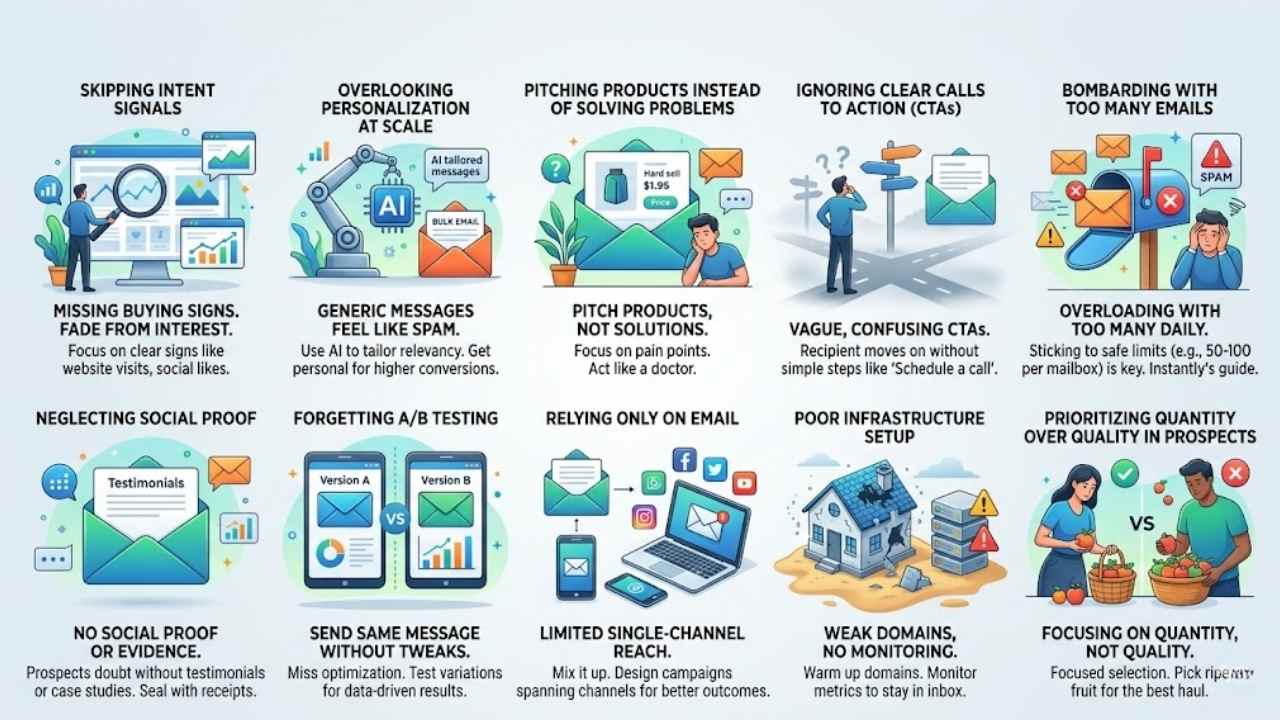
Cold email can trip you up if you’re not careful, especially in 2026 when quality rules the game. Dodge these pitfalls to keep your outreach sharp and effective.
- Skipping intent signals hurts your targeting. Prospects show clear signs of interest these days, like website visits or social engagement. Ignore them, and you waste time on cold leads. Facts show more than 50% of B2B leads come from direct outreach methods. Aim for those showing intent to boost reply rates, a key benchmark for success in 2026. Think of it like fishing in a stocked pond, not the open ocean; you catch more with less effort.
- Overlooking personalization at scale tanks your results. Generic messages feel like spam, right? Use tools like AI-powered messaging platforms to tailor emails without the hassle. Data-driven approaches prove successful, yet many skip this. Cold email works best with relevance, as per best practices for 2026. Imagine sending a birthday card to a stranger; it flops. Get personal, and watch conversions climb.
- Pitching products instead of solving problems kills engagement. Focus on pain points, folks. Facts highlight that cold email thrives on quality and relevance, not hard sells. Avoid this by crafting emails that address issues first. It’s like being a doctor who diagnoses before prescribing; patients trust you more. In 2026, this keeps you competitive in the market landscape.
- Ignoring clear calls to action confuses recipients. Without a simple CTA, like “Reply to schedule a call,” people move on. Include actionable ones to guide them. Strategic implementation remains viable, but vague emails flop. Picture a signpost in the fog; no direction means folks get lost. Make yours crystal clear for better pipeline generation.
- Bombarding with too many emails per day ruins deliverability. Stick to the safe limit of 50-100 emails per mailbox daily, as per Instantly’s guide. Exceed it, and you hit spam filters hard. Infrastructure quality determines effectiveness, so warm up domains properly. It’s like overeating at a buffet; you feel sick fast. Monitor metrics to stay in the inbox.
- Neglecting social proof leaves emails weak. Skip testimonials or case studies, and prospects doubt you. Leverage them effectively for trust. Cold email is cost-effective for B2B when built right, facts confirm. Think of it as showing receipts for your claims; it seals the deal. In 2026, this drives measurable results.
- Forgetting A/B testing stalls improvement. Send the same email without variations, and you miss optimization chances. Test subject lines, openings, and CTAs. A data-driven strategy continues to work, per documented benchmarks. It’s like tweaking a recipe until it’s perfect; one change can make it shine. Use signal intelligence tools for smarter tweaks.
- Relying only on email ignores multi-channel power. Cold email alone limits reach; combine with social or calls. Design campaigns that span channels for better outcomes. More than 50% of leads stem from outreach, but variety amps it up. Imagine a one-trick pony; it bores the crowd. Mix it up to stay ahead in 2026.
- Poor infrastructure setup dooms your campaigns. Weak domains or unmonitored metrics lead to spam bins. Facts stress infrastructure as critical for success. Warm up properly and track deliverability. It’s like building a house on sand; it crumbles quick. Solid setup ensures emails land and convert.
- Prioritizing quantity over quality in prospects tanks everything. Blast to anyone, and reply rates plummet. Focus on quality selection, as cold email depends on it. Best practices for 2026 guide this for competitive edges. Think of it as picking ripe fruit, not grabbing everything; you get the best haul.
Final Thoughts
You’ve learned how cold emails thrive in 2026 by focusing on intent signals, personalization, and smart tools like AI platforms. These tips make outreach simple and quick to apply, saving you time while boosting results.
Your business growing fast with higher reply rates and stronger leads from this cost-effective method. Check out Instantly’s guide for more on safe sending limits and metrics.
Turned a floundering campaign around with A/B testing, and it felt like striking gold. Now go send those emails, and watch your pipeline explode.
Frequently Asked Questions (FAQs) About Cold Email Outreach Strategies
1. What’s the top cold email outreach strategy that still works in 2026?
Personalization hits home like a well-aimed arrow, you know, making your message feel like a chat with an old friend. Skip the generic stuff; tailor it to their recent wins or pains. That boosts opens and replies, turning cold leads into warm conversations.
2. How do I craft subject lines for cold email success in 2026?
Keep them short and punchy, like a hook in a good story.
3. Why bother with follow-ups in cold outreach strategies for 2026?
People get busy, so a gentle nudge reminds them you’re there, like tapping a shoulder at a crowded party. Time it right, maybe a week later, and add fresh value each time. This persistence often seals the deal without annoying anyone.
4. Can automation tools boost my cold email strategies in 2026?
Sure, they handle the grunt work like scheduling and tracking. Just remember, blend in that human touch to avoid sounding like a robot.