Governments, law firms, and employers now run immigration cases through software, and the label for that software covers very different jobs. One system files a visa petition. Another stores agency records. A third flags people for enforcement.
A system can organize information without explaining what that information means. When a vendor says a tool tracks or predicts something, the useful question is what it records and who acts on the result. The Brookings Institution notes that past administrations have amassed varying technological tools to aid in immigration enforcement. A filing platform helps an attorney meet a deadline. A watchlist match can start a case against a person. The same broad category can carry very different stakes.
What Is Immigration Technology, Really?
At its simplest, the term means any tool that helps a person file, store, or search immigration information and act on it. That covers attorney case software and government databases, along with systems built to flag people for review. The tasks differ enough that one label can mislead you about what a product actually does.
Start with the legal side. Stanford Law School’s CodeX center keeps a record of legal-tech projects in this field. One of them is SESO INC, a company automating the H-2A visa, an uncapped visa that lets employers bring in foreign workers for seasonal farm labor. The output there is a filed petition. Nobody gets flagged or detained. Vendors in that space mostly sell speed: fewer forms, fewer missed deadlines.
Government records form a second category. The Department of Homeland Security hosts a public use-case inventory for ICE’s systems. That page tells you which tools an agency says it uses, and it is one of the few places where the list comes from the agency itself. A database built for benefit applications and one built for enforcement can hold the same names, which is why purpose matters more than data. Some of those records are public and some are not. That shapes what any outside researcher can verify.
Enforcement is the third category, and it draws the most attention. Brookings researchers describe successive administrations building up technology tools for immigration enforcement. People sometimes call the whole field migration technology, using migration as the broader word for movement across borders. Either way, the tools stay the same. If you are the person in a case rather than a reader of headlines, legal guidance on your rights and next steps will help you more than a product description will. What remains harder to pin down is where one category ends and the next begins, since the same data often sits behind all three.
A Tool Is Not the Same as a Decision
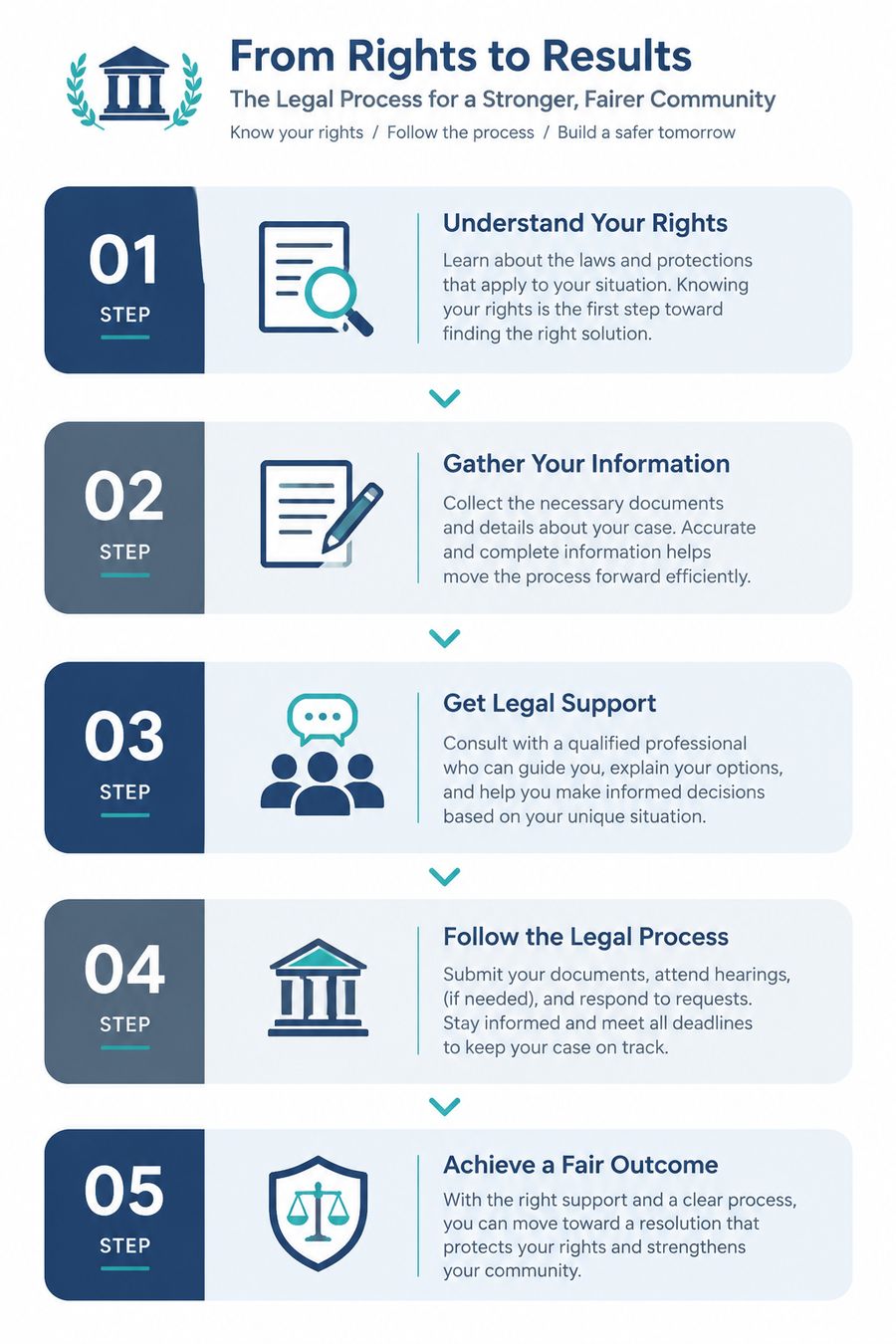
A record that is wrong and invisible follows a person through every later check, and that costs real choices. Separating what the software does from what a person decides to do with it is the way to see where the harm enters. Five steps trace that path, from the data going in to the action coming out.
- Name the input. Start with what the system records: a filing date, a travel history, a license plate, a court docket.
- Find the operator. Work out which agency or company runs it, and which contract or rule sits behind them.
- Trace the trigger. Establish what has to be true before action lands on a person. A flag in a database is a prompt for someone to look, not a verdict.
- Check the challenge path. See whether the person can view the record and get a mistake in it corrected.
- Weigh the rights at stake. A 2026 analysis from Ave Maria School of Law frames the question as one of balancing innovation in immigration enforcement against constitutional guarantees.
Most systems fall short at step four. When nobody can view or fix the underlying record, errors multiply. So before you trust any flag, put the step four question to it: can the person behind that flag see the file, and can they set it straight?
Who Sells, Uses, and Works on These Systems?
Three groups share the work. Vendors build and sell immigration technology. Agencies and firms use it. Workers keep it running, or push back against it. Their jobs barely overlap, so each group sees a different slice of the same system.
| Group | Example | What they do |
|---|---|---|
| Enterprise vendors | Palantir | Built ImmigrationOS, an ICE tracking platform reported in August 2025 |
| Visa and legal platforms | SESO INC and similar vendors | Automate petitions such as the H-2A visa |
| Public agencies | ICE and the Department of Homeland Security | Run systems and publish use-case inventories |
| Research groups | Brookings, CSET, and the American Immigration Council | Document deployments and their effects |
| Workers | Engineers, analysts, attorneys, policy staff | Build, review, file, and oversee the work |
One field, then, stretching from code to courtrooms, with almost no shared vocabulary.
August 2025 gave the field its clearest example. Palantir’s ImmigrationOS, the American Immigration Council reported, was a platform ICE planned to use to track immigrants’ movements. A prototype was slated for delivery by September 25, 2025, and the contract runs through September 2027.
The reported cost was $30 million. Vendor, deadline, contract length, price — one record, and you can check each part yourself.
Careers follow the same split. Software engineers and data analysts write the code. Compliance officers, immigration attorneys, and policy researchers sit on the other side of the desk.
Policy work runs both ways. A 2019 CSET report tied immigration policy to the U.S. AI sector, arguing that “the United States will continue to rely on foreign AI talent to stay ahead of the curve”.
Who can override a machine is a live question in operational technology too, where control systems meet human sign-off. What no directory answers is the harder one here: when a flag turns into an arrest, who gets to see the full record?
When Does a Lead Become an Assumption?
Most mistakes start when a database match gets treated as proof of wrongdoing. Records go stale. They get attached to the wrong person. A detail can mean something different than it did when it was entered. For the person named, the cost is real: an error they cannot see can lead to a stop, a detention, or a court date.
Six checks help you sort a real claim from an assumption.
- Find the record. Ask which document or data point the claim rests on, rather than which tool is named.
- Check the date. Once profiles are merged, an old address or job can look current.
- Check the tool’s role. If a name such as Zignal Labs or Falcon ICM shows up in a claim about surveillance contractors, find the contract or agency document that names the tool. Check that the same document states what the tool does before you accept a description of it.
- Separate the agencies. ICE handles immigration enforcement. The National Park Service does not. A federal uniform or vehicle will not tell you which agency you are dealing with.
- Check the correction path. A 2026 law-school analysis frames enforcement technology around constitutional guarantees. That makes the right to see and fix a record the part worth testing.
- Ask what the tool was built for. The ImmigrationOS reporting describes movement tracking, not case decisions.
Public money often moves ahead of public rules. The funding behind quantum technology research shows that gap clearly, and enforcement data carries the same lag. You can check most of these items yourself, starting with the agency that published the record.
What Changes—and What Stays at Stake?
A Reuters photograph taken on January 17, 2017 shows a surveillance camera fixed to the border fence between the United States and Mexico in El Paso. That camera is the oldest layer of enforcement technology: hardware bolted to a physical line. What changed since sits above the fence, in the data systems that decide who gets a closer look.
Brookings researchers describe how past administrations gathered different technology tools to support immigration enforcement. The 2017 image dates from days before President Trump took office, and the enforcement stack has kept growing under the administrations that followed. A contract date from that era tells you when a system arrived, not what it can do.
One record can serve a benefit application and an enforcement case at the same time. That is where the disputes start: privacy, accuracy, and oversight. A 2026 law-school analysis puts constitutional guarantees at the center of the question, and no software upgrade rewrites them.
The shift reaches past the United States. A PICUM report describes digital technology as a growing part of the EU’s immigration enforcement strategy and architecture. Amnesty International frames the same trend as border externalization, with states pushing controls outside their own territory through security and migration management technologies.
A photograph can date a system better than a report can, which is why images often make the clearest record of technology change at a border. The CSET report ties immigration policy to the country’s AI workforce, since the same rules decide who builds the tools.
Questions Behind the Headlines
Headlines about immigration technology mix broad public claims with narrow legal and operational facts. The questions below come up most often. Each one has a more specific answer than the headline suggests.
How does ICE know who to target?
ICE builds leads from records it can reach. Case files feed in, along with court data and employment or license records. Then an officer decides whether to act. Public sources show which systems an agency uses.
They rarely show how one person ended up on a list. The Department of Homeland Security’s use-case inventory for ICE tells you what the systems are for, not who they flag. Brookings has documented the tools available to enforcement agencies. The threshold stays hidden: nobody outside the agency knows how strong a match must be before it draws attention.
Is ICE arresting legal immigrants?
Status and history are separate questions, so no single yes or no covers this. A person can hold a valid visa or green card. Detention can still follow a past immigration violation, a missed court date, or a criminal charge.
Blanket claims in either direction do not hold up. What decides a case is the specific legal basis named in the paperwork. Sometimes that is a statute. Other times it traces back to a prior order, or to a charge. A 2026 law-school analysis of AI in immigration enforcement notes that these controversies are longstanding in the United States. The disputes are older than the tools.
What is the 7 year rule for immigrants?
The phrase “7 year rule” sounds authoritative when someone says it. U.S. immigration law contains no single rule by that name. People apply it to different things, and its meaning shifts with the benefit or program the speaker has in mind.
No one seven-year rule covers all immigrants. If you hear the phrase, pin it down: find the form it touches, the agency that handles it, the benefit at stake. The answer changes with the program. A general number will not tell you where you stand.
What This Means in Practice
A weak source can send your case in the wrong direction. So when you meet a claim about immigration technology, check four things: the system, its operator, the evidence behind it, and what the source leaves out.
The system is the tool itself, like a database or a tracking contract. The operator is the agency or company that runs it and answers for it.
The evidence is the record behind the claim. Look for something concrete, like a contract or a court filing. Then come the limits: what the source does not say. That missing part usually matters most.
The Palantir contract shows what good evidence looks like. It has a named vendor, a delivery date, a contract end date, and a price. If a claim about a tool has none of those, treat it as unfinished.
If the claim touches your own case, talk to a qualified immigration attorney.
Three questions work on any platform, whatever its name. What does it record? Who acts on the result? Can the person affected see and correct the record? If you cannot get answers, you know how much trust the claim deserves.