If you have been wondering how gamification in education works, the motivation science explained in plain English starts with a simple truth: students try harder when progress is visible and success feels within reach.
That matters in the U.S. The U.S. Department of Education reported chronic absenteeism was still about 28% in the 2022-23 school year, so teachers keep looking for ways to make class feel worth showing up for.
Gamification does not mean turning every lesson into a video game.
It means using clear goals, points, badges, stories, choice, and fast feedback so learning feels more active. I’ll show you what helps, what backfires, and a few simple activities you can try right away.
What is Gamification in Education?
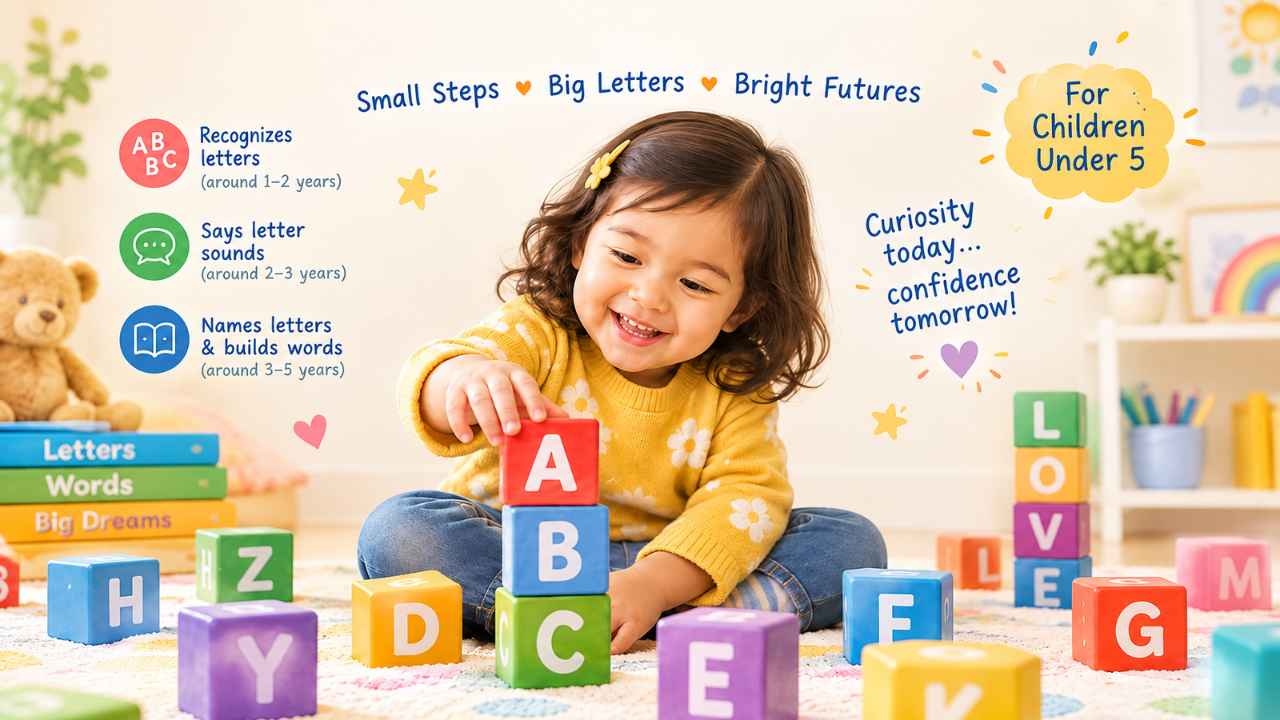
Gamification in education means adding game elements to regular learning tasks. You keep the lesson, quiz, reading, lab, or discussion, then layer on progress signals such as points, levels, badges, quests, or team goals.
It is different from game-based learning. Game-based learning uses an actual game to teach content, while gamification adds game structure to work students already need to do.
A 2024 review in Frontiers in Education examined 90 studies on school engagement and found that gamification was often tied to stronger participation, motivation, and self-regulation. A 2026 review in Algorithms also synthesized 62 studies and kept coming back to the same pattern: the best results appeared when game design supported real academic goals, not when the game layer took over the lesson.
- Clear goals: Students know what they are trying to achieve today, this week, or across a unit.
- Visible progress: A tracker, badge path, or level bar shows growth without waiting for a report card.
- Fast feedback: Students see what worked, what missed, and what to try next.
- Reason to return: Quests, streaks, or team missions give students a reason to come back and keep practicing.
Gamification works best when the game layer supports the lesson. If the game becomes the whole point, motivation fades fast.
That is why strong gamification feels less like a gimmick and more like smart classroom design. It gives students direction, energy, and more chances to succeed in small steps.
Key Elements of Gamification
The key elements of gamification do different jobs. Some make progress easy to see, some add excitement, and some help students care about the work for longer than one class period.
| Element | What it motivates | Best use | Common mistake |
|---|---|---|---|
| Points | Short-term effort and practice | Track repeatable actions like revisions, participation, and quiz retries | Rewarding speed more than understanding |
| Badges | Mastery and milestone pride | Mark skills such as “Completed three drafts” or “Solved five multi-step problems” | Giving out so many badges that none feel meaningful |
| Leaderboards | Social energy and friendly competition | Use team scores, private rankings, or personal bests | Publicly ranking struggling students |
| Stories and quests | Curiosity and persistence | Turn a unit into a mission with roles, checkpoints, and a final challenge | Writing a fun story that does not connect to the lesson |
Points, Badges, and Leaderboards
Points and badges work because they make progress visible. In motivation science, that visible progress supports a student’s sense of competence, which means, “I can do this, and I can see myself getting better.”
A 2024 meta-analysis in Educational Technology Research and Development found that gamification can lift intrinsic motivation, autonomy, and relatedness, but weak designs often fail when students do not feel competent or in control. That is why your point system should reward growth, not just the fastest correct answer.
- Give points for retries, corrections, and collaboration, not only first-place finishes.
- Use badges for meaningful milestones, like mastering all fraction operations or finishing a reading cycle.
- Swap public leaderboards for team boards, private dashboards, or “beat your own score” targets if confidence is fragile.
- Let students opt out of public ranking without losing access to the activity.
Rewards and Incentives
Rewards help students start. Intrinsic motivation helps them stay with the work after the novelty wears off.
The smartest reward systems do both. Use small extrinsic rewards, like points, unlocks, or class privileges, to get attention at the start, then shift the spotlight to mastery, choice, and improvement. If every task pays out a prize, students can start chasing the reward instead of the learning.
A simple fix is to reward behaviors that lead to learning, such as completing a second attempt, explaining reasoning, or helping a teammate. That keeps the incentive tied to the kind of effort you actually want more of.
Storytelling and Narratives
Storytelling gives students a reason to care. A worksheet becomes a mission, a review set becomes a rescue operation, and a research task becomes a case to solve.
Narrative also helps with relatedness and autonomy. Students feel part of something bigger, and they often get more room to choose a role, a path, or a strategy.
- Turn a history unit into a council meeting, trial, or diplomatic mission.
- Frame science review as a lab emergency with checkpoints and evidence cards.
- Use recurring class roles, like analyst, builder, recorder, or strategist, so students feel ownership.
- Keep the plot light and clear, then spend your planning energy on the checkpoints and feedback.
How Gamification In Education Works to Boost Motivation in Students
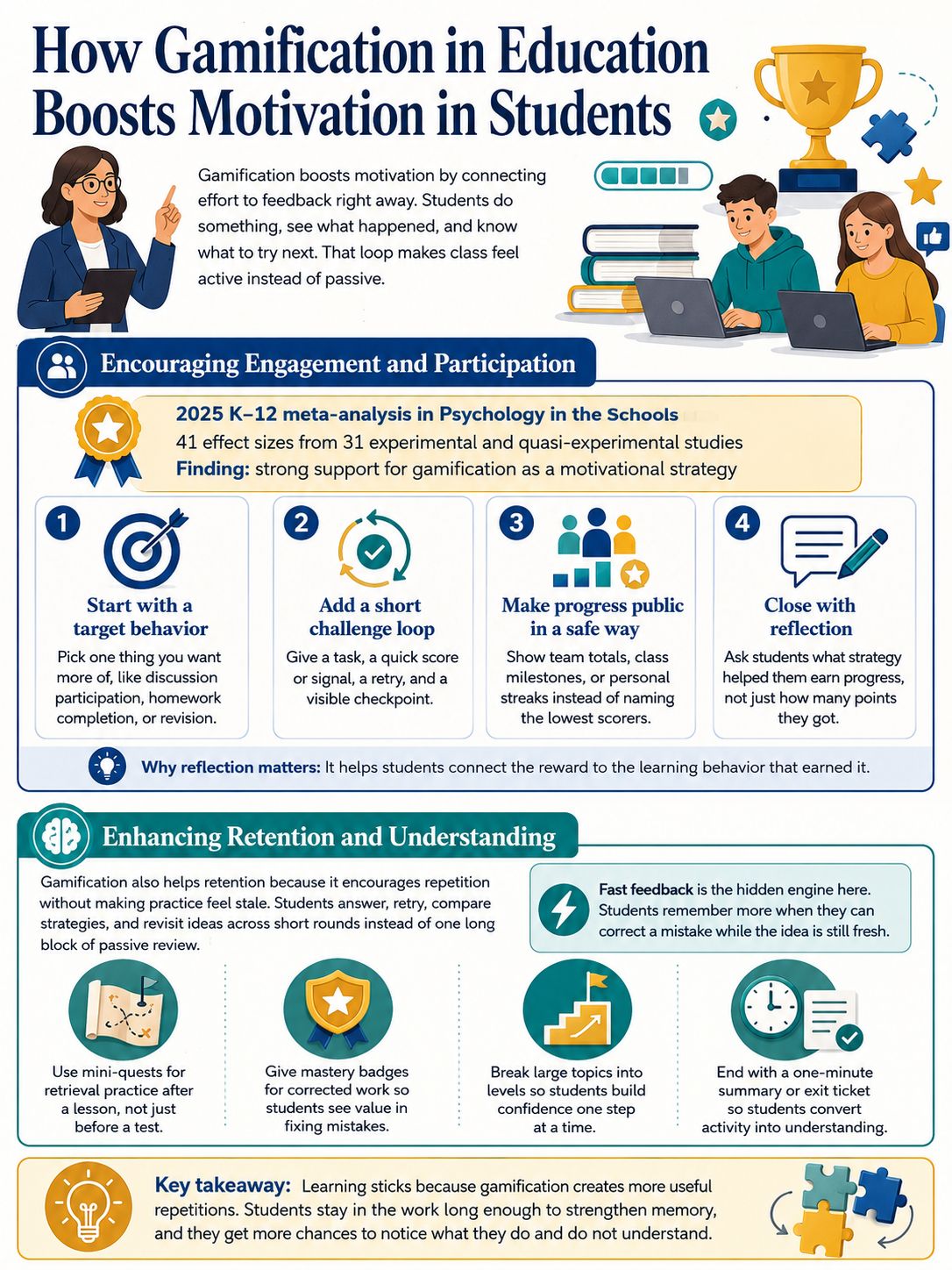
Gamification boosts motivation by connecting effort to feedback right away. Students do something, see what happened, and know what to try next. That loop makes class feel active instead of passive.
Encouraging Engagement and Participation
A 2025 K-12 meta-analysis in Psychology in the Schools synthesized 41 effect sizes from 31 experimental and quasi-experimental studies and found strong support for gamification as a motivational strategy. The big lesson for teachers is simple: students engage more when the task feels clear, fair, and winnable.
- Start with a target behavior. Pick one thing you want more of, like discussion participation, homework completion, or revision.
- Add a short challenge loop. Give a task, a quick score or signal, a retry, and a visible checkpoint.
- Make progress public in a safe way. Show team totals, class milestones, or personal streaks instead of naming the lowest scorers.
- Close with reflection. Ask students what strategy helped them earn progress, not just how many points they got.
That last step matters more than most people expect. Reflection helps students connect the reward to the learning behavior that earned it.
Enhancing Retention and Understanding
Gamification also helps retention because it encourages repetition without making practice feel stale. Students answer, retry, compare strategies, and revisit ideas across short rounds instead of sitting through one long block of passive review.
Fast feedback is the hidden engine here. Students remember more when they can correct a mistake while the idea is still fresh.
- Use mini-quests for retrieval practice after a lesson, not just before a test.
- Give mastery badges for corrected work so students see value in fixing mistakes.
- Break large topics into levels so students build confidence one step at a time.
- End with a one-minute summary or exit ticket so students convert activity into understanding.
In other words, the learning sticks because gamification creates more useful repetitions. Students stay in the work long enough to strengthen memory, and they get more chances to notice what they do and do not understand.
Examples of Gamification in Educational Settings
You do not need a huge tech budget to use gamification well. A paper tracker can work, but the right platform can save time, automate feedback, and make progress easier to see.
Game-Based Learning Platforms
As of 2026, the platform differences are practical, not just cosmetic. Official product pages and help centers show that each tool shines in a different kind of classroom routine, so it helps to match the platform to the teaching job.
| Platform | Best fit | Useful feature | Why that matters |
|---|---|---|---|
| Kahoot! | Live review, warm-ups, assemblies, and shared-screen play | Kahoot! EDU lists Google Classroom, Clever, and Zoom add-ons, plus large live and assigned participation on school plans | It fits teachers who want quick whole-class energy and easy integration with tools they already use |
| Gimkit | Independent practice and homework | Gimkit Pro includes Assignments, so students can play individually on their own time | It works well when you want more repetition outside live class time |
| Blooket | Fast review games with simple follow-up data | Blooket reports show game mode, question set title, number of players, and date played | It helps you spot who played, what they practiced, and what needs reteaching the next day |
One quick tip: do not choose a tool just because students think it is fun. Choose the one that matches your goal. If you need live energy, pick the platform built for live play. If you need homework repetition, pick the one with strong asynchronous assignments and reports.
Classroom Challenges and Quests
Classroom quests work especially well when you keep them short. Start with one unit, one routine, and one clear success rule.
- Week 1: Pick three measurable behaviors, such as bringing notes, finishing practice, and contributing once in discussion.
- Week 2: Add a point scale and one badge path. Keep it small, like 1 to 3 points per action.
- Week 3: Turn the week’s work into a quest with checkpoints, roles, and a final boss challenge, which is just a short cumulative review.
- Week 4: Review the data and ask students what helped them stay engaged, then adjust the rules before the next unit.
For example, an English teacher might run a “case file” quest where students unlock clues by citing evidence well. A science teacher might use a “mission control” board where lab teams earn progress for safe setup, accurate data, and clear conclusions. The point is not the theme alone. The point is giving students a clear path, a reason to participate, and feedback they can use right away.
Final Thoughts
That is how gamification in education works: the motivation science explained through clear goals, visible progress, quick feedback, and reasons to try again.
When you use rewards, stories, and challenges with care, students engage more and practice longer. Start small, keep the learning goal in charge, and your gamification system can support real motivation, stronger participation, and better retention.
FAQs about How Gamification In Education Works
1. What is gamification in education, and how does motivation science fit in?
Gamification in education uses game ideas, like clear goals and steady feedback, to help students learn. Motivation science studies why students act, it shows how rewards and meaning shape behavior and boost engagement.
2. Does gamification really boost student engagement and learning?
Yes, it can raise student engagement and help learning, when it links clear goals, timely feedback, and useful rewards.
3. How do intrinsic and extrinsic motivation work in gamified learning?
Intrinsic motivation comes from interest, and the joy of progress, it keeps students curious. Extrinsic motivation uses outside rewards, like praise or points, it can speed practice. Good design ties both to learning, and shapes lasting behavior.
4. How can teachers add gamification, without losing learning goals?
Start small, add short challenges, and give fast, helpful feedback that matches the lesson. As one teacher said, “I swapped empty chores for quick checks that show skill,” and students stayed for the learning, not the prizes.