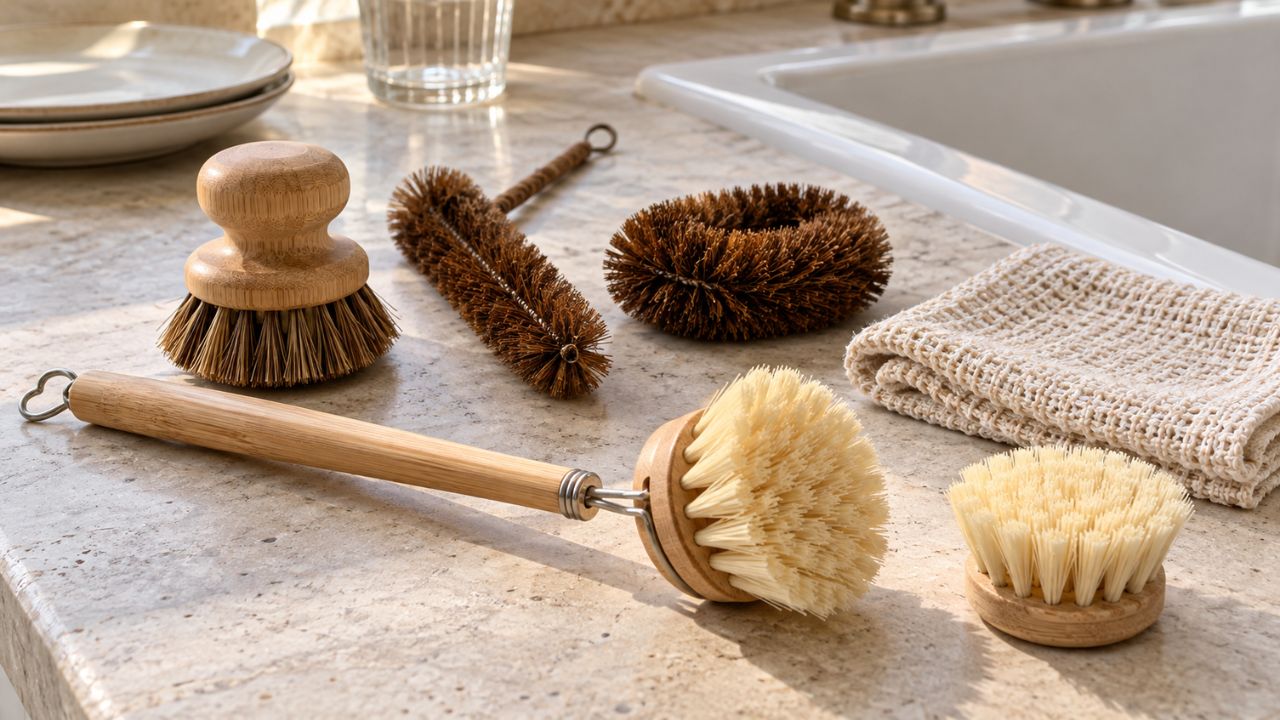
The replaceable head dish brush set from our Editorialge Eco Shop has been part of my washing-up routine for about six months. I’ve used different brushes for glasses, dishes, and cookware, but the long-handled brush has done most of the work. Its bristles eventually wore down from frequent cookware washing. I fitted the round spare head that came with the set and kept using the same wooden handle.
That experience is why I value the replaceable head. It also showed me what the set asks in return: the brushes need to be rinsed and dried properly. The wood still feels solid, I haven’t noticed an odor, and the bristles didn’t shed easily. Still, I wouldn’t call this a set I can leave wet in the sink and forget about.
What Comes in the Six-Piece Starter Bundle?
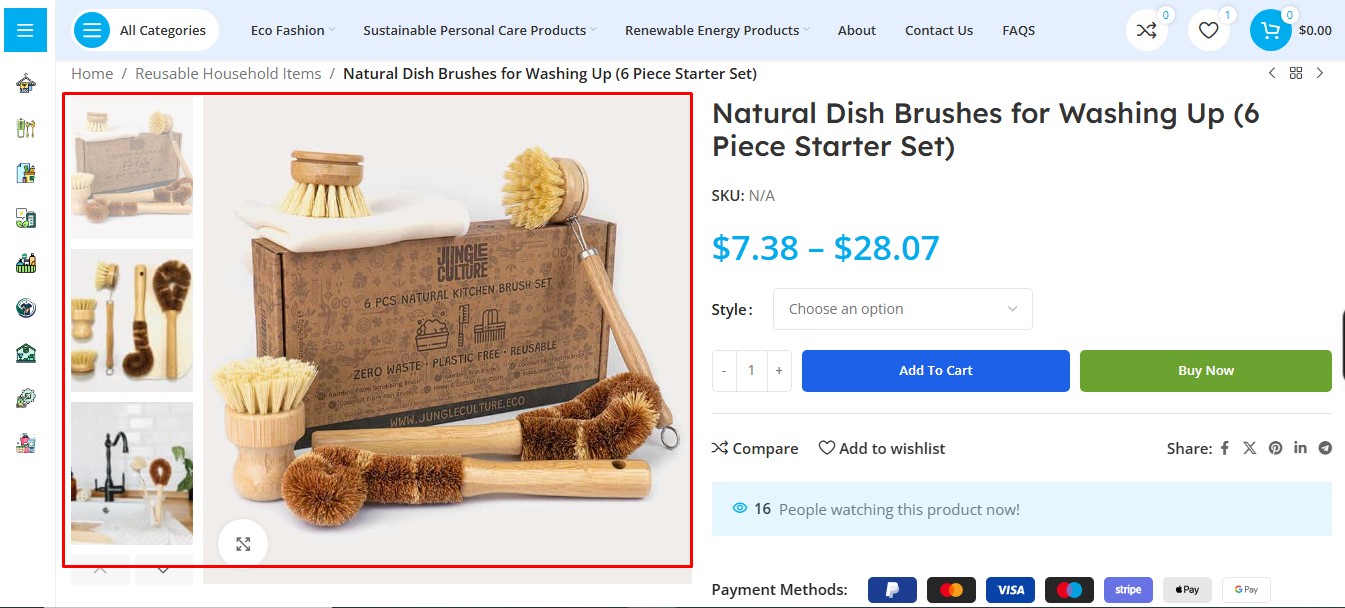
The first thing to clear up is the count. My six-piece set contained four brushes, one replacement head, and one cloth sponge. The spare head and cloth are useful parts of the bundle, but they aren’t two more brushes.
| Piece | My experience or its role in the set |
| Long-handled bamboo dish brush | My favorite and most-used piece, especially for cookware. I’ve replaced its head once. |
| Small round palm scrubber | A compact dish brush, though it’s the one I reach for least. |
| Coconut-fibre bottle brush | The narrower brush I use when washing glasses. |
| Coconut-fibre pan scourer | Another option when cookware needs scrubbing. |
| One round replacement head | The included spare that I recently fitted to the long-handled brush. |
| Hemp and organic cotton cloth sponge | A softer washing piece included alongside the brushes. |
The different shapes are the point of the bundle for me. I can choose a narrower brush for glasses and a different one for cookware, rather than using the same brush for every job. That said, the pieces haven’t all become equally important in my kitchen.
How the Brushes Fit Into My Washing-Up Routine
I’ve learned more about this set from which brush I pick up without thinking than from its list of features. Over six months, the long-handled one became my regular choice for cookware. The smaller round brush stayed available, but I reached past it more often than I reached for it.
The long-handled brush gets the most work
This is my favorite piece. I use it frequently on cookware, which also explains why its head was the first to wear down. I haven’t had to replace the wooden handle, and it still feels solid after months of washing and drying.
The pan scourer gives me another option for cookware. I like having that choice in the set, even though the long-handled brush is the one I use more often.
The other pieces have more specific jobs
I use a separate brush for glasses, and the bottle brush’s narrow shape makes it useful there. The small palm scrubber works as a short-handled option for dishes, but it doesn’t match the way I usually wash up as well as the long-handled brush does.
I wouldn’t present my least-used piece as a defect. It’s a reminder that the value of a bundle depends on your routine. Someone who prefers holding a compact brush close to a plate or bowl may use the palm scrubber far more than I do. In my kitchen, the long-handled brush earns its place first.
Was the Replacement Head Actually Useful?
Yes. I’ve already needed it. After almost six months of frequent cookware washing, the bristles on my long-handled brush had worn down. They hadn’t been shedding easily throughout that period; they simply wore down with use until I was ready to change the head.
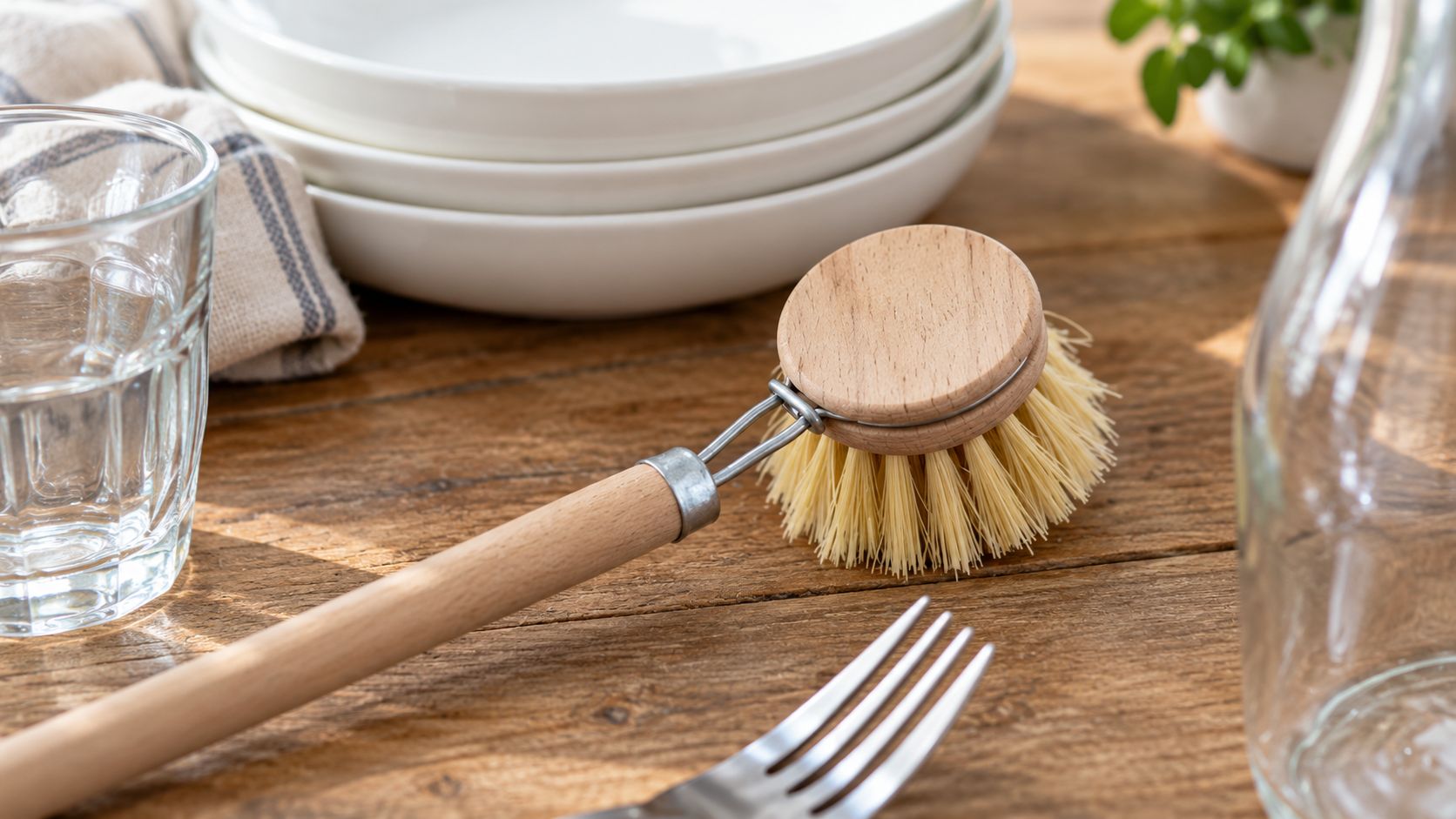
The head sits in a metal coil at the end of the handle. I found the change straightforward: loosen the coil, remove the worn head, and slide the spare into place. The handle was still in good condition, so I could carry on using it.
There are two limits worth knowing. Only the long-handled brush is the one whose head I’ve changed; I wouldn’t describe all four brushes as having interchangeable heads. And the bundle includes one spare head. Once that is worn, another replacement would need to be obtained separately.
My first head lasted almost six months under my pattern of use. That’s an observation, not a promised lifespan. How often someone washes cookware, and how hard they scrub, will affect when a head needs changing.
Benefits I Noticed After Six Months
The set’s strengths became clearer with regular use. For me, the best features are the different brush shapes, the spare head I could put to work, and how the wooden parts have held up with proper drying.
| Benefit | What I can say from using the set |
| A brush for different washing jobs | I use separate brushes for glasses, dishes, and cookware. I appreciate having those choices at the sink. |
| A spare head that extends use of the handle | When my most-used bristles wore down, I fitted the included head and kept the solid wooden handle. |
| Wood and bristles that have held up well for me | After six months, the wood still feels sound. I haven’t noticed an odor or much bristle shedding during normal use. |
The replaceable head is also the set’s most convincing sustainability feature in my experience. I changed a worn part while keeping a usable handle. I can describe that practical result without claiming to know the product’s total environmental impact.
Drawbacks I Would Want to Know Before Buying
I like using the set, but it requires care, and the word replaceable applies more narrowly than someone might expect. These points matter if you’re deciding whether the whole bundle fits your kitchen.
| Drawback | What it means in practice |
| The brushes must dry properly | I rinse and hang them after use. Leaving wood and natural fibres wet or soaking for long periods can damage them and create conditions for mold. |
| Bristles still wear down | My most-used head wore out after almost six months of frequent cookware washing. The included spare helps, but it isn’t a permanent fix. |
| Not every piece sees equal use or has a replaceable head | The palm scrubber is my least-used brush, and I’ve only changed the head on the long-handled one. |
The drying requirement is the drawback I notice most often because it’s part of every wash. I haven’t noticed an odor, and the wood remains solid, but I also haven’t left the brushes sitting in water. I wouldn’t suggest that they will stay in the same condition without that care.
How I Clean and Store the Set
My routine is uncomplicated: I rinse the brushes after washing up and hang them where they can dry. If a brush has been used on cookware, I make sure the bristles are rinsed rather than leaving food residue in them. I don’t leave the brushes soaking in the sink.
The cloth sponge also needs a chance to dry between uses. With natural-fibre cleaning tools, I think where they go after washing up matters almost as much as how I use them during it. A damp corner of the sink isn’t a good storage spot.
This is a care routine I’m willing to keep. If you prefer washing tools that can sit wet for hours without a second thought, the upkeep may feel like more work than you want.
Is This a Sensible Sustainable Kitchen Swap?
I’m drawn to the bamboo and plant-fibre materials, but I’d judge the sustainability of this set through use rather than a broad label. The strongest example from my kitchen is the head change: I kept a sound handle and replaced the part that had worn out.
That benefit depends on looking after the tools. The brushes still wear, the other three aren’t all interchangeable, and prolonged dampness can shorten their useful life. Drying them well and replacing the long-handled head when needed makes more sense to me than treating the bundle as a “zero waste” purchase that needs no maintenance.
Who Would I Recommend This Set To?
I’d recommend it to someone who regularly washes a mix of glasses, dishes, and cookware and wants several brush shapes available. The long-handled brush and included spare head are the strongest reasons I would choose this bundle based on my use.
I’d give a more qualified recommendation if you only want one brush, have little space to dry several pieces, or expect every brush head to be replaceable. Check that you’re selecting the full starter bundle if the product offers replacement heads as separate style options. The six-piece count is four brushes, a spare head, and a cloth sponge.
Six Months Later, It Still Has a Place by My Sink
The long-handled brush has earned its place by my sink. I’ve used the set across glasses, dishes, and cookware, and I’ve already benefited from the spare head. The wood still feels solid, and changing the worn head was easy.
I also know its limitations. I use the small palm scrubber less; only the long-handled brush has the head I’ve replaced, and drying the pieces is part of owning them. With those expectations, this has been a useful set for my everyday washing up.
Frequently Asked Questions on Replaceable Head Dish Brush Set
1. If I choose “Replacement Brush Head,” will I receive the six-piece set?
No. The shop lists Bamboo Dish Brush Set separately from the Replacement Brush Head (Soft) and Replacement Brush Head (Firm) options. Choose the set option if you want the four brushes, included spare head, and cloth sponge.
2. Can I change the head on every brush in the bundle?
No. The long-handled bamboo brush is the one whose head I’ve changed. Its metal coil holds the round head in place; loosen the coil, remove the worn head, and slide in the replacement. I found it straightforward when I changed mine.
3. Can I use these brushes on nonstick pans?
I wouldn’t treat every brush in the set as safe for every coating. The coarse scourer and firm replacement option are meant for tougher cleaning. For a nonstick pan, follow that pan’s care instructions and use a soft, nonabrasive tool if recommended. I haven’t tested this set against every type of coating, so I can’t promise a scratch-free result.
4. Are the wooden brushes dishwasher safe?
I couldn’t verify a dishwasher-safe instruction for this set. Its care guidance calls for rinsing with warm, soapy water, avoiding long soaks, and letting the brushes dry. I’d hand-clean the wooden brushes and hang them to dry rather than describe them as dishwasher-safe.
5. How do I keep the wood and bristles from getting moldy?
Rinse away food residue and hang the brushes where they can dry between uses. Don’t leave them soaking or sitting in pooled water. After six months of doing this, the wood on mine still feels solid, and I haven’t noticed an odor; prolonged dampness remains the care issue to watch.