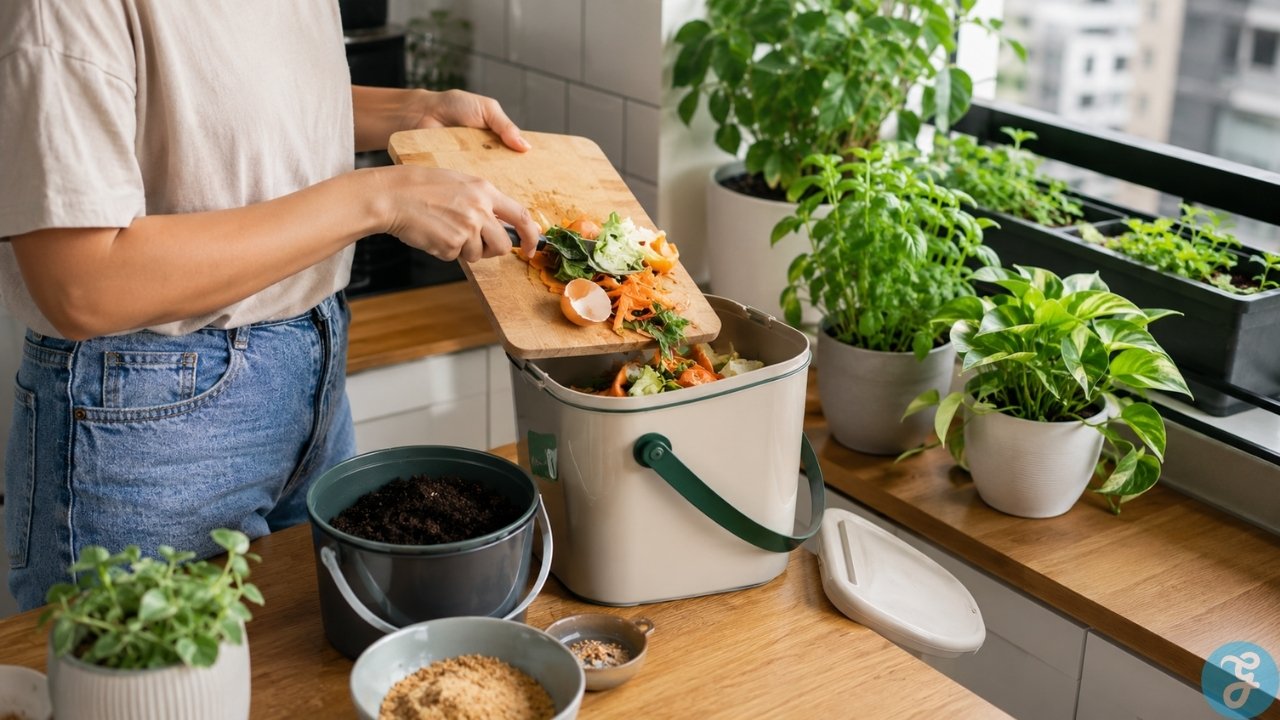
Most traditional instructions for recycling organic waste assume you have a suburban backyard, a patch of open soil, and a massive wooden bin tucked away out of sight. For residents of urban multi-story buildings, these requirements are completely impossible. When you live on the fifth floor with no private yard and a tight galley kitchen, trying to figure out how to process food scraps without causing a pest crisis turns an eco-friendly goal into a logistical headache.
Yet, managing your kitchen waste without a backyard is completely achievable if you shift your approach. Implementing a routine around composting apartment waste requires scaling down the physical footprint of decomposition, altering the biological methods you use, and understanding how to manage smells inside a small living environment. It is not about managing a massive, steaming pile of garden mulch; it is about creating a compact, clean, and controlled biological system that turns vegetable trimmings into a useful resource right under your sink or on a small balcony container.
The Environmental Case for Urban Composting
Discarded kitchen waste represents a massive structural problem for modern municipal waste infrastructure. Solid waste metrics indicate that organic material, including leftover meals and vegetable scraps, makes up roughly thirty percent of the total weight of residential trash collected in urban centers worldwide. When these scraps are thrown into standard plastic garbage bags, they are trucked to regional landfills where they are compressed under tons of other refuse.
This compression deprives the organic material of oxygen, halting natural aerobic decomposition. Instead, the waste undergoes anaerobic digestion, a process that releases vast quantities of methane gas into the atmosphere. Methane is a potent greenhouse gas with a warming potential significantly higher than carbon dioxide over a twenty-year horizon. Municipal data demonstrates that decomposing food inside landfills is one of the leading sources of human-caused methane emissions globally.
When you process your scraps via small space composting inside your home, you change the chemical breakdown entirely. By introducing controlled oxygen or specific microbial cultures, the organic carbon converts cleanly into stable soil nutrients rather than escaping as greenhouse pollution. For urban dwellers, this small adjustment keeps organic mass out of landfills, cuts down on municipal hauling costs, and transforms residential waste into an asset for potted plants or community gardens.
The Material Matrix: What Belongs in an Urban System
Before setting up a small space composting system, you must know what items can safely break down in a tight indoor environment. Because indoor systems operate on a much smaller physical scale than outdoor piles, they cannot absorb high-risk materials without immediately failing.
Safe Additions for Indoor Units
-
Apple cores, pear stems, and melon rinds
-
Coffee grounds, paper coffee filters, and unbleached tea bags
-
Raw vegetable peels, carrot tops, and squash seeds
-
Eggshells crushed into small fragments to accelerate mineral breakdown
-
Unlined cardboard boxes, plain brown paper lunch bags, and shredded egg cartons
Items to Exclude from Small Indoor Systems
-
Meat scraps, chicken bones, fat trimmings, and fish skin
-
Dairy products like cheese, butter, yogurt, and sour cream
-
Whole citrus peels and heavy concentrations of onions or garlic
-
Cooked foods containing heavy cooking oils, salad dressings, or animal fats
-
Pet waste, cat litter, or yard clippings treated with chemical pesticides
Excluding meats, dairy, and heavy fats is non-negotiable for indoor systems. In a backyard pile, these materials can be buried deep within a hot core where high temperatures and wildlife scavengers process them. In a small kitchen container, animal fats do not decompose quickly; instead, they coat the other ingredients, block oxygen flow, and undergo rancid putrefaction, creating foul odors and drawing flies into your living area.
The Core Methods of Small Space Composting
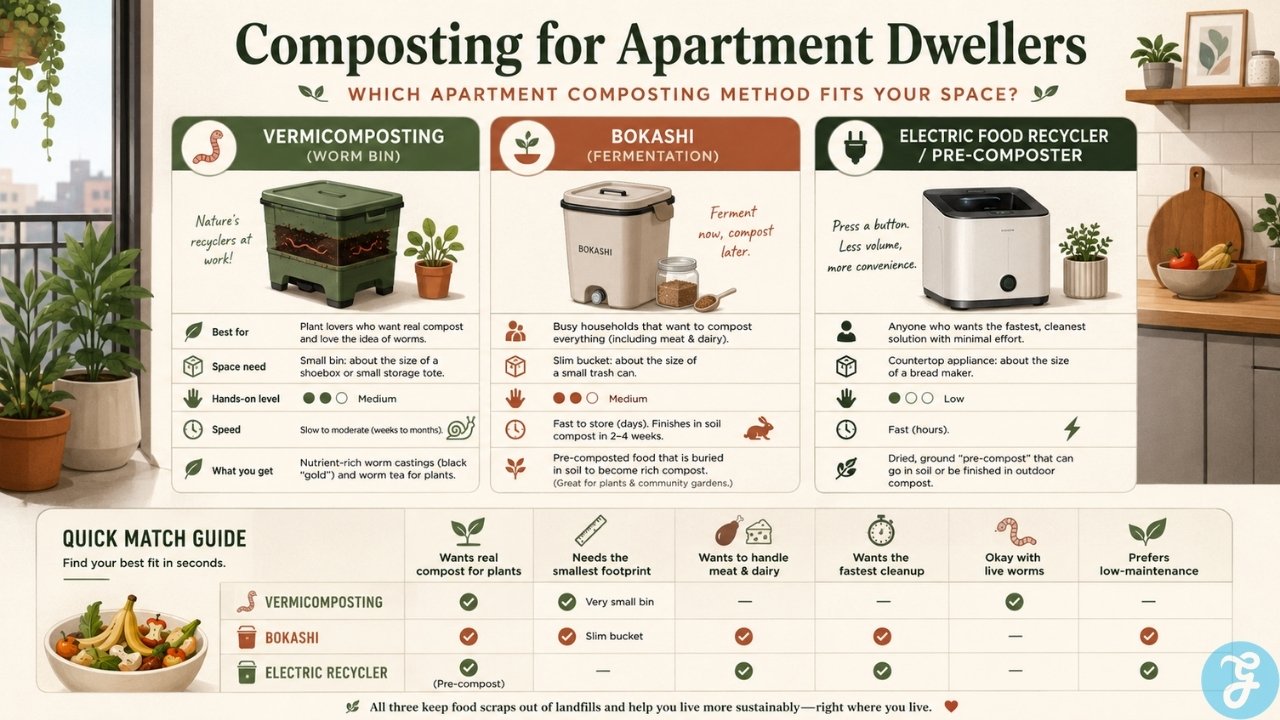
There is no single perfect system for every apartment layout. Choosing the right mechanism depends on your available space, how much kitchen waste your household generates, and your tolerance for maintaining a living biological system inside your home.
Vermicomposting: Using Red Wiggler Worms
Vermicomposting is a highly efficient method of indoor composting that uses a specialized species of surface-dwelling earthworms known as red wigglers to ingest food scraps and excrete nutrient-dense worm castings. This setup requires a shallow, ventilated plastic bin or a stacked tray system hidden inside a dark closet or kitchen cabinet.
Red wigglers are different from standard garden nightcrawlers. While earthworms require deep, cold soil tunnels to survive, red wigglers live naturally in the upper layers of leaf litter and compost, making them perfectly suited for confined bins. A healthy worm population can consume up to half its own body weight in organic scraps every single day, converting waste into a rich, soil-like material with zero foul odor when managed correctly.
The primary operational challenge of a vermicomposting bin is climate control. Worms are sensitive living organisms that thrive in a narrow temperature range between sixty and seventy-five degrees Fahrenheit. If you place your bin on a sunny apartment balcony during a mid-summer heatwave, internal temperatures can quickly spike, killing the entire colony in an afternoon. Similarly, freezing winter draft lines can cause the worms to become sluggish and stop processing food entirely.
Bokashi Fermentation: An Anaerobic Alternative
For households that want to process all food waste—including small amounts of meat, cheese, and citrus—Bokashi fermentation is an exceptional urban alternative. Originating in Japan, Bokashi is an anaerobic fermentation process that uses a specialized bran inoculated with beneficial microbes to pickle organic matter inside a tightly sealed, airtight bucket.
Because the bucket uses a rubber gasket seal to exclude oxygen, there is no risk of drawing fruit flies or creating traditional rot smells. You simply open the lid, drop in your daily kitchen scraps, cover them with a handful of Bokashi bran, compress the mass down with a flat trowel to remove air pockets, and snap the lid closed.
The significant friction point of the Bokashi method is that it does not actually produce finished soil inside the bucket. When the container fills up and ferments for two weeks, the contents look identical to the original food scraps, though they have undergone a chemical pickling process that smells deeply of vinegar or yeast.
To convert this pickled material into usable soil, it must be mixed with living earth. For apartment residents, this means you need a secondary soil factory container on a balcony—a large tub filled with plain garden soil where you bury the fermented waste for another two to three weeks until it breaks down completely—or you must transport the fermented mass to a local community garden plot.
Electric Food Dehydrators and Pre-Composters
In recent years, compact countertop electric kitchen appliances have emerged as a high-tech approach to managing food waste. These devices utilize internal heating elements and metal grinding blades to heat, agitate, and dehydrate wet food scraps over a cycle lasting three to eight hours.
It is important to understand the biological limitation of these appliances: they do not create actual compost. True composting requires time, moisture, and microbial activity to break down complex organic polymers into stable humic acids.
An electric appliance simply removes the water content and pulverizes the remaining fiber into a dry, sterile brown powder. If this powder is poured directly onto houseplants in large quantities and gets wet, it will rehydrate, grow mold, and create a sour smell inside the room. However, as a volume-reduction tool, these machines are highly effective, reducing the physical bulk of kitchen scraps by up to ninety percent, making the dry output incredibly easy to store, transport, or mix sparingly into balcony potting soil.
Comparing Urban De-composition Systems
| Method Type | Primary Mechanism | Space Requirement | Processing Speed | Common Household Friction Point |
| Vermicomposting | Red wiggler worm digestion | Medium closet or under-sink floor space | 2 to 4 months per batch | Requires keeping live worms; highly sensitive to temperature spikes. |
| Bokashi | Microbe-infused anaerobic fermentation | Small under-sink corner | 2 weeks fermentation, plus soil integration | Produces an acidic pickled smell when opened; requires an extra soil step. |
| Electric Dehydrator | Thermal drying and mechanical grinding | Countertop space near an electrical outlet | 3 to 8 hours per cycle | Consumes household electricity; output is sterile and can mold if over-watered. |
The Structural Balance of Carbon and Nitrogen
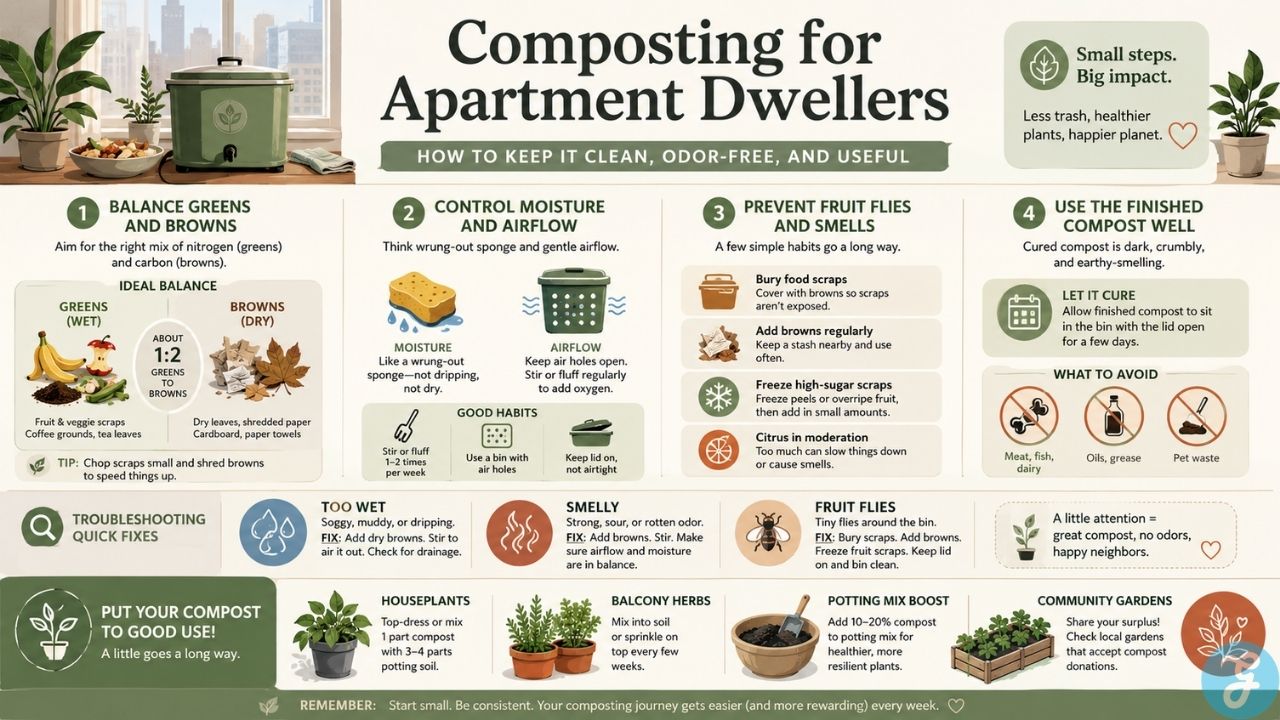
To run a successful vermicomposting bin or small indoor storage bucket without creating a soupy, rotting mess, you must balance the chemistry inside the container. This balance relies on managing the ratio of carbon-rich materials to nitrogen-rich materials.
Green Materials: The Nitrogen Drivers
Fresh kitchen scraps, such as fruit peels, green vegetable ends, and coffee grounds, are classified as green materials. They are high in nitrogen, contain immense amounts of water, and break down quickly.
While nitrogen is necessary for microbial growth or worm nutrition, adding too many greens to an apartment bin causes the material to collapse into an anaerobic slime. This wet slop prevents oxygen from moving through the system, creating a sour, sulfur-like odor that makes keeping the system indoors unbearable.
Brown Materials: The Carbon Structural Anchor
To offset the wet nitrogen from food waste, you must continuously add carbon-rich brown materials. Browns include dry, fibrous items like shredded unlined cardboard, torn brown paper grocery bags, dry fallen leaves, and egg cartons cut into tiny pieces.
Carbon acts as the structural skeleton of your indoor system. It creates micro-voids and air pockets within the bin, allowing oxygen to circulate freely and maintaining an optimal moisture balance.
Whenever you add a cup of wet green kitchen scraps to a worm bin, you must cover it with at least two cups of dry, shredded brown cardboard. This simple habit keeps the bin smelling like fresh, damp forest soil rather than an open garbage dump.
Managing Small-Space Friction: Smells, Moisture, and Pests
Indoor systems operate in close proximity to your living room and kitchen, meaning any operational breakdown requires immediate correction.
Eliminating the Fruit Fly Threat
The most common frustration with composting apartment spaces is the sudden emergence of fruit flies. Fruit flies are drawn to the volatile organic compounds released by ripening fruits. If adult flies gain access to your indoor scraps, they lay eggs that hatch into hundreds of larvae within days, creating a household infestation.
To prevent fruit flies from taking over your kitchen, use these three structural barriers:
-
Use a Charcoal-Filtered Collector: If you collect scraps on your counter before moving them to your main bin, use a stainless steel bucket equipped with a tight lid and an integrated activated charcoal filter sheet to block escaping odors.
-
Freeze Your Scraps: Keep your counter clear by storing your daily food scraps in a sealed silicone bag inside your freezer. This stops fruit flies from finding the food, and freezing actually breaks down the plant cell walls, helping the material decompose much faster once it enters your main bin.
-
The Brown Cover Layer: Inside a worm bin, never leave fresh food scraps exposed on the upper surface. Always dig a small hole in the bedding, deposit the scraps at the bottom, and cover the spot completely with a thick layer of dry, shredded paper or cardboard to mask the scent from searching pests.
Correcting an Over-Saturated System
If you notice fluid accumulating at the bottom of your indoor bin, or if the contents begin to emit a sharp, swampy odor, your system is over-saturated with moisture. This happens when the volume of kitchen scraps exceeds the absorbent capacity of the carbon bedding.
To fix a wet, smelly bin immediately, stop adding new food scraps for one week. Take several handfuls of dry, shredded cardboard or clean newsprint and mix it thoroughly into the damp core of the bin to absorb the stagnant fluid. Leave the lid slightly offset for twenty-four hours to allow excess humidity to evaporate into the room air, and confirm that your bin’s ventilation holes are not blocked by wet paper clumps.
Utilizing Finished Compost Without a Backyard Garden
Once your indoor system has successfully processed your food waste over several months, you will be left with a dark, crumbly, nutrient-dense material. For apartment dwellers without an extensive backyard lawn, finding a home for this material requires a bit of resourcefulness.
Revitalizing Indoor Houseplants
Finished worm castings or fully aged Bokashi soil act as an exceptional organic fertilizer for common indoor houseplants like pothos, monsteras, and snake plants. Because this material is highly concentrated, you do not need to repot the entire plant.
Simply scrape away the top inch of old potting soil from your indoor planters, replace it with a layer of fresh compost, and water the plant normally. The nutrients will slowly dissolve and travel down to the root system, boosting growth without the risk of synthetic chemical fertilizer burn.
Preparing Custom Potting Blends for Balconies
If you grow container vegetables, cherry tomatoes, or culinary herbs on a small balcony railing, use your indoor compost to create a custom, high-yield potting mix. Blend one part finished compost with two parts standard peat-free potting soil and one part perlite to ensure optimal drainage. This mix retains moisture efficiently, reducing the number of times you need to carry heavy watering cans out to your balcony during dry summer months.
Connecting With Urban Community Spaces
If your indoor system produces more compost than your houseplants can absorb, do not throw the excess into the standard garbage bin. Connect with local urban community gardens, school garden projects, or neighborhood tree-planting groups.
Many urban gardeners are thrilled to accept high-quality, indoor-processed worm castings to nourish their raised vegetable beds. Alternatively, look for regional organic waste drop-off kiosks or check digital mapping tools to locate neighborhood compost hubs where your finished material can join local agricultural loops.
Final Thoughts
Establishing a routine for composting apartment waste is entirely a matter of selecting a system that fits your physical space and managing the basic balance of carbon and nitrogen. By stepping away from the expectation of massive backyard piles and focusing on specialized indoor alternatives like vermicomposting, Bokashi fermentation, or strategic volume reduction, you can run a clean, efficient kitchen system. This deliberate practice keeps valuable organic mass out of landfills, cuts down on household environmental impacts, and provides a continuous supply of clean nutrients for urban greenery, proving that true sustainability does not depend on the size of your home.
Frequently Asked Questions About Composting Apartment Waste
Do indoor compost bins attract fruit flies and pests?
Indoor bins will not attract pests if you manage the balance of materials correctly. Storing fresh food scraps in the freezer before adding them to the bin kills any existing fruit fly eggs and prevents an immediate infestation. Covering the active wet layers with a thick cover of dry cardboard bedding also blocks searching insects from finding the food source.
How do you prevent a small space composting bin from smelling?
Foul odors only occur when a system becomes waterlogged and runs out of oxygen. Adding two parts of carbon-rich brown materials like shredded paper for every one part of wet food scraps keeps the internal environment aerated and fresh. If a sour scent develops, mixing in extra dry cardboard and leaving the lid slightly offset resolves the issue quickly.
What is the easiest composting apartment method for beginners?
Vermicomposting with a small under-sink storage bin and red wiggler worms is generally the most straightforward option for tight spaces. The worms process vegetable trimmings rapidly, leaving behind odorless, nutrient-dense castings that can go straight onto houseplants. Unlike the Bokashi method, it eliminates the need for a secondary outdoor soil factory setup.
Can you put citrus peels and onions in an indoor worm bin?
Large quantities of citrus peels and pungent onions should be excluded from small indoor vermicomposting systems. These ingredients contain highly acidic oils and strong compounds that irritate the sensitive skin of the worms and slow down the processing cycle. Small amounts are acceptable in a sealed Bokashi fermentation bucket, but they should be skipped in a standard worm habitat.
What should you do with finished apartment compost if you have no plants?
If your indoor system produces more finished soil or worm castings than your home can absorb, you can donate the material to local community gardens, school projects, or urban tree-planting groups. Many regional farmers’ markets and environmental organizations also operate public organic waste drop-off kiosks. This keeps your household output completely inside the local agricultural loop.