Hydration habits matter because water is part of nearly everything your body does. It supports temperature control, digestion, circulation, joints, concentration, physical performance, and normal daily function. I used to treat hydration like an afterthought. I would start the day with coffee, work for hours, forget water, then wonder why I felt foggy, hungry, tired, or headachy by afternoon. The fix was not complicated. I needed better cues.
That is what drinking more water often comes down to. Not motivation. Cues.
A useful hydration routine should fit your workday, meals, movement, climate, and training. It should not make you obsess over every sip or force water when your body does not need it. For the corporate athlete, hydration is part of daily performance. If you sit for long hours, train, manage stress, write, lead, study, or work under screen pressure, fluids matter.
These water intake habits connect naturally with the best healthy habits because hydration supports energy, movement, nutrition, recovery, focus, sleep, and stress control.
The goal is simple: Make water easier to remember before your body has to complain.
Why Hydration Habits Matter More Than People Think
Hydration habits matter because many people do not notice low fluid intake until the body starts sending signals. Thirst, dry mouth, darker urine, fatigue, headache, poor concentration, and sluggish movement can all show up when fluid habits are weak. The problem is that modern work makes forgetting water easy. A person can sit at a laptop for three hours, answer messages, attend meetings, drink coffee, and never touch water. The body is still working, but the routine gives hydration no clear place.
Hydration is also personal. There is no perfect daily water number for every person. Fluid needs can change with body size, weather, sweating, exercise, caffeine and alcohol habits, illness, pregnancy, breastfeeding, medications, and health conditions. That is why rigid water rules are not always helpful. Some people need more. Some people need less. Some people get fluids from food, soups, milk, tea, fruit, vegetables, and other beverages. The goal is not to chase a random target blindly. The goal is to build awareness and consistency.
For busy people, hydration also affects other habits. A dry, under-hydrated afternoon can feel like hunger, tiredness, or lack of focus. Sometimes the body needs water, movement, and a real meal, not another coffee. Good hydration habits do not need to be dramatic. They need to be repeatable.
| Hydration Problem | What It Feels Like | Habit That Helps |
| Forgetting water during work | Dry mouth, headache, fogginess | Keep water visible |
| Coffee before fluids | Jittery or dehydrated feeling | Drink water before coffee |
| Low afternoon energy | Sleepy or unfocused | Water plus movement break |
| Workout fatigue | Heavy or sluggish training | Drink before and after exercise |
| Hot weather | More sweating and thirst | Increase fluids and consider electrolytes |
| Random snacking | Mistaking thirst or boredom for hunger | Drink water and pause |
| No routine | Drinking only when very thirsty | Use meal-based water cues |
Hydration works best when it becomes part of the day, not an emergency response.
What Makes a Hydration Habit Actually Work?
A hydration habit works when it is tied to something you already do. If you rely only on memory, water is easy to forget. If you attach water to coffee, meals, movement breaks, workouts, and bedtime routines, it becomes automatic. The best hydration tips are practical. Drink water after waking. Keep a bottle on the desk. Drink with meals. Refill after bathroom breaks. Drink before and after workouts. Take water on errands. Use a larger bottle if refilling is the problem. Use a smaller glass if big bottles feel annoying.
A useful hydration habit should also respect your body. Drinking more water is not always better. Very high fluid intake in a short time can be unsafe, especially during endurance events or extreme sweating if electrolytes are ignored. People with kidney, heart, liver, or fluid-restriction conditions should follow professional guidance. Another key point is taste. Some people dislike plain water. That does not mean they are doomed. Lemon, cucumber, mint, unsweetened tea, sparkling water, diluted fruit flavor, soups, and water-rich foods can help.
Hydration should also fit the climate. A cool office day and a hot outdoor workday are not the same. A rest day and a sweaty workout day are not the same.
| Hydration Habit Rule | What It Means | Practical Example |
| Attach to cues | Drink with existing routines | Water after waking and with meals |
| Keep it visible | Make water hard to forget | Bottle on desk |
| Adjust by context | Needs change daily | More water in heat or workouts |
| Use taste support | Make water easier to drink | Lemon, mint, cucumber, herbal tea |
| Avoid extremes | More is not always better | Do not force huge amounts fast |
| Include food fluids | Food can support hydration | Soup, fruit, vegetables, yogurt |
| Track lightly | Build awareness without obsession | Refill count or bottle marks |
A hydration habit should make drinking water easier, not turn it into another pressure point.
13 Hydration Habits Worth Building
These hydration habits are built for real life. They work for desk workers, remote professionals, students, busy parents, travelers, fitness beginners, and people who simply forget water until the day feels heavy. You do not need to start all 13 habits at once. Choose two or three. If you forget water in the morning, start with water before coffee. If your workday swallows your attention, keep water visible. If you snack randomly, pair water with a pause. If you train, build workout hydration cues. If you live in a hot climate, adjust for heat and sweat.
The strongest water intake habits are usually simple. They do not require a perfect app, expensive bottle, or strict tracking. They require clear cues and realistic repetition. Hydration also connects with nutrition habits long term, movement habits sedentary workers can use, recovery day routines, full body workouts busy people can follow, and habits for better focus.
| Habit | Main Benefit | Best For |
| 1. Drink water before coffee | Better morning hydration rhythm | Coffee-first people |
| 2. Keep water visible | Fewer forgotten hours | Desk workers |
| 3. Use meal-based water cues | Easy routine building | Busy schedules |
| 4. Pair water with movement breaks | Supports hydration and circulation | Sedentary workers |
| 5. Refill after bathroom breaks | Natural reminder loop | People who forget bottles |
| 6. Build a workout hydration routine | Better training support | Active people |
| 7. Adjust fluids for heat and sweat | Safer hot-weather habits | Outdoor workers and exercisers |
| 8. Use water-rich foods | Hydration plus nutrition | Low-water drinkers |
| 9. Improve flavor without excess sugar | Better consistency | People bored with plain water |
| 10. Replace one sugary drink | Better daily drink pattern | Soda or sweet drink habits |
| 11. Use light tracking | Better awareness | Beginners |
| 12. Hydrate during travel | Less fatigue and dryness | Travelers |
| 13. Know when not to force water | Safer hydration | Health conditions and overdrinkers |
1. Drink Water Before Coffee
Drinking water before coffee is one of the easiest hydration habits because it attaches to something many people already do. If coffee is part of your morning, water can become the step before it. This habit does not mean coffee is bad. It simply means the first signal to your body is hydration, not caffeine. After sleep, many people have gone several hours without drinking. A glass of water can help restart the day more calmly.
For me, this habit works because it removes negotiation. I do not ask whether I feel like drinking water. I drink water, then coffee. The order does the work. Start small. You do not need to drink a huge bottle. A glass of water is enough to build the cue. If mornings are rushed, keep water beside the bed or near the coffee setup.
This habit also supports morning habits for better energy. A better morning rhythm often starts with light, water, movement, and a calm first routine.
| Morning Situation | Water Habit | Why It Helps |
| Coffee immediately after waking | Drink one glass first | Builds hydration before caffeine |
| Rushed morning | Keep water by bed | Reduces friction |
| Low morning appetite | Sip water slowly | Starts the body gently |
| Morning workout | Drink before training | Supports exercise prep |
| Dry mouth after sleep | Water before phone | Solves the first need early |
| Multiple coffees | Add water between cups | Keeps balance |
Water before coffee is simple, but it can change the tone of the day.
2. Keep Water Visible
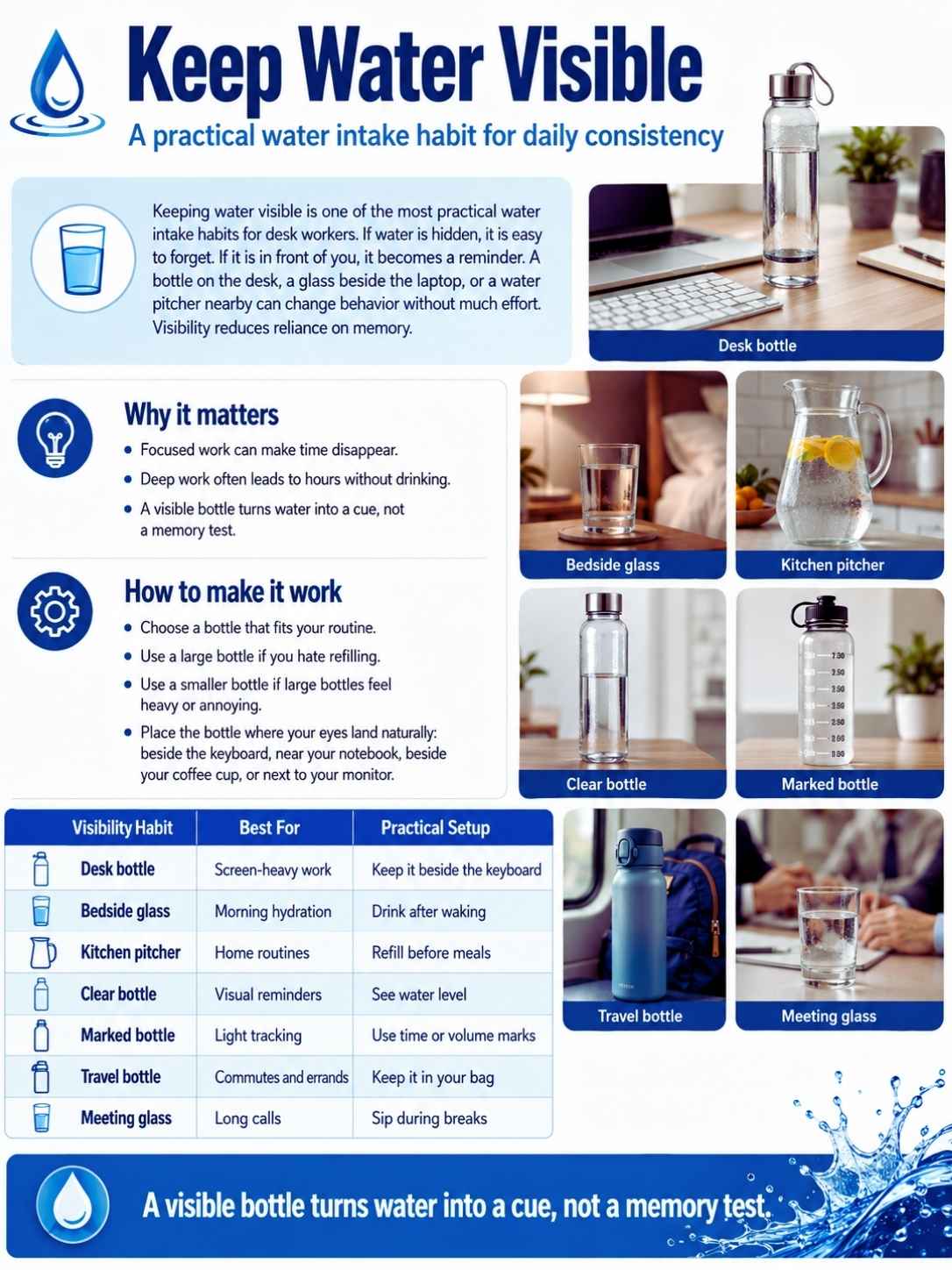
Keeping water visible is one of the most practical water intake habits for desk workers. If water is hidden, it is easy to forget. If it is in front of you, it becomes a reminder. A bottle on the desk, a glass beside the laptop, or a water pitcher nearby can change behavior without much effort. Visibility reduces reliance on memory.
This matters because focused work can make time disappear. Writers, editors, designers, students, founders, coders, and remote workers can easily spend hours in deep work without drinking. A visible bottle interrupts that pattern. Choose a bottle that fits your routine. A large bottle helps if you hate refilling. A smaller bottle helps if big bottles feel heavy or annoying. A clear bottle helps if seeing progress motivates you. A marked bottle helps if you like visual cues.
Do not make the bottle a decoration. Place it where your eyes land naturally. Beside the keyboard, near your notebook, beside your coffee cup, or next to your monitor works well.
| Visibility Habit | Best For | Practical Setup |
| Desk bottle | Screen-heavy work | Keep it beside the keyboard |
| Bedside glass | Morning hydration | Drink after waking |
| Kitchen pitcher | Home routines | Refill before meals |
| Clear bottle | Visual reminders | See water level |
| Marked bottle | Light tracking | Use time or volume marks |
| Travel bottle | Commutes and errands | Keep it in your bag |
| Meeting glass | Long calls | Sip during breaks |
A visible bottle turns water into a cue, not a memory test.
3. Use Meal-Based Water Cues
Meals are natural hydration cues because they already happen during the day. Drinking water with breakfast, lunch, and dinner is simple, repeatable, and easy to remember. This habit works well for people who dislike random tracking. You do not need an app. You connect water to eating. If you eat, you drink.
Meal-based hydration also supports digestion and a calmer eating rhythm. It helps you slow down, especially if you tend to rush meals at your desk. Start with one meal if three feels too much. Lunch is often the best place to begin because many people forget water during the workday. Dinner is also useful, especially if your evening includes salty foods or late snacking.
Be careful with extremes. You do not need to drink too much during meals if that feels uncomfortable. A glass or steady sips are enough for most people. This habit connects naturally with nutrition habits long term because food and fluid routines work best together.
| Meal Cue | Water Habit | Why It Works |
| Breakfast | Drink a glass or sip steadily | Starts the day well |
| Lunch | Drink before and during meal | Breaks work dehydration |
| Dinner | Drink with the meal | Supports evening rhythm |
| Snack | Sip water first | Checks thirst vs hunger |
| Restaurant meal | Order water early | Prevents relying only on sweet drinks |
| Work meal | Keep bottle beside lunch | Makes it automatic |
Meal-based cues make hydration easier because eating reminds you to drink.
4. Pair Water With Movement Breaks
Pairing water with movement breaks solves two common problems at once: sitting too long and drinking too little. This habit is perfect for desk-heavy days. Stand up, walk to refill water, take a few sips, move your shoulders, then return to work. It takes two or three minutes, but it can reset the body and mind.
The best part is that refilling water creates a reason to move. If your bottle is empty, you stand. If you stand, you walk. If you walk, your body gets circulation. That small chain is powerful. This habit also supports movement habits sedentary workers need. A hydration cue becomes a movement cue. A movement cue becomes a focus reset.
Do not wait until your bottle is completely empty if that makes you drink too little. Use time cues too. For example, refill mid-morning, after lunch, and mid-afternoon. If you work in an office, use a farther water station when practical. If you work from home, refill from the kitchen instead of keeping a giant jug beside you all day.
| Movement Cue | Hydration Action | Bonus Benefit |
| End of meeting | Stand and sip water | Clears mental residue |
| Hourly break | Refill or drink | Breaks sitting |
| Bathroom break | Drink after returning | Creates natural loop |
| Before deep work | Sip water | Prepares focus |
| After lunch | Walk and drink | Supports afternoon energy |
| Afternoon slump | Water plus 2-minute walk | Tests fatigue source |
Water plus movement is one of the simplest desk job wellness habits.
5. Refill After Bathroom Breaks
Refilling after bathroom breaks creates a simple loop. If you use the bathroom, you check your bottle. If it is low, you refill. This habit is useful because the cue already happens naturally. Many people drink water in bursts. They remember water once, drink a lot, then forget for hours. A refill loop spreads hydration more evenly through the day.
This habit also builds awareness. If you barely need bathroom breaks across a long workday, that may be a sign to review your fluid intake. If you are going constantly because you are forcing too much water, that also tells you something. The goal is not obsession. The goal is feedback.
This routine works well for office workers, students, remote workers, and anyone who loses track of water. It also adds movement because refilling usually requires standing and walking. If you have a medical condition affecting urination, thirst, kidneys, bladder, heart, or fluid balance, follow professional advice instead of generic hydration rules.
| Bathroom Break Cue | What To Do | Why It Helps |
| Returning to desk | Check bottle | Builds awareness |
| Bottle less than half full | Refill | Prevents long dry gaps |
| Bottle still full | Take a few sips | Reminds you to drink |
| Midday bathroom break | Refill before lunch | Supports afternoon hydration |
| Afternoon bathroom break | Refill for final work block | Prevents end-day dehydration |
| Too frequent breaks | Review intake and timing | Avoid forcing too much |
A refill loop makes hydration part of the day’s natural rhythm.
6. Build a Workout Hydration Routine
Workout hydration matters because exercise changes fluid needs. Sweating, breathing harder, heat, duration, intensity, and clothing all affect how much fluid you lose. A useful workout hydration routine has three parts: before, during, and after training. Before training, drink enough that you do not start dry. During short, moderate sessions, water is usually enough for many people. After training, replace fluids gradually.
For longer, hotter, or sweatier sessions, electrolytes may matter more. Sodium and other electrolytes are lost through sweat. Water alone may not always be enough during prolonged heavy sweating. Busy people often forget post-workout hydration because they rush back to work, errands, or family. That is where a routine helps. Drink after training, eat a balanced meal, and keep fluids available for the next few hours.
This habit supports full body workouts busy people can follow and recovery day routines. Training feels better when hydration is not random. Do not force extreme water intake. Drinking too much too quickly can be unsafe. Aim for steady, sensible hydration.
| Workout Moment | Hydration Habit | Practical Tip |
| Before workout | Drink water beforehand | Start hydrated, not dry |
| During short workout | Sip as needed | Keep water nearby |
| During hot workout | Drink more often | Watch sweat and heat |
| During long sweaty session | Consider electrolytes | Especially with heavy sweating |
| After workout | Rehydrate gradually | Keep bottle nearby |
| After strength training | Pair fluids with meal | Supports recovery |
| Next morning | Check thirst and urine color | Adjust the next session |
A workout hydration routine should support performance without becoming complicated.
7. Adjust Fluids for Heat and Sweat
Hot weather changes hydration needs quickly. So does sweat. If you live in a hot climate, work outdoors, commute in heat, train outside, or sweat heavily, your normal water routine may not be enough. Heat increases fluid loss through sweating. If you do not adjust, you may feel tired, dizzy, headachy, or unusually weak. Muscle cramps can also happen in some heat and sweat situations.
The practical habit is to prepare before the heat hits. Drink earlier. Carry water. Avoid waiting until you are very thirsty. Plan outdoor exercise during cooler parts of the day when possible. Take shade breaks. Wear breathable clothing. Electrolytes may be helpful during prolonged sweating, especially if activity lasts a long time or the climate is very hot and humid. This does not mean every person needs sports drinks daily. It means sweat context matters.
Also remember that too much plain water in a short time can be dangerous. Hydration is about balance, not force.
| Heat or Sweat Situation | Hydration Upgrade | Why It Helps |
| Hot commute | Carry water | Prevents long dry periods |
| Outdoor workout | Drink before and after | Supports sweat losses |
| Heavy sweating | Consider electrolytes | Helps replace salts |
| Long outdoor work | Schedule fluid breaks | Reduces heat strain |
| Hot office or home | Keep water visible | Easier sipping |
| Humid weather | Drink earlier | Sweat may not cool well |
| Heat fatigue | Stop, cool down, hydrate | Safety first |
Hot days require more planning than cool desk days.
8. Use Water-Rich Foods

Hydration is not only about drinks. Food also contributes fluid, especially fruits, vegetables, soups, yogurt, milk, smoothies, and cooked grains. Water-rich foods are useful for people who struggle to drink plain water all day. They add fluid, fiber, vitamins, minerals, and satisfaction. This makes them a strong partner to nutrition habits long term.
Examples include watermelon, oranges, berries, cucumber, tomatoes, lettuce, spinach, zucchini, soup, broth, yogurt, and smoothies. These foods do not replace all water, but they help the overall hydration pattern. This habit is especially useful during hot weather or low-appetite days. A bowl of soup, fruit plate, yogurt, or smoothie can support both hydration and nutrition.
The mistake is thinking only plain water counts. Plain water is excellent, but total hydration includes more than that. Unsweetened drinks and water-rich foods can play a role too. Use this habit at meals. Add fruit to breakfast, vegetables to lunch, soup with dinner, or yogurt as a snack.
| Water-Rich Food | Easy Use | Bonus Benefit |
| Cucumber | Salad or snack | Light and refreshing |
| Watermelon | Snack or dessert | High water content |
| Oranges | Snack | Fluid plus fiber |
| Berries | Yogurt or oats | Flavor and nutrients |
| Tomatoes | Salad or curry | Adds moisture and nutrients |
| Soup | Lunch or dinner | Fluid plus meal structure |
| Yogurt | Snack or breakfast | Protein plus fluid |
| Smoothie | Breakfast or snack | Flexible and filling |
Water-rich foods make hydration feel more like eating well, not just drinking more.
9. Improve Flavor Without Excess Sugar
Some people do not drink enough water because they find it boring. Flavor can help, but the type of flavor matters. A practical habit is to improve water taste without turning every drink into a sugar-heavy beverage. Add lemon, lime, cucumber, mint, berries, ginger, or a splash of unsweetened fruit flavor. Herbal tea, sparkling water, and chilled water can also help.
Temperature matters too. Some people drink more when water is cold. Others prefer room temperature. This seems small, but preferences shape consistency. The goal is to make water easier to drink without relying only on sweet drinks. Sweet drinks can add a lot of sugar quickly, especially when they become the main fluid source.
This habit works well for people trying to replace soda, packaged juices, or sweet tea. You do not need to change everything overnight. Start by making one drink lighter or replacing one sweet drink per day. Hydration should be enjoyable enough to repeat.
| Flavor Option | How to Use It | Best For |
| Lemon or lime | Add slices or juice | Fresh taste |
| Cucumber | Add to cold water | Light flavor |
| Mint | Add leaves | Cooling taste |
| Berries | Infuse or crush lightly | Mild sweetness |
| Ginger | Thin slices | Stronger flavor |
| Herbal tea | Hot or iced | No plain-water boredom |
| Sparkling water | Unsweetened | Soda replacement |
| Chilled water | Keep in fridge | People who dislike warm water |
Better flavor makes drinking more water easier without turning hydration into a chore.
10. Replace One Sugary Drink
Replacing one sugary drink is one of the most realistic hydration habits for people who drink soda, sweet tea, energy drinks, sweetened coffee, packaged juice, or other sweet beverages often. The goal is not to shame any drink. The goal is to improve the daily pattern. Liquid sugar can add up quickly and may not keep you full the way solid food does. Replacing one drink with water, unsweetened tea, sparkling water, or lightly flavored water can make a meaningful difference over time.
Start with the easiest drink to change. Maybe the afternoon soda becomes sparkling water. Maybe the second sweet coffee becomes plain coffee plus water. Maybe packaged juice becomes whole fruit plus water. Do not make the first step too hard. If you drink several sweet beverages daily, replace one first. Once that feels normal, adjust another.
This habit connects with nutrition habits long term because sustainable change works better when it is gradual. You are not banning everything. You are upgrading one routine.
| Current Drink Habit | Simple Replacement | Why It Helps |
| Afternoon soda | Sparkling water | Keeps fizz without added sugar |
| Sweet tea | Unsweetened or lightly sweetened tea | Gradual sugar reduction |
| Packaged juice | Whole fruit plus water | Adds fiber |
| Second sweet coffee | Plain coffee and water | Reduces sugar load |
| Energy drink | Water and movement break | Tests fatigue source |
| Sweet drink with every meal | Water at one meal | Builds new cue |
| Late-night sweet drink | Herbal tea | Supports evening routine |
One drink change is easier to keep than a total beverage overhaul.
11. Use Light Tracking
Light tracking can help you notice whether your hydration habits are working. The key word is light. You do not need to obsess over every ounce. A simple method is to count refills. If your bottle holds a known amount, count how many times you finish it. Another method is to use time cues: morning, lunch, afternoon, evening. You can also use a habit checkmark: water before coffee, water with lunch, water during workout.
Urine color can also give general feedback for many people. Very dark urine may suggest you need more fluids, while very pale urine all day may suggest you are drinking more than needed. Food, supplements, medications, and health conditions can affect color, so do not use it as the only guide.
The goal of tracking is awareness. If tracking makes you anxious, simplify it. Hydration should not become another source of pressure. This habit is useful for beginners because many people are surprised by how little they drink during work.
| Tracking Method | How It Works | Best For |
| Refill count | Count bottles finished | Bottle users |
| Meal check | Water with each meal | Routine builders |
| Habit checkmark | Mark key hydration habits | Simple tracking |
| Time blocks | Morning, midday, afternoon, evening | Busy workers |
| Urine color awareness | General feedback | Body awareness |
| Workout note | Before and after exercise | Active people |
| Travel check | Bottle carried and refilled | Travelers |
Track just enough to learn. Then let the habit become natural.
12. Hydrate During Travel
Travel disrupts hydration because routines disappear. You may drink less to avoid bathroom stops, forget water during flights or long rides, rely on coffee, eat saltier foods, or spend hours in air-conditioned spaces. A travel hydration habit starts before leaving. Carry a reusable bottle if allowed. Drink water before the trip. Refill when possible. Pair water with meals and stops. Keep water visible in your bag or near your seat.
Flights and long road trips can make people feel dry and tired. Water will not solve every travel problem, but it helps maintain a better baseline. Travel also changes food habits. Restaurant meals, snacks, and packaged foods may be saltier than your normal routine. That can increase thirst. Drinking steadily helps.
The mistake is waiting until you feel very thirsty. By then, you may already feel drained. Small sips across the day work better. If you are traveling in hot climates, walking outdoors, or sweating, adjust more. If you have a medical condition requiring fluid limits, follow your healthcare guidance.
| Travel Situation | Hydration Habit | Practical Tip |
| Before leaving | Drink water | Start hydrated |
| Airport or station | Refill bottle after security if allowed | Avoid buying sweet drinks |
| Long drive | Drink at stops | Balance hydration and bathroom needs |
| Hotel room | Keep water by bed | Supports morning routine |
| Restaurant meals | Order water first | Easy cue |
| Hot sightseeing | Carry water | Prevents long dry gaps |
| Work travel | Water before coffee | Keeps routine stable |
Travel hydration is less about perfection and more about not losing the basics.
13. Know When Not to Force Water
Drinking more water is useful for many people, but forcing water is not always safe or necessary. Hydration should be balanced. Some people hear “drink more water” and turn it into an extreme rule. They drink huge amounts quickly, ignore discomfort, or think clear urine all day is the goal. That is not smart.
Too much fluid in a short period can be dangerous because it can dilute sodium levels in the blood. This risk is especially relevant in endurance events, heavy sweating situations, or when people drink far beyond thirst without replacing electrolytes. Some health conditions also require personalized fluid guidance. Kidney disease, heart failure, liver disease, certain medications, and fluid restriction plans can change what is appropriate. In those cases, general hydration tips are not enough.
The goal is to drink consistently, respond to context, and listen to body signals. Thirst, urine pattern, sweat, weather, exercise, food, and medical needs all matter. Hydration is not a competition. More is not always better. Better is better.
| Situation | Why You Should Be Careful | Better Action |
| Drinking huge amounts fast | Can be unsafe | Sip steadily instead |
| Endurance exercise | Water and sodium balance matter | Consider electrolyte guidance |
| Kidney or heart condition | Fluid needs may differ | Follow medical advice |
| Very frequent urination | May be overdoing fluids or have other issues | Review intake or seek care |
| Persistent thirst | Could signal a health issue | Speak with a professional |
| Vomiting or diarrhea | Fluid and electrolytes may be needed | Use appropriate rehydration guidance |
| Heat illness symptoms | Can become serious | Cool down and seek help if needed |
Good hydration habits should support your body, not overwhelm it.
A Simple Daily Hydration Routine
A daily hydration routine works best when it follows the natural rhythm of your day. You should not need to think about water every five minutes. You should have cues that remind you at the right moments. Start with the morning. Drink water before coffee. Keep water visible during work. Drink with meals. Pair refills with movement breaks. Adjust around exercise. Drink steadily in hot weather. Use a calmer evening routine without overloading fluids right before bed if that disrupts sleep.
The routine should also leave room for food. Fruits, vegetables, soups, yogurt, and other fluid-containing foods can support hydration. Plain water is important, but it is not the only contributor. For desk workers, the strongest system is usually visual and cue-based. A bottle on the desk, water with lunch, a refill after meetings, and a short movement break can solve most forgetting.
If the full routine feels too much, start with the minimum version. One glass before coffee. One bottle at the desk. One glass with lunch. One refill in the afternoon.
| Time of Day | Hydration Habit | Why It Helps |
| After waking | Drink water before coffee | Starts the day with fluids |
| Breakfast | Drink with meal | Builds meal cue |
| Mid-morning | Refill bottle | Prevents long gaps |
| Lunch | Water before or during meal | Supports workday rhythm |
| Afternoon | Water plus movement break | Helps energy and focus |
| Before workout | Drink ahead of training | Starts exercise prepared |
| After workout | Rehydrate gradually | Supports recovery |
| Dinner | Water with meal | Keeps evening balanced |
Minimum version:
| Minimum Hydration Plan | Action |
| Morning | One glass before coffee |
| Work start | Put water on desk |
| Lunch | Drink water with meal |
| Afternoon | Refill once |
| Evening | Sip based on thirst |
A good hydration routine should feel like a set of helpful reminders, not a strict rulebook.
Beginner Mistakes That Make Hydration Harder
The first mistake is waiting until you feel very thirsty. Thirst is useful, but if you ignore water for hours, the body may already be asking for help. Drinking steadily is usually easier than catching up late.
The second mistake is drinking a lot at once. Some people forget water all day, then drink a huge amount at night. That may disrupt sleep and is not as comfortable as spreading fluids through the day.
Another mistake is thinking coffee replaces the entire hydration routine. Coffee and tea can contribute fluids for many people, but if caffeine makes you jittery, affects sleep, or replaces water completely, your routine may need balance.
Some people also ignore sweat. A normal office day is different from a hot day, outdoor work, or a hard workout. Hydration habits should adjust.
Another mistake is using only sweet drinks. Soda, sweet tea, packaged juices, and sugary coffee drinks can add a lot of sugar. Replacing one sweet drink is a realistic first step.
Finally, many people overcomplicate hydration. They buy apps, bottles, powders, and trackers before building basic cues. Start simple. Water before coffee. Water with meals. Bottle visible. Refill during breaks.
| Mistake | Why It Hurts | Better Habit |
| Waiting too long | Leads to catch-up drinking | Sip earlier |
| Drinking too much at night | Can disrupt sleep | Spread fluids through the day |
| Ignoring heat and sweat | Needs change with conditions | Adjust fluids and electrolytes |
| Relying only on coffee | Can crowd out water | Add water before and between cups |
| Drinking mostly sweet beverages | Adds sugar quickly | Replace one drink first |
| Tracking obsessively | Creates pressure | Track lightly |
| Forgetting travel water | Breaks routine | Carry a bottle |
| Forcing water | Can be unsafe | Drink sensibly and follow medical needs |
Hydration should become easier with practice, not more stressful.
Hydration Habits by Lifestyle Type
Different lifestyles need different hydration systems. A remote worker may need desk cues. An office worker may need refill breaks. A student may need a backpack bottle. A founder may need water before coffee and meetings. A fitness beginner may need workout hydration. A traveler may need a portable plan.
This is why generic advice often fails. “Drink more water” sounds simple, but the real issue is context. When do you forget? What drink do you choose instead? Do you sweat? Do you sit all day? Do you travel? Do you drink coffee first? Do you avoid water to reduce bathroom breaks?
The best hydration habit solves your actual friction. If water is out of sight, make it visible. If plain water is boring, improve flavor. If afternoons are foggy, pair water with movement. If workouts feel sluggish, drink before training. If heat drains you, carry fluids earlier. A hydration routine should fit the body and the day.
| Lifestyle Type | Common Hydration Problem | Best Habit to Start |
| Remote worker | Forgetting water at desk | Keep bottle visible |
| Office worker | Long meetings | Drink before and after meetings |
| Student | Busy classes and study blocks | Carry a refillable bottle |
| Founder or manager | Coffee-heavy days | Water before coffee |
| Fitness beginner | Poor workout prep | Drink before and after training |
| Traveler | Broken routine | Travel bottle and meal cues |
| Parent | Caring for others first | Water with every meal |
| Outdoor worker | Heat and sweat | Planned fluids and electrolytes |
| Writer or editor | Deep focus dehydration | Refill between work blocks |
The best hydration habit is the one that removes your most common excuse.
How Hydration Habits Support the Best Healthy Habits?
Hydration habits support almost every other healthy routine. Water does not do everything, but poor fluid habits can make other habits feel harder. Morning habits for better energy often start with water before coffee. Full body workouts busy people can follow feel better when hydration is handled before and after training. Recovery day routines also work better when fluids support normal body function after sweating or activity.
Nutrition habits long term connect closely with hydration. Drinking water with meals, eating water-rich foods, and replacing one sugary drink can improve the overall food routine. Movement habits sedentary workers use can also become hydration cues when water refills turn into walking breaks. Mental health habits and habits for better focus can benefit too. Sometimes mental fog, irritability, or fatigue becomes worse when the body is under-fueled, under-rested, and under-hydrated. Hydration is not a cure-all, but it is one of the basics worth checking.
Evening habits that improve sleep also matter. Drinking too much right before bed may wake some people at night, while ignoring fluids all day may leave them catching up late. A steady daytime rhythm works better.
| Hydration Habit | Related Healthy Habit Topic |
| Water before coffee | Morning habits for better energy |
| Water with meals | Nutrition habits long term |
| Refill walk | Movement habits sedentary |
| Pre-workout water | Full body workouts busy |
| Post-workout hydration | Recovery day routines |
| Water-rich snacks | Sustainable eating habits |
| Afternoon hydration cue | Habits for better focus |
| Calmer evening sipping | Evening habits that improve sleep |
| Heat hydration plan | Habits that reduce stress long term |
| Shared water break or walk | Social wellness habits |
Hydration is a small daily habit that helps the whole wellness system work more smoothly.
When to Get Personalized Hydration Guidance?
General hydration habits are helpful for many people, but some situations need personalized guidance. Fluid needs are not the same for everyone. If you have kidney disease, heart failure, liver disease, certain endocrine conditions, bladder issues, a history of low sodium, or a medical fluid restriction, follow healthcare guidance. If you take medications that affect fluid balance, thirst, urination, or electrolytes, ask a qualified professional what is appropriate.
You should also seek guidance if you feel unusually thirsty all the time, urinate far more than usual, have persistent dark urine despite drinking, experience dizziness, confusion, fainting, heat illness symptoms, severe vomiting, or diarrhea. Athletes, outdoor workers, people in very hot climates, pregnant or breastfeeding individuals, and people doing long endurance events may also need more specific hydration and electrolyte plans.
The point is not to make hydration scary. The point is to avoid guessing when your body or medical situation needs individual care.
| Situation | Why Guidance Helps |
| Kidney or heart condition | Fluid needs may be restricted |
| Persistent thirst | Could signal a health issue |
| Very frequent urination | Needs review if unusual |
| Long endurance events | Electrolytes and pacing matter |
| Heavy sweating in heat | Sodium and fluids may need planning |
| Vomiting or diarrhea | Rehydration may need special care |
| Pregnancy or breastfeeding | Fluid needs may change |
| Medications affecting fluids | Intake may need adjustment |
Hydration should feel supportive, safe, and suited to your real body.
Final Thoughts
Hydration habits do not need to be complicated. Start with water before coffee. Keep water visible. Drink with meals. Refill during movement breaks. Adjust for workouts, heat, sweat, travel, and long workdays. Add water-rich foods. Improve flavor if plain water feels boring. Replace one sugary drink. Track lightly if awareness helps.
You do not need to force a perfect number every day. You need a routine that helps your body get fluids before thirst becomes the only reminder. If your afternoons feel foggy, start with desk water and a refill walk. If workouts feel heavy, build pre-workout and post-workout hydration. If you forget water during travel, carry a bottle. If you drink mostly sweet beverages, replace one.
Small water intake habits compound because they support energy, focus, movement, nutrition, recovery, and daily comfort.
That is how drinking more water becomes easier.
That is how hydration tips turn into real behavior.
And that is why hydration habits belong among the best healthy habits for a stronger, steadier, more focused life.
Frequently Asked Questions (FAQs) About Hydration Habits
What are hydration habits?
Hydration habits are small daily routines that help you drink fluids consistently. They include drinking water before coffee, keeping water visible, drinking with meals, refilling during breaks, adjusting for workouts, and using water-rich foods.
What is the easiest hydration habit to start?
The easiest hydration habit is drinking one glass of water before coffee or tea. It attaches water to an existing morning routine and helps you start the day with a better fluid rhythm.
How can I start drinking more water?
Start by keeping water visible, drinking with meals, carrying a bottle, adding flavor if needed, and pairing water with movement breaks. Do not try to change everything at once. Build one cue first.
How much water should I drink daily?
There is no perfect amount for everyone. Needs vary by body size, activity, climate, sweating, diet, pregnancy, health conditions, and medications. A practical approach is to drink steadily, watch thirst, and adjust based on context.
Do coffee and tea count toward hydration?
Coffee and tea can contribute fluids for many people, but caffeine may affect some people differently. If coffee replaces water completely or affects sleep, balance it with water.
What are good hydration tips for desk workers?
Desk workers can keep a bottle visible, drink water before coffee, refill after meetings, walk to a farther water station, drink with lunch, and pair water with hourly movement breaks.
Can I drink too much water?
Yes. Drinking too much water too quickly can be unsafe because it may dilute sodium levels in the blood. This is especially important during endurance events or heavy sweating. Hydrate steadily and avoid extremes.