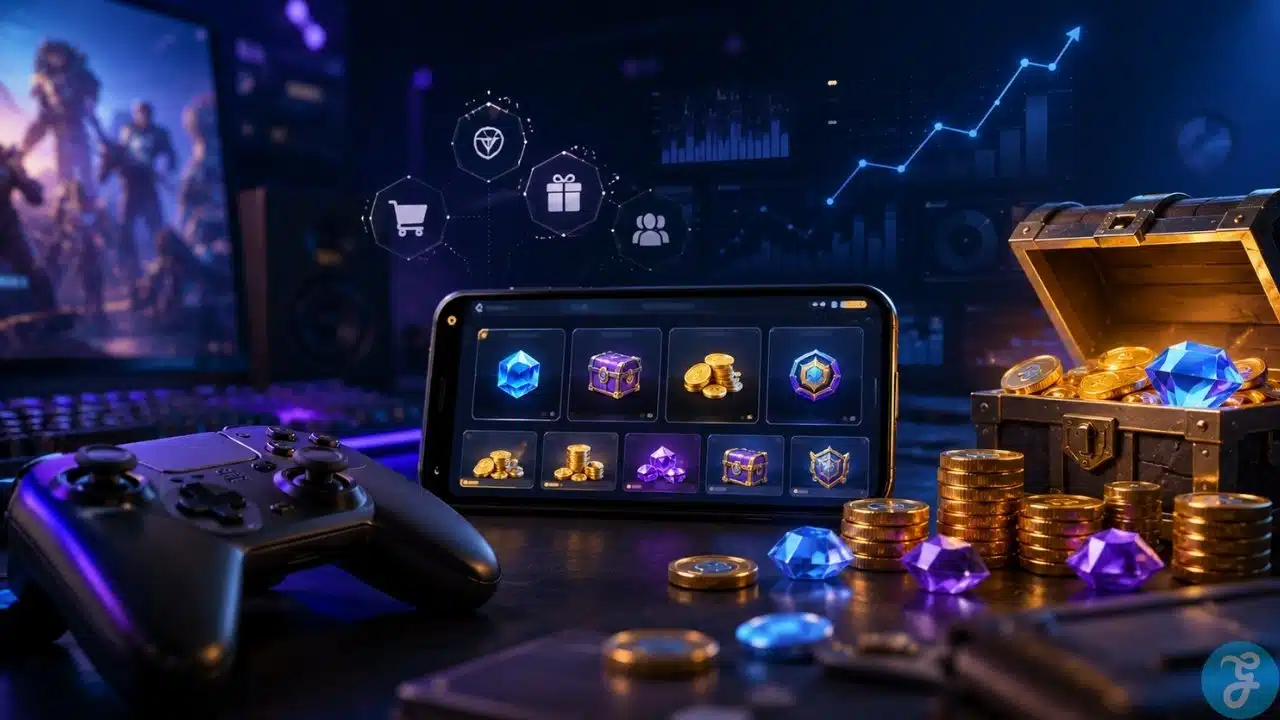
In modern gaming, monetisation goes far beyond one-time purchases. Players expect in-game currencies, loot systems, and reward-based economies that enhance engagement without disrupting gameplay. Microtransactions & In-Game Economies are now a core part of business models for free-to-play and live-service games, making specialised technology providers essential for developers.
Our Selection Criteria
To ensure the list is practical and relevant, we applied the following filters:
- Focus: Companies providing platforms or tools for microtransactions, in-game currencies, virtual economies, and player monetisation.
- Verification: Publicly available websites, product pages, or client references.
- SME/Startup Status: Small to medium-sized companies, not global conglomerates like Xsolla or Unity core services.
- Practical Value: Solutions used by game studios for live monetisation, balance of virtual economies, or in-game transactions.
- Geographic Relevance: Global providers, but clearly verifiable SMEs or medium-sized tech companies.
Top 10 SMEs Specializing in Microtransactions & In-Game Economies
1. AdInMo
Headquarters: London, United Kingdom
Website: www.adinmo.com
Email: contact@adinmo.com
AdInMo specialises in in-game advertising and monetisation SDKs. Their platform integrates seamlessly into mobile and PC games, enabling rewarded ads and interactive monetisation without disrupting gameplay. Game developers can maintain player engagement while generating revenue.
Why We Chose It: Provides unobtrusive in-game monetisation, trusted by multiple studios, supports mobile and PC platforms.
Things to consider: Focuses primarily on ad-based monetisation rather than virtual currency economies.
2. TapNation SDK
Headquarters: Paris, France
Website: www.tapnation.com
Email: info@tapnation.com
TapNation offers an SDK that helps developers implement in-app purchases, virtual currency, and reward loops in mobile games. Its platform allows for flexible economy design, enabling studios to optimise retention and monetisation simultaneously.
Why We Chose It: Strong focus on virtual currencies and microtransactions, supports analytics-driven economy optimisation.
Things to consider: Mainly for mobile-focused studios; not a full cross-platform solution.
3. Fortumo
Headquarters: Tallinn, Estonia
Website: www.fortumo.com
Email: support@fortumo.com
Fortumo provides payment and billing infrastructure for games and apps worldwide. It supports carrier billing, digital wallets, and in-game purchases, enabling players to pay seamlessly across multiple regions and devices.
Why We Chose It: Enables frictionless payments for microtransactions, supports global markets, integrates with game engines easily.
Things to consider: Focuses on payment processing; in-game economy management is developer-driven.
4. Voodoo SDK
Headquarters: Paris, France
Website: www.voodoo.io
Email: contact@voodoo.io
Voodoo provides tools for monetising hyper-casual games, including rewarded ads, in-app purchases, and player retention tools. Their SDK is designed to maximise revenue from microtransactions while keeping the gameplay loop intact.
Why We Chose It: Expert in hyper-casual monetisation, integrates both ad and microtransaction systems.
Things to consider: Best suited for hyper-casual games; less tailored for complex virtual economies.
5. Unity IAP
Headquarters: San Francisco, United States
Website: www.unity.com
Email: support@unity.com
Unity’s In-App Purchase (IAP) system allows game developers to integrate microtransactions and virtual currencies directly within Unity-powered games. It includes analytics, revenue tracking, and cross-platform payment options.
Why We Chose It: Widely adopted by indie and mid-tier developers, easy integration, supports multiple platforms.
Things to consider: Large company solution; may require customisation for advanced in-game economy management.
6. GameRefinery
Headquarters: Helsinki, Finland
Website: www.gamerefinery.com
Email: contact@gamerefinery.com
GameRefinery provides analytics and market insights to optimise in-game economies. While not a direct SDK, their tools help developers balance virtual currencies, pricing, and reward structures to enhance engagement and monetisation.
Why We Chose It: Supports strategic design of in-game economies, data-driven approach improves revenue and retention.
Things to consider: Primarily analytics-focused; integration with game code is developer-led.
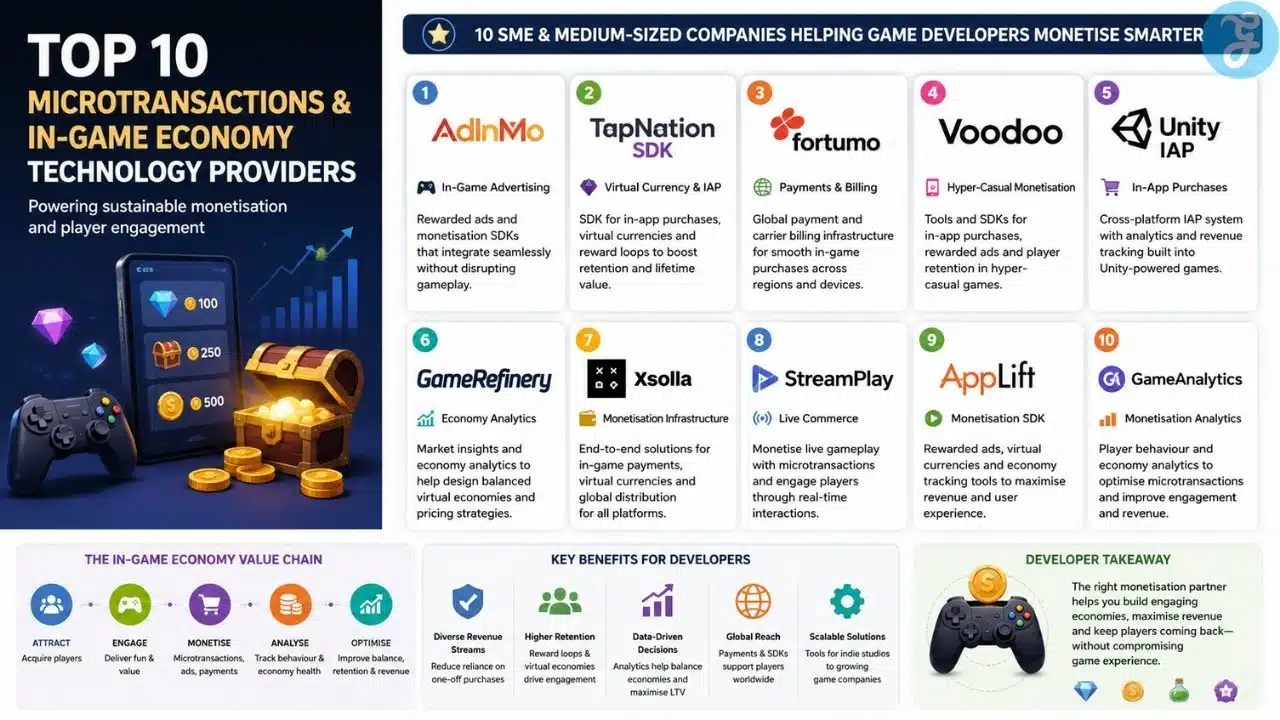
7. Xsolla (SME-Partnered Solutions)
Headquarters: Los Angeles, United States
Website: www.xsolla.com
Email: sales@xsolla.com
Xsolla offers microtransaction infrastructure, virtual currency management, and global payment services. They support game developers in building in-game economy systems for PC, console, and mobile titles.
Why We Chose It: Provides comprehensive monetisation tools with developer-friendly APIs, widely used by indie studios.
Things to consider: Larger organisation; small studio plans may vary.
8. StreamPlay SDK
Headquarters: Berlin, Germany
Website: www.streamplay.io
Email: info@streamplay.io
StreamPlay enables live content monetisation, including microtransactions and in-game purchases during streaming games. Focused on cross-platform engagement and virtual economy optimisation.
Why We Chose It: Blends live interaction with monetisation, supports in-game economy testing and optimisation.
Things to consider: Best for games with streaming components or real-time engagement features.
9. AppLift
Headquarters: Berlin, Germany
Website: www.applift.com
Email: hello@applift.com
AppLift provides monetisation platforms and SDKs that integrate rewarded video, virtual currencies, and in-game economic tracking. Studios can optimise revenue while maintaining user experience.
Why We Chose It: Combines ad monetisation and virtual economy tools, supports analytics-driven optimisation.
Things to consider: Primarily mobile-focused; may require SDK integration effort.
10. GameAnalytics Monetisation Tools
Headquarters: Helsinki, Finland
Website: www.gameanalytics.com
Email: support@gameanalytics.com
GameAnalytics offers virtual economy analytics, player behaviour tracking, and monetisation insights. While not an SDK for direct payment, it allows developers to optimise microtransactions and reward structures.
Why We Chose It: Provides data-driven optimisation for in-game economies, helps balance microtransactions and player engagement.
Things to consider: Analytics-focused, requires integration with existing monetisation SDKs.
Overview of Microtransactions & In-Game Economies Providers
These providers offer a mix of SDKs, payment systems, analytics, and optimisation tools to help developers implement, manage, and refine in-game economies. Some focus on direct microtransactions and virtual currency systems, others provide analytics to improve balance and retention. Together, they cover the full ecosystem needed for modern monetisation in games.
Top 3 Picks and Why
- AdInMo – best for ad-integrated, rewarded monetisation in mobile and PC games
- TapNation SDK – best for virtual currency design and retention optimisation
- Fortumo – best for global payment and microtransaction infrastructure
Why Microtransactions & In-Game Economies Are Booming
In-game monetisation is essential for free-to-play and live-service models. Players now expect seamless virtual economies, and developers need scalable platforms that integrate payments, rewards, and analytics. The combination of mobile gaming growth, digital wallets, and live-service mechanics is driving demand for these SMEs.
What Makes Them Special
- Enable seamless in-game purchases
- Support virtual currency management
- Provide analytics and optimisation tools
- Integrate with multiple platforms and engines
- Balance revenue generation with player engagement
Final Perspective: Practical Advice for Developers
Choosing the right monetisation provider requires understanding your player base and game type. SDKs and analytics should complement game design, not disrupt it. The best tools allow developers to optimise revenue without compromising user experience while maintaining robust in-game economy balance.
Frequently Asked Questions (FAQs) About Microtransactions & In-Game Economies
What Are Microtransactions & In-Game Economies?
Systems that allow players to purchase virtual goods or currencies and interact with structured in-game economic systems.
Why Are SMEs Leading This Space?
They provide specialised tools and analytics that allow developers to implement monetisation without relying on large corporate infrastructure.
Which Providers Are Best for Mobile Games?
AdInMo, TapNation SDK, and AppLift are top options for mobile-first microtransactions.
Which Providers Are Best for Analytics & Optimisation?
GameRefinery and GameAnalytics help developers balance virtual economies and improve revenue with data-driven insights.
Can Small Studios Use These Tools?
Yes, many SMEs offer packages suitable for indie developers while providing enterprise-grade monetisation features.