
Does your body physically ache when you think about your loss? You are definitely not alone in feeling that way. When someone or something important leaves your life, your physical health takes a massive hit, too. Many people miss the fact that emotional pain doesn’t just stay in your head; it shows up directly in your body. Experiencing the physical symptoms of grieving is incredibly common and can affect almost every system you have.
Your headaches pound. Your muscles ache. Your energy just drains away completely, leaving you tired all the time, even if you cannot figure out why. Here is a little secret that helped me understand my own reactions: your body actually cannot separate emotional reactions from physical ones. When sadness hits you hard, your immune system weakens, your digestion struggles, and your sleep falls apart. These changes are incredibly real. Your body is working overtime to process the emotional pain, and that heavy lifting exhausts you.
I am going to walk you through exactly what happens inside your body when you grieve. You will learn why your chest feels so tight, why you cannot eat properly, and why your brain feels foggy. More importantly, we will go through practical ways to take care of yourself while you heal.
Understanding Grief
Grief shows up differently for everyone, and that is completely normal. Your body and mind react to loss in ways that feel intensely real and physical.

What is Grief?
Sorrow hits hard when you lose someone or something that matters deeply. Emotional pain floods in, and your body responds to this loss exactly as it would to a severe physical injury.
Loss creates a natural biological reaction. In fact, medical research shows that grief triggers an inflammatory response in the body. Your heart aches, your stomach twists, and exhaustion completely takes over. Mourning lives in your bones, your chest, and your sleep schedule. Heartache after loss is your system’s honest, biological response to a massive life change.
“Grief is the price we pay for love.” — Queen Elizabeth II
Types of Grief: Normal, Complicated, and Prolonged
Grief manifests in a few different ways. Understanding these variations helps you recognize what you or someone close to you might be experiencing.
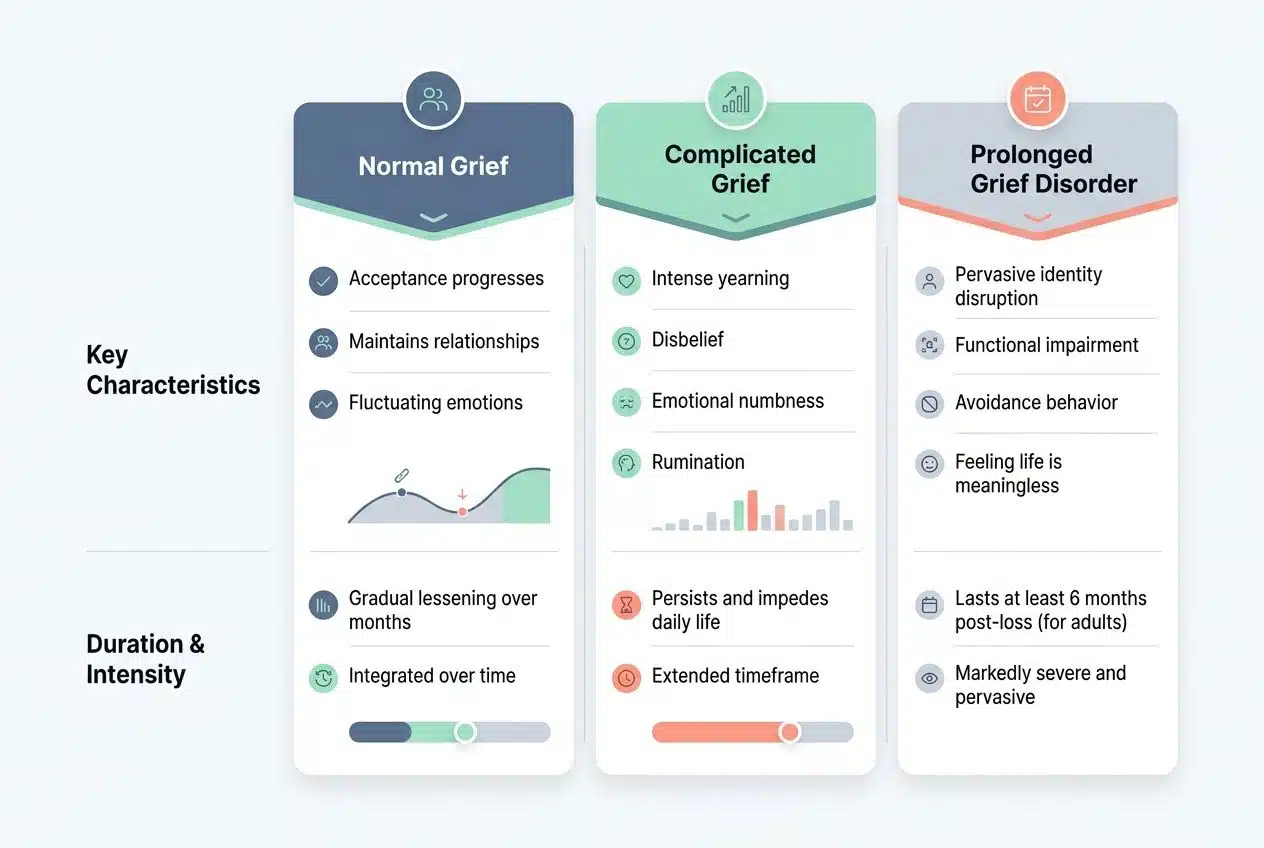
| Grief Type | Key Characteristics | Duration & Intensity |
|---|---|---|
| Normal Grief |
|
|
| Complicated Grief |
|
|
| Prolonged Grief Disorder |
|
|
Normal grief lets you move forward, even when it hurts. Complicated grief keeps you stuck in the same painful spot, and your body recognizes this difference, responding with prolonged physical illness when sorrow goes unmanaged.
The Physical Impact of Grief on the Body
Your body treats grief exactly like a five-alarm fire. It triggers your stress system to kick into overdrive, leaving you vulnerable to illness and pain.
The Stress Response and the Fight-or-Flight Mechanism
Your brain treats emotional loss like an immediate physical threat. It instantly triggers your fight-or-flight mechanism, flooding your bloodstream with cortisol and adrenaline. These are two powerful stress hormones designed to prepare you for danger.
Your heart races, your muscles tense up, and your breathing quickens. Because you cannot literally “fight” loss or “run away” from sorrow, these stress chemicals stay trapped in your body. This prolonged activation exhausts you physically and mentally.
Takotsubo Cardiomyopathy (Broken Heart Syndrome)
The phrase “broken heart” is not just poetry; it is a medical reality. In severe cases of acute grief, the sudden surge of stress hormones can stun the heart muscle. This causes a condition called Takotsubo cardiomyopathy, or broken heart syndrome. It mimics the symptoms of a heart attack, including severe chest pain and shortness of breath, and significantly increases cardiovascular risk in the first 30 days after a major loss.
Immune System Suppression
This constant state of stress takes a serious toll on your immune system. Your body shifts its energy away from fighting off everyday infections, leaving you vulnerable to illness.
Research shows that grieving individuals often experience a massive drop in the activity of lymphocytes (the white blood cells responsible for fighting off viruses). This drop in cellular defense is why you catch colds, sinus infections, or the flu so easily during your most difficult moments.
Changes in Digestion and Body Weight
Grief hits your stomach hard. The “gut-brain axis”—the direct communication line between your brain and your digestive system- is incredibly sensitive to emotional trauma.
When cortisol floods your body, it slows down enzyme production and alters gut motility. This is why about 60% of grieving individuals report significant digestive changes. Some people stop eating altogether because food tastes like cardboard. Others turn to high-sugar comfort foods. High cortisol also signals your body to store fat for a perceived emergency, which can lead to unexplained weight gain around the midsection, even if you are barely eating.
Typical Physical Symptoms of Grieving
Your body speaks a language of pain when sorrow takes hold. Here is how that pain typically shows up in your day-to-day life.
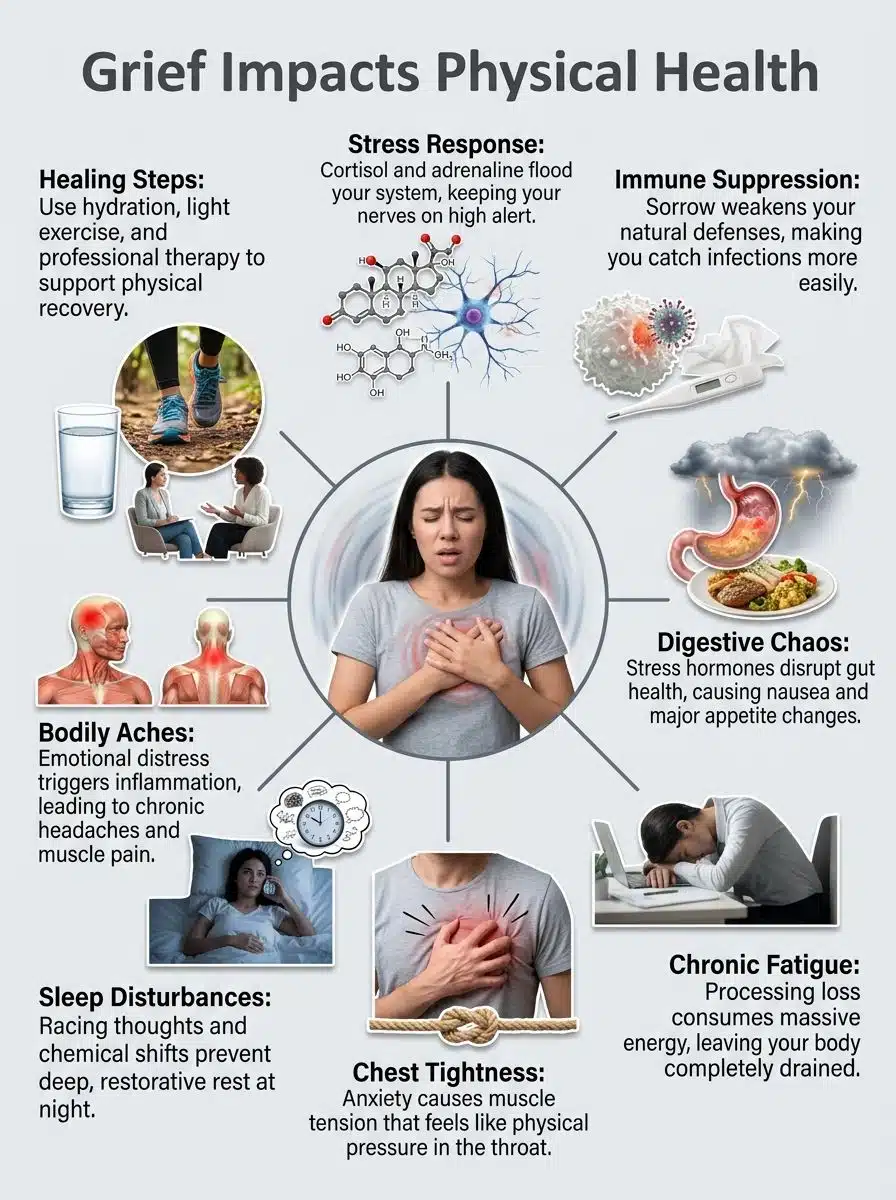
The “Globus Sensation”: Tightness in the Chest and Throat
Many people feel a tight, squeezing sensation in their throat or a heavy pressure on their chest during mourning. Doctors call the lump in the throat the “globus sensation.” It happens because the vagus nerve, which connects your brain to your major organs, becomes highly stimulated during emotional distress. This nerve triggers the muscles in your neck and chest to physically constrict.
Headaches and Somatic Body Aches
When you are grieving, you naturally brace yourself against the emotional pain, causing you to constantly clench your jaw, raise your shoulders, and tighten your back. This chronic muscle tension restricts blood flow, leading to intense tension headaches and severe body aches. Psychologists call this “somatic memory”, the phenomenon where your physical body literally holds onto emotional trauma.
Disturbances in Sleep Patterns
Grief attacks your sleep like an unwelcome guest. Your mind races with thoughts about your loss, making it hard to fall asleep. Even worse, you might find yourself jolting awake at 3:00 AM with your heart pounding. This happens because of nocturnal cortisol spikes. Your brain is so stressed that it accidentally triggers a wake-up chemical signal in the middle of the night, destroying your restorative sleep cycles.
“Grief Brain” and Lack of Focus
Grief stirs up a profound restlessness that makes sitting still feel impossible. You might pace around the house or constantly rearrange things without finishing a single task. This cognitive impairment is known as “grief brain.” Your brain is utilizing so much energy to process the emotional trauma that it literally has no bandwidth left for executive functioning. Short-term memory lapses and trouble making simple decisions are genuine physiological effects of grief, not a sign that you are losing your mind.
Strategies for Managing Physical Symptoms of Grief
You can ease your body’s pain by taking care of yourself in practical, gentle ways.
1. Cortisol-Conscious Hydration and Nutrition
Your body loses water fast when grief hits hard. Dehydration makes headaches and fatigue much worse. Drinking water throughout the day helps your body flush out stress hormones.
Try to practice “cortisol-conscious nutrition.” Instead of just eating whatever is in front of you, try to give your body foods that stabilize stress:
- Warm broths or soups: Incredibly easy to digest when you have zero appetite.
- Lean proteins: Help repair cellular damage caused by stress.
- Whole grains: Provide steady, slow-burning energy to fight fatigue.
2. Gentle Movement and Somatic Release
You do not need to hit the gym for an intense workout. Instead, focus on gentle movement to release the physical tension trapped in your muscles. A simple 15-minute walk around the block, gentle stretching, or restorative yoga pumps out endorphins (feel-good chemicals) and lowers systemic inflammation. Sweating and moving loosen the physical knots that grief ties in your body.
3. Regulating the Nervous System
Because your nervous system is stuck in fight-or-flight mode, you have to manually tell it to calm down.
- Box Breathing: Inhale for 4 seconds, hold for 4, exhale for 4, hold for 4. This directly stimulates the vagus nerve and slows your heart rate.
- Warm Baths: Heat relaxes tight muscles and mimics the feeling of physical comfort.
- Cold Exposure: Splashing ice-cold water on your face can instantly “reset” an overwhelming panic response.
4. Know When to See a Doctor (Red Flags)
While many physical symptoms of grief are normal, you should not ignore severe warning signs. Please consult a doctor immediately if you experience:
- Crushing chest pain or pain radiating down your arm (this could be a heart issue, not just stress).
- An inability to keep food or liquids down for more than 24 hours.
- Extreme, rapid weight loss.
- Thoughts of self-harm or deep hopelessness that frighten you.
The Inevitability of the Grieving Process
Grief moves through your body and mind on its own timeline. You cannot rush this process, no matter how hard you try. Your immune system needs weeks, sometimes months, to bounce back. Sleep disturbances and fatigue do not disappear just because you want them to. Rushing through the mourning process only prolongs your suffering.
Furthermore, grief does not follow a script. Your bereavement journey belongs to you alone. Your heartache might manifest as chest tightness, while someone else’s shows up as stomach issues. This variation is not a weakness; it is proof that grief is deeply personal. Time and patience act as the real medicine in your healing journey.
Final Words
Grief hits your body hard. It triggers stress responses, weakens your immune system, and causes real physical pain that shows up as fatigue and digestive troubles. Eating well, staying hydrated, moving your body gently, and resting give you practical tools to manage these symptoms.
Taking care of your physical health during mourning matters because it builds the foundation for your emotional healing. Professional counselors, support groups, and trusted friends stand ready to help you through this journey. Please reach out when you need them. Managing the physical symptoms of grieving is a slow process, but your pain is completely valid. Moving through it at your own pace is the only way forward that actually works.
Frequently Asked Questions (FAQs) on Physical Symptoms of Grieving
1. What are the most common physical symptoms of grieving?
The most common symptoms include profound physical exhaustion (even after resting), tension headaches, upset stomach or nausea, muscle aches, and a tight, squeezing sensation in the chest or throat. Research shows that nearly 70% of grieving individuals experience at least one of these physical manifestations.
2. Why do my physical symptoms of grieving seem to get worse at night?
At night, the distractions of the day fade away, leaving you alone with your thoughts. This sudden quiet often triggers a spike in anxiety and cortisol levels. Additionally, your body temperature naturally drops at night, which can make muscle aches and tension feel much more pronounced when you are lying still in bed.
3. Is it normal to feel like I have the flu when I am grieving?
Yes. Grief significantly suppresses your immune system and increases systemic inflammation in your body. This combination can cause general malaise, body aches, chills, and fatigue, symptoms that closely mimic a viral infection like the flu.
4. How long will this physical exhaustion last?
There is no magic shortcut. For most people, the most intense physical symptoms begin to gradually ease within 6 to 12 months as the brain slowly processes the loss and lowers its stress response. However, everyone’s timeline is different.
5. How do I know what is just grief and what requires a doctor?
Trouble sleeping, temporary loss of appetite, and minor aches are normal. However, if your physical symptoms prevent you from basic daily functioning (like drinking water, standing up without fainting, or severe chest pain), that is your cue to seek medical help immediately. Grief is natural, but you still need to protect your physical health.
6. Can grief permanently damage my physical health?
While normal grief will not permanently damage your body, prolonged and unmanaged stress can lead to chronic health issues like high blood pressure, chronic inflammation, or autoimmune flare-ups. This is why managing the physical symptoms through rest, nutrition, and medical support is so critical to protecting your long-term health.