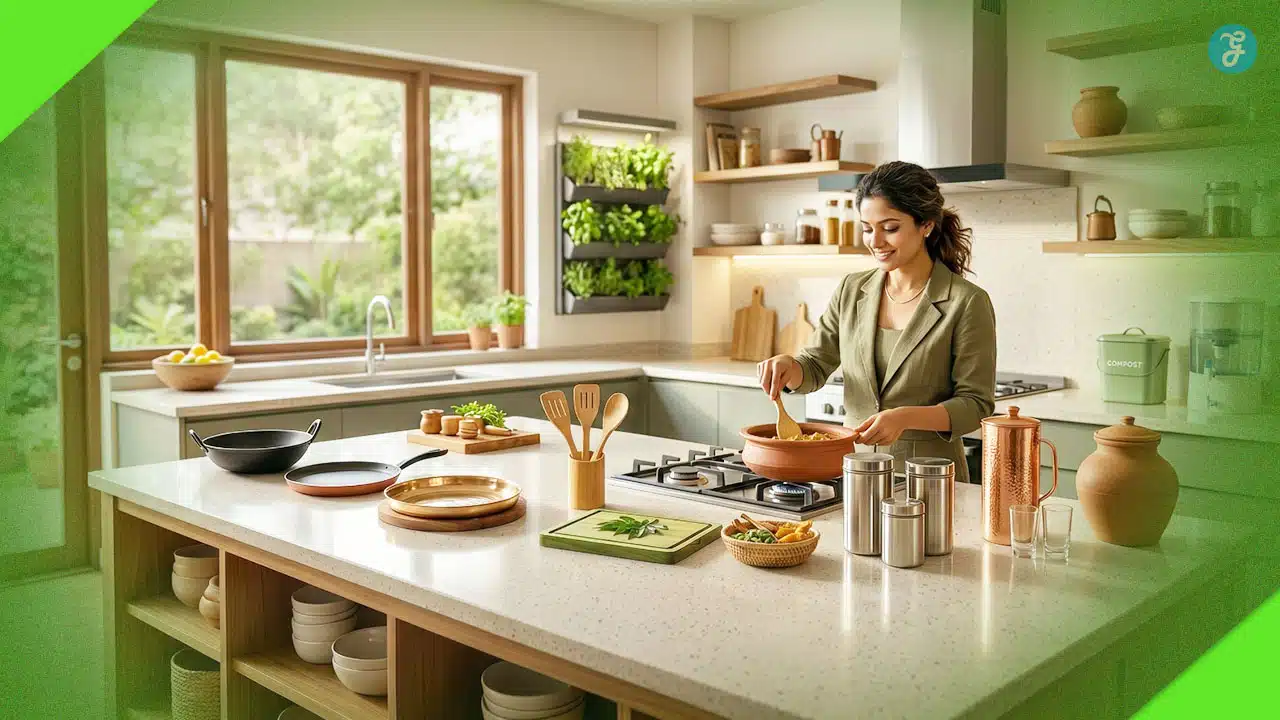
Walk into an Indian home today and you will witness a quiet revolution. Cooks across generations are rethinking their daily tools. This shift extends beyond domestic kitchens to professional home chefs and culinary enthusiasts. The old reliance on synthetic plastics and disposable packaging is fading fast. Modern buyers understand the environmental cost of cheap gear. They want safer choices.
The demand for sustainable alternatives is surging. Shoppers are actively looking for eco-friendly kitchen brands in India. This guide highlights the pioneers driving this exact change. We profile 15 innovative eco-friendly kitchen startups. These businesses are redefining meal preparation and domestic waste management. They represent the practical future of sustainable living.
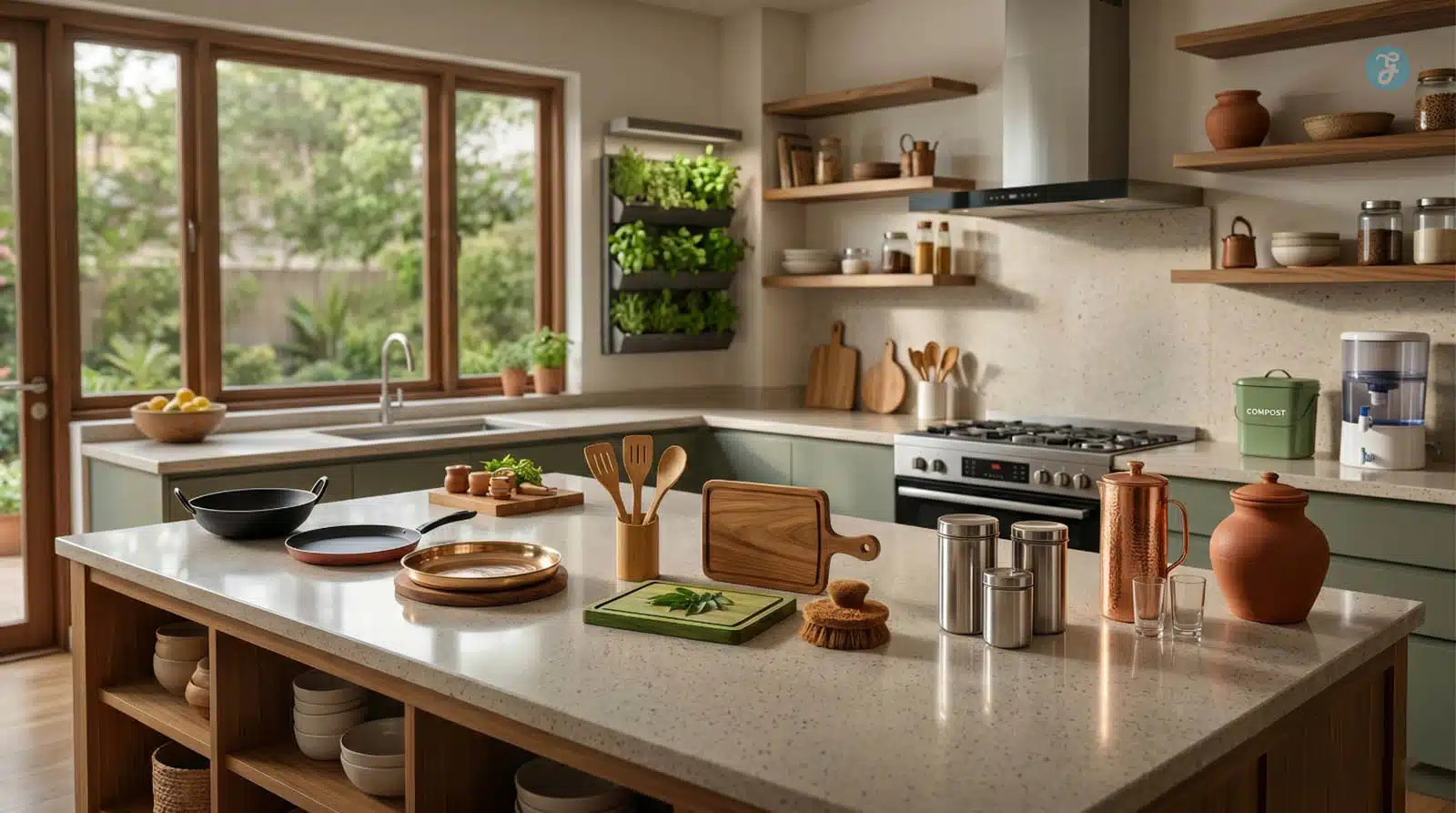
Eco-Friendly Kitchen Startups: The Shift Away from Chemical Cookware Has Begun
The current surge in sustainable kitchenware is a permanent market correction. This is not a passing trend. Several heavy drivers are pushing this growth. People are waking up to the health risks of chemical coatings like Teflon. Fears of microplastics in daily tools are real. These concerns are moving from the fringe to the mainstream.
Government action is also playing a major role. Recent regulations on single-use plastics are forcing change in every Indian pantry. At the same time, the spending power of Millennials and Gen Z is shifting the needle. These shoppers prioritize the planet. They want products that fit a circular economy. They are not just buying a pan. They are investing in a healthier lifestyle. Because of this, eco-friendly kitchen brands in India are seeing record demand. The industry must adapt or get left behind. This is the new standard for the modern home.
How We Curated India’s Top Eco-Friendly Kitchen Brands
Our editorial team conducted independent market research to identify the leaders among sustainable domestic startups in India. We vetted each company based on their material transparency, manufacturing ethics, and active impact within the Indian SME sector. While these eco-friendly kitchen startups are numbered for clarity, this list does not represent a definitive hierarchy or ranking. We prioritized businesses with proven track records in removing toxins and plastics from the domestic culinary environment.
Top 15 Eco-Friendly Kitchen Startups Transforming Indian Homes
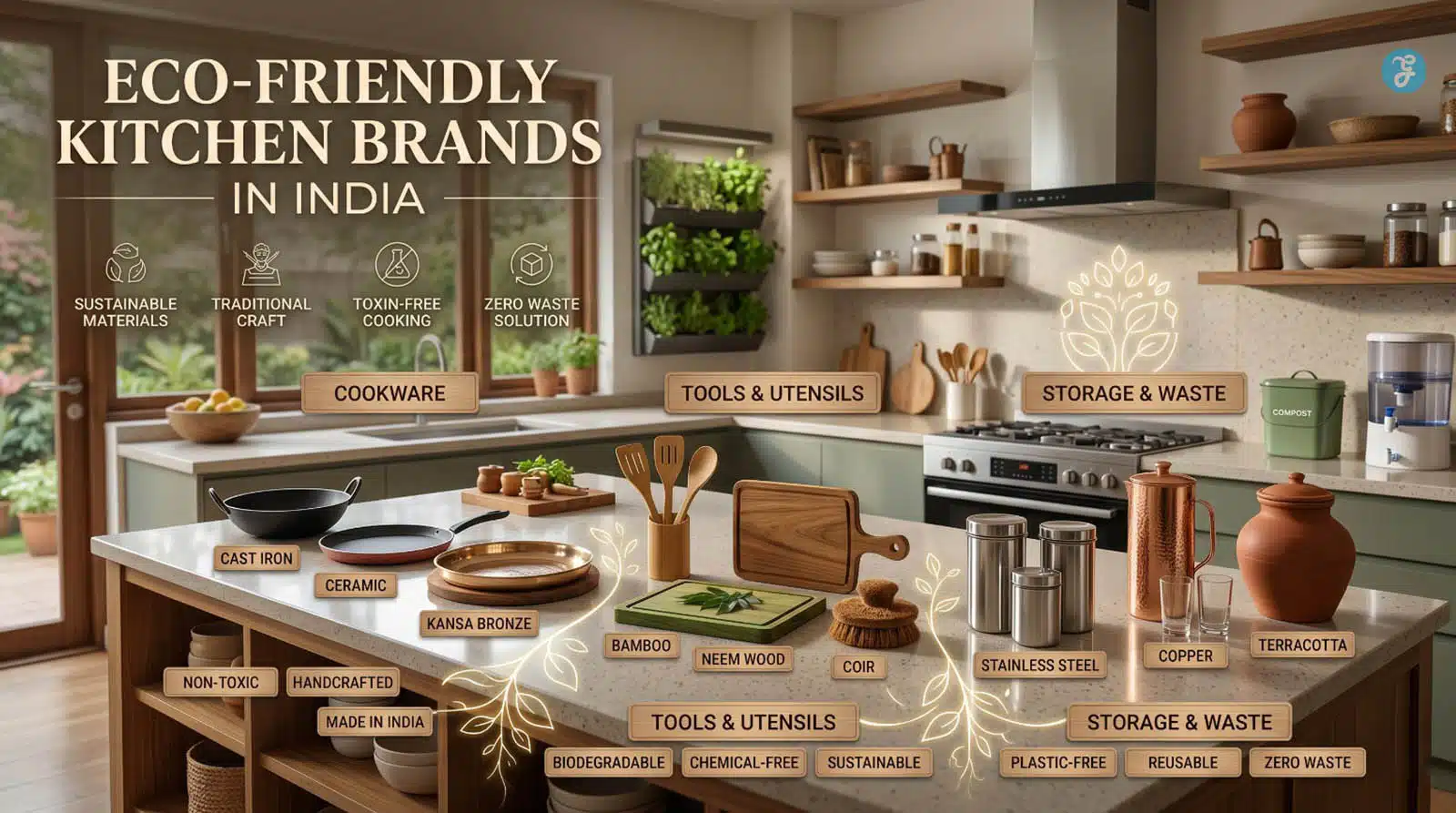
Here is a detailed look at the 15 pioneering enterprises making sustainable cooking accessible and viable across the nation.
1. The Indus Valley
HQ Location: Chennai, Tamil Nadu
This startup is a verified direct-to-consumer brand reshaping how modern Indian households approach daily meal preparation. They pioneer the shift back to traditional cooking materials by eliminating harmful chemical coatings from kitchens. By providing non-toxic cast iron and tri-ply stainless steel cookware, they ensure that the foundation of every meal is safe and sustainable.
- Ideal for: Health-conscious home cooks seeking durable and chemical-free pots and pans.
- What Sets It Apart: They successfully combine modern direct to consumer convenience with ancient metallurgical health benefits.
- Before You Choose: Cast iron products require regular seasoning and proper maintenance to prevent rust.
- Core Highlights: Toxin-free construction, heavy gauge heat retention, and induction friendly designs.
- Future Outlook: Expanding their tri-ply stainless steel range to capture the low maintenance consumer market.
2. Beco
HQ Location: Mumbai, Maharashtra
By targeting everyday consumables, this venture-backed startup makes transitioning to an eco-friendly lifestyle seamless and highly accessible. They offer a direct zero plastic alternative to the single-use items that generate the most daily waste in a standard kitchen. By producing bamboo-based kitchen towels and compostable garbage bags, they help households reduce their landfill contribution significantly.
- Ideal for: Busy households looking for easy swaps for daily use items.
- What Sets It Apart: They provide a subscription ready model for items that require constant replenishment.
- Before You Choose: Bamboo-based products often carry a slight premium over standard paper or plastic goods.
- Core Highlights: Chemical-free manufacturing, highly absorbent materials, and certified compostable certifications.
- Future Outlook: Scaling their retail distribution to compete directly with legacy paper and plastic brands.
3. Ecoware
HQ Location: New Delhi, Delhi
Operating as a verified SME, this enterprise focuses on completely natural and biodegradable tableware. They utilize local agricultural waste to create safe toxin-free kitchen packaging and plates that decompose completely within a few months. This model addresses both the plastic crisis and the environmental issues caused by crop residue burning.
- Ideal for: Eco conscious event planners and households hosting large gatherings.
- What Sets It Apart: They turn crop stubble into a valuable resource instead of an air polluting hazard.
- Before You Choose: These items are strictly designed for single-use rather than long term pantry storage.
- Core Highlights: Oil resistant surfaces, microwave safe materials, and 100 percent natural composition.
- Future Outlook: Partnering with major food delivery aggregators to replace all styrofoam containers.
4. Zishta
HQ Location: Bangalore, Karnataka
This enterprise serves as a bridge between ancient Indian heritage and modern sustainability demands. They work directly with rural artisan clusters to revive traditional science-backed Indian cookware made from pure bronze, cast iron, and soapstone. Their work ensures that traditional craftsmanship survives while offering consumers time-tested, healthy cooking surfaces.
- Ideal for: Culinary enthusiasts who value authentic preparation methods and artisan craftsmanship.
- What Sets It Apart: They maintain complete supply chain transparency while directly supporting rural economies.
- Before You Choose: Soapstone and clay items are inherently fragile and require careful handling during washing.
- Core Highlights: Handcrafted precision, naturally non stick properties over time, and zero chemical usage.
- Future Outlook: Creating global export channels for authentic Indian heritage cookware.
5. Koparo
HQ Location: New Delhi, Delhi
Focusing on unseen pollutants, this rapidly growing clean tech startup ensures that the water leaving the kitchen is as clean as the dishes themselves.
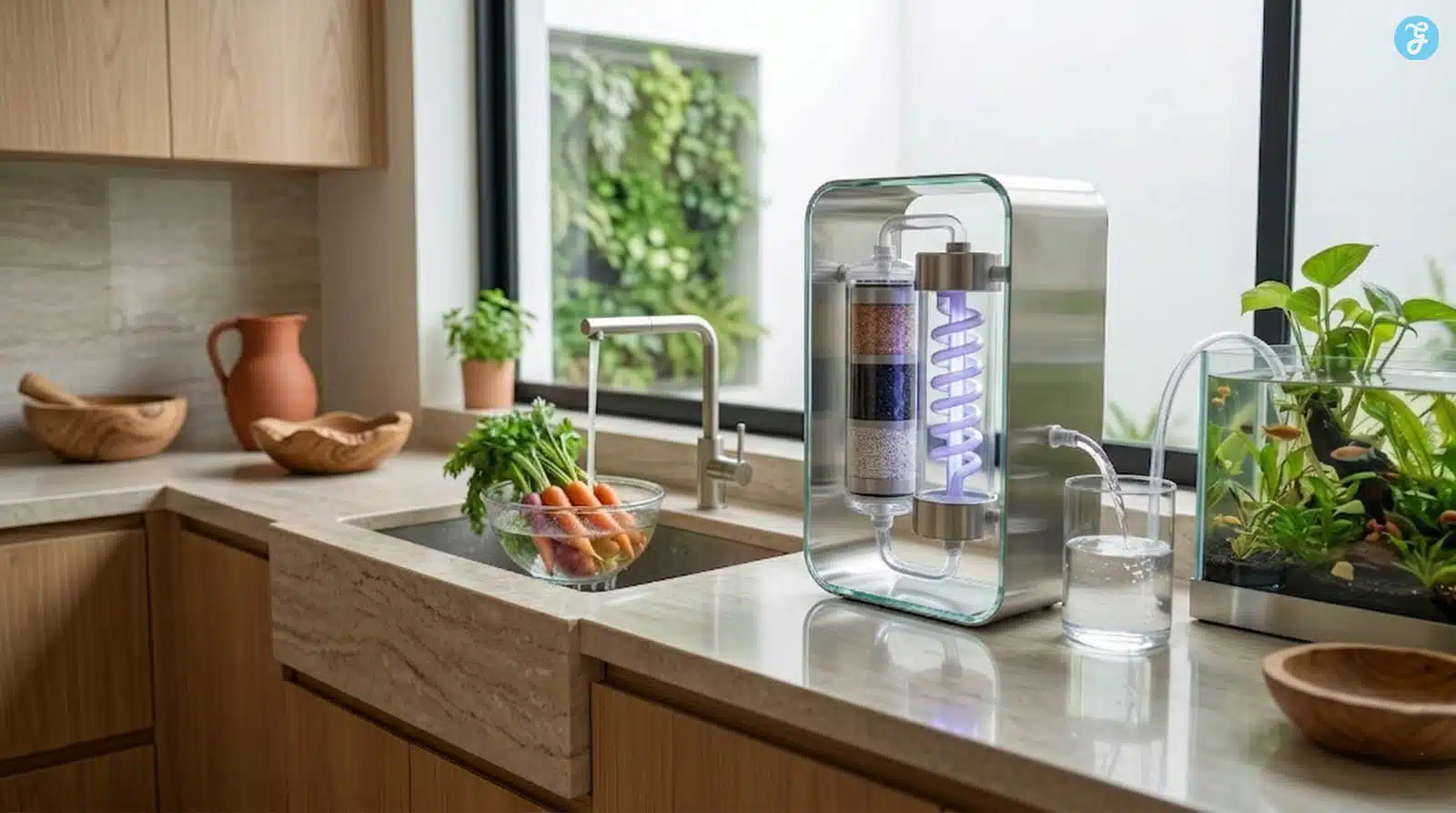
They manufacture plant-based toxin-free dishwashing liquids and surface cleaners that prevent harsh synthetic chemicals from entering local water systems. Their approach brings peace of mind to families concerned about chemical residues on food-contact surfaces.
- Ideal for: Families with young children or pets seeking safe surface cleaning solutions.
- What Sets It Apart: Their formulations are tough on grease but entirely biodegradable and gentle on skin.
- Before You Choose: Natural fragrances are generally milder than the artificial scents found in commercial cleaners.
- Core Highlights: Vegan ingredients, cruelty-free testing, and concentrated formulas for less packaging.
- Future Outlook: Expanding into commercial kitchen supply lines to clean up restaurant wastewater.
6. Bare Necessities
HQ Location: Bangalore, Karnataka
This pioneering zero-waste startup directly challenges the plastics industry by addressing the massive problem of food preservation. They create handmade beeswax food wraps and reusable storage solutions that eliminate the need for single-use cling film in domestic kitchens. Their products focus on a circular economy where every item can eventually return to the earth without harm.
- Ideal for: Zero-waste advocates looking to eliminate soft plastics from their refrigerators.
- What Sets It Apart: They offer a highly aesthetic and functional alternative to a ubiquitous plastic problem.
- Before You Choose: Beeswax wraps cannot be used with raw meat or exposed to hot water.
- Core Highlights: Organic cotton base, natural antibacterial properties, and fully compostable end of life.
- Future Outlook: Developing new plant-based waxes to offer completely vegan wrap alternatives.
7. Mitti Cool
HQ Location: Wankaner, Gujarat
By turning to earth based materials, this rural SME innovator has created off grid solutions that challenge modern appliance dependency. They manufacture earthen clay refrigerators and terracotta kitchenware that operate entirely without electricity. This innovation proves that traditional wisdom can solve modern energy consumption challenges effectively.
- Ideal for: Environmentally strict households and rural areas with inconsistent power supplies.
- What Sets It Apart: It is a brilliant example of frugal innovation requiring zero fossil fuels to operate.
- Before You Choose: The cooling capacity is limited to basic preservation rather than deep freezing.
- Core Highlights: Evaporative cooling technology, natural clay construction, and low maintenance design.
- Future Outlook: Modernizing the aesthetic of terracotta appliances to appeal to upscale urban kitchens.
8. Thooshan
HQ Location: Ernakulam, Kerala
This highly innovative startup has redefined the lifecycle of disposable tableware to eliminate plastic waste completely. They manufacture edible plates and bowls using wheat bran, ensuring zero-waste by allowing the products to be consumed or safely composted after use. This approach completely reimagines “disposable” as a nutrient rather than a pollutant.
- Ideal for: Innovative catering services and eco tourism resorts.
- What Sets It Apart: They have completely removed the concept of waste from the consumption cycle.
- Before You Choose: Edible plates have a specific flavor profile that may interact with certain dishes.
- Core Highlights: High structural integrity, nutrient rich composition, and rapid biodegradability.
- Future Outlook: Engineering new flavor profiles to complement a wider variety of global cuisines.
9. Nurture India
HQ Location: Noida, Uttar Pradesh
Blending contemporary design with ethical sourcing, this enterprise brings sustainable elegance to dining and serving. They empower local artisans while ensuring all wood is sourced through environmentally responsible channels to create sustainable wooden serveware. Their work proves that high-end kitchen aesthetics do not need to rely on unsustainable materials.
- Ideal for: Consumers looking for premium gifting options and elegant tablescapes.
- What Sets It Apart: They prove that luxury aesthetics do not have to come at an environmental cost.
- Before You Choose: Wooden items require periodic oiling to prevent the material from drying or cracking.
- Core Highlights: Sustainable timber sourcing, food safe finishes, and contemporary artisan designs.
- Future Outlook: Expanding their catalog to include sustainable furniture for the dining room space.
10. Qudrat
HQ Location: Thiruvananthapuram, Kerala
This startup tackles the disposable kitchenware market with extreme precision to reduce reliance on single-use plastics. They produce highly durable single-use plates and containers from rice bran and agricultural residue for a zero plastic catering solution. Their engineering allows these disposables to serve heavy, liquid-based Indian meals without compromising structural integrity.
- Ideal for: Bulk buyers in the hospitality sector looking for heavy-duty disposables.
- What Sets It Apart: Their products are engineered to handle hot liquid curries without losing structural integrity.
- Before You Choose: Bulk purchasing is usually required to offset the higher per unit manufacturing costs.
- Core Highlights: Leak proof design, thermal resistance, and utilization of abundant rice milling byproducts.
- Future Outlook: Scaling production facilities to lower costs and compete with cheap plastic imports.
11. Trishula
HQ Location: Vadodara, Gujarat
This active enterprise produces spoons and forks from a blend of natural flours and spices to combat plastic pollution. Their edible cutlery offers structural integrity that holds up in hot foods while remaining completely biodegradable and safe for consumption. It provides a clever solution to the problem of billions of plastic utensils ending up in landfills.
- Ideal for: Takeout restaurants and food trucks looking to green their delivery operations.
- What Sets It Apart: They provide a fun and engaging consumer experience while solving a critical pollution issue.
- Before You Choose: The shelf life of edible cutlery requires careful inventory management compared to plastic.
- Core Highlights: Multiple flavor options, strict hygiene standards, and zero landfill impact.
- Future Outlook: Developing stronger natural binding agents to increase the durability of forks and knives.
12. Pappco Greenware
HQ Location: Mumbai, Maharashtra
Operating strictly out of Mumbai, this established SME focuses on reducing white pollution by creating eco-friendly tableware. They utilize sugarcane bagasse and bamboo to produce compostable plates, bowls, and containers, providing a highly reliable and sustainable alternative to standard plastic disposables. Their large-scale operations make sustainable packaging viable for big institutions.
- Ideal for: Cloud kitchens and institutional cafeterias needing reliable takeout packaging.
- What Sets It Apart: They have the production capacity to supply major corporate clients consistently.
- Before You Choose: Bagasse products must be disposed of in commercial composting facilities for optimal breakdown.
- Core Highlights: High volume production, versatile container shapes, and sturdy construction.
- Future Outlook: Innovating new protective films that remain compostable while extending food shelf life.
13. Brown Living
HQ Location: Mumbai, Maharashtra
Acting as a critical gatekeeper for the conscious consumer, this platform streamlines the transition to an eco-friendly kitchen. They apply a strict verification framework to ensure all listed kitchen items are completely plastic free and devoid of greenwashing. By aggregating various sustainable brands, they make eco-conscious shopping convenient and trustworthy.
- Ideal for: Shoppers who want a one stop marketplace for verified sustainable household goods.
- What Sets It Apart: They do the heavy lifting of vetting supply chains so the consumer can shop with confidence.
- Before You Choose: They function as a marketplace aggregator rather than the direct manufacturer of the goods.
- Core Highlights: Carbon neutral shipping, strict plastic free packaging rules, and diverse brand partnerships.
- Future Outlook: Developing an in house white label brand based on marketplace data and consumer gaps.
14. Bambrew
HQ Location: Bangalore, Karnataka
Targeting the flexible packaging crisis, this venture backed startup provides structural solutions to pantry and kitchen storage. They manufacture certified compostable alternatives that mimic the protective barrier functionality of plastic packaging without the associated environmental toll. Their focus is on replacing the most difficult-to-recycle films found in every kitchen.
- Ideal for: Food and beverage brands needing sustainable pouches and wraps for retail sale.
- What Sets It Apart: They solve the hardest packaging challenge in the kitchen which is flexible barrier films.
- Before You Choose: Industrial composting conditions are often required for flexible films to degrade efficiently.
- Core Highlights: High barrier protection against moisture, custom printing options, and strong sealability.
- Future Outlook: Creating home compostable flexible films that break down in standard garden bins.
15. Sunbird Straws
HQ Location: Bangalore, Karnataka
Focusing on a very specific yet massive pain point, this startup replaces synthetic kitchen accessories with natural innovation. They manufacture multi layered functional drinking straws from dried coconut leaves to offer a highly sustainable alternative to both plastic and soggy paper straws. This utilizes a waste product that is abundant in India while providing a superior user experience.
- Ideal for: Cafes and restaurants seeking a premium alternative to paper straws.
- What Sets It Apart: They utilize an abundant natural waste product to solve the functional failures of paper straws.
- Before You Choose: The natural aesthetic means each straw has slight variations in color and texture.
- Core Highlights: Does not get soggy in liquids, naturally antibacterial, and empowers women in rural manufacturing.
- Future Outlook: Expanding their leaf based technology into other small form kitchen utensils like stirrers.
The Kitchen Vibe Check: This Is Where Things Get Interesting
Looking at these 15 players, it is clear that the “standard” way of running a kitchen is officially over. Here is the lowdown on how these startups are rewriting the rulebook for the modern home.
- Heirloom Tech is the New Flex: We are seeing a massive rejection of “disposable” culture. Instead of buying cheap, non-stick pans every two years, people are investing in “forever” tools. By scaling ancient materials like cast iron and pure bronze, these brands are proving that the most advanced kitchen tech might actually be thousands of years old. Longevity is the ultimate sustainability flex.
- Agri-Waste is the New Gold: The most exciting innovation isn’t happening in a lab; it’s happening on the farm. By upcycling rice husk, coconut leaves, and wheat bran, startups are solving two massive problems at once. They are stopping agricultural burning, a major air pollution source, and replacing plastic. It is a masterclass in circular thinking that turns “trash” into high-performance kitchenware.
- The “Single-Use” Funeral: The success of edible cutlery and bamboo towels signals the end of the “use once and forget” era. Consumers are no longer okay with a 20-minute meal leaving a 500-year legacy in a landfill. These companies prove that convenience does not have to come at a permanent environmental cost. If you can eat your spoon or compost your trash bag, you have won.
- Transparency is the Only Currency: Greenwashing is getting called out. Today’s buyers are hyper-aware and demand proof of every claim. These startups are winning because they build zero-waste principles into their DNA, not just their marketing. With strict verification and plastic-free shipping, they are proving that being “clean” is a full-time commitment, from the factory floor to the front door.
Investing in the Circular Culinary Economy
The rise of eco-friendly kitchen startups in India represents more than a trend; it is a fundamental shift in the $60 billion D2C market. For founders, the roadmap is clear: the next massive opportunity lies in “un-sexy” problems like flexible compostable packaging and localized agri-tech upcycling. The era of blitzscaling is over. Today, building an anti-fragile brand means prioritizing unit economics and material transparency from day one.
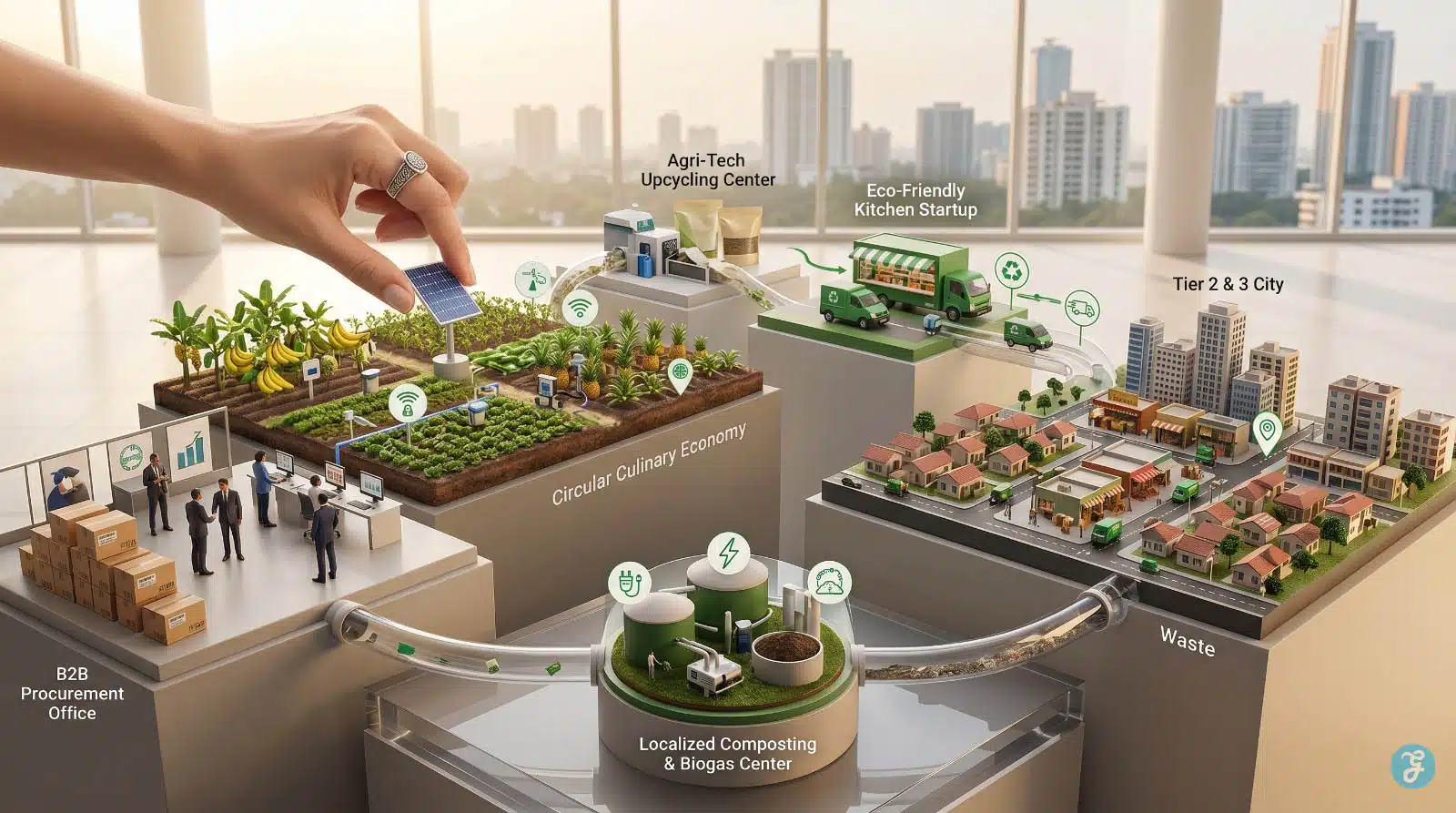
For SMB buyers and corporate procurement teams, the message is equally urgent. Transitioning to sustainable suppliers is no longer just a CSR goal, it is a hedge against incoming plastic regulations and a direct response to a consumer base that now values “clean” products over cheap ones. Investing in these partnerships early ensures supply chain resilience as global buyers shift their focus from “cheap” to “credible” manufacturing.
Investors should note that patient capital is the new winner. The most valuable ventures in 2026 are those bridging the gap between traditional Indian sustainability and modern tech-enabled convenience. With Tier 2 and 3 cities driving 66 percent of new demand, the potential for geographically decentralized growth is immense. Those who back vertical leaders with a sharp focus on circular principles will find themselves at the center of India’s disciplined, high-growth maturity.
| Brand | HQ | Material Innovation | Why it Matters |
| The Indus Valley | Chennai | Cast Iron / Tri-ply | Replaces toxic chemical-coated non-stick pans. |
| Beco | Mumbai | Bamboo / Cornstarch | Swaps daily disposables for compostable versions. |
| Ecoware | New Delhi | Sugarcane Bagasse | Upcycles crop waste into sturdy, natural plates. |
| Zishta | Bangalore | Pure Bronze / Soapstone | Revives ancient metallurgy for healthier cooking. |
| Koparo | New Delhi | Plant-based Actives | Keeps micro-pollutants out of the water system. |
| Bare Necessities | Bangalore | Beeswax / Organic Cotton | Eliminates plastic cling film and fridge waste. |
| Mitti Cool | Wankaner | Terracotta / Clay | Offers zero-electricity, evaporative cooling. |
| Thooshan | Ernakulam | Wheat Bran | Makes tableware edible to ensure zero-waste. |
| Nurture India | Noida | Sustainable Timber | Proves luxury dining can be ethically sourced. |
| Qudrat | Trivandrum | Rice Husk Residue | Provides heavy-duty, leak-proof catering gear. |
| Trishula | Vadodara | Multi-grain Flour | Turns disposable cutlery into a nutrient source. |
| Pappco | Mumbai | Bamboo Fiber | Scales eco-packaging for major cloud kitchens. |
| Brown Living | Mumbai | Curated (Plastic-free) | Acts as a verified filter for the conscious buyer. |
| Bambrew | Bangalore | Compostable Film | Solves the crisis of plastic flexible packaging. |
| Sunbird Straws | Bangalore | Coconut Leaves | Replaces soggy paper straws with sturdy leaf tech. |
Frequently Asked Questions (FAQs) on Eco-Friendly Kitchen Brands in India
What exactly makes a kitchen brand “eco-friendly” in the Indian market?
In India, a truly sustainable brand goes beyond just using “natural” materials. It involves a full-circle approach: sourcing non-toxic raw materials (like lead-free clay or virgin grade cast iron), ethical labor practices within local artisan clusters, and plastic-free shipping. Most importantly, the product must either be designed to last a lifetime (like The Indus Valley’s cast iron) or compost safely back into the earth within 90 to 180 days (like Ecoware’s bagasse plates).
How can I spot “greenwashing” when shopping for kitchenware?
Greenwashing is common, especially with vague terms like “all-natural” or “earth-friendly” that lack certification. To verify a brand, look for specific credentials:
- Certifications: Look for FSSAI compliance for food safety and ISO or BPI certifications for compostability.
- Material Transparency: Authentic brands will list the exact composition, such as “100% Sugarcane Bagasse” rather than just “Plant-based.”
- The Scratch Test: For cookware, if a brand claims to be “eco-friendly” but uses a non-stick coating that can release microplastics if scratched, it is likely not truly sustainable.
Is bamboo better than sugarcane bagasse for disposable kitchenware?
Both are excellent, but they serve different needs. Sugarcane bagasse (used by brands like Pappco) is an agricultural byproduct, meaning it utilizes waste that would otherwise be burned. It is highly cost-effective and composts faster (60–90 days). Bamboo is more durable and has a premium aesthetic, but it takes longer to decompose (up to 180 days) and is often more expensive.
Are eco-friendly kitchen products actually safer for my health?
Yes. Conventional kitchenware often contains “forever chemicals” like PFAS and PFOA in non-stick coatings, which have been linked to hormonal imbalances. Furthermore, a single scratch on a standard non-stick pan can release upwards of 9,000 microplastic particles into your food. Sustainable brands like Zishta or Koparo eliminate these risks by using inert materials and plant-based cleaners that leave no toxic residue.
How do new 2026 government regulations affect my kitchen?
The latest updates to the Plastic Waste Management Rules have significantly restricted single-use plastics and non-biodegradable packaging. This means many “traditional” plastic containers and thin-film wraps are being phased out. Modern eco-friendly kitchen startups are ahead of the curve, providing compliant alternatives like compostable flexible films and leaf-based utensils that meet the strict Bureau of Indian Standards (BIS) guidelines for recycled and sustainable content.
Can sustainable cookware like cast iron be used on modern induction stoves?
Absolutely. One of the biggest myths is that traditional cookware is “old-tech.” Most cast iron and tri-ply stainless steel from brands like The Indus Valley are naturally magnetic and highly efficient on induction cooktops. They offer the heat retention of traditional cooking with the precision of modern appliances.