


Have you ever looked in the mirror and wondered why a certain rash or dry patch just will not go away? I know exactly how frustrating it is to try every lotion on the shelf with zero results. Your skin actually acts like a mirror for your whole body. When something goes wrong inside, your skin often shows it first. I was amazed to learn that the American Academy of Dermatology reports that one in four people in the United States currently has a skin condition.
Many of those annoying skin problems are actually your body sending messages about what is happening beneath the surface. Dermatologists catch serious health problems every single day just by looking at their patients’ skin. Visible changes can reveal clues about your liver, kidneys, hormones, and immune system before you feel sick. Grab a cup of coffee, and let’s go through the skin signs of internal health problems together.
I am going to walk you through exactly what your skin is telling you about your health, and you will see how simple it is to spot the warning signs.
How Your Skin Reflects Your Overall Health
Your skin is your largest organ, and it works closely with your internal systems. When your organs struggle, your skin speaks up first with visible clues.
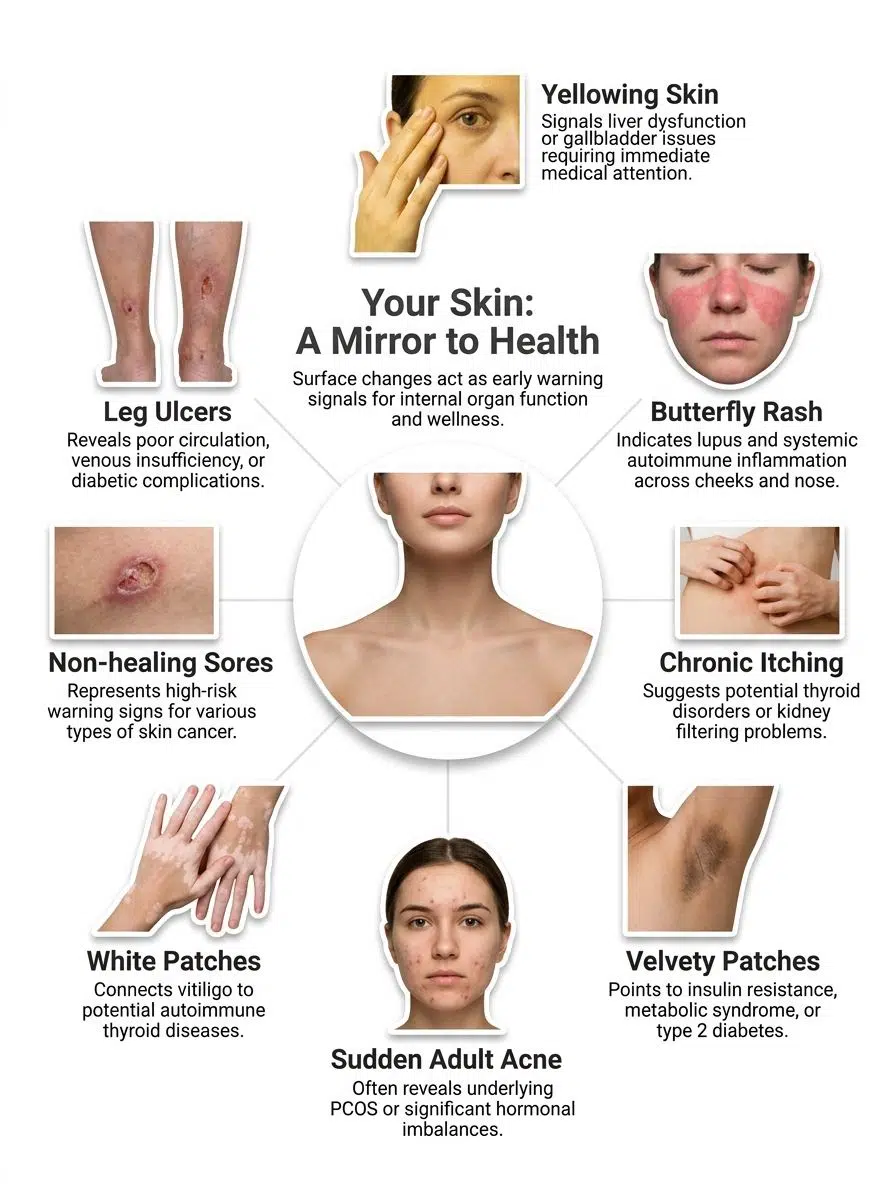
The connection between skin and internal health
Think of your complexion as a billboard displaying what happens inside your body. Organs, hormones, nutrition levels, and wellness all send signals outward. I always tell people that skin conditions rarely appear without a reason.
Dark spots, rashes, acne, and discoloration often point to deeper health issues. Your digestive system, liver function, thyroid health, and hormone balance all influence your skin’s appearance directly. Inflammation inside your body shows up as inflammation on your face and body.
Poor nutrition makes skin dull and weak. Dehydration causes dryness and itching. Medical symptoms manifest through the skin before you feel them anywhere else.
“The skin is the window to the body’s health, revealing what lies beneath the surface.”
Skin changes tell stories about what is happening in your gut, bloodstream, and organs. A sudden rash might signal an allergic reaction or an autoimmune response. Catching these disease detection opportunities early can save lives.
Early warning signs visible on the skin
These visible signals often show up before you feel sick, giving you a head start on catching health problems early. Here are the most common early warnings to watch for:
- Yellowing of the skin and eyes: This signals liver or gallbladder dysfunction. The discoloration appears when your body cannot process a yellowish substance called bilirubin correctly.
- Dry, itchy skin: When this persists for weeks, it may indicate thyroid issues or kidney disease. These organs help control moisture balance and filter waste throughout your body.
- A butterfly-shaped rash: Spreading across your cheeks and nose, this is a classic sign of lupus. This autoimmune condition affects multiple body systems and often worsens in sunlight.
- Dark, velvety patches: Found on your neck, armpits, or skin folds, these patches point to acanthosis nigricans. This condition connects directly to diabetes or insulin resistance.
- Persistent rashes: Rashes that spread without a clear trigger may indicate liver problems or iron deficiency anemia. Your skin becomes inflamed as your body sends distress signals.
- Scaly patches or sores: Wounds that refuse to heal suggest possible skin cancer and demand immediate dermatology attention.
- Sudden adult acne: Breakouts that appear out of nowhere often signal Polycystic Ovary Syndrome (PCOS), a common hormonal imbalance.
- White patches: Spreading loss of pigment indicates vitiligo, which is associated with autoimmune thyroid diseases.
Common Skin Symptoms and Their Meanings
Your skin sends real messages about what is happening inside your body. Different skin changes point to different internal issues, so paying attention to your skin’s behavior matters immensely.
Dry, itchy skin: Possible thyroid or kidney issues
Dry, itchy skin that will not quit might seem like a simple moisture problem, but your body could be sending you a bigger message. Thyroid issues often trigger this frustrating symptom because your thyroid controls how your body regulates temperature and skin hydration.
Kidney problems also show up this way. A condition called uremic pruritus affects 15% to 49% of patients with chronic kidney disease in the US. When your kidneys struggle, they cannot filter waste properly. That waste builds up in your blood and severely irritates your skin.
Persistent itching is your body’s alarm system. Do not just apply more lotion; investigate what is happening on the inside.
Flaking skin combined with fatigue or weight changes points toward thyroid dysfunction. Itching that gets worse in winter or never improves with a heavy moisturizer suggests your kidneys might need checking.
Yellowing skin/eyes (Jaundice): Liver or gallbladder dysfunction
Your skin color shifts tell a big story about what happens inside your body. Yellowing of your skin or the whites of your eyes signals jaundice, and this symptom demands your immediate attention.
Your liver and gallbladder work hard to process bile, a fluid that helps digest fats. When these organs struggle, bilirubin builds up in your blood instead of flowing where it should go. In the US, the CDC notes that viral hepatitis and gallstones are common triggers for this specific liver dysfunction.
You can easily check your bilirubin levels with a Comprehensive Metabolic Panel (CMP) blood test. Fatigue, dark urine, and pale stools often tag along with jaundice. Discoloration this severe means you should call your doctor right away.
Butterfly rash: A sign of lupus
A butterfly rash spreads across your cheeks and nose in a pattern that looks like wings. This specific skin condition is known medically as a malar rash, and it signals lupus.
Lupus makes your body attack its own tissues, and the rash appears because of inflammation underneath your skin. Studies show that a malar rash appears in roughly 46% to 65% of all lupus patients. It feels highly sensitive to sunlight, getting noticeably worse after you spend time outdoors.
Lupus causes other symptoms beyond the rash, so your skin tells only part of the story. You should watch for these accompanying signs:
- Severe joint pain and stiffness
- Extreme, unexplained fatigue
- Fever that comes and goes
- Mouth sores or nasal ulcers
- Unusual hair loss
Dark, velvety patches (Acanthosis Nigricans): Diabetes or insulin resistance
Your skin sends signals about your metabolic health, too. Dark, velvety patches that appear on your skin folds often signal acanthosis nigricans. This skin condition is a major warning sign for insulin resistance or diabetes.
Your body produces too much insulin, which triggers these distinctive discolored areas to form. Recent data show that 47% of patients diagnosed with type 2 diabetes show signs of acanthosis nigricans. Catching this early gives you time to make lifestyle changes before diabetes fully develops.
Here is where you should check for these metabolic skin changes:
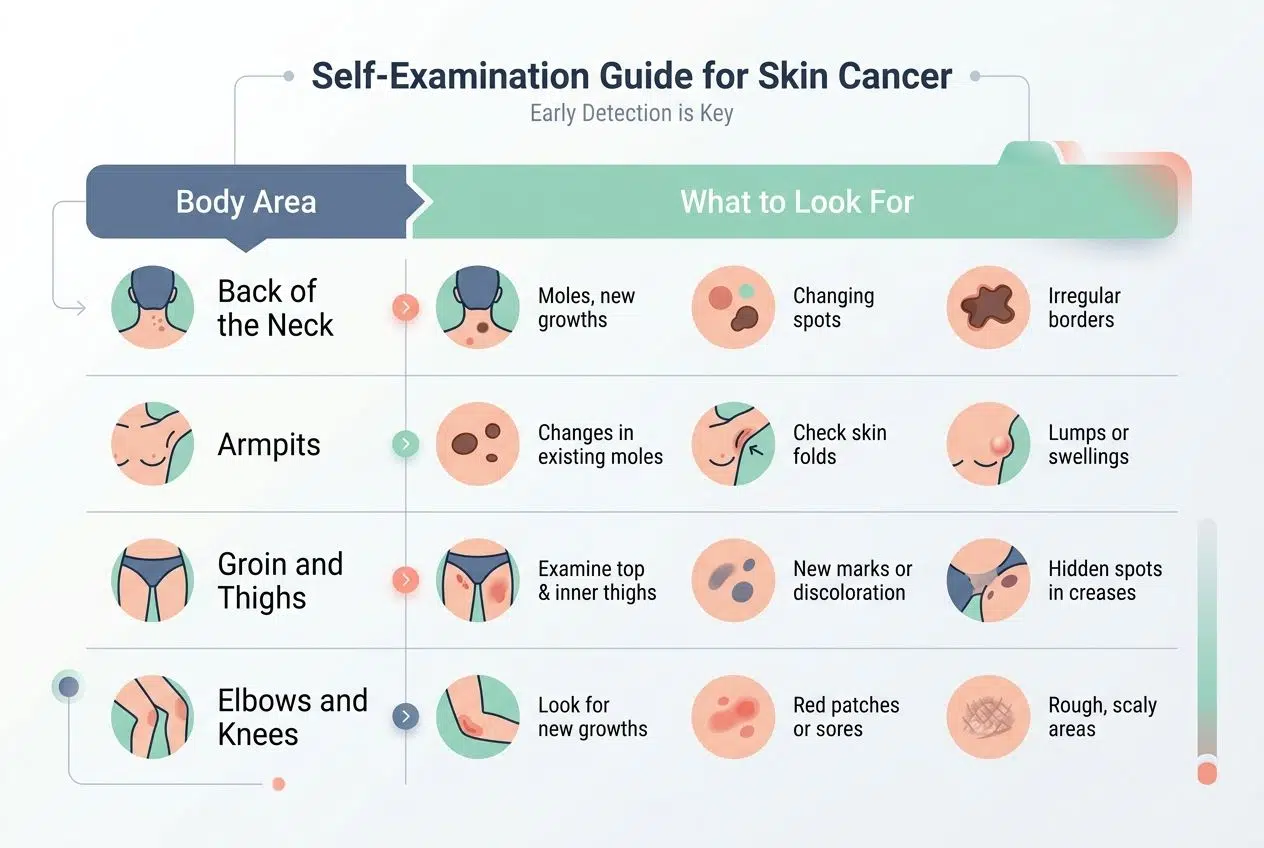
| Body Area | What to Look For |
|---|---|
| Back of the Neck | Thickened, dark folds that look unwashed. |
| Armpits | A velvety texture with noticeable hyperpigmentation. |
| Groin and Thighs | Darkening in the natural creases of the skin. |
| Elbows and Knees | Rough, dark patches over the joints. |
Persistent itching or rashes: Potential liver or iron deficiency problems
Itching that will not quit, and rashes that keep coming back often signal deeper health issues brewing beneath the surface. Liver conditions, such as primary biliary cholangitis, trigger intense itching because your body struggles to process bile properly.
Iron deficiency anemia creates similar symptoms. When your iron drops, your body lacks the resources to keep skin healthy and oxygenated. This causes systemic inflammation, making your skin react with persistent itching.
Scratching constantly might feel like the only relief, but it is actually your skin sending distress signals. A rash that lingers for weeks or months deserves a medical check, especially if you feel tired or notice you bruise more easily than before.
Skin Manifestations of Serious Conditions
Your skin can wave red flags for serious health problems that need immediate attention. Some changes point to major conditions that demand a doctor’s visit right away.
Scaly patches or non-healing sores: Possible skin cancer
Scaly patches that stick around for weeks or months deserve your attention. Non-healing sores, especially ones that bleed or itch constantly, signal something serious is happening below the surface.
According to 2026 estimates from the American Cancer Society, about 112,000 new invasive melanomas will be diagnosed in the US. Skin cancer often starts as small, crusty spots that do not go away. Basal cell carcinoma often looks like a pearly bump, while squamous cell carcinoma looks like a red, scaly patch.
Early detection saves lives. You should memorize the ABCDEs of melanoma to check your spots at home:
- A for Asymmetry: One half of the mole does not match the other.
- B for Border: The edges are irregular, ragged, or blurred.
- C for Color: The color is not the same all over and may include shades of brown, black, or red.
- D for Diameter: The spot is larger than 6 millimeters across (about the size of a pencil eraser).
- E for Evolving: The mole is changing in size, shape, or color.
Rashes and blisters: Linked to gluten intolerance or autoimmune diseases
Your skin breaks out in rashes and blisters for a reason, and sometimes that reason points to gluten intolerance. Dermatitis herpetiformis (DH) is a severe skin condition tied directly to celiac disease.
In the US, DH affects roughly 11.2 per 100,000 people. It causes intense itching, burning, and clusters of blisters that appear on your elbows, knees, and buttocks. Over 90% of people with this blistering rash also have celiac disease, even if they do not have stomach pain.
If you eat gluten and your body treats it like an invader, your immune system works overtime and attacks healthy tissues. Your doctor can run a specific tissue transglutaminase (tTG-IgA) blood test to check for this autoimmune response.
Sudden adult acne: May indicate Polycystic Ovary Syndrome (PCOS)
Acne that appears suddenly in your adult years sends a clear message from your body. PCOS, or Polycystic Ovary Syndrome, causes hormonal imbalances that trigger deep, painful breakouts.
Clinical studies show that 30% to 40% of adult women with PCOS experience adult acne. This health indicator shows up because excess androgens (male hormones like testosterone) overstimulate oil glands in your skin. These specific breakouts usually cluster around your jawline, chin, and lower cheeks.

“If you never dealt with acne as a teenager but face persistent lower-face breakouts now, hormones are likely the culprit.”
PCOS affects millions of women, yet many do not recognize the skin signals. A dermatology visit combined with hormone blood work can confirm whether PCOS is causing your sudden breakouts.
Vitiligo: Possible association with autoimmune thyroid diseases
Vitiligo shows up as white patches on your skin, signaling something deeper is going on inside your body. This skin condition develops when your immune system attacks the cells that make pigment.
Research confirms a strong link between vitiligo and autoimmune thyroid diseases. People with vitiligo have up to a 2.5 times higher risk of developing conditions like Hashimoto’s disease or Graves’ disease. Your skin health indicators reveal what is happening with your immune system.
If you notice these white patches spreading across your skin, ask your doctor to test your thyroid. Testing for Thyroid Peroxidase Antibodies (TPOAb) is highly recommended, as treating your thyroid condition can sometimes slow down the progression of vitiligo.
Other Skin Clues to Watch For
Your skin sends out many signals that deserve your attention. Here are a few more vital clues your body might be trying to tell you.
Leg spots or ulcers: Diabetes or venous insufficiency
Spots on your legs might seem like a minor cosmetic issue, but they often signal something serious. A condition called diabetic dermopathy, often referred to as shin spots, causes light brown, scaly patches to form on the lower legs.
These spots develop because high blood sugar damages the small blood vessels supplying the skin. Poor circulation from venous insufficiency creates similar problems, leaving your legs vulnerable to skin damage and slow-healing ulcers.
You should seek a dermatology exam if you notice any of these specific leg symptoms:
- Dark, round, or oval patches on the shins.
- Swelling in the lower legs and ankles.
- Open sores that take longer than two weeks to heal.
- Skin that feels unusually tight or shiny.
Thick, waxy skin: Linked to diabetes complications
Your skin can feel thick and waxy when diabetes damages your blood vessels and nerves. High blood sugar levels affect how your skin cells work and hold water. Doctors call this condition diabetic cheiroarthropathy. Your skin loses its normal flexibility, becoming stiff and shiny instead.
This specific health indicator usually shows up in these areas:
- The back of the hands and fingers.
- The shoulders and upper back.
- The back of the neck.
This symptom matters immensely because it means your diabetes complications are progressing. Catching this skin texture change early helps you work with your doctor to adjust your treatment plan.
Flesh-colored, orange-peel patches: Potential internal health concerns
Flesh-colored patches with an orange-peel texture deserve your close attention. This rare condition, called scleredema diabeticorum, typically shows up on your upper back, neck, or shoulders.
Dermatology experts link these thickened patches to metabolic syndrome and undiagnosed diabetes. Your body sends these skin signals when your internal systems struggle with long-term blood sugar control.
The patches feel incredibly rough and look distinctly different from your normal complexion. Catching this skin condition early gives you a real advantage in disease detection and treatment.
When to Seek Medical Advice
Your skin changes demand medical attention when they stick around or get worse. Do not wait for a minor issue to become a major health crisis.

Persistent or worsening skin changes
Skin changes that stick around demand your attention. Dermatologists often use the “two-week rule.” If a rash, discoloration, or sore lingers for more than two weeks, that is your body waving a red flag. Do not brush off a patch that spreads, a bump that grows, or itching that will not quit. These medical symptoms deserve a conversation with your primary care doctor.
Make an appointment immediately if your skin changes are accompanied by any of these internal symptoms:
- Unexplained weight loss or weight gain.
- Extreme fatigue that sleep does not fix.
- Increased thirst and frequent urination.
- Joint pain or muscle weakness.
Unexplained or painful rashes
Painful rashes that show up without warning deserve your attention. Your body sends signals through massive inflammation when an infection or autoimmune flare-up happens inside.
Blisters and red patches mean your immune system is working overtime. Rashes tied to severe allergies or hormonal imbalances often appear suddenly and hurt far more than typical skin reactions.
Painful rashes that will not fade demand a doctor’s visit, not just home remedies. If a rash oozes, spreads rapidly, or comes with a fever, you should visit an urgent care center right away.
Sudden onset of unusual skin conditions
Your skin can flip like a light switch. Sudden rashes, hives, or strange patches that show up out of nowhere often signal acute systemic issues.
Infections, severe drug reactions, or rapid inflammation can all trigger these sudden skin changes. Your complexion acts like your body’s messenger, shouting warnings when internal health goes sideways.
Pay close attention to rapid changes. Fast-moving skin conditions often arrive right before you experience other major physical symptoms.
Unusual skin conditions that strike suddenly deserve your complete focus. Trust what your body is telling you, and get a professional opinion to protect your long-term wellness.
Final Thoughts
Your skin acts like a mirror, reflecting what happens inside your body, so paying attention to changes helps you catch health problems early. Dry patches, unusual rashes, color shifts, and other skin signals often point to thyroid trouble, liver issues, diabetes, or autoimmune diseases that need medical care.
Spotting these warning signs takes just a few minutes of self-awareness each week, making skin monitoring one of the easiest health checks you can do.
Talk to a doctor if you notice persistent skin changes, unexplained rashes, or sores that will not heal, because early action stops small problems from becoming big ones.
Start observing your skin today, trust what it tells you, and take that first step toward better health by scheduling a checkup whenever something feels off.
Frequently Asked Questions (FAQs) on Skin Signs of Internal Health Problems
1. Why does my skin look dull or tired sometimes?
Your skin acts like a mirror, showing signs of stress, poor sleep, or dehydration. According to dermatology research, when you drink less than eight glasses of water daily, your skin loses its plumpness and glow. Check your daily habits if your face looks pale or dry.
2. Can itchy patches mean something about my health?
Yes, they can signal allergies, eczema, or even liver issues. The National Eczema Association reports that over 31 million Americans deal with eczema-related itching. Sometimes it’s just dry air, other times it’s your body waving a red flag.
3. What do sudden pimples say about me?
Breakouts often pop up when hormones shift, you eat too much greasy food, or stress kicks in. Stress triggers your body to produce cortisol, which ramps up oil production and clogs your pores.
4. Should I worry if I see new moles or dark spots?
If you spot changes in the size, color, or shape of any mole, don’t ignore it. The American Academy of Dermatology recommends checking moles using the ABCDE rule: Asymmetry, Border, Color, Diameter, and Evolving. Best to let a doctor take a peek for peace of mind.





















