Taking charge of your health should not drain your bank account. Let us face it, navigating the modern healthcare system often feels like walking through a maze blindfolded. Many patients end up with unexpected medical bills simply because they misunderstood the complex rules surrounding insurance billing.
Under the Affordable Care Act, most health insurance plans must cover a specific set of US preventive care services at absolutely no cost to you. This means zero copays, zero coinsurance, and no deductibles to meet before the coverage kicks in. Getting these free checkups, screenings, and vaccines helps catch potential health issues early when they are easier and cheaper to treat.
A routine checkup can suddenly cost hundreds of dollars if the wrong keyword is used during the appointment. It can also happen if a test gets sent to an out-of-network laboratory. This guide walks you through exactly how to get the free care you deserve without paying a single penny out of pocket.
Understanding US Preventive Care Services and 100% Coverage
Navigating healthcare bills often feels like a part-time job. You go in for a routine checkup and end up with a surprise bill weeks later. The Affordable Care Act changed the game by mandating free preventive screenings for most standard insurance plans. Knowing exactly how insurance companies classify your medical visit is your best defense against unexpected out-of-pocket costs. Let us break down the core rules you need to know before you even call the receptionist to book your appointment.
Preventive versus Diagnostic Care
This is the single most common trap patients fall into when visiting the doctor. Preventive care happens when you currently have no symptoms and are simply getting screened according to standard medical guidelines for your age and gender. Diagnostic care happens when you have a specific symptom, like stomach pain or a strange rash, and the doctor runs tests to figure out what is wrong. Even if a procedure starts as a routine preventive measure, it can switch to diagnostic if your doctor finds something unusual and investigates further. When a visit gets billed as diagnostic, your regular copays and deductibles instantly apply.
The Role of In-Network Providers
To get your medical services fully covered, you almost always have to see a doctor or use a medical facility that is officially in your insurance plan’s network. Health insurance companies negotiate specific rates with these in-network providers. If you decide to go to an out-of-network clinic, your insurance plan might not pay anything toward your checkup. Always call your insurance provider or check their online member portal to verify that your chosen doctor is in network before you go.
15 Expert Tips to Maximize Your Covered Care
Getting the most out of your health plan requires a bit of strategy. Many people leave valuable health benefits on the table simply because they do not know what they are entitled to receive. The government regularly updates screening guidelines, meaning you might qualify for new free tests this year. The right approach to booking and conducting your doctor visits will keep your bank account safe. Here are practical, everyday strategies to ensure you receive the free health services you deserve.
1: Schedule Your Annual Wellness Visit
Every adult should have a yearly checkup with their primary care physician to establish a baseline for their health. This visit focuses heavily on your overall health trajectory rather than fixing an immediate illness. Your doctor will check vital signs like your blood pressure, track your weight, and review your family medical history to see if you need specialized screenings.
It is a time to set health goals, discuss lifestyle changes, and update your medical records. Be incredibly clear when you call the clinic that you are booking an annual preventive exam rather than a standard sick visit. If you are on Medicare, this is often called an Annual Wellness Visit, which involves filling out a health risk assessment questionnaire before you even see the doctor.
| Visit Component | Description | Why It Matters |
| Vitals Check | Recording height, weight, and blood pressure. | Establishes a baseline to spot future anomalies. |
| Family History | Updating records of diseases in your family tree. | Determines if you need earlier cancer or heart screenings. |
| Medication Review | Checking all current prescriptions and supplements. | Prevents dangerous drug interactions. |
| Risk Assessment | Evaluating lifestyle habits like diet and exercise. | Helps create a personalized prevention plan. |
2: Clarify the Purpose of Your Visit Upfront

This is where the dreaded surprise bill usually originates. If you start talking about a new ache, a persistent cough, or a specific medical issue during your physical, the doctor has to document and treat it. This instantly turns the visit from a preventive screening into a diagnostic appointment in the eyes of the medical billing coders.
You will almost certainly receive a bill in the mail if this happens because the doctor used an evaluation and management billing code instead of a preventive one. To protect your wallet, stick strictly to preventive topics like diet, exercise, and routine screenings. If you have specific complaints you want addressed, it is usually much cheaper to schedule a separate sick visit for another day entirely.
| What to Say | What NOT to Say | Billing Result |
| I am here for my annual physical exam. | I am here because my stomach has been hurting. | Preventive (Covered) vs. Diagnostic (Billed) |
| I feel great and want to check my routine labs. | I have been feeling really tired and dizzy lately. | Preventive (Covered) vs. Diagnostic (Billed) |
| Let us review my family history of diabetes. | Can you look at this strange mole on my back? | Preventive (Covered) vs. Diagnostic (Billed) |
| I need to schedule my routine colonoscopy. | I have been having digestive issues this week. | Preventive (Covered) vs. Diagnostic (Billed) |
3: Stay Updated on Blood Pressure and Cholesterol Checks
High blood pressure and high cholesterol rarely present any noticeable symptoms until severe damage is already done to your cardiovascular system. Because these conditions are silent, routine checks are the only way to catch them early. Insurance legally covers routine blood pressure screenings for all adults at almost every doctor appointment.
Furthermore, cholesterol checks, often called lipid panels, are fully covered for adults of certain ages or those with a higher risk for heart issues. You usually need to fast for eight to twelve hours before a cholesterol test to get accurate results. These simple, fast tests are your absolute best first line of defense against heart disease and stroke.
| Screening Type | Target Audience | Fasting Required? | Goal Range |
| Blood Pressure | All adults over 18, checked yearly. | No | Under 120/80 mmHg |
| Total Cholesterol | Adults at average risk starting in their 20s. | Usually Yes | Under 200 mg/dL |
| LDL (Bad) Cholesterol | Adults with risk factors for heart disease. | Usually Yes | Under 100 mg/dL |
| HDL (Good) Cholesterol | Checked alongside total cholesterol. | Usually Yes | 60 mg/dL or higher |
4: Do Not Skip Cancer Screenings
Depending on your exact age and your specific family health history, vital tests like colonoscopies and lung cancer screenings are completely covered as part of standard US preventive care services. For example, the nationally recommended age to begin routine colon cancer screening recently dropped to forty-five because doctors are seeing a spike in cases among younger adults.
If you have a heavy history of smoking, you might also qualify for a free annual low-dose CT scan to check your lungs. Catching abnormal cells early drastically improves your chances of successful treatment and minimizes the need for harsh chemotherapy or invasive surgeries down the road.
| Cancer Screening | Recommended Age | Frequency for Average Risk |
| Colonoscopy | Starts at age 45. | Every 10 years if clear. |
| Lung Cancer CT Scan | Age 50 to 80 (for heavy smokers). | Annually while eligible. |
| Stool DNA Test | Starts at age 45 as a non-invasive option. | Every 3 years. |
| Prostate Screening | Discuss with doctor starting at age 50. | Varies based on patient choice. |
5: Monitor for Type 2 Diabetes
If you are currently overweight or have a history of high blood pressure, you likely qualify for fully covered diabetes screening. A simple fasting blood sugar test or an A1C blood draw lets your doctor know exactly how your body is processing sugar. The A1C test is particularly helpful because it shows your average blood sugar levels over the past three months rather than just a single moment in time.
Finding out you are prediabetic gives you the crucial time needed to make dietary changes before developing full-blown Type 2 diabetes. Reversing prediabetes is entirely possible through lifestyle adjustments, which saves you from a lifetime of managing insulin and expensive medications.
| Test Type | What It Measures | Normal Range | Prediabetes Range |
| Fasting Blood Sugar | Glucose levels after fasting for 8 hours. | Under 100 mg/dL | 100 to 125 mg/dL |
| A1C Test | Average blood sugar over the last 3 months. | Below 5.7% | 5.7% to 6.4% |
| Glucose Tolerance | Blood sugar levels before and after drinking a sweet liquid. | Under 140 mg/dL | 140 to 199 mg/dL |
| Random Blood Sugar | Glucose levels at any given time of day. | Under 200 mg/dL | N/A |
6: Utilize Well-Woman Visits
Women are entitled to an annual well-woman visit to discuss reproductive health, family planning, and general wellness. This specialized appointment is completely separate from a general primary care physical and focuses specifically on the female reproductive system. During this visit, you can discuss irregular periods, menopause symptoms, or pelvic pain, though treating a specific disease might still incur a diagnostic charge.
The doctor will likely perform a clinical breast exam and a pelvic exam if you are due for one. Because this visit is heavily protected under federal law, it is fully covered by your insurance without any out-of-pocket costs.
| Well-Woman Topic | What Gets Discussed | Benefit of the Visit |
| Menstrual Cycle | Tracking periods, identifying heavy bleeding or pain. | Helps diagnose issues like PCOS early. |
| Menopause | Managing hot flashes, bone density concerns, and mood changes. | Improves quality of life as hormones shift. |
| Pelvic Exam | Checking the physical health of the uterus and ovaries. | Catches abnormalities or physical changes. |
| Breast Exam | Manual check for lumps or unusual skin changes. | Acts as an early warning system before a mammogram. |
7: Access Free Contraception and Family Planning
Most standard health plans must cover a wide variety of FDA-approved contraceptive methods without charging you a dime. This amazing benefit covers daily birth control pills, long-lasting intrauterine devices, contraceptive arm implants, and even permanent sterilization procedures like tubal ligation. Patient counseling regarding which of these options is best for your body is also covered without any copayment.
Keep in mind that while the medication itself is free, you usually need a prescription from your doctor to get it covered by insurance. Over-the-counter options like condoms or emergency contraception might not be covered unless your doctor writes a specific prescription for them and you pick them up at the pharmacy counter.
| Contraceptive Method | How It Works | Typical Insurance Coverage |
| Birth Control Pills | Daily oral medication to prevent ovulation. | 100% covered with a prescription. |
| IUDs (Hormonal or Copper) | Device inserted into the uterus lasting several years. | 100% covered, including insertion costs. |
| Contraceptive Implants | Small rod inserted under the skin of the arm. | 100% covered, including insertion costs. |
| Permanent Sterilization | Surgical procedure to block or remove fallopian tubes. | 100% covered (female sterilization). |
8: Get Covered Mammograms and Cervical Cancer Screenings
Recent guidelines from the US Preventive Services Task Force now heavily recommend that women start getting every-other-year mammograms at age forty rather than waiting until age fifty. Cervical cancer screenings, which include Pap smears and HPV testing, are covered starting at age twenty-one. A Pap smear looks for physical changes in the cells of your cervix, while an HPV test looks for the specific virus that causes most cervical cancers.
These specific medical tests catch microscopic cellular changes years before they ever turn into aggressive, hard-to-treat cancer. You can usually get both tests done at the exact same time during your well-woman visit.
| Screening Type | Recommended Starting Age | Typical Frequency |
| Mammogram | Age 40 for average-risk women. | Every 2 years. |
| Pap Smear | Age 21 for average-risk women. | Every 3 years. |
| HPV Test | Age 30 (often co-tested with a Pap smear). | Every 5 years if combined with a Pap. |
| BRCA Genetic Counseling | Varies based on strong family history of breast cancer. | One-time assessment if eligible. |
9: Take Advantage of Maternal Health Services
If you are expecting a child, your routine prenatal visits and specialized gestational diabetes screenings are fully covered to ensure a healthy pregnancy. Folic acid supplements prescribed by your healthcare provider also fall under this protective umbrella to prevent birth defects. Furthermore, your insurance will cover screening for Rh incompatibility, which is crucial if your blood type does not match your baby’s blood type.
Once the baby is born, breastfeeding support, professional lactation counseling, and necessary medical equipment like breast pumps are included for new mothers. Always call your insurance to see which specific brand of breast pump they cover before you buy one yourself.
| Maternal Service | When It Happens | What It Covers |
| Prenatal Visits | Throughout the entire pregnancy. | Routine checks of maternal weight and fetal heartbeat. |
| Gestational Diabetes Screen | Usually between 24 and 28 weeks of pregnancy. | A glucose drink test to check blood sugar processing. |
| Rh Incompatibility Test | Early in the first trimester. | Checks blood type to prevent maternal antibody reactions. |
| Breast Pump Equipment | Usually ordered in the third trimester or after birth. | Provides a manual or electric pump at no cost. |
10: Follow the Well-Child Visit Schedule
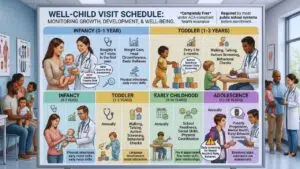
Infants, growing children, and teenagers require frequent medical checkups to closely monitor their physical growth and mental development. These pediatric visits assess absolutely everything from physical milestones, like walking and talking, to behavioral health markers. They are completely free under all ACA-compliant health insurance plans and are required by most public school systems before enrollment.
Recent updates to pediatric guidelines even include specific risk assessments for childhood trauma and early screening for autism spectrum disorder. Keeping up with this schedule ensures your child does not fall behind and gets early intervention therapies if they need extra help.
| Age Range | Visit Frequency | Key Milestones Checked |
| Infancy (0-1 Year) | Roughly 6 to 7 visits in the first year. | Weight gain, head circumference, basic reflexes. |
| Toddler (1-3 Years) | Every 3 to 6 months. | Walking, talking, autism screening, behavioral checks. |
| Early Childhood (4-10 Years) | Annually. | School readiness, social skills, physical coordination. |
| Adolescence (11-18 Years) | Annually. | Puberty progression, mental health, risky behavior screening. |
11: Ensure Vision and Hearing Screenings for Kids
Catching sensory issues early is absolutely critical for a child’s learning, reading comprehension, and overall social development. A child who cannot see the blackboard or hear the teacher will inevitably struggle in school, often being misdiagnosed with attention disorders. Routine hearing tests and basic vision screenings are standard, required elements of pediatric preventive care.
You should never have to pay a dime for these basic sensory checks when they are performed at your pediatrician’s office. However, keep in mind that if your child fails the basic screening and needs to see an optometrist for glasses, that secondary visit might fall under vision insurance rather than medical preventive care.
| Sensory Test | Who Performs It | What to Look Out For at Home |
| Basic Vision Screen | Pediatrician using an eye chart or screening machine. | Squinting, sitting too close to the TV, frequent headaches. |
| Basic Hearing Screen | Pediatrician using tones through headphones. | Not responding to their name, asking you to repeat things. |
| Full Eye Exam | Optometrist or Ophthalmologist (may require vision insurance). | Failing the pediatrician’s basic vision screen. |
| Audiology Exam | Audiologist (may require diagnostic billing). | Failing the pediatrician’s basic hearing screen. |
12: Keep Up with Free Vaccinations
Standard vaccines officially recommended by the CDC are completely free of charge to you. This extensive list includes your yearly seasonal flu shot, updated COVID-19 vaccines for the current year, and regular tetanus boosters every ten years. The highly effective HPV vaccine is also covered for growing adolescents and young adults to prevent future cancers.
For older adults, the shingles vaccine and pneumococcal vaccines are covered to prevent severe illness in your later years. You can often get these vaccines right at your local pharmacy without even needing to schedule an appointment with your primary care doctor.
| Vaccine Type | Target Audience | Frequency |
| Influenza (Flu) | Everyone 6 months and older. | Annually in the fall. |
| Tdap (Tetanus, Diphtheria, Pertussis) | All adults, plus pregnant women in their third trimester. | Every 10 years for adults. |
| Shingles | Adults age 50 and older. | Two doses, given 2 to 6 months apart. |
| Pneumococcal (Pneumonia) | Adults age 65 and older, or younger adults with risk factors. | Varies based on the specific vaccine type used. |
13: Ask About Depression and Mental Health Screenings
Your mental health is just as profoundly important as your physical health, and the medical community finally recognizes this. Free clinical depression screening is widely available as part of US preventive care services for adults, teenagers, and postpartum women. Your primary care doctor will usually hand you a short, standardized questionnaire on a clipboard while you sit in the waiting room.
This form asks about your sleep habits, your energy levels, and your general mood over the past two weeks. If your score indicates a high risk for depression, your doctor can seamlessly refer you to a therapist or discuss medication options to get you back on track.
| Screening Tool | What It Is | Common Questions Asked |
| PHQ-9 Questionnaire | A standard 9-question form to assess depression severity. | Feeling down, depressed, or hopeless? |
| GAD-7 Questionnaire | A standard 7-question form to assess anxiety levels. | Feeling nervous, anxious, or on edge? |
| Edinburgh Postnatal Scale | A questionnaire specifically for pregnant or new mothers. | Blaming yourself unnecessarily when things go wrong? |
| Pediatric Symptom Checklist | A tool to recognize cognitive or behavioral problems in kids. | Does the child seem sad or withdrawn? |
14: Use Tobacco Cessation Programs
Quitting smoking, chewing tobacco, or vaping is arguably one of the absolute greatest things you can do to extend your lifespan. Modern insurance plans legally cover screening for tobacco use at every visit and provide excellent, scientifically backed cessation interventions. These helpful programs often include multiple counseling sessions over the phone or in person to help you manage your cravings.
More importantly, your insurance will cover various FDA-approved medications or nicotine patches at absolutely no cost to you. Most plans cover up to two actual quit attempts per year, giving you plenty of support even if you slip up and need to try again.
| Cessation Tool | How It Helps You Quit | Insurance Coverage Details |
| Nicotine Patches/Gum | Slowly reduces nicotine dependence to minimize withdrawals. | Fully covered with a doctor’s prescription. |
| Prescription Medication | Blocks nicotine receptors in the brain to reduce cravings. | Fully covered with a doctor’s prescription. |
| Behavioral Counseling | Teaches coping mechanisms for stress triggers. | Covers multiple sessions per quit attempt. |
| Quitline Phone Support | Provides immediate advice when a craving hits hard. | Free public service often partnered with insurance. |
15: Explore Diet and Obesity Counseling
If your current body mass index falls into the medically obese category, usually a BMI of thirty or higher, you are legally eligible for intensive behavioral counseling. This is not just a pamphlet handed to you at the door; it involves actual sessions to safely promote a healthy diet and sustainable weight loss.
Many excellent health plans cover in-depth nutritional counseling with a registered dietitian for adults facing a higher risk of chronic diseases like diabetes or heart disease. These professionals help you read nutrition labels, plan realistic meals, and build an exercise routine that fits seamlessly into your busy lifestyle.
| Counseling Benefit | Who Qualifies | What You Actually Get |
| Obesity Screening | All adults at their annual checkup. | A calculation of your BMI based on height and weight. |
| Intensive Behavioral Therapy | Adults with a BMI over 30. | Multiple sessions focused on diet and exercise strategies. |
| Nutritional Counseling | Adults with diet-related chronic disease risks. | One-on-one time with a registered dietitian. |
| Prediabetes Interventions | Adults with elevated fasting blood sugar. | Referrals to specialized diabetes prevention programs. |
Common Pitfalls to Avoid in US Preventive Care Services
Even when you try your hardest to follow the rules, the healthcare billing system can trip you up. A simple misunderstanding at the reception desk can lead to a massive headache later. Many doctors run standard panels of tests without realizing your insurance will not classify all of them as free preventive care. Facility fees can also sneak onto your final bill if you choose the wrong location for your appointment. Let us look at how to dodge these expensive billing traps.
Lab Tests Outside the Preventive Scope
Sometimes your doctor will order a comprehensive panel of bloodwork during your physical to get a complete picture of your health. Basic glucose and cholesterol might be covered as preventive care. However, checking your Vitamin D levels, doing a full thyroid panel, or testing your hormone levels is almost always considered diagnostic billing.
You should always firmly ask your doctor to strictly limit your bloodwork to only what is fully covered under standard preventive guidelines. If they insist on running the extra tests, ask them for an estimated cost upfront so you are not completely shocked when the bill arrives.
Facility Fees
If you receive your preventive care at a large hospital-affiliated clinic, the hospital might try to charge a completely separate facility fee just for walking through their doors. These administrative fees pay for the building’s overhead, but they are rarely covered in full by insurance.
It is generally much safer for your wallet to get routine preventive care at a standard, independent doctor’s office or a standalone imaging center. Always ask the receptionist if the clinic bills as a hospital outpatient facility before you finalize your appointment time.
Final Thoughts
Taking full advantage of covered US preventive care services is the absolute smartest way to carefully manage both your long-term health and your personal finances. Catching a medical issue early through a free screening can literally save your life and prevent massive medical debt down the road. The system works best when you become an active, educated advocate for your own healthcare journey. Keep a close eye on exactly what you book, what you say in the exam room, and exactly what your doctor orders for lab work.
By clearly understanding the strict difference between preventive and diagnostic visits, you can easily avoid stressful surprise medical bills that ruin your budget. Always stay within your insurance network and memorize what medical services you are legally entitled to receive under the law. Be highly proactive with your wellbeing today. Schedule those necessary annual checkups, utilize your US preventive care services, and keep your overall health on the right track for years to come.
Uncommon FAQs About US preventive care services
You probably still have a few highly specific questions about how all of this works in the real world. Healthcare laws change constantly, and exceptions to the rules definitely exist. Some people have older insurance policies that do not follow the modern rules. Others wonder what happens if a routine test actually finds something dangerous. Here are some of the most uncommon but important questions patients ask about accessing US preventive care services.
1. Do grandfathered health plans cover preventive care?
Some older health insurance plans that existed long before the Affordable Care Act passed are officially considered grandfathered. These specific older plans are not legally required by the federal government to cover preventive services at no cost to the patient. You should carefully check your official summary of benefits document or call your human resources department to see if your current employer plan falls into this rare, exempt category.
2. What happens if my doctor finds a polyp during a routine colonoscopy?
This complex billing area confuses many patients and doctors alike. Under updated federal guidelines, the safe removal of a polyp discovered during a routine screening colonoscopy is still considered part of the initial preventive service. Because removing the polyp is the primary way the test prevents cancer, it should not trigger an unexpected copay. However, you should always explicitly confirm this specific scenario with your gastroenterologist’s billing department beforehand.
3. Can I get these services for free without insurance?
The federal mandate for one hundred percent coverage only legally applies if you currently have an active, ACA-compliant health insurance policy. If you are entirely uninsured, the federal rules cannot force private clinics to give you free care. Instead, look for local community health centers, federally qualified health clinics, or county health departments. These government programs often offer free or drastically low-cost preventive screenings based strictly on your current household income.
4. Does short-term health insurance cover preventive screenings?
Temporary or short-term health insurance policies are generally completely exempt from the Affordable Care Act coverage mandates. These bare-bones plans are designed strictly to protect you financially from sudden emergencies and catastrophic events, not everyday wellness. If you are currently on a short-term plan, you will likely have to pay entirely out of pocket for your annual physicals, routine bloodwork, and seasonal vaccinations.