
Feeling overwhelmed by endless tax filings as a U.S. citizen abroad is common among expats and dual citizens. U.S. tax obligations follow citizens worldwide, creating ongoing financial and administrative pressure. This burden often leads many to consider how to Renounce US Citizenship for greater financial freedom and simplicity.
However, the process is structured and comes with significant requirements. Applicants must appear in person at a U.S. embassy or consulate to sign the Oath of Renunciation, with a fee of $2,350. Proper documentation is essential, including a valid U.S. passport and proof of another citizenship.
Tax compliance is a critical step. Filing IRS Form 8854 ensures all obligations are settled, while some individuals may face exit tax rules if classified as covered expatriates. There are also important considerations, such as potential impacts on Social Security benefits.
Alternative paths, like relinquishment under the Immigration and Nationality Act, may also be available depending on individual circumstances. Understanding each step carefully is essential before deciding to Renounce US Citizenship.
What Does Renouncing U. S. Citizenship Mean?
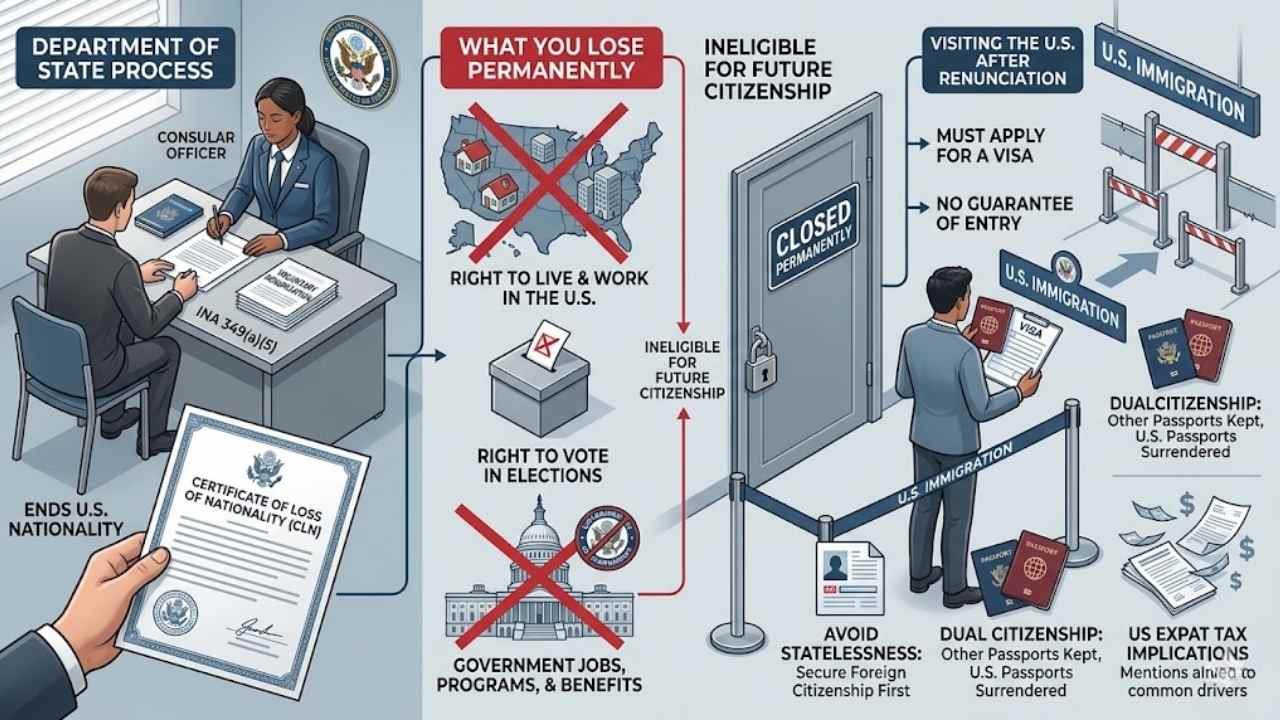
Renouncing U.S. citizenship means you give up your U.S. nationality for good, under the Immigration and Nationality Act (INA). People choose this voluntary renunciation, often through INA 349(a)(5), to end ties with the United States.
Imagine it like cutting a lifelong cord, you step away from all rights and duties as a citizen. The Department of State handles this process, and they issue a Certificate of Loss of Nationality (CLN) once approved.
This act makes you ineligible for future U.S. citizenship, permanently. You lose the right to live, work, and vote in the U.S. after renunciation. Former citizens become ineligible for U.S. government jobs, programs, or benefits.
The decision to renounce is permanent and irreversible, like closing a door you can never reopen.
Renouncing citizenship is a serious step that affects your entire future, says a consular officer from the State Department.
Renounced citizens must apply for a visa to visit the U.S. in the future, with no guarantee of entry. Individuals may face challenges re-entering the U.S. due to visa complications.
Think of it as becoming a foreigner in your old home, complete with new hurdles at the border. Dual citizenship holders might keep their other passport, but U.S. passports go away.
Avoid statelessness by securing foreign citizenship first. This choice hits hard, especially for accidental Americans caught in the web of U.S. expat tax returns and rules like the Foreign Account Tax Compliance Act.
Why Might Someone Consider Renouncing Their U. S. Citizenship?
People often think about giving up U.S. citizenship to dodge future tax bills from the Internal Revenue Service. Imagine living abroad, earning big bucks, and still owing Uncle Sam a chunk every year on your worldwide income.
That bites, right? Folks use tools like the foreign earned income exclusion or foreign tax credit to soften the hit, but sometimes it’s not enough. They might file a U.S. expat tax return, deal with Form 1040, or even chase a tax extension, yet the hassle piles up.
Add in reporting foreign bank accounts through FBARs on FinCEN Form 114, and you see why tax implications drive many to renounce citizenship. Some hire a CPA for tax planning, but others say, enough is enough, let’s cut ties to avoid it all.
The expatriating act lets them walk away, but the potential for an exit tax looms large, especially for covered expatriates filling out IRS Form 8854. Renouncing may stem from avoiding U.S. government programs or benefits eligibility, like dodging links to the Social Security Administration.
Imagine you’re done with the red tape, ready to lose your citizenship and breathe easier without those obligations.
Others weigh renouncing to skip out on ties that bind, like eligibility for U.S. visas or the visa waiver program. They might hold a green card once, but now crave full freedom in another country.
Without another nationality, though, you risk turning stateless, a real pickle that leaves you adrift. Folks chat about this on sites like travel.state.gov, pondering forms like DS-4079, DS-4080, or DS-4081.
Some pass the physical presence test or substantial presence test to qualify as expats, yet still feel the pull to renounce. The Department of Homeland Security plays a role here, too, in how you handle denaturalization paths.
An ITIN might help with taxes post-renounce, but ineligibility for future U.S. citizenship seals the deal as irreversible. Streamlined procedures ease some filing, but the choice boils down to personal gripes with the system.
Key Steps to Renounce U. S. Citizenship
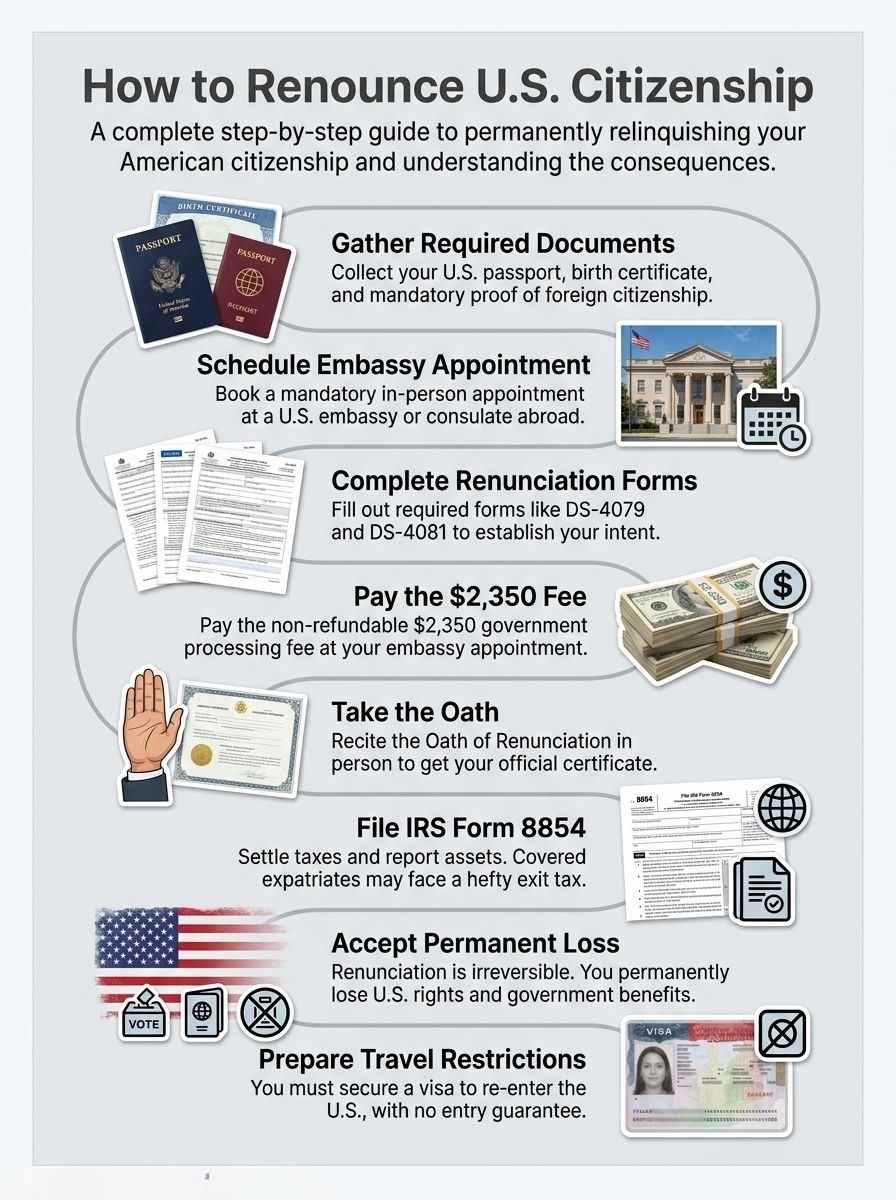
Renouncing your U.S. citizenship feels like closing a big chapter in your life story, full of paperwork and bold choices, so you start by collecting items like your passport and birth record, book a slot at an embassy overseas, fill out papers such as Form DS-4079, Form DS-4080, and Form DS-4081, hand over the fee, and swear the oath—to get all the details and avoid any slip-ups, keep reading!
Gather necessary documents
You need to collect key papers before you start the renunciation process. Grab your valid U.S. passport first, it’s a must-have. Pull out your U.S. birth certificate or Certificate of Naturalization to prove your status.
Don’t forget proof of foreign citizenship, like a foreign passport, that shows you have another home base. If your name changed, bring those records too. Think of this like packing for a big move, you want everything in order to avoid hiccups.
Renunciation is a serious step, so double-check your documents, says a State Department official.
People often mix up gathering docs with filling out forms like DS-4079 or DS-4081. Stay organized, it eases the stress. For expats, note that this ties into your U.S. expat tax return later on.
Chat with a pal who’s done it, their stories might lighten the load. Keep things simple, and you’ll move forward smoothly.
Schedule an appointment at a U.S. embassy/consulate abroad
Head over to the website of a U.S. embassy or consulate in a foreign country to book your slot. This step feels like plotting a secret mission, but it’s straightforward. Pick a location outside the United States, since renunciation can’t happen on U.S. soil.
You’ll need to appear in person, no exceptions, and the appointment is mandatory. Imagine chatting with officials abroad, far from home, to make this big change official.
Folks often tie this to sorting out taxes, like filing a us expat tax return before you go. Contact the embassy early, as spots fill up fast. They guide you through details, easing that knot in your stomach.
Bring patience, because bureaucracy moves at its own pace, yet it leads to your fresh start.
Complete required forms (DS-4079, DS-4081, and DS-4083)
You fill out Form DS-4079 first, the Request for Determination of Possible Loss of U.S. Citizenship. This form asks about your background, like a roadmap to your past ties with America.
consular officers review it to check your intent. Next comes Form DS-4081, the Statement of Understanding, which spells out what you’re giving up. Read every line, folks, because you initial each section to show you grasp the legal fallout, no shortcuts here.
Form DS-4083 joins the mix as part of the process, tying everything together for official records. Don’t forget Form DS-481, it’s mandatory too, but hold off signing it until you’re face-to-face with a consular officer.
If language trips you up, bring an interpreter, they must sign during the process to keep things clear and fair. These steps feel like crossing a bridge, one careful foot at a time, to make sure you understand the journey.
Pay the renunciation fee
Pay that renunciation fee to seal the deal. The U.S. government sets it at $2,350. You must cover this cost before they process your request. Think of it like buying a one-way ticket out of citizenship town, no refunds allowed.
Officials accept payment in cash, by check, or with a credit card at the embassy. They demand exact change if you go the cash route, so count your bills twice. This step hits your wallet hard, but it wraps up the formal side of things.
Folks often joke it’s the price of freedom from Uncle Sam’s tax grip, yet it stings all the same.
Double-check your funds ahead of time. Embassy staff won’t budge without that payment in hand. You hand over the money during your appointment, right after filling out those forms.
Some expatriates share stories of scraping together the cash last minute, like raiding a piggy bank for a big adventure. It feels final, doesn’t it? Keep in mind this fee supports the administrative hustle behind your choice.
Pay up, and you’re one step closer to that fresh start abroad.
Take the Oath of Renunciation
You head to a U.S. embassy or consulate abroad for this big step. Stand before a consular officer, and recite the Oath of Renunciation in person. Feel that mix of nerves and relief, like leaping off a tall cliff into a new life.
They listen, nod, and make it official.
Officials hand you the Certificate of Loss of Nationality right after. Keep it safe; it proves your change. Think of it as your ticket out, a fresh start without looking back. Folks often share stories of that moment, full of emotion and finality.
Required Documents for Renouncing U. S. Citizenship
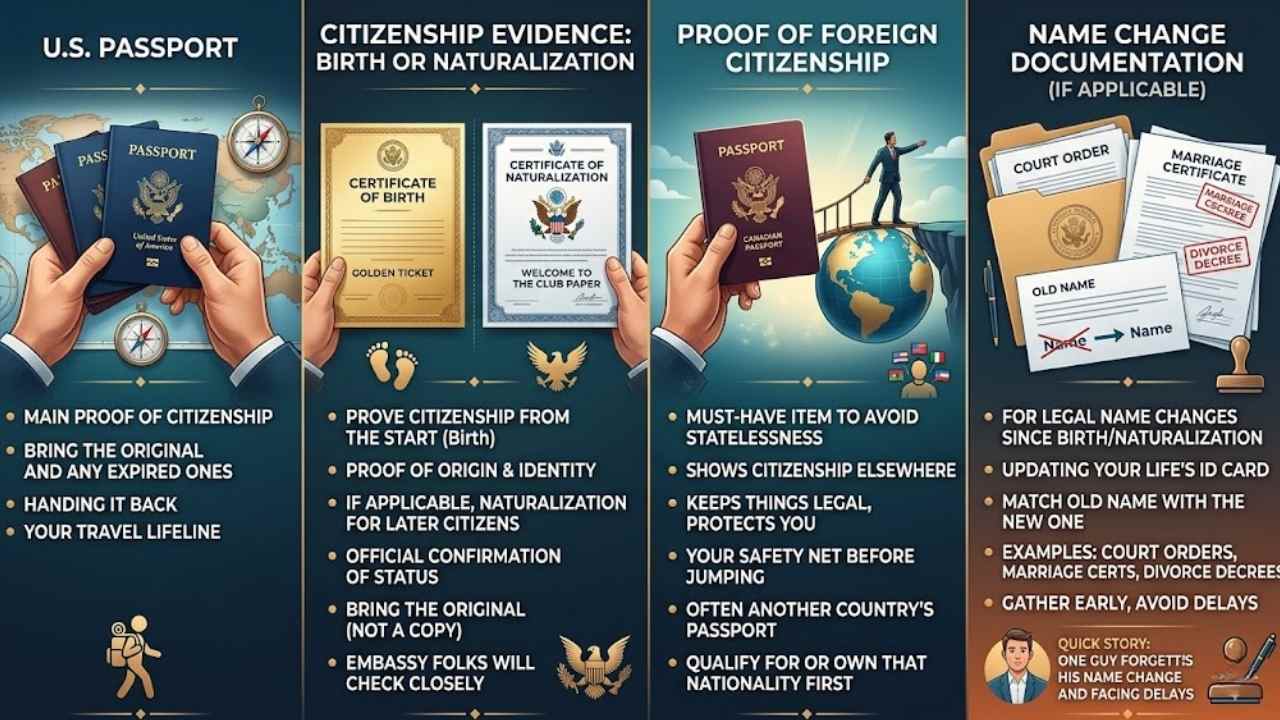
Required Documents for Renouncing U.S. Citizenship: Gathering your key papers, like that old passport gathering dust in your drawer and proof of your new nationality, feels like packing for a one-way trip abroad, so dig them out and keep scrolling for the full scoop on what you’ll need.
U.S. Passport
Your U.S. passport acts as the main proof of your citizenship during the renunciation process, so bring the original along with any expired ones. Think of it as your travel lifeline that you’re handing back, opening doors to a new chapter abroad—curious about the rest?
U.S. Birth Certificate or Certificate of Naturalization
You need that U.S. birth certificate, folks, to prove your citizenship from the start. Imagine this: it’s like the golden ticket that shows you were born on American soil, or at least gained that status early on.
Applicants must present a U.S. birth certificate or, if applicable, a Certificate of Naturalization. Grab the original, not some faded copy, because the embassy folks will check it closely.
This document acts as your proof of identity in the renunciation process, no shortcuts here.
If you became a citizen later in life, swap that birth certificate for the Certificate of Naturalization. Think of it as your official “welcome to the club” paper from Uncle Sam. Officials require this to confirm your status before you say goodbye.
Make copies ahead, but bring the real deal to your appointment abroad. It keeps things smooth, avoids delays, and shows you’re serious about the step.
Proof of foreign citizenship
Proof of foreign citizenship stands as a must-have item in this process. Officials demand it to make sure you won’t end up stateless, like a ship without a harbor. Grab your foreign passport or similar document that shows you hold citizenship elsewhere.
This step protects you from losing all ties, and it keeps things legal. Think of it as your safety net before jumping off the U.S. citizenship cliff.
Folks often use a passport from another country as that proof. You must already qualify for or own that other nationality. Without it, the renunciation hits a wall. Imagine trying to quit a club without joining a new one; they won’t let you.
Bring this evidence to your embassy meeting, and stay calm knowing it avoids big headaches down the road.
Name change documentation (if applicable)
If you have legally changed your name since birth or naturalization, bring the papers that prove it. Think of this like updating your life’s ID card, no shortcuts allowed. Court orders, marriage certificates, or divorce decrees often fit the bill.
Officials need these to match your old name with the new one, keeping everything on the up and up.
Skip this step if your name stayed the same, but double-check your records just in case. A quick story: one guy forgot his name change from years ago and faced delays at the embassy.
Don’t let that happen to you; gather those docs early and sail through smoother.
Tax Implications of Renouncing U. S. Citizenship
Renouncing hits your wallet hard, with the IRS demanding full tax records before you go. File Form 8854 to report assets, or face an exit fee as a high-net-worth leaver—curious how it all adds up?
IRS Form 8854 and tax compliance
You must file IRS Form 8854, the Initial and Annual Expatriation Statement, to report your expatriation. This form acts like a final tax checkpoint, a bridge you cross before leaving U.S. citizenship behind.
Officials check it closely. They want to see you’ve paid up on taxes. Picture it as settling an old debt with a stern landlord before moving out.
Stay tax-compliant for the five years before your renunciation. The IRS demands this. Miss a filing, and you hit a roadblock. Folks often share stories of double-checking returns, like proofreading a love letter to avoid regrets.
Compliance means no loose ends. It keeps the process smooth, avoids penalties that sting like a bee.
Exit tax for covered expatriates
Covered expatriates face an exit tax when they renounce U.S. citizenship. The IRS defines a covered expatriate as someone with a net worth over $2 million. This label also applies if your average income tax liability tops certain thresholds in recent years.
Picture it like a final bill at the door, folks, before you step out for good. That tax treats some assets as sold, even if you keep them.
Pay attention to this tax, because it hits hard for those who qualify. Officials calculate it based on gains from deemed sales of property. They use fair market values on the day before renunciation.
Imagine Uncle Sam taking one last swipe at your wallet, right? File IRS Form 8854 to report it all and stay compliant.
Warnings and Considerations
Renouncing your U.S. citizenship feels like burning a bridge you can never cross again, a final choice that locks you out for good. You might kiss goodbye to Social Security payments, deal with fresh passport rules for trips, and wonder if it was worth it, so dig deeper into these risks before you decide.
Irreversibility of renunciation
You make the choice to renounce U.S. citizenship, and that’s it, folks. The act seals the deal forever. Officials process your oath, and poof, your ties snap like a brittle twig. No take-backs exist in this game.
Imagine jumping off a cliff with no parachute; you can’t climb back up. The State Department stamps it final, leaving you without a path to return.
Folks often dream of second chances, but not here. You lose that status for good, just like spilling milk you can’t unspill. Picture a door slamming shut behind you, locked tight. Empathy kicks in when I say, weigh this heavy, because regrets might whisper later.
The rule stands clear: once gone, you stay gone from U.S. citizenship rolls.
Impact on Social Security and other benefits
Renouncing U.S. citizenship hits your wallet, especially with Social Security. Former citizens often lose eligibility for these benefits, even after years of payments. Imagine working decades, building that nest egg, only to watch it vanish like smoke.
The government cuts you off, plain and simple. Think about your retirement plans, they change fast. You paid in, but now, no payout comes your way. This stings, right? Empathy here, folks, it’s a tough pill to swallow, but facts don’t lie.
Ineligibility spreads wide after renunciation. All U.S. government programs and benefits slip away, no exceptions. Envision it, you need Medicare or veterans’ aid, forget it. Doors slam shut on federal help, from student loans to disaster relief.
Uncle Sam says goodbye, and you’re on your own. This shift forces big life adjustments, like finding new safety nets abroad. Ouch, that reality bites, yet many push through. Stay sharp, weigh these losses before you leap.
Changes in travel and visa requirements
You give up your U.S. citizenship, and bam, the government sees you as a foreigner. That means no more easy trips back to the States. Plan a visit? Grab a visa or an ESTA first. Think of it like knocking on a door you once owned, now you wait for permission to enter.
Officials check your background, your reasons, everything. They might say yes, or they could turn you away. Picture packing your bags, full of excitement, only to hit a roadblock at the border.
No promise exists that your visa gets the green light. Stay sharp, folks, this shift flips your travel world upside down.
Losing that passport perk stings, like trading a golden ticket for a lottery stub. As a foreign citizen now, you face the same rules as anyone from abroad. Apply for that visa, cross your fingers.
Approval? It’s anyone’s guess. Some sail through, others wait forever or get denied flat out. Chat with friends who’ve done it, they share tales of red tape and surprises. Keep your plans flexible, because the U.S. doesn’t owe you entry anymore.
Alternative Options: Relinquishing vs Renouncing Citizenship
Maybe you’re weighing your choices beyond just renouncing, so let’s break down relinquishing versus renouncing in a clear way.
| Aspect | Relinquishing Citizenship | Renouncing Citizenship |
|---|---|---|
| Definition | People lose U.S. citizenship through actions like naturalizing in another country with the intent to give it up. Think of it as a quiet exit, like slipping out the back door at a party you no longer enjoy. | Individuals formally declare they give up U.S. citizenship at a U.S. embassy or consulate. It’s more like shouting your goodbye from the rooftop, official and direct. |
| Process | The Immigration and Nationality Act (INA) 349(a)(1)-(4) governs this. You perform a voluntary act, such as joining a foreign military or taking a high government job abroad, with the clear goal to drop U.S. ties. Officials review your case after the fact. | You follow steps like filling out forms DS-4079, DS-4081, and DS-4083, then take an oath. This happens in person abroad, and it’s a structured event, no looking back without effort. |
| Key Differences | Relinquishing follows a different process from renunciation. It often ties to past actions, like that time you swore allegiance to Canada and meant to cut U.S. links. Consequences vary, so weigh them like comparing apples to oranges in your life story. | Renunciation demands current intent and paperwork right now. Both paths end in loss of U.S. citizenship, but this one feels more final, like closing a book with a firm snap. |
| Why Consider It | Alternative options should be considered, as the processes and consequences may vary. If you naturalized elsewhere years ago with intent to lose U.S. status, this might fit like a glove without extra hassle. | Pick this if you want a clean break today. People choose it for tax reasons or new starts, but hey, chat with a pro first to avoid regrets, like that impulse tattoo you later cover up. |
Final Thoughts
You’ve walked through the key steps to renounce US citizenship, like gathering your passport and birth certificate, filling out forms such as DS-4079 and IRS Form 8854, and swearing the oath at an embassy abroad.
These actions feel straightforward when you break them down, saving you headaches with clear prep and that $2,350 fee. Ever wondered if you’re ready for the exit tax or losing Social Security perks? This choice packs a punch, it shifts your whole world from voting rights to visa needs, but it opens doors to fresh starts without Uncle Sam’s tax grip.
Chat with an immigration attorney first, they can guide you through the maze like a trusted friend sharing war stories from past clients. Go ahead, chase that freedom if it calls to you, life’s too short for regrets.
Frequently Asked Questions (FAQs) on Renounce US Citizenship
1. What steps do you take to renounce US citizenship?
First, you fill out Form DS-4079, that key questionnaire for expatriation. Then, schedule an appointment at a US embassy or consulate abroad; you can’t do this inside the States. Finally, attend the interview, swear an oath, and pay the fee, it’s like cutting ties with an old friend who’s become a bit too clingy.
2. Why would someone want to give up US citizenship?
People often renounce to avoid double taxation, especially if they’re living abroad and building a new life. It’s like trading in your old passport for a fresh start, dodging those pesky IRS headaches.
3. What happens after you renounce your US citizenship?
You lose rights like voting and consular protection. Expect tax implications, including an exit tax if your assets are high.
4. How much does renouncing US citizenship cost?
The government fee is $2,350, non-refundable, so think of it as the price of freedom from Uncle Sam’s grasp. Add in potential lawyer costs if you need help navigating the paperwork; it’s not pocket change, but for some, it’s worth every penny. Just remember, once done, there’s no easy way back, like burning a bridge you might miss later.