Imagine a young person staring at the news, heart pounding with worry about melting ice caps and raging wildfires. They skip school plans, question starting a family, and feel a deep ache that the world they inherit is crumbling. This hits hard for many teens and young adults today. It’s like carrying a heavy backpack of fears that no one seems to lighten. Youth Climate Anxiety grips them tight, turning everyday thoughts into storms of doubt and anger.
One key fact stands out: A recent global study of 10,000 young people aged 16-25 found that 75% believe the future is frightening. This blog explores why this anxiety sparks radical change among youth, and how politicians fuel the fire with empty words.
You’ll see real examples of youth rising up, plus tips to ease the worry and push for real action. Stick around; the spark of change starts here.
What Is Climate Anxiety?
Climate anxiety strikes as that nagging fear of a warming world, hitting young folks with worries about droughts, floods, and lost futures. Kids face it differently, you know, carrying the weight of tomorrow on their shoulders while grown-ups often shrug it off.
Definition of climate anxiety
People feel ecoanxiety when worries about the planet keep them up at night. This environmental distress hits hard, like a storm cloud that won’t budge. Kids and teens often face climate grief, packed with fear about the future and a deep sense of doom for humanity.
They sense betrayal from government inaction on climate issues, fueling that inner turmoil. A big chunk of young folks carry this weight, feeling pressure to become the ultimate saviors. That role adds to their emotional distress, no doubt.
Young people are turning to radical environmentalism because they see systemic failure everywhere, says a youth activist.
Young activists connect climate change to wider social problems, viewing it as a total systemic failure. Support grows for bold steps, even sabotage of fossil fuel spots, among those with future anxiety.
Politicians brush off this climate anxiety, which ramps up frustration and pushes calls for extreme change. Youth empowerment rises through activism, demanding climate justice and government accountability.
How it affects youth differently
Youth face climate anxiety in ways that hit harder than for older folks. They grow up with the climate crisis as their constant backdrop, like a shadow that never fades. This ecoanxiety sparks deep feelings of betrayal, especially when governments drag their feet on real action.
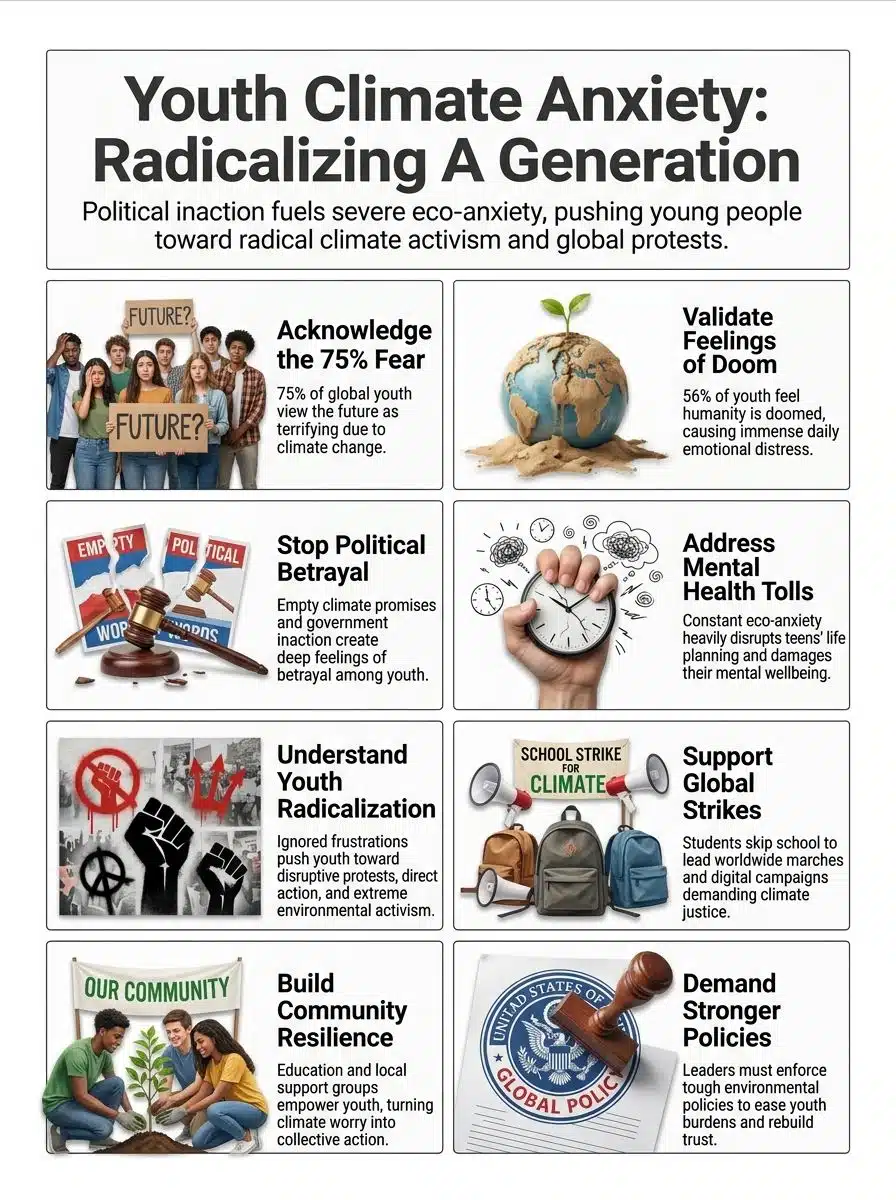
A whopping 75% of young people see the future as frightening, and over half, that’s 56%, think humanity is doomed. They view this despair as a smart reaction to weak political moves on climate emergencies.
Anger boils up from a sense of abandonment by leaders, pushing some toward radicalization. Young activists lean into extreme steps, like sabotage, because normal responses feel too small.
This anxiety ties into bigger pictures of injustice and systemic failure, not just the environment. Kids link climate woes to social wrongs, feeling the weight of it all on their shoulders.
Politicians brush off this fear and chase short-term wins, which amps up the frustration. It breeds a sense of political apathy mixed with fiery protest urges. Imagine carrying that load while planning your life; it twists mental health and dreams. Youth channel this into activism, demanding change that matches the crisis scale.
The Psychological Impact of Climate Change on Young People
Young people stare at a warming planet, and fear grips their hearts like a vice. This dread shapes their dreams, crushes hopes for the future, and sparks a quiet rage against leaders who seem deaf to the cries.
Rising levels of fear and despair
Fear grips many young hearts these days, folks. Surveys show 75% of young people find the future frightening, like a storm cloud that won’t budge. Then, 56% think humanity is doomed, a heavy weight that crushes hope.
This climate despair builds up, turning into real environmental distress. Imagine kids staring at a broken promise, like a toy that never works. Feelings of betrayal hit hard, especially anger aimed at governments that drag their feet.
Politicians’ inaction fans these flames, worsening youth distress and climate anxiety every day. Kids feel like the ultimate saviors, pushed into radical youth activism. Support for bold moves rises, linked straight to this climate despair.
Experts say the pressure sparks burnout, leaving activists drained and weary. Betrayal fuels radicalization, as future uncertainty looms large. It’s like a firecracker waiting to pop, demanding we listen now.
Feelings of betrayal and distrust in leadership
Young people feel deep betrayal from leaders who ignore climate change. Governments promise action, but they drag their feet on real fixes. This political inaction stings like a broken promise from a trusted friend.
Youth link their climate anxiety straight to this letdown. Activists call their fear a smart response to failed vows on the environment. A big chunk of kids say leaders have dropped the ball, sparking waves of hopelessness. Fossil fuel subsidies keep flowing, and that feels like a slap in the face to their future. Frustration boils over from this ongoing mess.
Experts point out the unfair load on youth for climate fixes. They shoulder the responsibility while politicians sit idle, and that builds massive distrust. Betrayal grows when kids must lead the charge amid these flops.
This mess fuels radicalization in youth activism, pushing for environmental justice. Kids turn to protests and bold moves to fight back. Distrust in leadership hits hard, like a storm cloud that won’t lift.
Young activists view their anxiety as a rational reaction to perceived failures of politicians in fulfilling climate promises.
Effects on mental health and life planning
Climate anxiety hits young people hard, sparking emotional distress and messing with their mental well-being. Imagine feeling like the world’s on fire, and no one’s grabbing the hose; that’s the daily grind for many teens and young adults facing the climate crisis.
A whopping 75 percent see the future as downright scary, which tanks their mental health and leaves them in a fog of fear. This psychological impact builds from government inaction, turning simple worries into deep emotional turmoil that sticks around.
Feelings of betrayal from leaders amp up this anxiety, creating a sense of urgency that disrupts life planning in big ways. Kids feel like they must step up as the main changemakers, piling on stress that leads to real emotional distress.
Activists link the climate crisis to systemic issues like social justice, which complicates their dreams and daily choices, all while politicians’ dismissive vibes fuel injustice and push support for radical actions amid that “climate doom” vibe.
How Climate Anxiety is Radicalizing a Generation
Young folks stare down a scorched future, and that gut-wrenching fear sparks a fire in their bellies for bold protests. They channel despair into marches, sit-ins, and loud calls for justice, turning whispers of worry into roars that shake the world.
Rising activism among youth
Climate anxiety grips young people hard, sparking rising activism among youth. They feel betrayed by leaders who drag their feet on the climate crisis. A global study shows 75% of folks aged 16-25 see the future as scary, while 56% think humanity is doomed.
This fear fuels their push for change, turning eco-anxiety into bold moves. Activists now link climate woes to social justice and flaws in capitalism, calling out the need for systemic change. Support grows for radical steps, like messing with fossil fuel setups, as despair boils over.
Politicians’ empty promises widen the trust gap, amping up youth empowerment through protests and sustainability drives. Kids view themselves as the real change-makers, demanding political accountability.
Experts worry about burnout in these young fighters, so they call on adults to step up and own climate action. Imagine a generation saying, “Enough is enough,” and hitting the streets to fight for a better world. This shift highlights how inaction breeds a wave of determined advocacy.
Shift toward direct action and advocacy
Young people feel the weight of the climate crisis, and it pushes them into activism. Anxiety drives them toward more disruptive actions, like protests that shake things up. Picture a kid skipping school to march; that’s direct action in full swing.
A whopping 75% of them see the future as scary, so they shift to bold moves for change. Betrayal from leaders fuels their anger, sparking a fire for advocacy. They demand environmental justice now, not later.
Activists view the climate mess as a big systemic failure, and that amps up their frustration. Support grows for radical steps, think sabotage or even hacking to disrupt the status quo.
This disconnect between empty promises and real action boils over into youth empowerment. They push for systemic change through broader efforts, like online campaigns that spread like wildfire. Experts say we all need to share the load, to ease the heavy burden on these young fighters.
Global youth movements and their demands
Youth feel deep anxiety about climate change. This pushes them into global movements that demand real action.
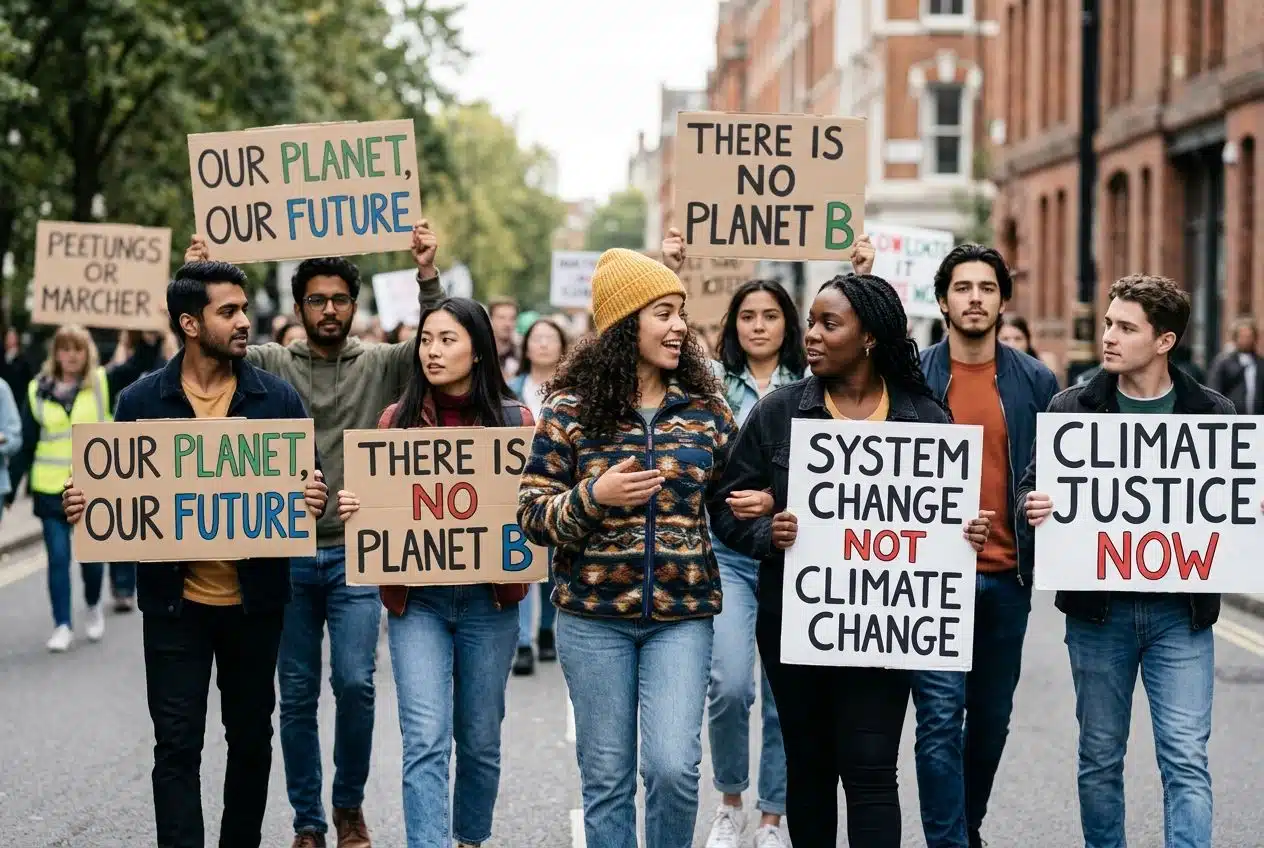
- Kids around the world join school strikes, like those started by Greta Thunberg in 2018, to protest inaction on climate issues, and they link this to betrayal by leaders who fail to secure futures, with a 2021 study showing 75% of young people find the future frightening and 56% think humanity is doomed.
- These movements demand climate justice, pushing for an end to fossil fuel support while politicians make empty promises, which fuels anger and a shift to radical actions against oil pipelines and coal plants as part of youth empowerment.
- Activists use social media to spread their message, turning anxiety into advocacy that connects climate change to systemic failure in society, like inequality and poverty, and they call for policies that match words with deeds to avoid the “say-do” gap.
- Global protests, such as Fridays for Future, rally millions of teens who express despair and distrust in leadership, demanding urgent cuts in emissions to fight environmental threats that affect mental health and life plans.
- Radicalization grows as youth support direct action, including blockades of fossil fuel sites, because they see government failure as a betrayal that leaves them with no choice but to fight for their own survival.
- Experts warn that this activism, driven by feelings of doom, might cause burnout in young people, so they demand adult accountability to rebuild trust and prevent despair from turning into endless exhaustion.
- Through these efforts, youth tie climate anxiety to broader fights for justice, urging a stop to broken promises that radicalize a generation tired of waiting for change.
Role of Politicians in Escalating Youth Climate Anxiety
Politicians stoke youth climate anxiety with empty promises and weak policies, like tossing a band-aid on a gaping wound, leaving young people furious and ready to fight back—curious about the fallout? Stick around for the full story.
Perceived inaction and broken promises
Young people see government leaders making big promises on climate change, but then they spot the inaction. This fuels their anxiety big time. Take that “say-do” gap, for example; leaders claim bold climate action while still handing out subsidies for fossil fuels.
No wonder 75% of youth feel the future looks frightening from such weak responses. They sense betrayal, and it stings, like a friend who bails on plans over and over.
Feelings of doom hit hard, too, with 56% of young folks thinking humanity is toast, all tied to broken governmental promises. This betrayal ramps up support for radical activism, as they push back against the letdown.
Experts point out how this mess piles emotional distress on youth, urging adults to step up and ease that load through real political accountability. Youth engagement in environmental justice grows from here, demanding sustainability and solid government policy now.
Lack of effective climate policies
This inaction ties directly to the lack of effective climate policies that leave youth feeling stuck in a climate crisis. Politicians promise big changes, but they deliver little, fueling emotional distress and ecoanxiety among the young.
Kids see leaders ignore the climate crisis, and that betrayal sparks anger, pushing them toward radicalism. Think of it like a broken promise from a friend who swore they’d help with a big problem, only to bail; it hurts, right? Youth feel this political betrayal deeply, and it drives their distrust of government accountability.
Support for radical actions grows as a result, like sabotaging fossil fuel infrastructure to fight back against systemic failure. Activists link the climate crisis to social injustice, viewing governmental inaction as a total letdown.
They feel pressured to lead environmental activism themselves, since adults drop the ball on youth empowerment. Frustration builds from politicians’ disregard for this anxiety, creating anti-establishment sentiments that radicalize a generation. Imagine the weight of that, carrying the world’s future on young shoulders while leaders sit idle.
Examples of Youth-Led Climate Movements
6. Examples of Youth-Led Climate Movements: Picture kids ditching class for school strikes that sweep the globe, or teens firing up social media campaigns to demand real change, like a wildfire of passion that’s hard to ignore, so hang tight and see what comes next.
School strikes and global protests
Young people lead powerful climate movements worldwide. They organize school strikes and global protests to demand real change on climate issues.
- Students skip classes for school strikes, a bold move started by Greta Thunberg in 2018, to push for urgent action on climate change and sustainability. These strikes spread like wildfire across countries, with kids holding signs and chanting for environmentalism and social justice. Imagine thousands of teens flooding streets, their voices echoing demands for better policies; it builds awareness and mobilization among youth. Protests turn frustration into activism, showing leaders that youth engagement matters now.
- Global protests unite young activists from different nations, creating a wave of advocacy that pressures governments on climate change. Think of Fridays for Future, where millions join marches, sharing stories and ideas to highlight the need for protest against inaction. Empathy grows as participants feel connected, turning despair into hope through collective power. Such events spark conversations on sustainability, encouraging more people to get involved in environmentalism.
- Youth use these strikes and protests to call out broken promises, fostering a sense of betrayal that fuels their drive for change. Picture a group of friends organizing a local rally, laughing nervously but standing firm for what they believe in. This direct action builds community and resilience, proving that advocacy can lead to real shifts in policy. Mobilization like this inspires others, spreading the message of youth engagement far and wide.
- In cities around the world, these movements blend fun with serious demands, like adding art and music to protests for greater impact. Activists share personal anecdotes, such as skipping school to march, which humanizes the fight against climate change. Humor sneaks in, too, with clever signs that poke fun at politicians, making the events relatable and engaging. Environmentalism thrives here, as young voices demand sustainability and social justice without backing down.
School strikes ignite passion on the streets, but they often spark even bigger waves online. Youth activists amplify their voices through social media and technology, turning global protests into everyday advocacy.
- Social media platforms let young people spread awareness fast, like sharing videos of climate disasters to mobilize friends and strangers alike for sustainability efforts.
- Hashtags such as #ClimateAction create community bonds, where teens collaborate on petitions that demand real change from leaders.
- Apps and online tools boost engagement. Think of how innovation in virtual reality lets kids experience melting ice caps up close, fueling their activism.
- Influencers in the youth space use TikTok for education, posting quick tips on eco-friendly habits that inspire collaboration among peers.
- Online forums build mobilization networks, connecting students across countries to plan events and share stories of local innovation in fighting climate change.
- Technology aids advocacy by tracking carbon footprints through apps, helping young folks push for policies that promote sustainability in their schools.
- Live streams from protests heighten awareness, drawing in viewers who then join the community and add their voices to the growing chorus.
- Digital campaigns encourage education on climate science, with youth creating memes that make complex issues fun and relatable for better engagement.
Addressing Climate Anxiety Among Young People
Kids face big fears about the planet, but schools and friends can help them grow strong, like a tree standing tall in a storm. Join a group, plant some seeds, or march for change, and watch that worry turn into power.

Building resilience through education and community support
Education lights the path for young people facing climate anxiety. Schools teach facts about climate change, which builds psychological resilience. Students learn coping strategies to handle fear and despair.
Think of it like arming kids with a toolkit for emotional well-being. Community engagement plays a big role, too. Local groups offer support networks where youth share stories and find strength together. This setup empowers them to turn worry into action. Advocacy becomes a natural step as they push for real changes.
Picture a group of teens planting trees in their neighborhood, laughing through the dirt. Such activities boost mental health and foster youth empowerment. Environmental education in these settings shows how small steps fight big problems.
Support networks provide a safety net, easing the weight of climate change worries. Friends and mentors listen, offer advice, and spark ideas for advocacy. Everyone feels less alone in the fight. Laughter sneaks in during tough talks, making resilience feel achievable.
Encouraging climate action as a coping mechanism
Young folks feel ecoanxiety from climate change, and it hits their mental health hard. Turn that worry into power. Join youth activism through green initiatives. Plant trees in your neighborhood, or push for sustainability at school.
These steps build climate resilience. They ease environmental stress, too. Picture a group of teens cleaning up a park; laughter mixes with purpose, lightening the load.
Collective action sparks hope for a better future outlook. Start small, like recycling more or biking to cut emissions. Such moves fight despair. They foster community support. Kids lead the charge in global movements. Embrace this as your coping tool. It transforms fear into fuel for change.
What Needs to Change?
Politicians, listen up, you gotta roll out tougher climate policies right now, and start mending that broken trust with the kids you’ve disappointed for years. Craving the full story on this radical shift? Stick around for the finale!
The necessity of stronger climate policies
Youth feel deep betrayal from government inaction on global warming. This betrayal pushes them toward radicalized approaches in youth activism. They seek real policy commitment from leaders.
A global study reveals that 75% of young people view the future with fear. That fear drives the need for effective climate action right now. Imagine kids carrying the weight of the world, like Atlas holding up the sky, but with no help in sight.
Ecoanxiety grips them tight, and it sparks a shift to disruptive actions. Stronger climate policies can ease this burden. They highlight the urgency for sustainability and climate justice.
Young activists face emotional distress, pressured to lead change alone. Experts point out the risk of activist burnout in this fight. Shared responsibility must step in to build a supportive environmental policy.
Frustration builds from the disconnect between promises and real action. It reinforces demands for government accountability. Support grows among youth for radical steps to tackle their concerns.
Comprehensive climate policies offer a path forward. Think of it as mending a broken bridge, one sturdy plank at a time, so everyone crosses safely together.
Politicians’ responsibility to rebuild trust with the youth
Politicians fuel climate anxiety through their inaction on key issues, and young people see this as a deep betrayal. They spot the “say-do” gap, like when leaders keep subsidizing fossil fuels despite bold promises.
Experts point out how this fosters frustration and pushes kids toward radical actions. Leaders dismiss these fears as “hysteria,” and that only ramps up feelings of injustice, sparking anti-establishment vibes.
Imagine a parent ignoring a child’s plea for help; that’s the vibe here, and it breeds distrust fast. Politicians must step up their responsibility in climate action to ease this anxiety and back youth activism.
They need to acknowledge the concerns of young activists, who often feel pressured to lead the charge alone. Transparent communication and genuine efforts can restore faith, as experts suggest adults take more responsibility to prevent youth burnout.
Collaboration with these movements bridges the trust gap, turning engagement into real progress. Picture politicians sitting down with kids for honest talks, like old friends hashing out a plan.
This kind of openness fights injustice and builds a team effort. Now, let’s look at this radical awakening we can no longer ignore.
Finally: A Radical Awakening We Can No Longer Ignore
Youth face a scary future, and climate anxiety pushes their activism into radical zones. They feel betrayed by government inaction, sparking deep anger toward leaders. Support grows for extreme steps like sabotage and hacking fossil fuel infrastructure. This shift turns fear into fierce advocacy, blending social justice with bold political action.
Envision kids, once hopeful, now plotting protests that shake the system; it’s like a storm brewing from ignored warnings. Leaders keep subsidizing fossil fuels, fueling youth frustration and radical tactics in environmentalism. Young activists engage in disruptive protests, demanding sustainability and real change.
Experts warn that this heavy load leads to burnout. Adults must step up and support youth engagement, easing the burden. Envision a generation, fired up like a wildfire, turning anxiety into unstoppable climate change advocacy.
We see this radicalism as a wake-up call for everyone.