Do you ever crave a wild adventure but find yourself stuck at home? Life gets busy, and traveling across the globe just is not an option for most of us right now. I get it, and I have found the perfect escape. You can explore the deepest oceans and highest mountains straight from your couch. Watching the 6 best nature documentary series is an incredible way to connect with wildlife. These shows do more than just share beautiful views. They reveal amazing secrets about natural history and show us exactly how we can protect our environment.
I am going to share my absolute favorite series with you. Grab some popcorn, and let us explore Earth’s wonders together.
Why Nature Documentaries Are Fascinating
The 6 Best Documentary Series on Nature capture our attention with stunning views and incredible animal stories. They spark a deep curiosity about our planet.
The beauty of wildlife and landscapes
Golden eagles soar above snowy cliffs, and zebras race across open plains. The colors of a coral reef shine bright under the blue waves.
You see mountains rising like silent giants, holding ancient secrets in each rock and tree. Wildlife documentaries capture these moments with crisp detail and light that almost sparkles on the screen.
Did you know that watching these scenes is actually good for your health? A famous study from the University of California, Berkeley, found that watching nature programming significantly lowers stress and boosts feelings of joy.
“The natural world is the greatest source of excitement; the greatest source of beauty.” – David Attenborough
Raising awareness about environmental issues
These shows also open our eyes to real problems facing the environment. Viewers see melting ice caps, shrinking forests, and oceans full of plastic.
In the US alone, we generate over 40 million tons of plastic waste every year. Seeing those numbers come to life on screen makes the issue impossible to ignore.
These films share essential facts about ecosystem preservation. Famous voices help explain these hard truths with gentle, encouraging words.
Here are a few ways these shows highlight urgent environmental issues:
- They track the exact decline of endangered species over specific decades.
- They reveal how climate change alters migration patterns for birds and whales.
- They show the devastating effects of deforestation on local communities and wildlife.
- They highlight successful conservation efforts to prove that change is possible.
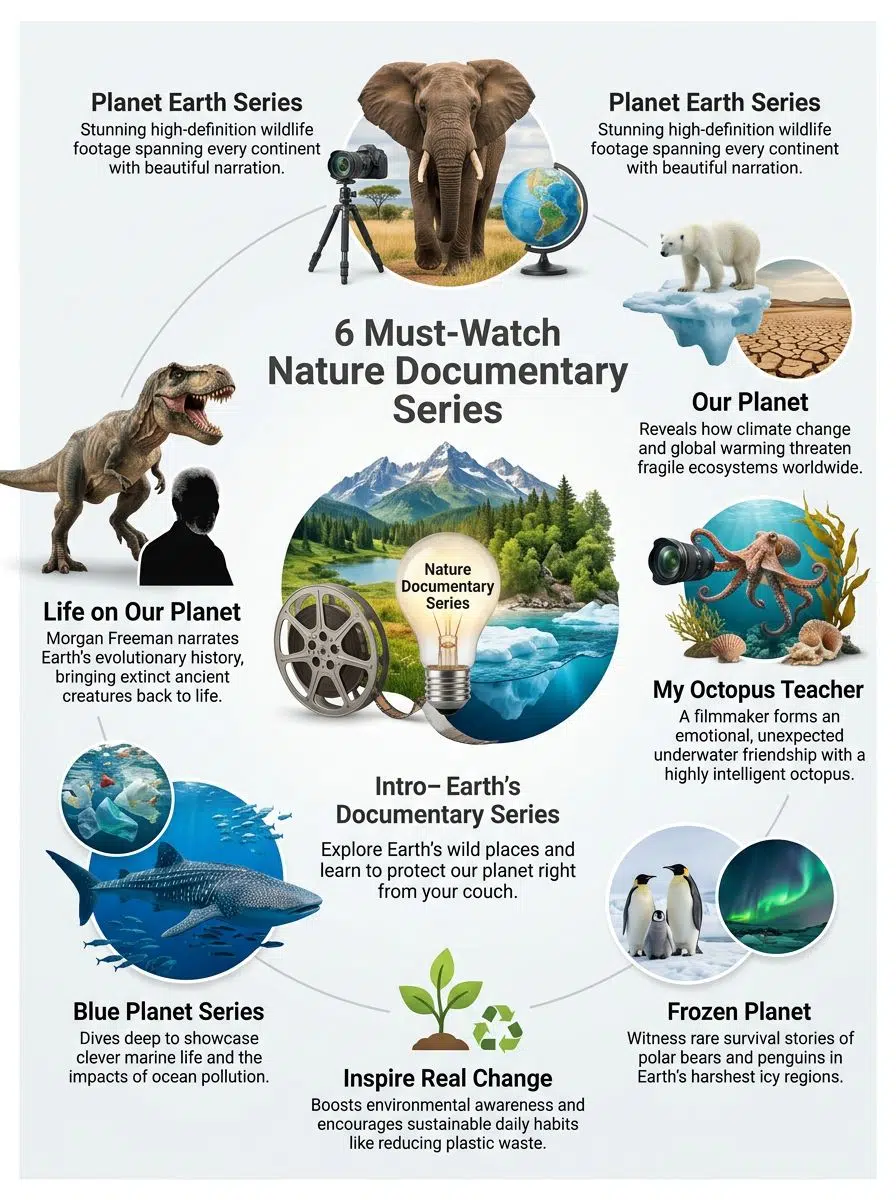
1. Planet Earth Series
The Planet Earth series sweeps you across deserts, jungles, oceans, and frozen peaks. Every episode feels like stepping into a wild, living postcard.
Overview of the Planet Earth Journey
The BBC released the original “Planet Earth” in 2006. It completely changed how we view wildlife and ecosystems. David Attenborough guides each step with his calm, familiar voice. The crew took five years to film that first season, using early high-definition cameras for breathtaking clarity.
In 2016, “Planet Earth II” brought us even closer to the action using lightweight drones and stabilized camera rigs. A clip of baby iguanas fleeing racer snakes became a massive internet sensation. It is pure, edge-of-your-seat suspense.
The series expanded again with “Planet Earth III” in late 2023. This newest chapter focuses heavily on animal behavior in a modern, human-dominated world.
Key highlights and breathtaking visuals
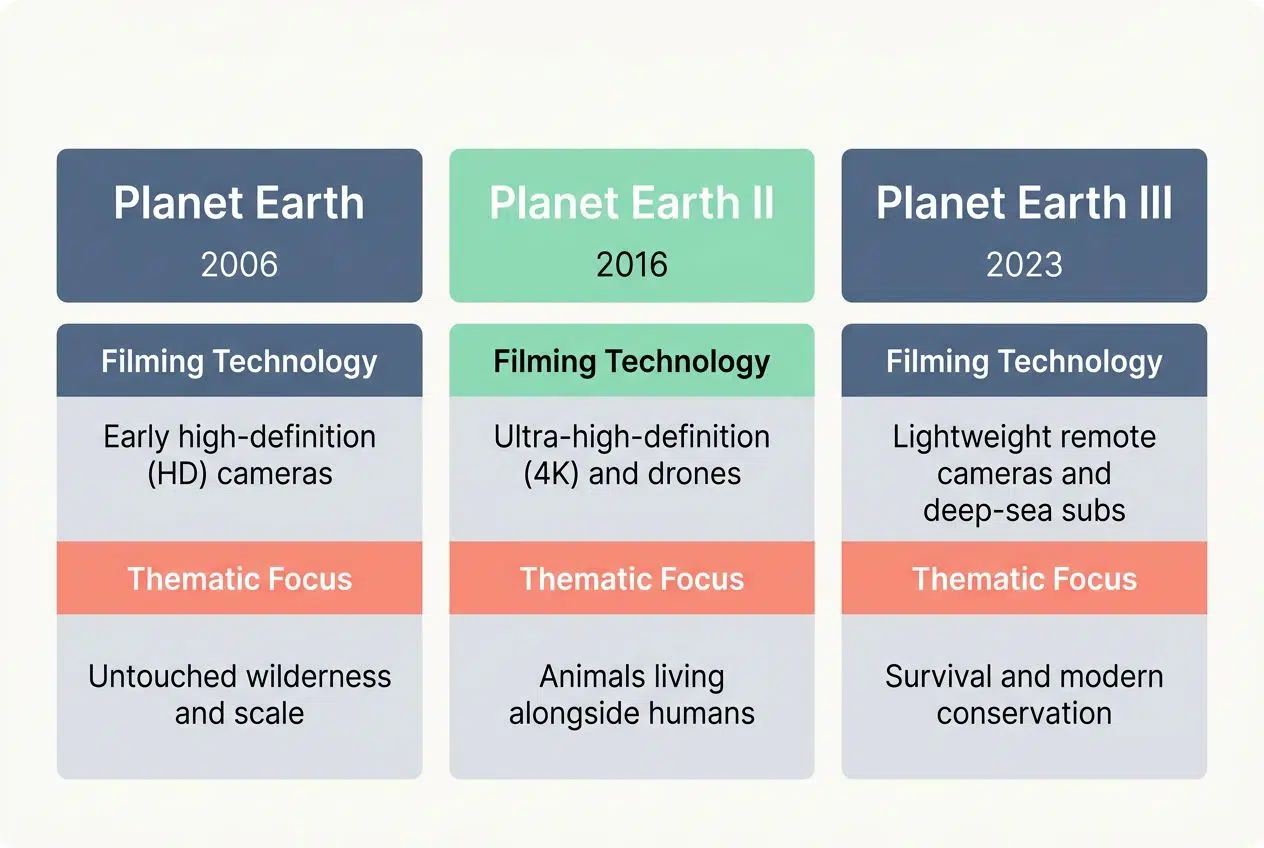
To understand the massive scale of this nature series, let us look at how the technology and focus have grown.
| Series | Release Year | Filming Technology Focus | Main Theme |
|---|---|---|---|
| Planet Earth | 2006 | Early high-definition (HD) cameras | Untouched wilderness and scale |
| Planet Earth II | 2016 | Ultra-high-definition (4K) and drones | Animals living alongside humans |
| Planet Earth III | 2023 | Lightweight remote cameras and deep-sea subs | Survival and modern conservation |
The camera zooms over giant rainforests and glides above deserts at sunrise. Time-lapse videos show flowers blooming overnight and ice shelves cracking apart under the northern lights. Each scene feels vibrant and alive. This incredible biodiversity stirs a deep sense of wonder.
2. Our Planet
Our Planet brings forests, deserts, and oceans to your screen in stunning detail. With every episode, you explore how small changes shape life everywhere.
Collaboration with David Attenborough and the WWF
David Attenborough lends his powerful voice to this incredible project. Netflix partnered directly with the World Wildlife Fund (WWF) to ensure every scientific fact is perfectly accurate.
Filmmakers spent four years working closely with these experts to capture nature’s beauty. They wanted to show exactly why conservation matters right now.
Attenborough explains climate change issues using simple, clear words. He makes tough topics easy for everyone to grasp, inspiring viewers to care for our environment.
Focus on climate change and conservation
Our Planet pulls back the curtain on the immediate effects of climate change. It shows melting ice, shrinking forests, and coral reefs under severe threat.
The series ties every stunning scene to real, verifiable problems. Here are a few critical insights the show shares about our changing world:
- Arctic sea ice is declining at a rate of 13% per decade, directly threatening polar bears.
- Ocean temperatures are rising, causing massive coral bleaching events across the globe.
- Deforestation forces wildlife into smaller territories, increasing competition for food.
Seeing sea turtles struggle through plastic waste hits home hard for many viewers. These moments stick with you long after the final episode ends. They drive urgent calls for environmental action and sustainability across the US and beyond.
3. My Octopus Teacher
This story wraps around a filmmaker who forms an unexpected friendship with a clever octopus. You get swept up by wonder and learn heaps about animal intelligence.
A unique bond between a filmmaker and an octopus
Craig Foster spent almost a year visiting a freezing kelp forest in South Africa. This specific location is known as the Great African Seaforest.
There, he met a common octopus and watched her every single day. The octopus started to trust him over time, letting him get close without hiding.
Foster filmed his daily meetings for “My Octopus Teacher,” which became a massive hit. The film was so universally loved that it won the 2021 Academy Award for Best Documentary Feature.
Emotional and educational storytelling
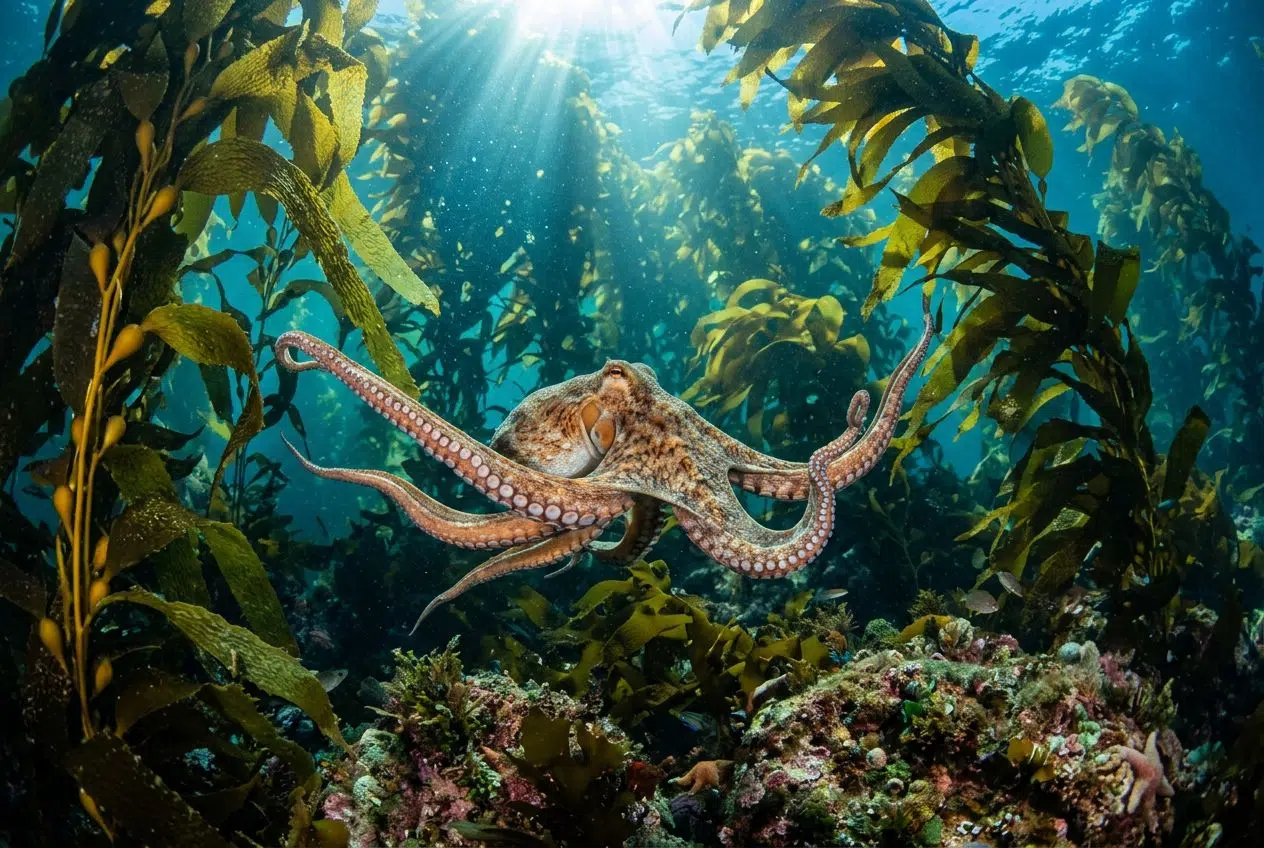
The stories in this documentary pull right at your heart. They make you feel like a true part of the underwater world. This animal teaches profound lessons about friendship, life, and trust without saying a single word.
“A lot of people say an octopus is like an alien. But the strange thing is, as you get closer to them, you realize that we are very similar in a lot of ways.” – Craig Foster
The film also explains ocean ecosystems with clear facts and real experiences. People leave feeling much more eager to protect marine life after watching these moving moments.
4. Frozen Planet
Frozen Planet puts you right into icy worlds where survival is a daily struggle. You watch polar bears, penguins, and whales do what they must to survive in the coldest places on Earth.
Exploration of the Earth’s coldest regions
Snow blankets everything in the Arctic and Antarctic. The cold bites hard, dropping as low as minus 60 degrees Fahrenheit.
Animals like emperor penguins and arctic foxes fight to survive every single day. Filmmakers use special cold-weather cameras to catch rare moments of wildlife hunting and playing.
The series expanded with “Frozen Planet II” in 2022, showing us even more fragile ecosystems. The crew spent years capturing high-definition footage of melting sea ice and shifting glaciers.
Stunning visuals of Arctic and Antarctic wildlife
Life can be incredibly harsh in these wild places, yet each moment is full of wonder. The show reveals fascinating survival tactics used by animals in extreme cold:
- Emperor penguins balance eggs on their feet to keep them warm under the freezing sky.
- Polar bears use their sharp eyesight to hunt seals across vast white fields.
- Orcas work together to create waves that wash seals completely off the floating ice.
- Hungry wolves track caribou herds across the frozen, unforgiving tundra.
Viewers see exactly how climate change affects these specific habitats. Newborn seal pups might only live a few weeks if the weather shifts too fast.
5. Blue Planet Series
The Blue Planet Series opens a window to the wonders of marine life. Dazzling colors and rare creatures completely steal the show.
Insights into marine life and underwater ecosystems
Coral reefs, kelp forests, and the darkest ocean trenches hide thousands of unique species. Giant blue whales swim beside tiny plankton, and both play a crucial part in keeping the water healthy.
Many creatures use incredibly smart ways to survive. Some glow in the deep dark like lanterns, while others blend in by changing color instantly.
The series explains how rising temperatures harm coral and sea turtles. It links the health of small fish to massive global environmental changes.
“Blue Planet II” is a continuation of the legacy
Released in 2017, “Blue Planet II” explores our oceans with groundbreaking footage. David Attenborough returns as narrator, bringing stories to life with his familiar, comforting voice.
This specific season triggered a massive cultural shift regarding plastic pollution. Researchers call this the “Blue Planet Effect,” which led to a massive spike in Americans purchasing reusable water bottles.
“Surely we have a responsibility to care for our blue planet. The future of humanity and indeed, all life on earth, now depends on us.” – David Attenborough
Stunning visuals blend with haunting music by Hans Zimmer. This makes each episode beautiful and deeply thought-provoking for fans young and old.
6. Life on Our Planet
Life on Our Planet sweeps viewers across millions of years, showing creatures both strange and stunning. It keeps you glued to the screen, eager to see how life adapts.
A journey through Earth’s evolutionary history
Dinosaurs ruled Earth for 165 million years before vanishing after an asteroid crash. Jellyfish swam in the seas over 500 million years ago, long before fish even grew bones.
Woolly mammoths once roamed icy tundras next to saber-toothed cats and early humans. Nature documentaries show exactly how creatures evolved and learned new tricks through struggle and survival.
This series uniquely blends natural history with incredible digital effects. The producers hired Industrial Light & Magic, the famous visual effects company behind Star Wars, to bring extinct animals back to life.
Narration and cutting-edge visuals
Morgan Freeman’s calm voice guides the story, helping everyone grasp big ideas about evolution. Each word carries excitement, making scientific facts stick in your mind.
The visual effects show fierce predators and slow giants moving as if they are alive right now. Here are a few ways the show uses technology to tell its story:
- Crystal-clear colors paint extinct animals with stunning, lifelike detail.
- Digital time-lapses show entire ecosystems growing or fading away in seconds.
- Close-up shots reveal sharp teeth, giant claws, and scaly skin that look real enough to touch.
Fast-moving scenes make complex evolutionary topics incredibly easy to understand. You learn exactly how life constantly adapts through time.
How Nature Documentaries Inspire Conservation
Nature documentaries light a fire in our hearts for protecting the planet. They gently nudge viewers to make better choices, one small action at a time.

Impact on public consciousness
People start to care deeply about ecosystems after seeing these striking images. Vivid shots of melting glaciers wake people up to the severe threats of habitat loss.
Broadcasters give a voice to animals that cannot speak for themselves. This helps shift public opinions and inspires action for conservation efforts across the United States.
Viewers often feel pure empathy as they watch animal behavior up close. These quiet moments create strong connections that spark daily discussions at dinner tables.
Many US-based environmental groups, like the Sierra Club, report spikes in website traffic and donations right after a major nature series premiere.
Encouraging sustainable behaviors
Watching these series inspires families to rethink their daily habits. Small, consistent steps absolutely matter for ecosystem preservation.
Here are a few simple ways viewers often change their routines after watching:
- Switching to reusable grocery bags and metal water bottles to cut down on plastic waste.
- Turning off lights and lowering thermostats to save energy and reduce carbon footprints.
- Choosing locally sourced food to cut down on truck emissions and air pollution.
- Planting native flowers in their yards to support local bee and butterfly populations.
Strong visuals mixed with honest storytelling reshape how we think about sustainability. They make conservation a natural, easy part of everyday life.
Closing Thoughts
Nature documentary series fill our minds with pure wonder. They spark a lifelong curiosity about wildlife, ecosystems, and conservation. Seeing these breathtaking scenes encourages so many of us to learn more about environmental protection. Each story shows exactly why ecosystem preservation matters so much. Watching the 6 best nature documentary series opens doors to a world rarely seen up close.
Vivid images of marine life or Arctic landscapes will stick with you for years. People often feel incredibly moved to support sustainability after tuning in. These films make natural history fun, relatable, and real for everyone watching at home.