The Australian retail landscape is undergoing its most significant transformation since the invention of the barcode. Major players like Woolworths and Wesfarmers have moved beyond simple chatbots to integrate Google’s Gemini-powered agentic systems directly into the heart of the customer journey. These advanced models are no longer just answering questions; they are predicting grocery lists, solving fulfillment errors in real-time, and even helping customers plan entire home renovation projects based on a single photo.
By bridging the gap between digital discovery and physical store execution, these retailers are proving that the future of shopping in Australia is deeply personal and incredibly fast.
How We Selected Our 11 Best Generative AI in Australian Retail Use Cases
To identify the most impactful ways local businesses are leveraging this technology we focused on three primary criteria. First we analyzed the direct implementation of agentic AI systems by major Australian conglomerates like Woolworths Group and Wesfarmers to ensure the use cases were grounded in real-world application. Second we looked for multimodal capabilities where Gemini’s ability to process text, voice, and images simultaneously creates a unique value for the shopper. Finally we prioritized tools that move beyond mere “conversation” to “transaction” where the AI has the authority to resolve problems or complete purchases with customer consent.
The Future of Shopping: 11 Generative AI in Australian retail Innovations
The shift from simple automation to agentic intelligence is allowing Australian retailers to offer a “digital concierge” experience that was previously impossible at scale. Here are the eleven most powerful ways these businesses are using Gemini to stay ahead of the curve.
1. Agentic Personal Shopping Assistants
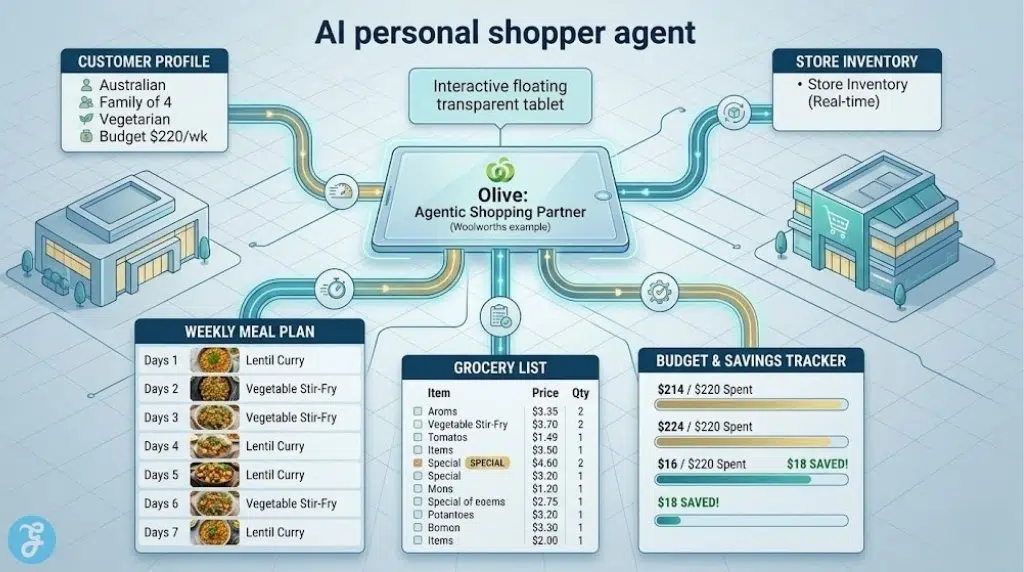
Woolworths has led the charge by evolving its digital assistant, Olive, into a proactive shopping partner powered by Gemini Enterprise. Unlike traditional bots that wait for a specific query, this agent uses complex reasoning to anticipate what a customer might need based on their past habits and local store specials. It acts as an intuitive partner that helps plan meals and suggests items that align with a family’s specific dietary requirements and weekly budget. It turns a routine grocery run into a curated experience tailored to the individual household.
Best Feature/For:
-
High-volume grocery shoppers looking for meal inspiration and budget control
Why We Chose It:
-
Moves from a reactive Q&A model to proactive assistance
-
Directly integrates with real-time store inventory and pricing
-
Helps customers save time by automating the discovery of weekly specials
Things to consider:
-
Proactive suggestions must remain relevant to avoid feeling like intrusive advertising
2. Multimodal Visual Search for Home Improvement
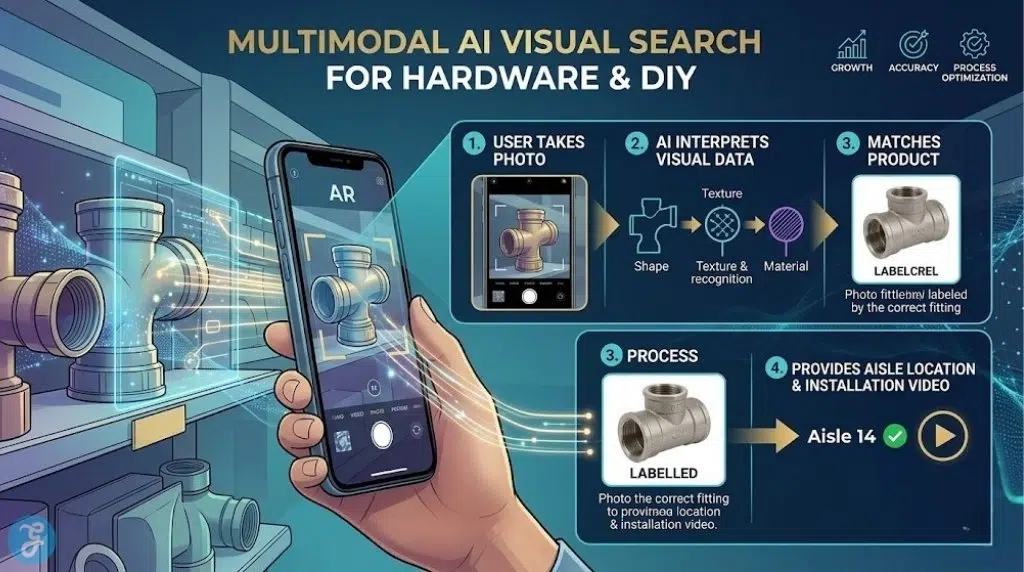
Aussie retailers in the hardware and home improvement sector are using Gemini’s multimodal capabilities to simplify complex DIY projects. Instead of trying to describe a specific plumbing part or tile pattern in a search bar, customers can simply snap a photo. The AI identifies the exact item or its closest equivalent in the local store and even provides step-by-step installation videos. It bridges the gap between seeing an inspiration image on social media and finding the physical product on a shelf in Melbourne or Sydney.
Best Feature/For:
-
DIY enthusiasts and tradies needing quick part identification
Why We Chose It:
-
Eliminates the frustration of searching for technical items with unknown names
-
Leverages Gemini’s “eyes” to provide visual context to the shopping journey
-
Connects digital images directly to local aisle locations
Things to consider:
-
Image quality and lighting can affect the accuracy of the product match
3. Automated Real-Time Issue Resolution
One of the most powerful applications for Gemini in the Australian market is the ability to resolve post-purchase “hiccups” without a human intervention. If an order is delayed or a delivery goes missing, the AI agent can independently access the ERP and logistics systems to issue a refund or reroute a replacement. This shifts the customer support role from a cost center to a loyalty engine by fixing problems the moment they arise. It removes the need for customers to wait on hold for a call center agent to verify the same data.
Best Feature/For:
-
Large scale e-commerce operations with high delivery volumes
Why We Chose It:
-
Dramatically reduces the “cost-to-serve” for retailers
-
Provides instant gratification and relief for frustrated customers
-
Operates 24/7 without the need for increased staffing levels
Things to consider:
-
Clear boundaries must be set for the AI’s refund and replacement authority
4. Complex Reasoning for Product Compatibility
Retailers specializing in electronics or appliances are using Gemini to help customers navigate technical specs. For example an AI agent can cross-reference a kitchen’s specific electrical requirements against a product catalog to confirm if a certain induction range is compatible. This level of complex reasoning ensures that the customer gets it right the first time, reducing the rate of expensive returns. It replaces the need for the customer to become a technical expert before making a major household purchase.
Best Feature/For:
-
Specialized retail categories like white goods, electronics, and automotive parts
Why We Chose It:
-
Reduces the high cost of returns and restocking for heavy items
-
Builds massive consumer confidence during the high-consideration phase
-
Acts as an “expert in every pocket” for technical queries
Things to consider:
-
Requires deep integration with high-quality product data and technical manuals
5. Personalized Meal and Budget Planning
In the midst of a cost-of-living crisis, Australian supermarkets are using Gemini to help families stretch their dollar further. By analyzing the “Shopping Graph,” the AI can suggest recipes that use ingredients already in the pantry while prioritizing items that are currently on sale. It can generate a 7-day meal plan for a family of four that stays under a specific price cap. This level of granular personalization makes the retailer a partner in the customer’s financial well-being rather than just a place to buy food.
Best Feature/For:
-
Budget-conscious families and health-focused shoppers
Why We Chose It:
-
Directly addresses the current economic challenges facing Australian households
-
Encourages larger basket sizes by providing complete recipe solutions
-
Increases app engagement by providing daily value to the user
Things to consider:
-
AI-generated recipes need a verification layer to ensure safety and taste
6. Unified Cross-Divisional Shopping with OnePass
Wesfarmers is testing a “cross-divisional” agentic experience through its OnePass program, allowing customers to shop across Kmart, Officeworks, and Priceline in a single conversation. Gemini maintains the context of the interaction as the user moves between different retail brands. You could ask to “buy school supplies and a new skincare kit,” and the AI would coordinate the search and fulfillment from multiple stores simultaneously. It creates a frictionless “one-stop-shop” experience within a single conglomerate ecosystem.
Best Feature/For:
-
Customers who regularly shop across multiple Wesfarmers brands
Why We Chose It:
-
Breaks down the silos between different retail divisions
-
Simplifies the shopping journey for multi-category needs
-
Leverages a unified loyalty program (OnePass) for better data insights
Things to consider:
-
Maintaining data privacy across different business units is critical
7. Interactive In-Store Smart Displays
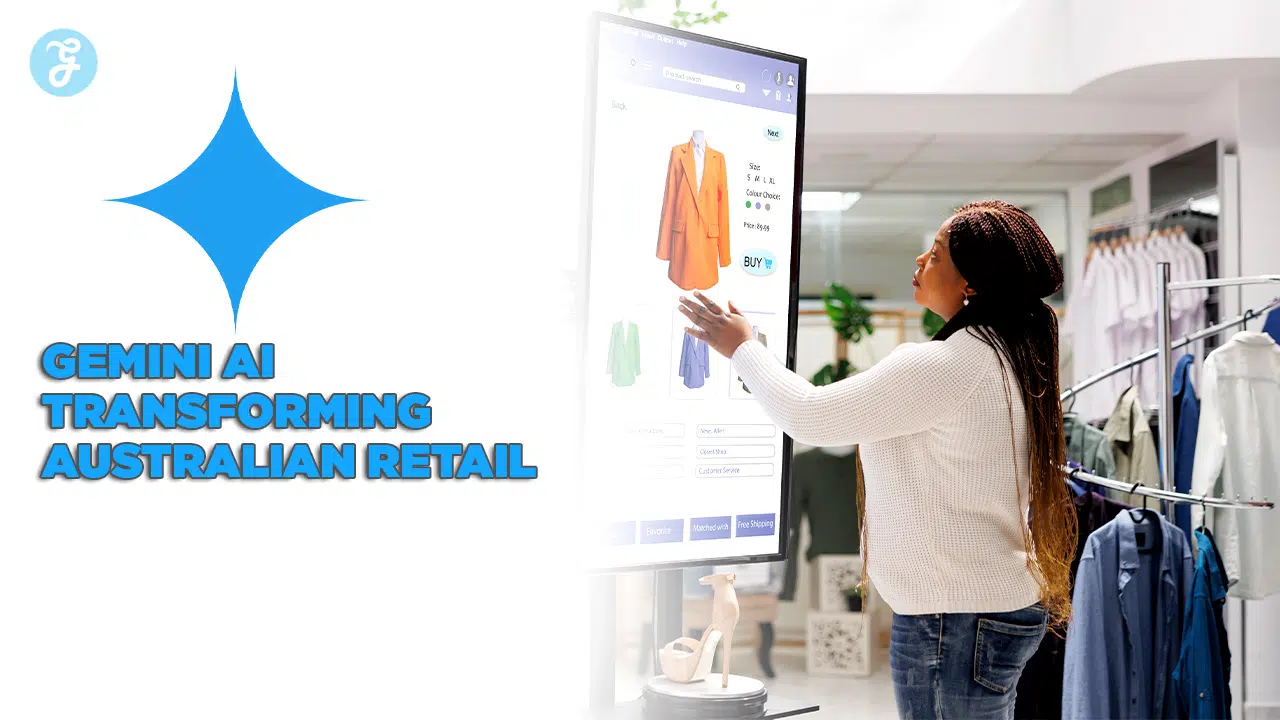
Gemini is moving from the mobile app to the physical store floor through interactive kiosks and smart mirrors. In fashion retail, these displays can act as a personal stylist, suggesting accessories that complement a garment the customer is holding. By “seeing” the item via a camera, the AI can check real-time stock levels and order a different size to be brought directly to the fitting room. It brings the convenience of online data to the tactile experience of in-store shopping.
Best Feature/For:
-
High-street fashion retailers and flagship experience centers
Why We Chose It:
-
Combines the sensory benefit of the store with the intelligence of AI
-
Empowers store associates by automating basic stock and styling queries
-
Reduces “lost sales” by identifying available stock in other nearby stores
Things to consider:
-
Hardware maintenance and camera privacy must be managed carefully
8. AI-Powered Dynamic Loyalty and Direct Offers
Retailers are moving away from generic newsletters and toward “Direct Offers” facilitated by Gemini. Instead of sending the same 10% discount to everyone, the AI generates tailored offers based on a shopper’s real-time intent. If a customer is browsing premium luggage but hasn’t committed, Gemini can offer a specific “loyalty bundle” that includes free shipping or a travel accessory. These offers are generated in the moment of consideration, significantly increasing the likelihood of a conversion.
Best Feature/For:
-
High-consideration retail categories like travel, tech, and luxury goods
Why We Chose It:
-
Replaces the “race to the bottom” with value-driven promotions
-
Tailors incentives to the specific friction points of individual shoppers
-
Drives much higher ROI compared to broad-market discount campaigns
Things to consider:
-
Over-discounting can erode brand value if not managed by AI guardrails
9. Predictive Inventory and “Self-Healing” Supply Chains
Behind the scenes, Aussie retailers are using agentic AI to solve the “dead stock” problem. Gemini-powered agents monitor soft signals like local weather shifts or viral TikTok trends to predict a surge in demand for specific SKUs. If a certain sunblock starts trending in Sydney, the system can autonomously initiate a stock transfer from a slower-moving Perth warehouse before the shelf goes empty. It replaces reactive dashboards with an autonomous “merchandising brain” that keeps products in the right place at the right time.
Best Feature/For:
-
National retailers with complex multi-state logistics networks
Why We Chose It:
-
Reduces the financial drain of inventory misalignment and stockouts
-
Speeds up the redistribution of goods by up to 90%
-
Operates “always-on” to detect shifts humans might miss in giant datasets
Things to consider:
-
Requires a high degree of trust in the AI’s autonomous ordering capabilities
10. Multimodal Customer Support with Agent Studio
With the launch of Google’s Agent Studio, Australian retailers are building multimodal support agents that can interpret voice calls and visual evidence of a problem. If a customer receives a damaged table from an online order, they can video-call the support agent. Gemini analyzes the video in real-time, confirms the damage, and immediately schedules a pickup and replacement. This eliminates the long back-and-forth of email chains and photo attachments, resolving the entire claim in minutes.
Best Feature/For:
-
High-volume customer service centers looking to improve resolution rates
Why We Chose It:
-
Uses multimodal context (video/voice) to prove claims faster
-
Dramatically reduces average handling time for complex issues
-
Maintains a consistent tone and brand voice across all support interactions
Things to consider:
-
Requires robust data-handling protocols for customer-submitted video content
11. Employee Productivity and Institutional Intelligence
Wesfarmers has made Gemini Enterprise available to its entire retail workforce to automate routine internal tasks. Store managers can use the AI to analyze complex service trends, draft staff schedules based on predicted foot traffic, or instantly find policy information in massive HR manuals. By using AI to handle the “heavy lifting” of administration, retail teams can spend more time on the floor helping customers. It turns years of institutional documents into an instantly accessible internal knowledge base.
Best Feature/For:
-
Large retail organizations with thousands of employees and complex policies
Why We Chose It:
-
Increases staff productivity by automating routine administrative work
-
Ensures every employee has instant access to accurate “best-practice” data
-
Supports better decision-making at the local store level
Things to consider:
-
Upskilling and training are necessary to ensure staff use the tools responsibly
An Overview Of 11 Generative AI in Australian retail Trends
The integration of agentic AI is no longer a future concept but a foundational layer for major Australian retail brands. We have broken down these trends to show where the industry is focusing its investments in 2026.
Overview Comparison Table
Below is a quick reference guide comparing the primary benefits and implementation areas of the top AI retail trends.
| AI Application Category | Primary Business Benefit | Main Retail Sector | Adoption Stage |
| Personal Shopping Agent | Customer Loyalty & Cart Size | Supermarkets / Grocery | Pilot to Scale |
| Multimodal Discovery | Reduced Search Friction | Home & DIY / Fashion | Growing |
| Transactional Support | Cost-to-Serve Reduction | General E-commerce | Emerging |
| Predictive Merchandising | Inventory Optimization | National Retailers | Back-end Scale |
| Internal Productivity | Staff Efficiency | Large Conglomerates | Internal Rollout |
While all of these are transformative, a few have become the primary battleground for Australian consumer trust.
Our Top 3 Picks and Why?
-
Agentic Personal Shopping (Woolworths Olive): This is our top pick because it directly solves the “what’s for dinner?” problem for millions of Aussies while simultaneously managing their budget and nutrition.
-
Multimodal Visual Search: We chose this as the runner-up because it finally bridges the gap between the physical and digital worlds, allowing for a “see it, buy it” experience that works for complex products.
-
Autonomous Support Resolution: This takes the third spot because it represents the biggest shift in retail margins, turning a traditional cost center into an instant problem-solving engine.
Buyer’s Guide: How to Choose the Right Generative AI in Australian retail Solution by Yourself?
If you are a retail leader looking to implement these tools, you need to look past the hype and focus on practical “agentic” capabilities. Buying AI in 2026 is about moving from “talking” to “doing.”
Here is the selection framework you should use for your AI retail investments:
-
The Interoperability Test: Can the AI agent talk to your existing ERP, CRM, and logistics APIs? If it can’t take actions, it is just a chatbot, not an agent.
-
The Multimodal Requirement: Does the system support voice, image, and video input? Modern Aussie shoppers expect to search with their cameras, not just their keyboards.
-
The Trust and Transparency Guardrails: Does the system provide “explainability”? Customers trust AI more when it clearly explains why it is making a specific recommendation.
Below is a decision matrix to help you match your retail problem with the right AI solution.
| Choose this strategy… | If your primary retail challenge is… |
| Choose Agentic CX (Gemini CX) if… | You need to resolve customer service issues and fulfill orders automatically. |
| Choose Multimodal Search if… | Your product catalog is technical or visually driven (Hardware/Fashion). |
| Choose Predictive Merchandising if… | You are losing money on dead stock or frequent out-of-stock situations. |
| Choose Internal GenAI if… | Your goal is to boost staff productivity and centralize institutional knowledge. |
The Final Checklist:
-
Assess your data readiness; AI is only as good as the inventory and customer data feeding it.
-
Choose a single high-impact use case (like support or meal planning) to pilot before scaling.
-
Ensure your chosen partner has local Australian infrastructure for low-latency and data sovereignty.
-
Develop a clear upskilling program for your staff to work alongside AI agents.
-
Set strict boundaries for where the AI can and cannot transact on behalf of the business.
The New Retail Standard
The transition from AI as a “feature” to AI as an “operating layer” is the defining shift for Australian retail in 2026. By moving beyond simple search and toward proactive, agentic assistance, brands like Woolworths and Wesfarmers are reimagining every customer touchpoint. For retailers of all sizes, the message is clear: the winners will be those who use AI to do the “heavy lifting” for the customer, giving them back their most valuable asset—time.