

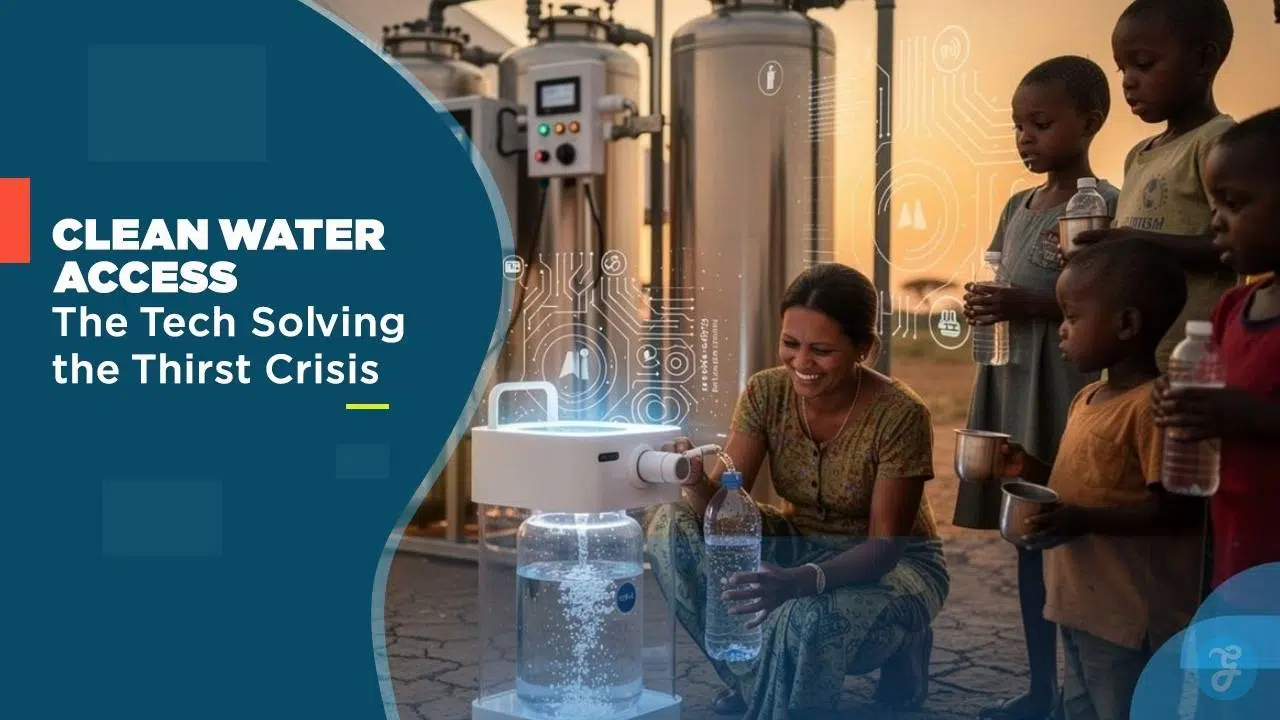
You wake up thirsty and head to the kitchen for a glass of water. You twist the tap, but nothing comes out. For millions of people, this isn’t a bad dream; it is a daily reality. Clean drinking water is getting harder to find in many places. One out of every ten people on Earth lacks access to safe water at home. That includes right here in the US, where over 2 million Americans live without running water.
But there is good news flowing through the pipes. Clean Water Technology is stepping up as a hero in this crisis. We are going to break down new solutions and exciting tech that bring clean water closer to everyone who needs it.
So, grab a cup of coffee, and let’s go through it together. I will show you exactly how technology is turning the tide on thirst.
Understanding the Global Water Crisis
We need to face a harsh fact before we look at the solutions. Water scarcity affects over two billion people each day. Children walk miles just to fill jugs. The United Nations calls clean water access a basic human right. Yet many folks worldwide still struggle to get safe hydration.
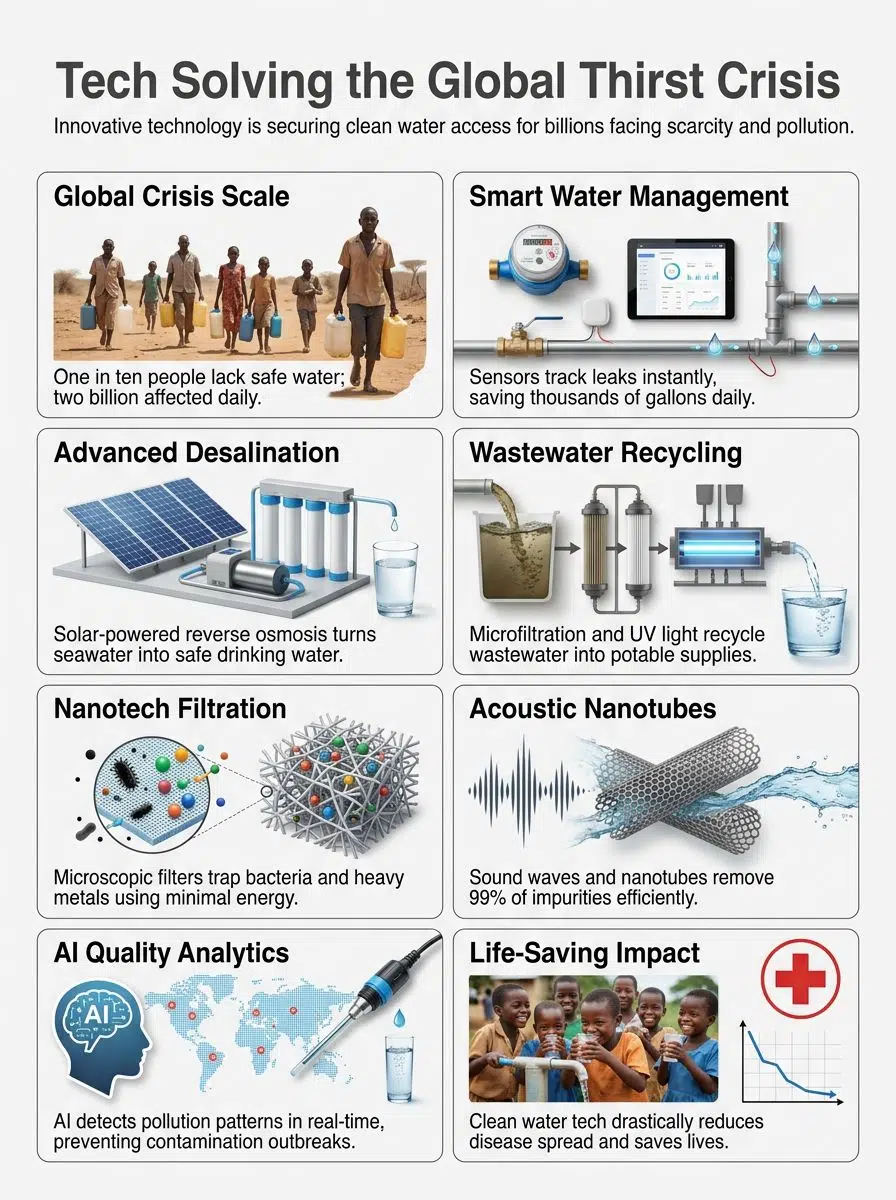
Dirty water brings sickness like cholera and diarrhea. These illnesses claim almost 485,000 lives every year. Pollution is a major culprit, too. Chemicals and trash pollute lakes and streams near crowded cities. This makes them unsafe for drinking or cooking. Climate change heats things up and sends bigger storms that can break old pipes.
The situation is hitting close to home in the United States. Recent studies show the Colorado River basin has lost nearly 28 million acre-feet of groundwater in the last two decades. That is roughly the same amount of water as a full Lake Mead.
In some villages, you might hear jokes about rain dancing being their only “water technology.” But behind those laughs sits real worry because every drop means life or loss.
Water is life’s matter and matrix, mother and medium. – Albert Szent-Györgyi
Role of Technology in Clean Water Access
Technology brings fresh hope to those needing clean drinking water. New tools and inventions are making safer water easier to find. Let’s look at the specific tools changing the game.
Smart Water Management Systems
Smart water management uses sensors, valves, and pumps to control water use. Cities around the world now fit pipes with smart meters. These tools track leaks quickly.
This tech saves thousands of gallons each day. For example, a company called ASTERRA uses satellite technology originally designed to find water on Mars. They now use it to spot underground leaks here on Earth.
In a recent project in New Mexico, their “LeakTracer” program found 82 hidden leaks. This saved the state millions of gallons of water that would have otherwise vanished into the dirt.
Another leader in this space is FIDO Tech. Their AI sensors listen to the acoustic flow inside pipes. In one case study, they helped a utility save over $200,000 a year by finding a single massive leak that traditional tools missed.
With easy-to-read dashboards, even small communities can check their daily usage. This tech gives people more power over access to clean drinking water.
Advanced Desalination Technologies
Seawater covers more than 70 percent of Earth. Most people cannot drink it, but desalination plants are changing that. These plants turn salty water into clean drinking water using smart machines.
Reverse osmosis uses special filters to push out salt and tiny bits. This creates safe, fresh water. The challenge has always been the high energy cost, but that is changing fast.
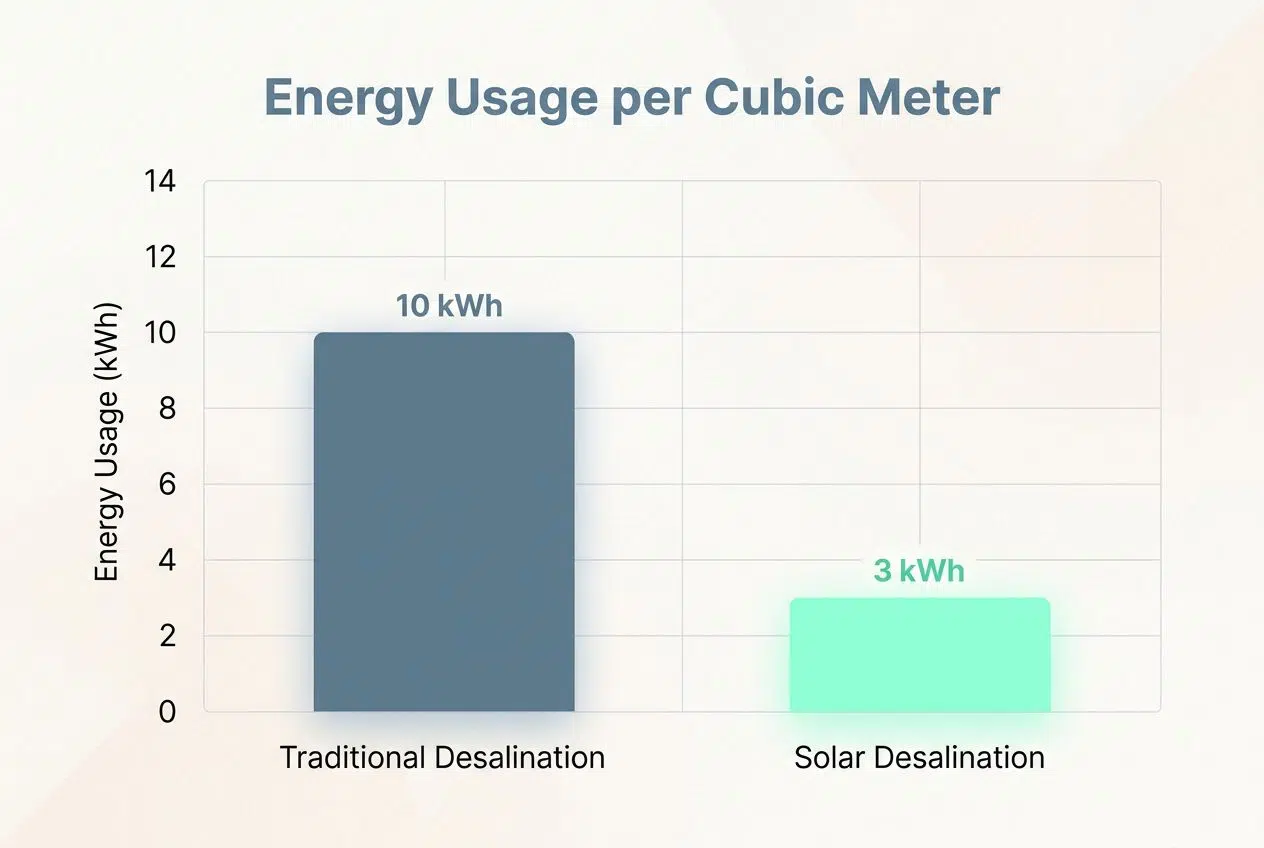
Newer tech like solar desalination cuts down on energy use. Elemental Water Makers, for instance, has developed a solar-powered system. It uses roughly 3 kWh of energy per cubic meter of water.
Compare that to traditional systems, which can use up to 10 kWh. That efficiency makes a huge difference for budget-strapped communities. Here is a quick look at how the costs stack up.
| Feature | Traditional Desalination | Solar Desalination (New Tech) |
|---|---|---|
| Energy Source | Fossil Fuels / Grid Power | Solar Panels (Renewable) |
| Energy Usage | 7-10 kWh per cubic meter | ~3 kWh per cubic meter |
| Ideal Location | Industrial Zones | Remote Islands & Coastal Villages |
Saudi Arabia has some of the world’s biggest desalination plants. Israel uses advanced solutions too. These systems help countries fight water scarcity as rivers dry up.
Wastewater Recycling Innovations
Dirty water can turn into clean drinking water using smart technology. In Singapore, the NEWater plants recycle over 190 million liters each day. Systems like these use microfiltration and ultraviolet light to remove germs.
Even toilet water is now safe enough for people to drink. The real champion of this technology is in the United States. The Orange County Groundwater Replenishment System (GWRS) is the world’s largest facility of its kind.
They recently finished a major expansion in 2023. The plant now produces 130 million gallons of clean water every single day. By January 2026, they hit a milestone of producing 500 billion gallons total.
This saves both money and precious groundwater supplies during droughts. It boosts sustainability in big cities where every drop counts.
Challenges in Clean Water Access
Clean water access faces many hurdles. The solutions are out there, but we have to understand the problems first. Keep reading to quench your curiosity.
Addressing Water Scarcity
Scarcity of water affects over 2 billion people each year. Cities grow fast while rivers shrink. Farms need fresh water too. Places like the Colorado River basin are facing serious shortages. Forecasts for 2026 predict a “Tier 1 Shortage” for the river. This means mandatory water cuts for states like Arizona and Nevada.
Many families carry heavy buckets for miles just to get a drink. Technology brings new hope here. Smart water management systems spot leaks quickly.
Solar-powered desalination plants turn salty ocean water into safe drinking water. This helps villages by the sea stay hydrated even when rain does not fall.
Tackling Contamination and Pollution
Dirty water harms both people and nature. Heavy metals, chemical waste, and bacteria often flow into rivers. Children get sick from these toxins.
The World Health Organization says over 2 million deaths each year are linked to unsafe water. A major concern in the US right now is PFAS, or “forever chemicals.”
The EPA issued strict new rules in April 2024 to limit these chemicals in drinking water. Smart sensors now spot pollution fast in real time. Filters with activated carbon or nanomaterials trap lead and pesticides.
In India, low-cost solar-powered filters clean village water for thousands daily. Simple fixes like protecting watersheds from trash also help a lot.
Overcoming Infrastructure Limitations
Old pipes and leaky tanks make getting clean water tough. Lack of electricity is another big barrier. In rural Africa, about 60 percent of people have to walk long distances for clean drinking water.
Many villages use solar-powered pumps now. These help bring groundwater up even when there is no grid power. Simple filters at the tap can stop bugs and dirt.
Some towns use mobile treatment units parked near communities. Companies like Watergen pull moisture straight from the air. Their “Genny” unit can make up to 30 liters of water a day just from humidity.
These smart solutions create access to water where traditional systems fail. Every drop counts in fighting water scarcity.
Emerging Clean Water Technologies
New ideas are changing how we clean and save water. These high-tech tricks might soon change life for many thirsty people.
Nanotechnology in Water Filtration
Tiny filters using nanotechnology trap dirt and bacteria. These tiny parts are only a few billionths of a meter in size. They clean water better than many old-style filters.
One exciting development comes from a Danish company called Aquaporin A/S. They use a technology called “biomimicry.” It uses proteins that mimic the way human kidneys filter water.
NASA was one of the first to test this tech in space. Now, you can find “Aquaporin Inside” membranes in home water purifiers. They are incredibly efficient at removing pollutants like PFAS.
People do not need lots of power or big machines to use these smart cleaning tools. This makes nanotechnology affordable for small towns. With cleaner water, whole communities thrive.
Photocatalytic Water Purification
Sunlight meets science in photocatalytic water purification. This method uses special materials like titanium dioxide. These materials react with light to break down harmful chemicals.
No harsh chemicals are needed. It just takes a bit of sunshine and smart tech. Photocatalytic systems help fight water contamination in areas with scarce resources.
They work well for smaller communities where big treatment plants are too costly. Next up is Acoustic Nanotube Technology, another leap forward in clean drinking water solutions.
Acoustic Nanotube Technology
Acoustic nanotube technology uses sound waves to clean water fast. High-frequency sound shakes dirt and bacteria loose. These nanotubes act like little tunnels.
Only clean molecules pass through. Pollutants get left behind and are removed easily. This method needs much less energy than older systems like boiling.
Tests show it can remove over 99 percent of harmful stuff in just a short time. Scientists see big promise for places with severe water scarcity.
Atmospheric Water Generators (AWG)
Imagine pulling water out of thin air. That is exactly what Atmospheric Water Generators do. They work like a dehumidifier but filter the water to be perfectly safe to drink.
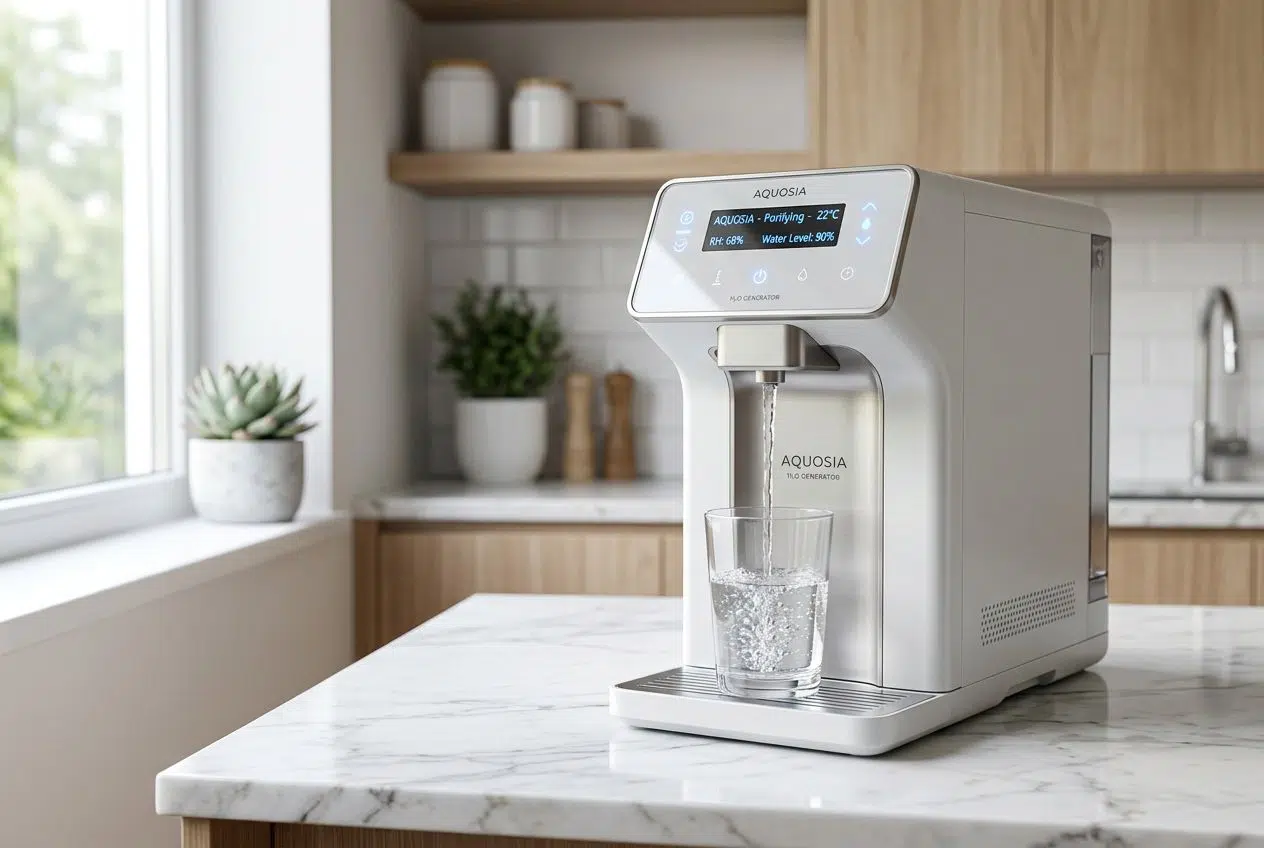
Prices have come down significantly in recent years. A home unit from Solaris now costs around $1,690. Another option, the Spout, sits on your countertop and requires no plumbing at all.
This technology is a lifesaver in humid regions with polluted groundwater. It gives families total independence from the grid.
Industry 4.0 and Water Treatment
Fresh tech blends smart tools with data. This makes water cleaner and safer. Want to see how the future keeps us hydrated? Keep reading!
Real-Time Monitoring with Smart Sensors
Smart sensors act like watchful lifeguards for water. They check water quality every second. If harmful bacteria sneak in, these smart tools sound the alarm.
Cities like Singapore and New York use smart monitoring. They keep their clean drinking water safe for millions every day. Sensors test things like pH balance and temperature.
With this tech on duty, leaks do not go unnoticed anymore. Losses can be cut by 25 percent or more. Farmers also rely on these sensors to manage irrigation better.
AI-Driven Water Quality Analytics
AI sorts through water data with lightning speed. It spots tiny changes fast. Sensors send updates every minute about pollution levels.
Companies like VODA.ai are taking this a step further. They use artificial intelligence to predict which pipes are going to break before it happens. They give utility companies a “Likelihood of Failure” score for every pipe in the city.
This allows crews to fix weak spots before a catastrophic leak occurs. By finding problems right away, communities can keep water safe for everyone. These advances make sustainable solutions possible.
Societal and Environmental Benefits
Clean water technology is changing lives. It supports communities and makes our planet healthier. Keep reading to discover how simple solutions have big impacts.
Reducing Water Scarcity
Technology gives new hope for water scarcity. Smart water management systems track leaks and waste. Advanced desalination turns salty seawater into safe drinking water.
Places such as Singapore use wastewater recycling to stretch every drop. They clean used water so it can be used again and again. Solar-powered purification units bring affordable options to remote villages.
Even small solutions matter. Rainwater harvesting tanks help families collect precious rainfall. These innovations protect people from thirst and help crops grow better.
Enhancing Public Health
Clean water saves lives. It stops the spread of diseases like cholera and typhoid. Places with good water solutions have fewer sick children.
In 2022, UNICEF said over two billion people still drank unsafe water. Tech changes this. Access to clean drinking water means better nutrition, too.
Kids miss less school when they do not get sick from dirty water. Simple purification tools at home keep families healthy. Healthy folks can work and care for their neighbors.
Promoting Sustainability
Boosting public health is closely to protecting water. Smart sensors and AI-driven analytics help cut waste. They save gallons each day.
Desalination plants using solar power lower carbon footprints. Villages in India adopt solar-powered purification systems. This slashes energy use by half compared to diesel pumps.
In California, wastewater recycling helps stretch every drop. These technological innovations support sustainability by reducing pollution.
Challenges in Implementing Water Technology
Money, rules, and old pipes all stand in the way. Getting clean water tech from idea to tap can feel like walking uphill both ways.
Financial and Infrastructure Barriers
High costs block clean water access for many. Building big pipes and treatment plants needs lots of money. For example, a single rural water project in Africa can cost more than $100,000.
Many poor communities cannot afford this price tag. Old pipes leak precious water before it gets to homes. In India, up to 40 percent of treated drinking water can vanish through cracks.
New technology could help fix these problems fast. But setting it up takes cash and workers. Bad power supply also stalls modern filtration systems since they rely on steady electricity.
Policy and Regulation Hurdles
Rules and laws can trip up water projects even more. Governments often make strict laws about clean drinking water. These rules change from place to place.
The new EPA PFAS regulations introduced in 2024 are a perfect example. While they are great for safety, they create a huge logistical challenge. Public water systems now have until 2029 to install expensive new filtration systems to comply.
Some new technologies face long waits for approval. Red tape keeps solutions on hold for years. Many small towns cannot keep up with updates in water policy.
As old rules lag behind quick tech changes, communities miss out. Better filtration technology could solve their thirst crisis right away.
The Bottom Line
Technology opens new ways to safe water. From smart sensors in cities to tiny filters using nanoscience, solutions keep growing. Desalination plants help turn saltwater into drinking water. Recycling systems now change dirty water back into something people can use again. These changes do not just save time; they protect lives.
Clean Water Access: The Tech Solving The Thirst Crisis is more than a headline. It means better health and fewer sicknesses across the globe. Each drop cleanly filtered is hope in action.





















