Ever sit in a class, listen to a lecture for an hour, and then realize you didn’t actually absorb a single word? It happens to the best of us. Teachers want every student to be excited and involved, but the old way of standing at the front and talking just doesn’t work for everyone. That’s where the “Flipped Classroom” comes in.
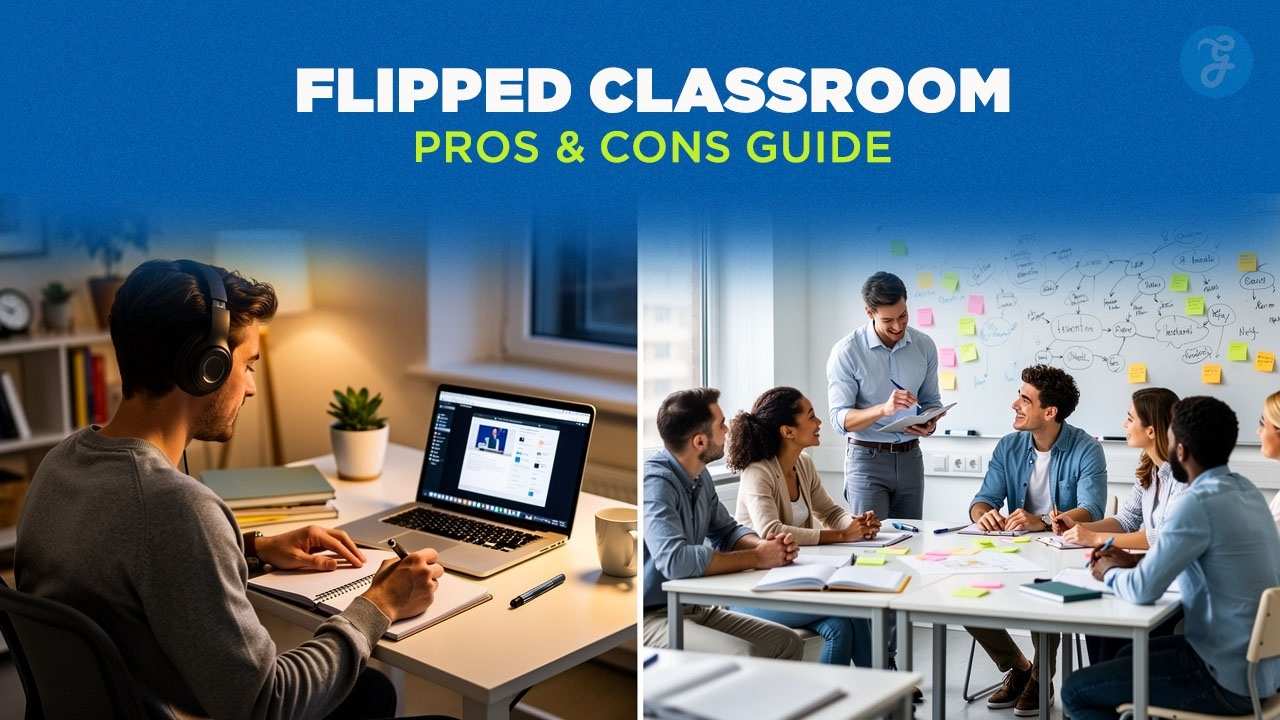
This model turns the traditional school day on its head. Instead of listening to a lecture at school and doing homework alone, students watch lessons at home and use class time to work on projects or solve hard problems with their teacher right there to help.
I’m going to walk you through exactly how this works, why schools from Detroit to Harvard are using it, and the real pros and cons you need to know.
What is the Flipped Classroom Model?
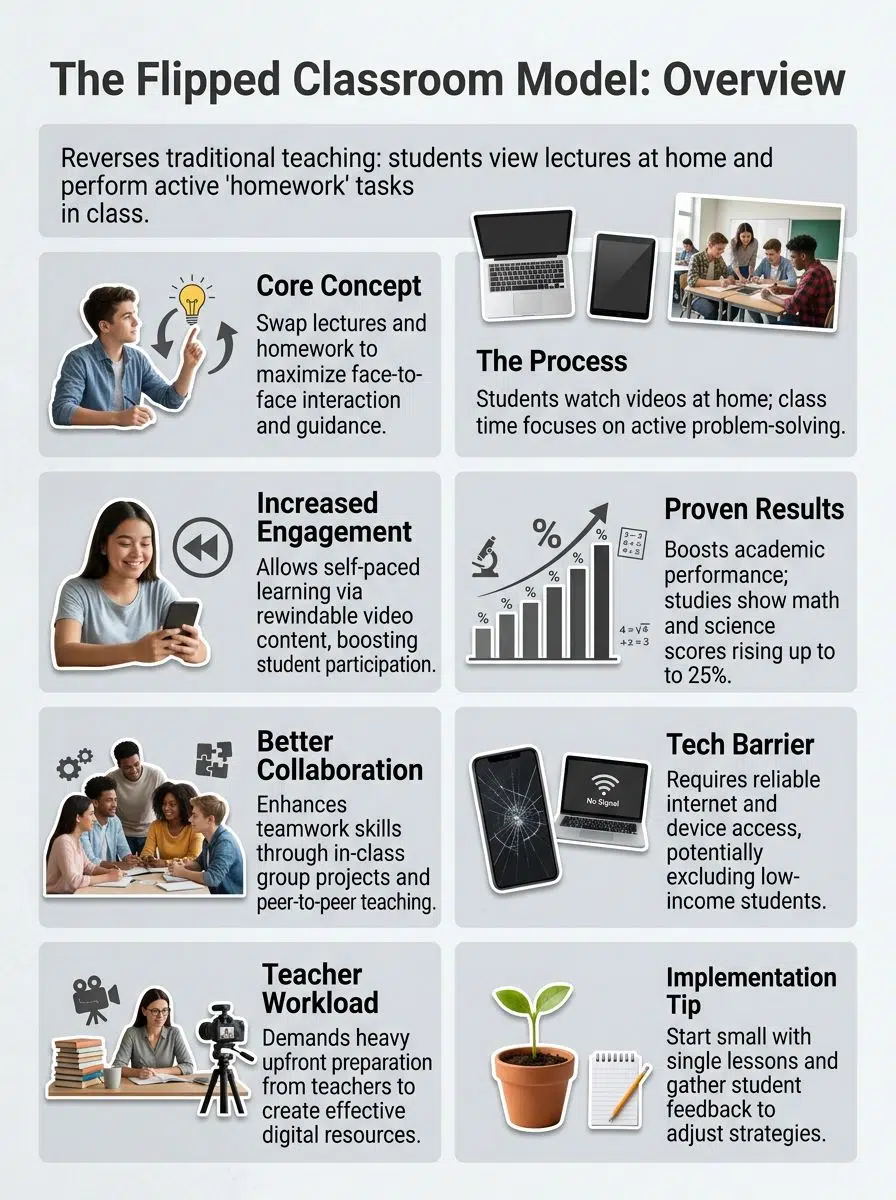
The core idea here is simple but powerful. You move the “easy” part of learning, getting the basic information, to homework time. Then, you move the “hard” part, applying that information to the classroom.
Think about Bloom’s Taxonomy, a framework teachers use to classify learning goals. In a standard class, the teacher spends all their time on the bottom levels: remembering and understanding. Students are then sent home to do the hard stuff, like analyzing and creating, all by themselves.
Flipping the classroom reverses this. Students get the basics at home through a video or reading. Then, they come to class ready to analyze, evaluate, and create with their peers.
Definition and concept
In this setup, the “lecture” is usually a recorded video that students watch before they ever set foot in the room. This frees up class time for active learning.
Instead of a teacher talking to students for 45 minutes, the teacher walks around the room. They answer specific questions, guide group projects, and help students who are stuck on a tough concept.
Tell me and I forget. Teach me and I remember. Involve me and I learn.
It changes the teacher’s role completely. They stop being the “Sage on the Stage” and become the “Guide on the Side.”
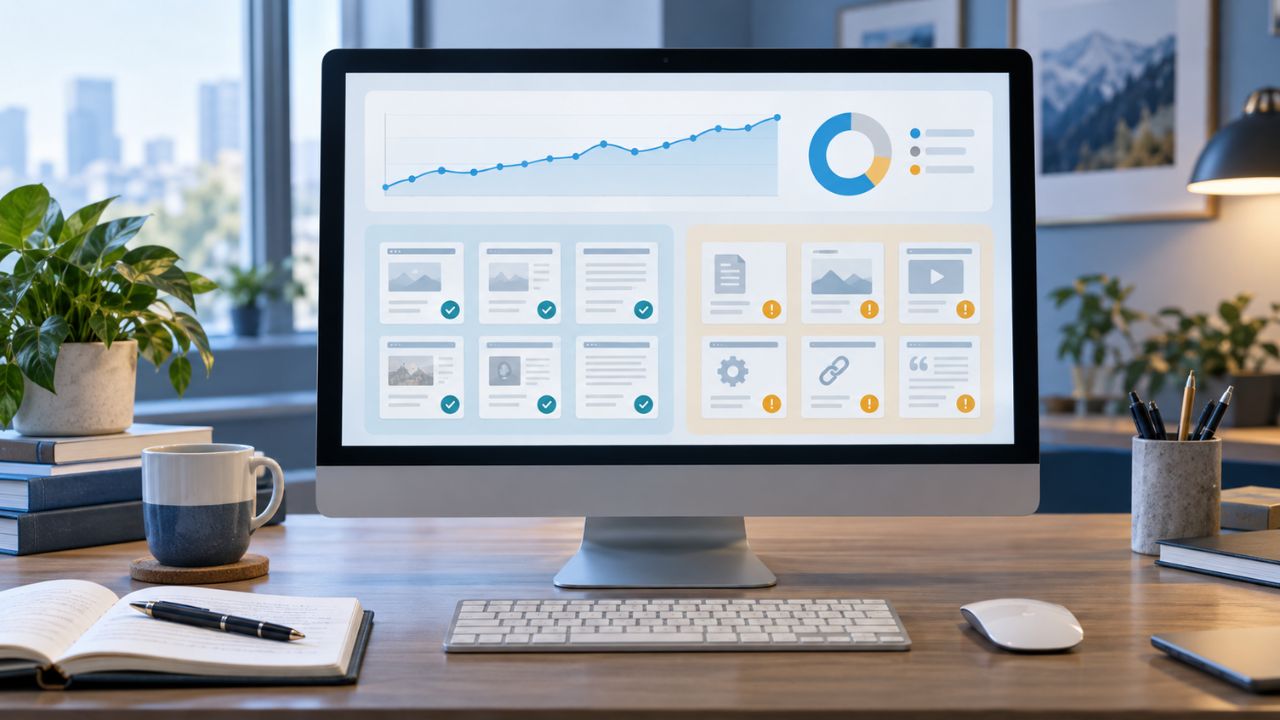
Technology plays a huge role here. Tools like Edpuzzle allow teachers to see if students actually watched the video and even embed questions to check for understanding before class starts.
How it differs from traditional teaching methods
In a traditional setup, if a student gets stuck on a homework problem at home, they usually just give up or copy from a friend. There is no one there to help.
In a flipped class, that “homework” problem is done in school. If a student gets stuck, they just raise their hand. The help is immediate.
This also allows students to control their own pace. If a student doesn’t understand a concept in a video, they can rewind and watch it five times. In a live lecture, if you zone out for two minutes, you miss that information forever.
History of the Flipped Classroom Model
This isn’t just a trendy buzzword; it started with two high school chemistry teachers in Colorado who were trying to solve a real problem.
In 2007, Jonathan Bergmann and Aaron Sams at Woodland Park High School began recording their lectures. They initially did it for students who missed class due to sports or illness.
They quickly realized something interesting. The students who were in class started watching the videos too. It helped them review for exams and clarify tough points.
Bergmann and Sams decided to assign the videos as homework for everyone. When students came to class, they didn’t need the lecture anymore. Suddenly, the entire class period was open for labs and chemical experiments.
They wrote a book called Flip Your Classroom, and the idea caught fire. Today, you see it everywhere from kindergarten classes to medical schools.
How the Flipped Classroom Works
Flipping a class requires a clear routine. It relies on three distinct phases: what happens before, during, and after class.
Pre-class activities
This is where the direct instruction happens. The goal is to give students the foundational knowledge they need so they don’t walk into class “cold.”
- Watch short videos: Teachers record 5-10-minute lessons using tools like Screencastify or Loom. Keeping it short is key to keeping attention.
- Interactive questions: Students don’t just watch passively. They often answer embedded questions in the video to prove they did the work.
- Reading assignments: It doesn’t always have to be video. A short article or chapter works too.
- Note-taking: Students jot down questions or confusing points to bring to the next day’s discussion.
In-class activities
This is the fun part. Since the lecture is done, the classroom becomes a hive of activity.
- Socratic Seminars: Students sit in a circle and debate the concepts they learned the night before.
- Think-Pair-Share: Students work on a problem alone, then pair up with a partner to discuss, and finally share with the group.
- Lab experiments: In science classes, flipping allows for significantly more time doing actual hands-on science.
- Station Rotation: Students move between different stations, one might be a small group with the teacher, another a hands-on project, and another a digital review game.
Post-class activities
The learning doesn’t stop when the bell rings. After class, students solidify what they learned.
- Review and extend: Students might re-watch a specific part of the video if they struggled during the in-class activity.
- Reflection: Teachers often ask for “exit tickets”, a quick note on what the student learned or is still confused about.
- Projects: Long-term projects continue, utilizing the skills practiced in class.
Pros of the Flipped Classroom Model
When this model works, the results can be incredible. It solves many of the biggest complaints students have about school.
Encourages active learning
Active learning is when students do something rather than just listen. A 2014 study published in the Proceedings of the National Academy of Sciences (PNAS) found that active learning increases student performance in science, engineering, and math.
The study showed that students in traditional lecture classes were 1.5 times more likely to fail than those in active learning classes. Flipping the classroom forces active learning to happen every single day.
Promotes student engagement
Let’s look at a real-world example. Clintondale High School in Michigan was one of the first schools to flip completely. The results were staggering.
Before flipping, more than 50% of freshmen failed English. After flipping, the failure rate dropped to 19%. In math, failure rates went from 44% to 13%. When students are actually doing the work in class, they are more engaged and less likely to fail.
Personalized learning experiences
Every student learns at a different speed. In a lecture, the teacher goes at one pace. If you’re fast, you’re bored. If you’re slow, you’re lost.
With video lessons, students control the playback. One student might watch a 10-minute video in 10 minutes. Another might need 20 minutes to pause and take notes. Both students arrive at class ready to go.
More effective use of class time
Teachers often wish they could clone themselves. In a flipped class, they almost can. While the “digital teacher” delivers the lecture at home, the “real teacher” moves around the room.
This allows for one-on-one tutoring with the kids who need it most, while the advanced students can move ahead on their own.
Enhances collaboration and teamwork
Because the teacher isn’t talking the whole time, students talk to each other. They solve problems in groups. They explain concepts to their peers.
This builds soft skills like communication and teamwork, which are just as important as the actual subject matter.
Cons of the Flipped Classroom Model
Despite the benefits, this model isn’t perfect. There are real barriers that can make it difficult to implement effectively.
Increased screen time for students
Parents are often worried about how much time their kids spend on devices. Flipping the classroom inevitably adds to this.
If a student has six classes and every teacher assigns a 15-minute video, that is 90 minutes of screen time just for homework. Teachers need to coordinate to make sure they aren’t overloading students.
Requires significant preparation by instructors
For teachers, the first year of flipping is hard work. You can’t just walk in and talk; you have to record, edit, and upload videos for every single lesson.
Creating a high-quality video lesson takes time. Teachers have to learn new software and often spend their evenings recording. However, once the library of videos is built, it can save time in future years.
Not all students may complete pre-class work
This is the biggest headache for teachers. If a student doesn’t watch the video, they can’t participate in the activity. They sit there lost.
Teachers have to build in safeguards, like a quick quiz at the start of class or a “re-watch station” in the corner for students who came unprepared.
Challenges with access to technology
This is a major equity issue known as the “Homework Gap.” According to the Pew Research Center, about 17% of teens say they are often or sometimes unable to complete homework because they lack reliable computer or internet access.
For lower-income households earning less than $30,000 a year, that number jumps to 24%. If a school demands high-speed internet for homework, they risk leaving a quarter of its students behind.
Effectiveness of the Flipped Classroom Model
Does it actually work? The data suggests yes, but it comes with a catch regarding how students feel about it.
Academic performance improvement
We mentioned the Clintondale High School success story, but it’s not just one school. A 2021 meta-analysis of 20 experimental studies found an overall positive effect size of 0.66 for flipped classrooms compared to traditional ones.
In plain English, that means the average student in a flipped class performs significantly better than the average student in a lecture class.
Student satisfaction and engagement
Here is the interesting part. A 2019 study from Harvard University found that while students learned more in active learning classrooms, they actually felt like they learned less.
Why? Because active learning is hard! Listening to a polished lecture feels easy, like watching a movie. Solving problems makes your brain hurt. Teachers have to explain to students that this “brain hurt” is actually the feeling of learning happening.
Examples of Flipped Classroom Implementation
You can see this model in action across all levels of education.
Higher education settings
Harvey Mudd College flipped its introductory chemistry course. They found that it allowed professors to cover more material in the same amount of time because they didn’t have to pause for basic definitions during class.
At Harvard University, physics professor Eric Mazur is a famous advocate for “Peer Instruction,” a form of flipped learning where students answer questions and convince their neighbors of the correct answer during class.
K-12 classrooms
At Mepham High School in New York, teachers use the flipped model to help students who are busy with extracurriculars. If a student has to miss class for a game, the lesson is already online.
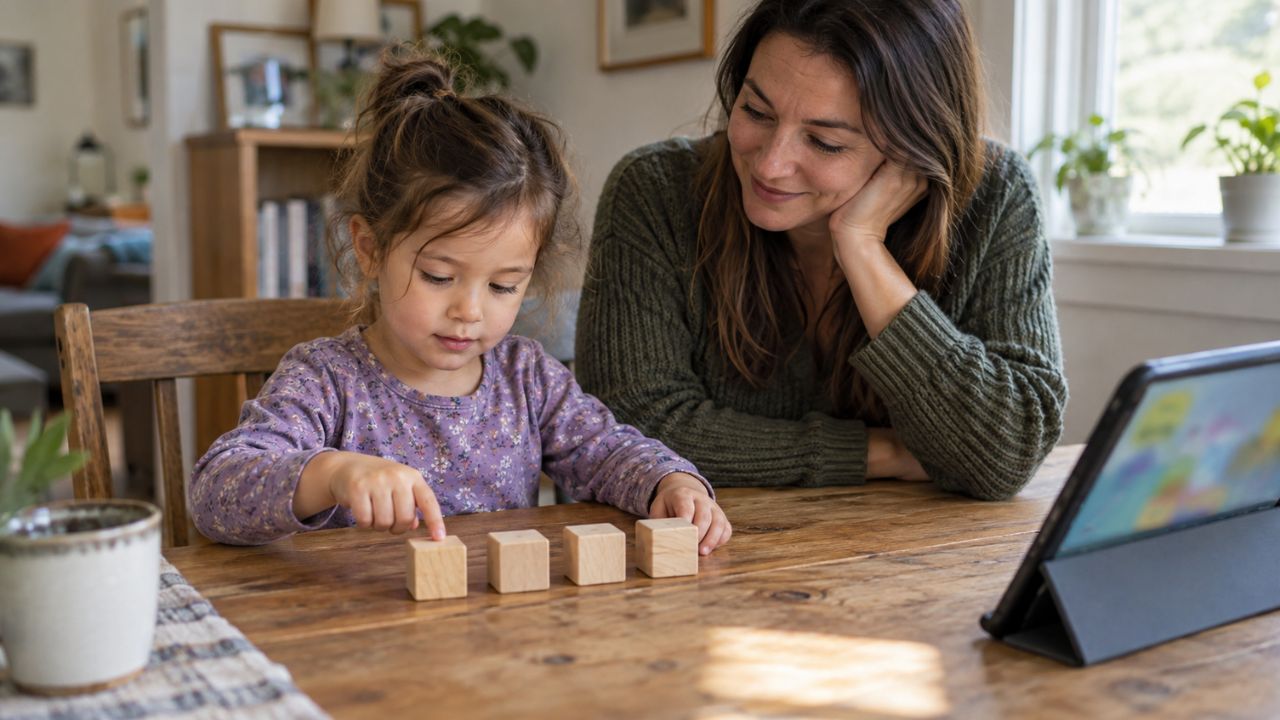
Elementary teachers use it too, often for math. Parents love it because they can watch the video with their child and actually understand “New Math” well enough to help with homework.
Professional training programs
Companies are hopping on the bandwagon. Instead of flying employees to a conference room for a three-day seminar, they assign video modules to be watched beforehand.
Then, the time together is spent on role-playing sales calls or troubleshooting technical equipment. It saves money and makes the training far more practical.
Combining Flipped Classrooms with Other Approaches
The best teachers don’t just use one trick. They mix and match methods.
Blended learning strategies
Flipped learning is technically a type of Blended Learning. This just means mixing digital and face-to-face instruction.
A popular method here is the “Station Rotation” model. In a 90-minute block, students might spend 30 minutes on software like Khan Academy, 30 minutes in a seminar with the teacher, and 30 minutes on a group project.
Flipped mastery model
This is the advanced version. In a “Flipped Mastery” class, students don’t all move to Chapter 2 on Tuesday just because it’s Tuesday.
Students work through the videos at their own pace. They take a quiz at the end of a unit. If they get a B or better, they move on. If not, they re-watch and re-take. This ensures that no student moves forward with a gap in their knowledge.
Tips for Implementing a Flipped Classroom
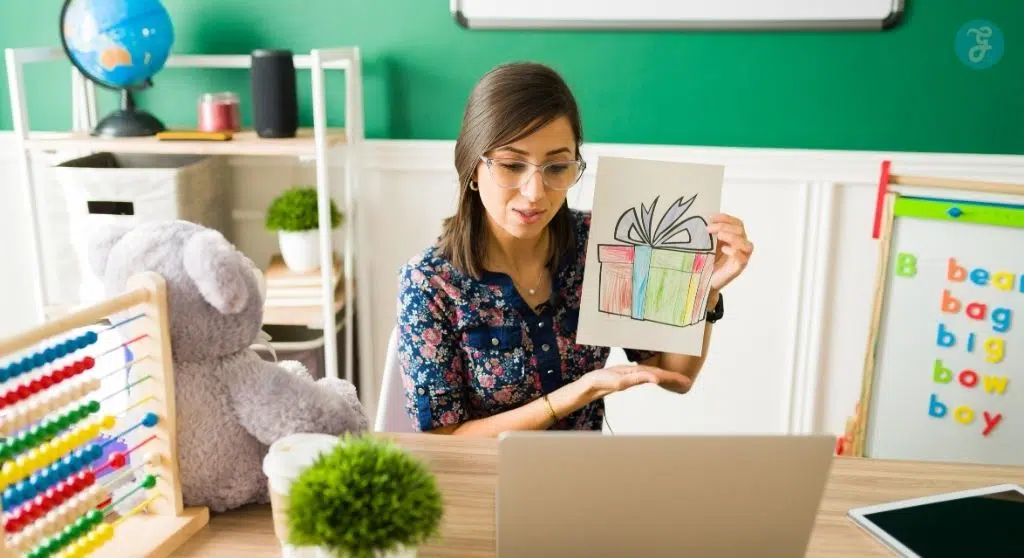
If you are a teacher or a parent helping at a school, try this. Here is how to do it right.
Start with small changes
Don’t try to record 180 videos in one summer. Start by flipping just one unit, or even just one lesson a week. See how the students react. Iron out the technical glitches before you commit to the whole year.
Use accessible and engaging resources
You don’t have to make everything yourself. Crash Course, Khan Academy, and TED-Ed have thousands of high-quality videos ready to go.
If you do make your own, keep them short. The general rule is 1 to 1.5 minutes per grade level. So, a 5th grader should never have a video longer than 5-7 minutes.
Encourage student feedback
Ask the students what is working. Use a simple Google Form to survey them every few weeks. Maybe the videos are too quiet, or the in-class activities are too chaotic. Students will tell you the truth, and fixing these small issues builds their trust in the system.
Wrapping Up
Active learning changes the energy of a room. The “Flipped Classroom” model uses technology to shift the focus from the teacher to the student, making class time about solving problems rather than just listening.
While there are challenges like the digital divide and the initial workload for teachers, the benefits often outweigh them. With tools like Edpuzzle and models like Flipped Mastery, education becomes more personal and effective.
Whether you are in a K-12 school or a professional training program, this approach puts the ownership of learning right where it belongs: in the hands of the learner.