If you want the straight answer to how many chapters in Monster Hunter Wilds, it has 6 chapters. The part that trips most people up is that the game is basically split into two “story phases” :
- Chapters 1–3 are the main campaign that most players treat as “beating the story.”
- Chapters 4–6 are the post-credits story progression that leans into High Rank, stronger hunts, and Hunter Rank gates.
So when you ask me, “How many chapters are there?” the answer is 6. But when you ask, “How long is the story?” it depends on whether you stop at the credits or push through all six chapters.
Quick Chapter Breakdown You Can Understand At A Glance
Here’s how I recommend you think about the chapter structure, because it matches how the pacing actually feels when you play.
Chapters 1–3: The Core Campaign (Low Rank Story Arc)
This is the guided “introduction journey” through the Forbidden Lands. You unlock the basics, learn the systems, meet the key expedition characters, and steadily move from biome to biome as the narrative builds toward a major turning point.
This is also the fastest-paced portion of the game, because:
- Objectives are clear
- Hunts are more linear
- Gear needs are lighter
- Progression is mostly story-driven
Most players see the credits around the end of Chapter 3.
Chapters 4–6: The Post-Credits Story (High Rank Arc)
This is where the game stops feeling like a guided campaign and starts feeling like Monster Hunter “for real.”
You will still get story missions, but you are also expected to:
- Climb Hunter Rank
- Do side missions and optional quests
- Upgrade gear more seriously
- Handle stronger monsters and harder multi-step progression
If Chapters 1–3 feel like a fast-paced tour, Chapters 4–6 feel like building a long-term hunting career.
How Long Is Monster Hunter Wilds Story? The Time Ranges That Actually Matter
I’m going to give you the time ranges in a way that helps you understand without getting confused.
How Long To Reach Credits (Mostly Chapters 1–3)
If you’re focused and reasonably comfortable with hunting games, you can reach the credits in roughly 10–15 hours.
If you’re newer, experimenting with weapons, or stopping to craft and upgrade often, it commonly lands in the mid-teens up to around 20 hours.
This is the “main story” length that most people mean when they ask about story time.
How Long To Finish All Six Chapters (Full Story Quest Line)
To see every main story quest across Chapters 1–6, you’re typically looking at about 30–40 hours.
Why the jump?
Because High Rank chapters slow you down with:
- Tougher fights
- More crafting
- Hunter Rank requirements
- Longer stretches where the game expects you to “prepare” instead of sprinting story-to-story
How Long Until The First True Endgame Point
Even after you clear the final main story chapter, the real Monster Hunter loop continues. Most players then spend dozens (or hundreds) of hours on:
- Farming parts
- Optimizing builds
- Upgrading weapons and armor
- Tackling harder variants and event content
So if you’re writing a guide, the clean message is:
Credits are the midpoint for many players, not the finish line.
What Each Chapter Actually Feels Like (No Spoiler Dump, Just The Useful Stuff)
I’m going to keep this focused on “what you do and what changes,” because that’s what readers care about most.
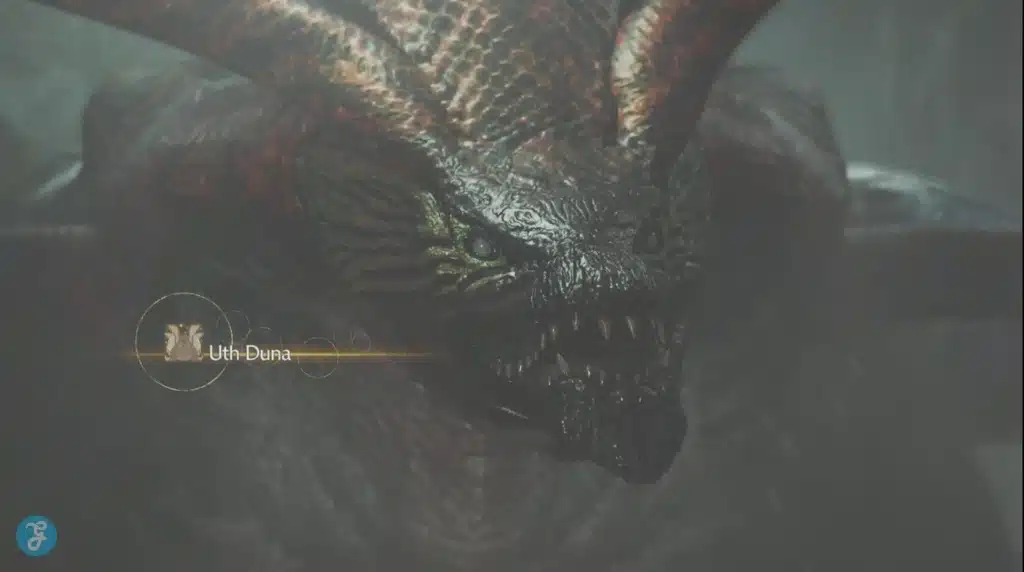
Chapter 1: Learning The Forbidden Lands
This is where Wilds establishes its identity. You’re introduced to the Forbidden Lands as a hostile place with multiple biomes, extreme weather, and an expedition structure built around camps and travel.
What you’re really doing in Chapter 1:
- Learning the core hunt loop
- Understanding region navigation
- Getting comfortable with early monsters
- Stepping into the first big biome flow (Plains into Forest)
If you’re new, Chapter 1 is where your time can stretch, because you’re:
- Learning your weapon
- Learning crafting basics
- Learning how positioning and recovery work
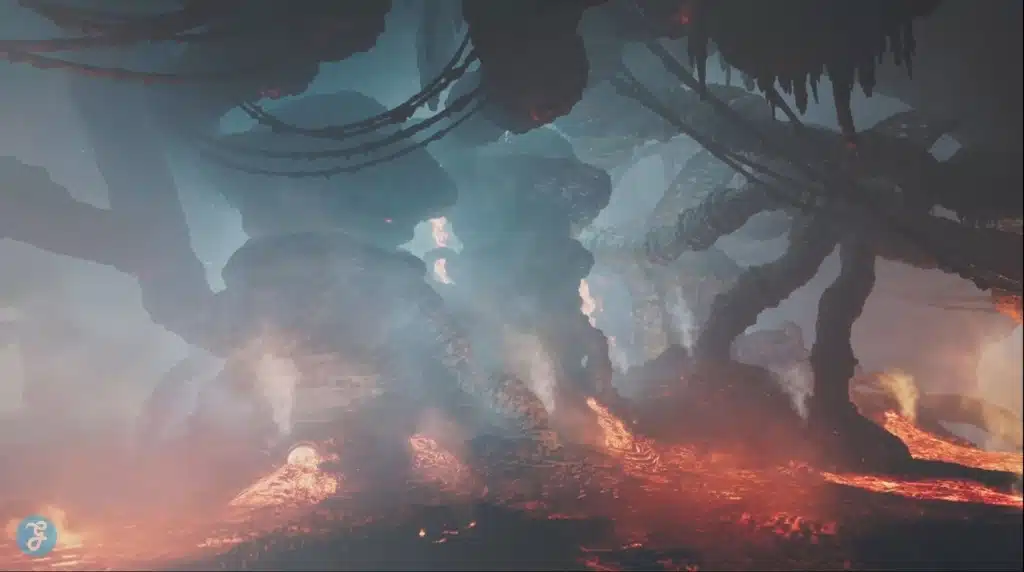
Chapter 2: The Game Starts Opening Up
Chapter 2 is where the game starts, expecting you to play more independently.
You’ll notice:
- Hunts feel less “tutorial” and more like proper assignments
- The world starts feeling larger
- Your gear begins to matter more
This is also the point where many players begin settling into:
- One main weapon
- One backup weapon strategy
- A repeatable upgrade habit (hunt → craft → hunt)
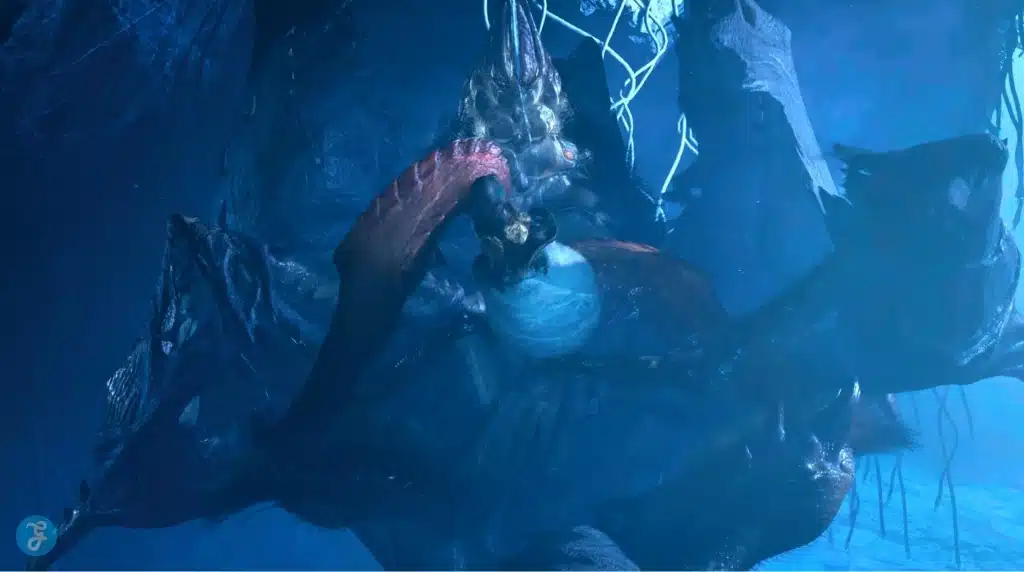
Chapter 3: The First Big Payoff (Credits Territory)
Chapter 3 is where the Low Rank story arc reaches its major milestone. This is the chapter that typically ends with credits for most players.
What makes Chapter 3 a big deal for pacing:
- Monster difficulty spikes
- You’re expected to use your systems properly (items, positioning, camps, prep)
- The story lands a “this is bigger than you thought” moment
If your reader wants a single sentence: Chapter 3 is the end of the introductory campaign, not the end of the full story.
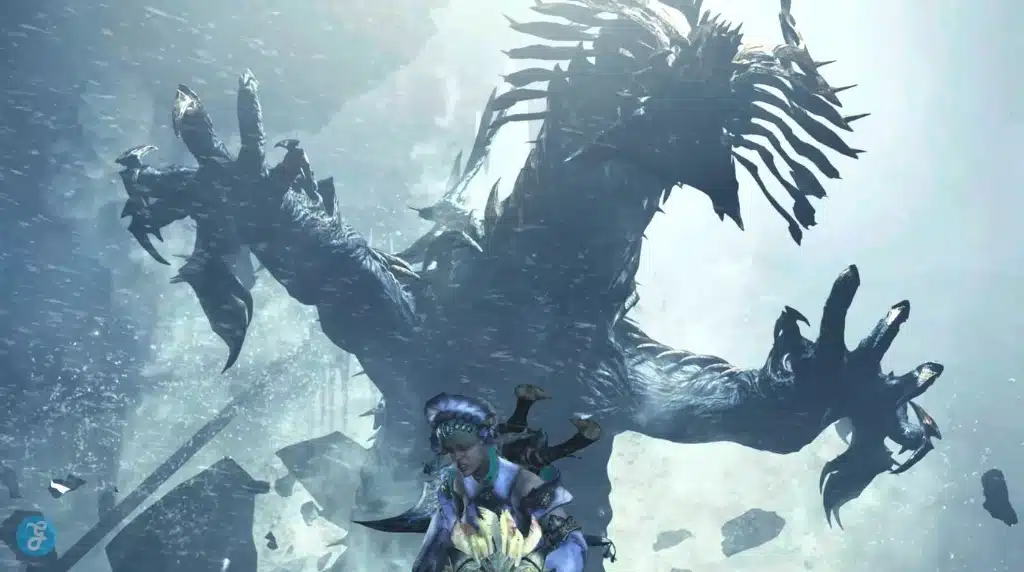
Chapter 4: High Rank Begins (The Real Grind Starts)
Once High Rank is in play, Wilds changes tone.
The game now wants you to:
- Build stronger sets more often
- Farm-specific monsters for upgrades
- Pay attention to skills and resistances
- Take side content seriously because it feeds your progress
This is where people start asking, “Why am I not progressing?” And the answer is usually: You need better gear and a higher Hunter Rank.
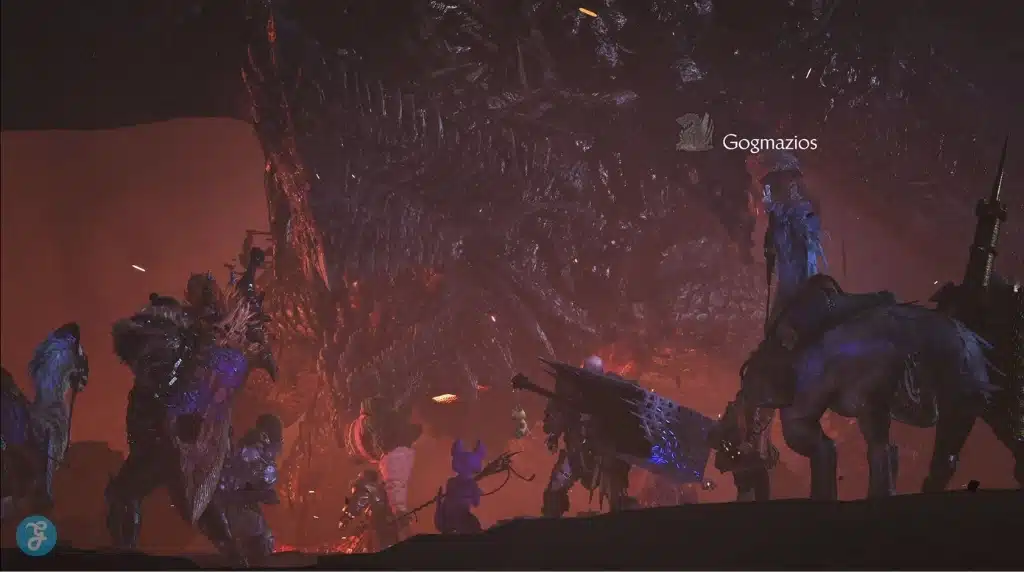
Chapter 5: Tougher Hunts, Bigger Preparation
Chapter 5 pushes you further into High Rank-style pacing:
- Tougher monsters
- More punishing mistakes
- Longer fights if your gear is behind
This is the chapter where “I’ll brute force it” starts failing more often. If you’re writing advice for readers, this is where you should tell them: When you hit a wall, it’s usually a gear wall, not a skill wall. Yes, skill matters, but proper upgrades matter just as much.
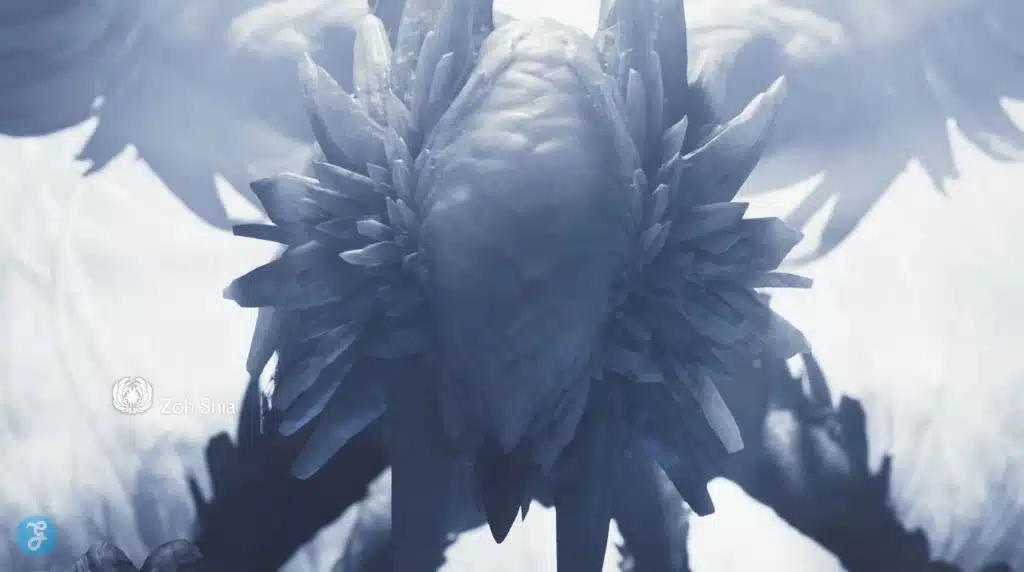
Chapter 6: The Long Chapter (HR Gates And Extra Story Missions)
Chapter 6 is the one that often feels “weirdly long,” and I’ll explain why in plain terms.
Chapter 6 includes:
- Major story missions
- A strong push toward doing side questlines
- Hunter Rank gating, meaning you can be forced to spend time hunting and raising HR before the next story mission opens
There’s also an important detail for readers: some story missions in Chapter 6 were added through post-launch content, and at least one key mission requires a high Hunter Rank milestone (HR 50).
So Chapter 6 is not “long” because it has endless cutscenes. It’s long because it expects you to live in the hunting loop.
Why Your Story Length Can Be Dramatically Different From Someone Else’s
This is the part most guides skip, but it’s exactly what your reader wants.
You’ll Finish Faster If You
- Stick to one weapon and one playstyle
- Focus only on the main assignments
- Avoid farming unless you absolutely must
- Use camps and fast travel efficiently
- Don’t get stuck on a monster wall
You’ll Take Longer If You
- swap weapons often (totally normal)
- Craft multiple armor sets per chapter
- explore heavily and gather constantly
- Do side missions as they appear
- Hit High Rank gates and need to raise HR
- play co-op with friends who like doing “everything.”
Neither approach is wrong. One is “story sprint,” the other is “Monster Hunter lifestyle.”
My Practical Advice To You If You’re Stuck In Chapters 4–6
If you’re writing a guide, this section adds real value.
1) Treat Side Missions As Progress Tools
In High Rank chapters, side content is not filler. It often:
- helps you raise HR faster
- unlocks useful rewards
- improves your long-term efficiency (materials, buddy support, and more)
2) Upgrade One Reliable Set Before Chasing Multiple Builds
A common mistake is trying to build three different “cool” sets too early.
If you’re stuck, your fastest fix is usually:
- one upgraded armor set
- one upgraded weapon line
- a focused resistance plan for the monster you’re struggling with
3) Use Camps Like A Strategy System
Wilds is built around camps and movement.
If you’re spending too much time running back to fights, you’re slowing down your progress and burning supplies.
Efficient camps shorten hunts, reduce mistakes, and speed up chapter progress.
In The End
Monster Hunter Wilds has a chapter-based story that most players finish in two stages: reaching the credits, then pushing through the longer High Rank progression that follows. If you only want the campaign, you can wrap it up fairly quickly, but if you want every chapter and the full story arc, expect your playtime to climb with tougher hunts and Hunter Rank requirements.