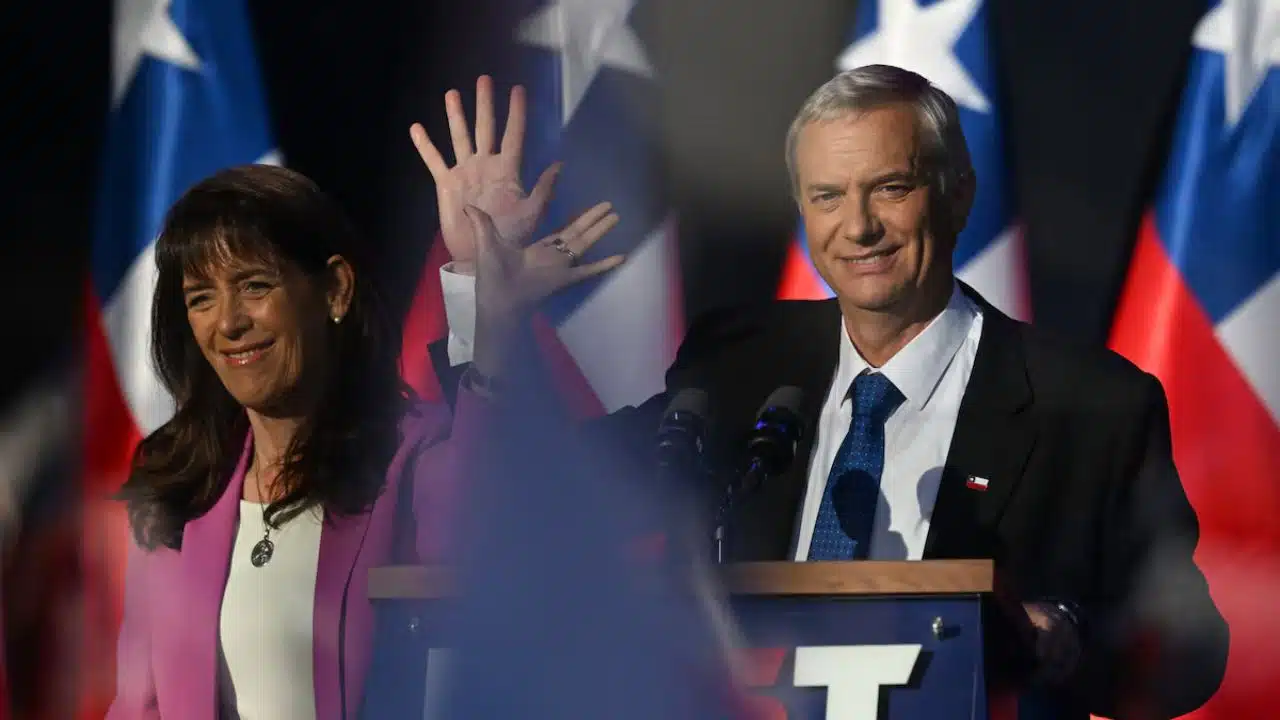
Chile has elected ultra-conservative José Antonio Kast as its next president, marking a sharp rightward turn in one of Latin America’s most stable democracies. The victory, confirmed in the runoff election on December 14, 2025, signals a profound shift in national sentiment and political direction, as voters rejected the center-left coalition and turned to Kast’s hardline platform focused on security, immigration, and economic austerity.
The Election Results
José Antonio Kast, a 59-year-old lawyer and founder of the Republican Party, won the runoff decisively with approximately 58% of the vote, defeating Jeannette Jara, a former Labour Minister and member of the Communist Party. The election marked Kast’s third attempt at the presidency, following his defeats in 2017 and 2021, and is widely interpreted as a repudiation of the policies enacted by outgoing President Gabriel Boric. Boric, who came to power as a young progressive leader after the massive social protests of 2019, saw his popularity plummet over the course of his term due to rising crime rates, economic stagnation, and dissatisfaction with his government’s handling of immigration.
Kast’s Political Profile
Kast is known for his ultra-conservative views, which include admiration for the legacy of Augusto Pinochet, the former military dictator whose regime ruled Chile from 1973 to 1990. He is the son of a Nazi party member and has built his campaign around a platform of law and order, traditional values, and economic liberalism. Kast’s rise reflects broader trends in Latin America, where voters in several countries have turned to right-wing leaders amid growing concerns over crime, migration, and economic instability.
Campaign Promises and Policy Agenda
Kast’s campaign was defined by three main pillars: security, immigration, and fiscal discipline. He promised to tackle rising crime rates by empowering law enforcement and increasing penalties for criminal offenses, drawing inspiration from U.S. President Donald Trump’s approach to crime and immigration. On immigration, Kast pledged to expel hundreds of thousands of undocumented migrants and close the northern border to prevent further influxes, proposing to establish a new police agency modeled after U.S. Immigration and Customs Enforcement (ICE) to swiftly deport those living in the country illegally.
Economically, Kast advocated for significant spending cuts—up to $6 billion over 18 months—without eliminating core public benefits, and promised historic tax reductions to stimulate growth and attract investment. His platform also included a pledge to restart stalled infrastructure projects and attract foreign capital, particularly in the vital copper mining sector.
Public Sentiment and Voter Concerns
The shift to the right in Chile reflects deep-seated public dissatisfaction with the status quo. Voters cited rising crime rates, a perceived loss of national identity due to increased immigration, and economic stagnation as their primary concerns. The 2022 rejection of a proposed progressive constitution, which was backed by Boric’s administration, signaled a broader disillusionment with the left’s transformative ambitions and a desire for more pragmatic, conservative leadership.
Chile’s economy, while projected to grow at about 2.3% in 2025, faces challenges such as a public debt level approaching 30% of GDP and persistent unemployment, currently at 8.6%. These factors contributed to the electorate’s appetite for change and bolstered support for Kast’s promises of fiscal discipline and economic revitalization.
Immigration and Security Policies
Kast’s proposed immigration policies are among the most restrictive in Chile’s recent history. He intends to use “all administrative, legislative, judicial, diplomatic and technological tools” to combat clandestine migration, hoping that for every undocumented migrant the state forcibly removes, four or five more will leave voluntarily due to the harsher environment. His platform includes expedited deportation procedures, stricter border controls, and limited regularization programs for undocumented residents.
On security, Kast has pledged to grant enhanced powers to the military and police to combat organized crime, drawing criticism from human rights groups who fear a return to the repressive tactics of the Pinochet era. His proposals are expected to face resistance in a divided Congress, where right-wing parties made gains but the Senate remains evenly balanced between left and right factions.
Economic Outlook and Fiscal Challenges
Kast’s economic agenda centers on austerity and tax cuts, with promises to reduce public expenditures by $6 billion while maintaining essential social programs. His platform includes reforms to the pension system and efforts to attract foreign investment, particularly in copper mining, which remains the backbone of Chile’s economy. However, analysts caution that the practical implementation of these measures may be complicated by the need for legislative approval and the realities of Chile’s fiscal constraints.
Regional Implications
Chile’s turn to the right is part of a broader trend in Latin America, where several countries—including Argentina and Ecuador—have recently elected right-wing leaders in response to similar voter concerns over crime, migration, and economic uncertainty. The region is witnessing a resurgence of populist and conservative movements, often fueled by social media and anti-establishment sentiment.
Challenges Ahead
Kast’s victory comes with significant challenges. He will need to navigate a divided Congress, manage the expectations of his base, and address the complex realities of Chile’s economic and social landscape. Human rights organizations and opposition parties have already voiced concerns about the potential for increased repression and the erosion of democratic norms under his leadership. Moreover, his hardline immigration and security policies may provoke social unrest and diplomatic tensions, particularly with neighboring countries that are sources of migration to Chile.
Final Words
Chile’s election of José Antonio Kast marks a pivotal moment in the nation’s democratic journey. The sharp rightward turn reflects deep public dissatisfaction with recent governance and a desire for change on issues of security, immigration, and the economy. As Kast prepares to take office, the world will be watching closely to see how he navigates these challenges and whether his administration can deliver on its ambitious promises while preserving Chile’s democratic institutions and social fabric.