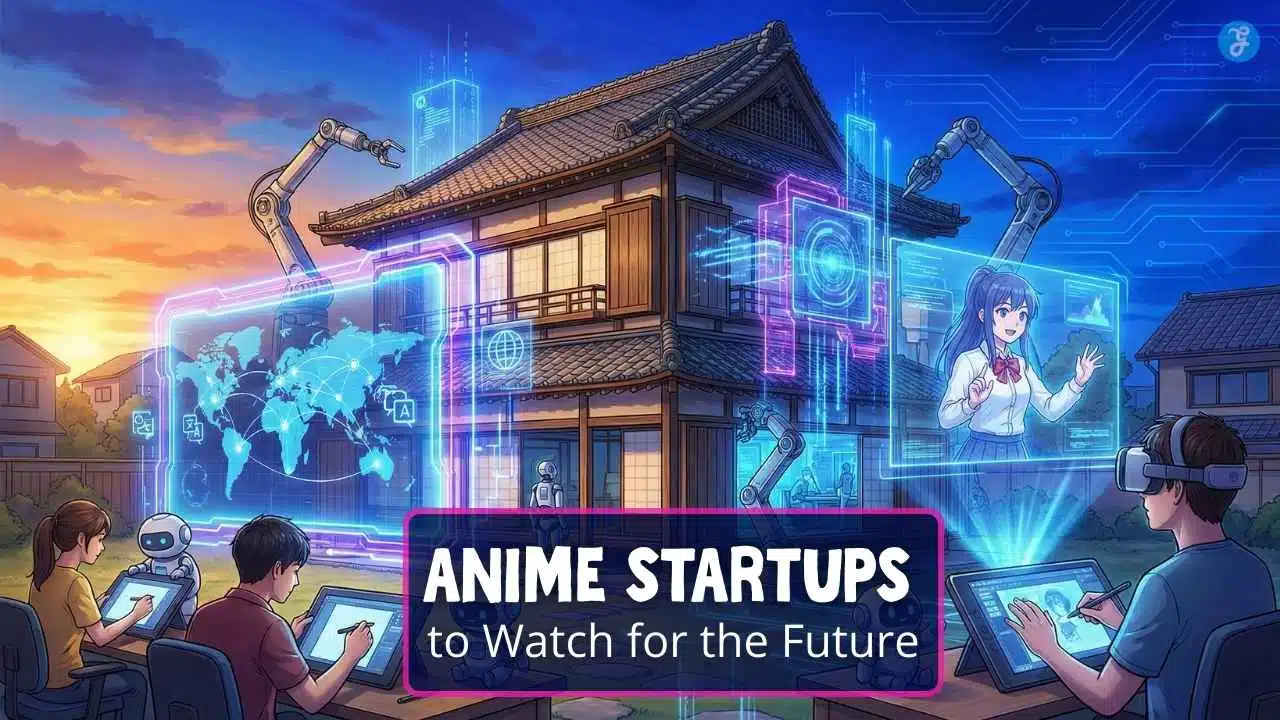
The anime industry is currently navigating a paradoxical era: global demand is at an all-time high, yet the traditional production models are cracking under the pressure. This is where a new wave of Anime Startups is stepping in. These companies are not just traditional studios; they are technology firms leveraging Generative AI, Web3, and the Creator Economy to solve the industry’s most critical bottlenecks—labor shortages, localization delays, and fan engagement.
In the future, the studios that survive will likely be the ones that partner with or acquire these innovators. Below, we explore 10 anime startups that are redefining how we create, translate, and consume Japanese pop culture.
Key Takeaways: The Future of Anime
-
Tech is the Lifeline: Startups are using AI to solve the industry’s fatal labor shortage, not just to cut costs.
-
Speed Equals Profit: New localization tools aim to eliminate the months-long gap between Japanese and global releases.
-
Fans Want Control: The next generation of platforms focuses on interactive, user-generated, and participatory content.
-
Hybrid Studios Prevail: The most successful companies in 2026 will merge traditional artistry with aggressive tech infrastructure.
-
Democratized Creation: AI tools are lowering the barrier to entry, allowing solo creators to produce studio-quality manga and anime.
The Catalyst: Why the Industry Needs Anime Startups Now
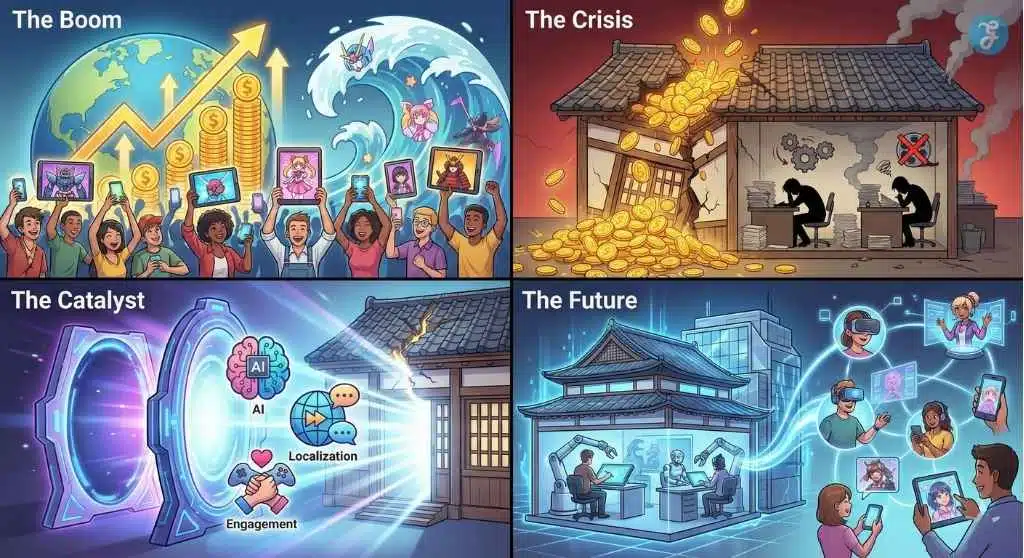
To understand why these anime startups are gaining so much traction, one must first look at the “Profitless Boom” currently gripping the market. The global demand for anime has never been higher, yet the traditional production studios are facing an existential crisis. While merchandise and licensing revenues soar, the studios actually making the content are often operating on razor-thin margins, plagued by a severe labor shortage and outdated workflows.
This economic paradox has created a massive opening for disruption. The industry can no longer rely solely on the “sweat equity” of underpaid animators. Instead, it is turning to technology.
The surge of anime startups is primarily driven by three critical bottlenecks that legacy companies have failed to fix:
-
The Localization Lag: Global fans want content simultaneously with Japan. Traditional translation methods are too slow and expensive to keep up with the volume of production, leaving millions of potential dollars on the table (or lost to piracy).
-
The Labor Crunch: Japan’s shrinking workforce means there simply aren’t enough skilled animators to meet Netflix and Crunchyroll’s demand. Startups offering AI-assisted production are not just a “nice-to-have”—they are becoming a survival mechanism for studios.
-
The Engagement Gap: Modern fans don’t just want to watch; they want to participate. The old model of “broadcast and sell toys” is being replaced by interactive experiences, gaming, and creator-driven platforms where fans invest directly in the IP.
It is in this volatile environment that the following 10 companies have emerged, offering solutions that promise to transition anime from a labor-intensive craft to a scalable, tech-empowered global industry.
1. Sakana AI
-
Category: AI Infrastructure
-
The Innovation: Nature-Inspired Generative Models
While many tech companies rely on Western-centric data, Sakana AI is building foundation models specifically tailored for the Japanese context. Based in Tokyo and founded by former Google researchers, this startup has rapidly achieved “unicorn” status.
Their models are designed to understand the nuance of Japanese culture, language, and visual logic better than their Silicon Valley counterparts. In the future, Sakana AI could provide the “brain” for anime production tools, automating in-betweening or background art with a level of stylistic accuracy that current generic models cannot match.
2. Orange Inc.
-
Category: Localization & Publishing
-
The Innovation: AI-Powered Manga Translation
Orange Inc. is tackling one of the industry’s biggest inefficiencies: the localization gap. Currently, only a tiny fraction of manga released in Japan gets officially translated. Orange uses proprietary AI to translate manga up to 5x faster than traditional methods, while still using human editors for quality assurance.
Their platform, Emaqi, aims to release titles globally at the same time they launch in Japan. By removing the language barrier instantly, they are unlocking a massive library of content that was previously inaccessible to international fans.
3. Mantra
-
Category: AI Translation & EdTech
-
The Innovation: The Mantra Engine & Langaku
Similar to Orange, Mantra is solving the translation bottleneck but with a unique twist. Their Mantra Engine is a cloud-based tool specifically trained on manga datasets to handle the unique challenge of text bubbling and onomatopoeia (sound effects).
Additionally, they have launched Langaku, an app that uses manga to help fans learn languages. This dual approach of B2B production tools and B2C educational apps positions them as a versatile player in the future ecosystem.
4. VoyceMe
-
Category: Creator Economy Platform
-
The Innovation: “Wattpad for Anime”
VoyceMe is aggressively targeting the gap between official licensing and User Generated Content (UGC). It is a platform where independent creators can publish original manga and webtoons, and where fans can directly support them. They have integrated AI tools to help writers visualize their stories, lowering the barrier to entry.
As the “creator economy” boom continues, VoyceMe is positioning itself as the launchpad for the next One Piece or Naruto, originating not from a boardroom in Tokyo, but from an independent creator’s bedroom.
5. Shortbread
-
Category: AI Creative Tools
-
The Innovation: Consistency in AI Comics
One of the biggest struggles for AI art has been maintaining character consistency across different panels. Shortbread (backed by Y Combinator) solves this. It is a tool designed for webcomic creators that allows them to generate consistent characters in various poses and scenes instantly.
This empowers writers who cannot draw to finally produce visual narratives. In the future, this could democratize manga creation, allowing anyone with a great story to compete with major publications.
6. Sekai
-
Category: Interactive Media
-
The Innovation: AI Character Interaction
Sekai is moving the fan experience from passive watching to active participation. Their mobile platform allows users to create and interact with AI-powered characters. Fans can generate scenarios, chat with avatars, and build “parasocial” relationships with their favorite anime archetypes. As fans increasingly demand personalized experiences, Sekai’s model of “interactive fanfiction” represents a lucrative new revenue stream for IP holders.
7. Glade
-
Category: AI Gaming
-
The Innovation: “Living” Anime NPCs
Glade is pioneering the next generation of anime-style RPGs. Their tech focuses on giving Non-Player Characters (NPCs) distinct personalities and memories driven by AI. Instead of reading pre-written dialogue boxes, players in Glade’s worlds can have dynamic conversations with characters who remember past interactions. This brings the dream of “living inside an anime” closer to reality than ever before.
8. Hyper
-
Category: VTuber Technology
-
The Innovation: Mobile-First Avatar Creation
VTubing (Virtual YouTubing) is the fastest-growing sector of anime culture. Hyper makes the expensive technology required to be a VTuber accessible to everyone. Using just a smartphone, users can animate high-quality anime avatars in real-time. By lowering the cost of entry, Hyper is fueling a future where “anime influencers” are as common as real-life ones, creating a massive new marketing channel for the industry.
9. Kyuzan
-
Category: Web3 & Gaming
-
The Innovation: Blockchain for Major IP
While many Web3 projects struggled to find utility, Kyuzan has successfully partnered with major Japanese rights holders to build blockchain-integrated games. They focus on how digital ownership (NFTs) can enhance the gaming experience rather than just being a speculative asset. Their work suggests a future where items earned in anime games are truly owned by the player, potentially transferable across different titles or platforms.
10. Fellaz
-
Category: Web3 Ecosystem
-
The Innovation: DAO Governance for Entertainment
Fellaz is testing a radical new model: The DAO (Decentralized Autonomous Organization) for entertainment. They are building an ecosystem where fans holding tokens can theoretically vote on production decisions, such as which idol group gets promoted or which story arc gets adapted. This “community-owned” model flips the traditional “Production Committee” system on its head, giving the paying customer a seat at the table.
Comparing the Innovators
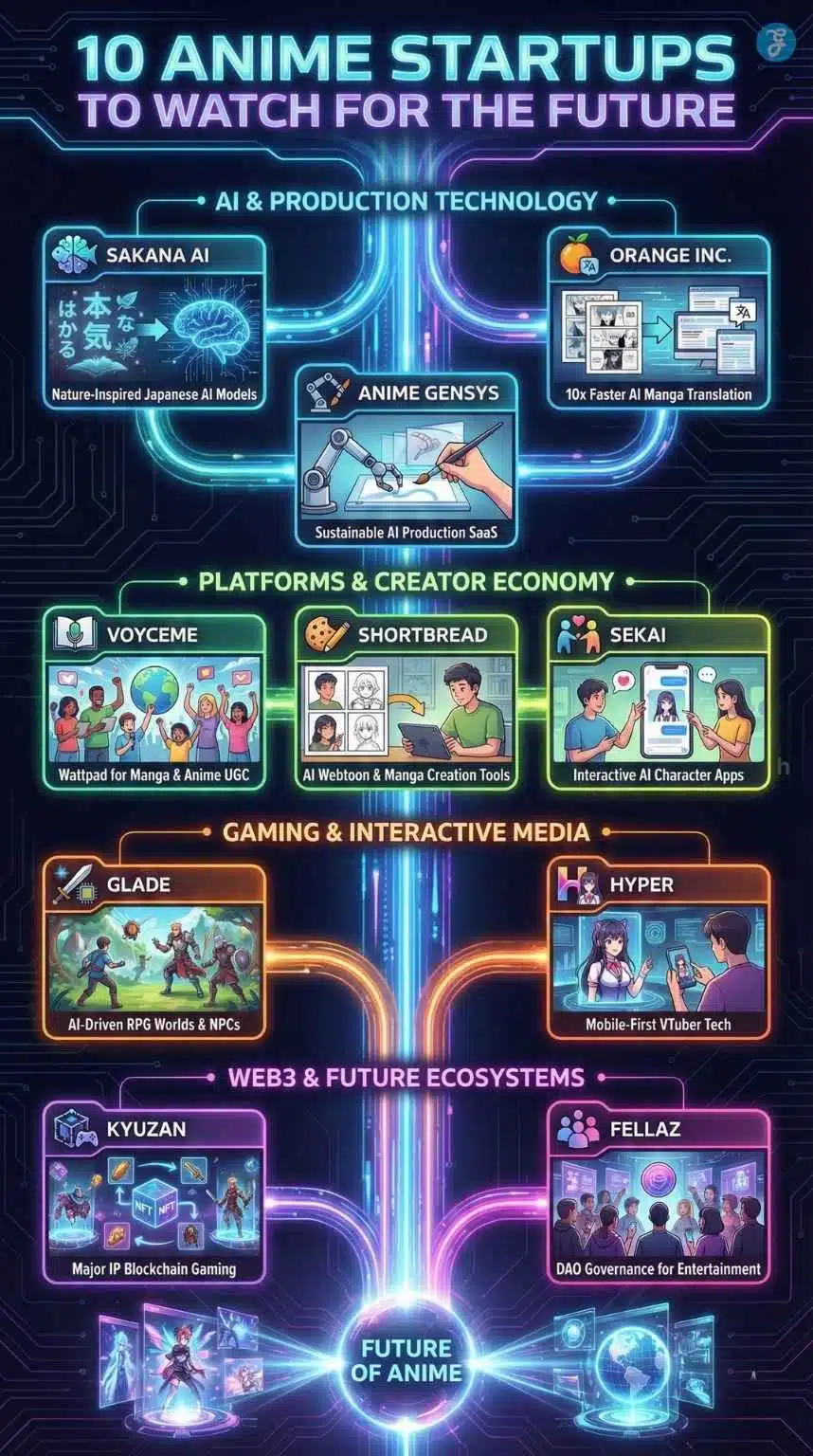
To better understand how these anime startups are dividing the market, here is a quick comparison of their primary focus areas.
| Startup | Primary Focus | Key Technology | Goal for the Future |
| Sakana AI | Infrastructure | Japanese-Centric LLMs | Build the “AI Brain” of Japan |
| Orange Inc. | Localization | AI Translation | Same-day global manga release |
| Mantra | Localization | Image/Text Recognition | Automated translation & EdTech |
| VoyceMe | Platform | Creator Tools | Democratize manga publishing |
| Shortbread | Production | Consistent AI Art | Allow writers to create manga |
| Sekai | Interaction | Character AI | Personalized fan experiences |
| Glade | Gaming | NPC AI | “Living” anime game worlds |
| Fellaz | Web3 | Blockchain/DAO | Fan-governed production |
The Hurdles Ahead: It Won’t Be Smooth Sailing
While the potential for these anime startups is massive, the path to modernizing the industry is fraught with challenges. The future isn’t just about who has the best technology, but who can navigate the complex cultural and legal landscape of Japan.
-
The Copyright Minefield: Generative AI models like those used by Shortbread or Sakana AI face looming legal battles regarding training data. Japan has relatively loose AI copyright laws currently, but international regulations are tightening. Startups will need to prove their models are “clean” to work with major IP holders like Sony or Toei.
-
Cultural Resistance: The anime industry is notoriously traditional. Many veteran directors and studios view AI and Web3 with deep skepticism, fearing a loss of “soul” in the art form. Startups like Anime GenSys face the difficult task of convincing old-school craftsmen to adopt new digital workflows.
-
The “Quality vs. Quantity” Trap: As tools like VoyceMe and Hyper democratize creation, there is a risk of market saturation. With more content being produced than ever before, the challenge for future platforms will be curation—helping fans find the gems amidst a sea of AI-generated noise.
Frequently Asked Questions about the Future of Anime
Will AI replace human animators?
It is unlikely that AI will fully replace human creativity in the near future. Instead, anime startups are focusing on “assistive AI”—tools that handle repetitive tasks like in-betweening, background coloring, and translation. This allows human artists to focus on high-value creative work, potentially reducing the industry’s notorious burnout rates.
Why are so many startups focusing on localization?
Localization is currently the biggest bottleneck in the industry. While anime is popular globally, only a small percentage of manga and light novels are translated. Startups like Orange Inc. and Mantra see a multi-billion dollar opportunity in unlocking this “trapped” content for Western audiences instantly, rather than waiting months or years for official releases.
Are these startups investable?
Many of the companies listed, such as Sakana AI and Glade, are venture-backed and have received funding from major firms like Andreessen Horowitz, Y Combinator, and Japanese venture capital funds. While some are still private, the influx of capital suggests that investors see “Anime Tech” as a high-growth sector for the next decade.
Bottom Line: The Future is Hybrid
The future of the medium will likely not be a battle between “Human vs. AI” but rather a synthesis of the two. The anime startups listed above are not trying to replace the creativity of human directors and animators. Instead, they are building the scaffolding to support them—automating the tedious work of translation, filling the gaps in production schedules, and giving fans new ways to spend money on the properties they love.
As we look toward the future, keeping an eye on these 10 companies will give you the best preview of where the medium is heading next.