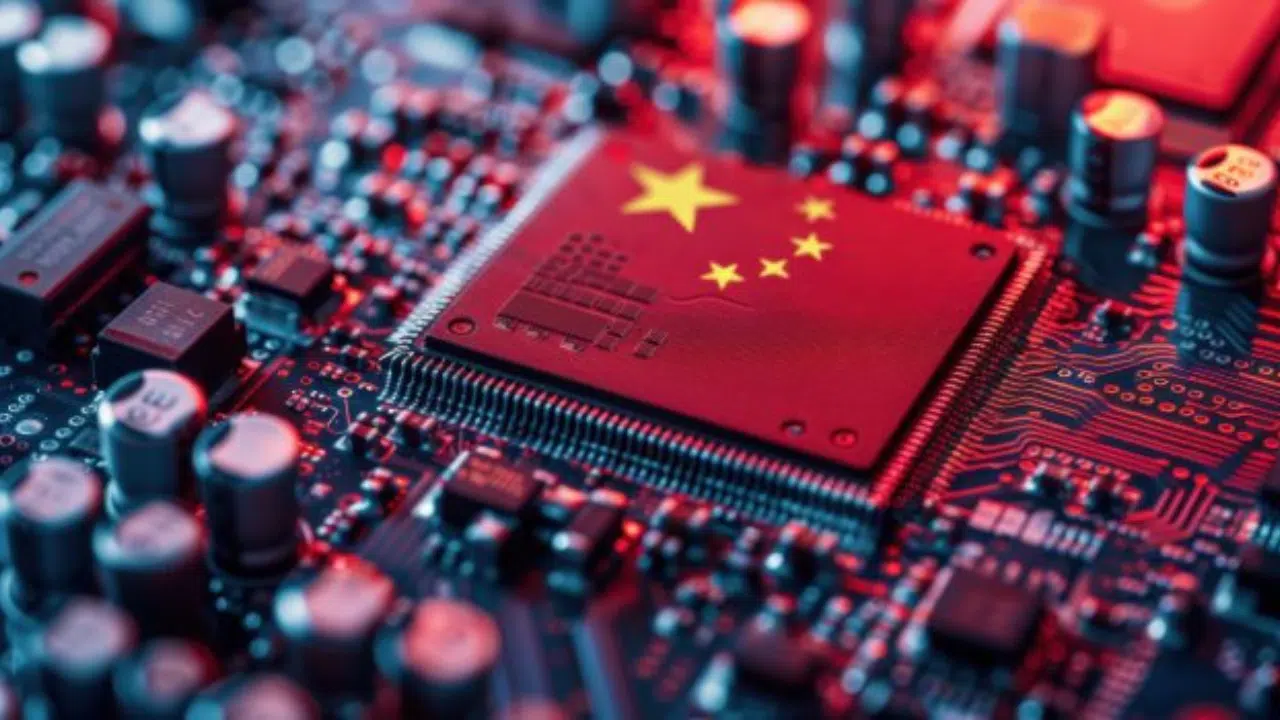
China is weighing a record semiconductor incentive package of up to $70 billion, signaling one of its boldest moves yet to shore up domestic chipmaking and blunt U.S. technology pressure. If fully approved, the plan would rank among the largest state-backed chip programs in the world and could reshape the next phase of the global “chip war.”
Beijing’s New $70 Billion Chip Push
Chinese policymakers are discussing a new package of subsidies and financing support estimated between 200 billion yuan and 500 billion yuan, equivalent to around $28 billion to $70 billion. The range reflects internal debate over how aggressively Beijing should intervene at a time of slowing growth at home and intensifying technological rivalry with Washington.
The new program is designed to operate separately from China’s existing semiconductor funding vehicles, including the roughly $50 billion “Big Fund III,” which mainly focuses on equity investments in strategic chip companies. Instead, this incentive package would lean more heavily on direct subsidies, cheap credit and other fiscal tools to accelerate investment in fabrication, equipment and advanced packaging capacity.
Target: Reduce Reliance on Foreign Chipmakers
The central strategic objective is to cut China’s dependence on foreign suppliers such as Nvidia and other U.S. chip designers, whose products sit at the heart of artificial intelligence and high‑performance computing systems. Successive rounds of U.S. export restrictions under three different U.S. administrations have increasingly limited China’s access to cutting‑edge GPUs and advanced manufacturing tools, prompting Beijing to double down on its own capabilities.
Officials see the package as a way to help domestic firms weather long development cycles and high upfront capital costs in one of the most complex industries in the world. By using state support to bridge financing gaps, the government hopes local players can scale up fast enough to serve both domestic demand and, where possible, export markets, even under tightening Western controls.
Winners: Huawei, SMIC, Cambricon and Other “National Champions”
Although final decisions on beneficiaries have not been announced, sources and industry analyses indicate that leading Chinese chip players are likely to be major recipients. These include telecoms and smartphone giant Huawei, foundry operator Semiconductor Manufacturing International Corp. (SMIC), AI chip designer Cambricon, and GPU developers such as Moore Threads.
The package is expected to target several parts of the value chain, from logic and memory fabs to design houses and packaging and testing facilities. Analysts say Beijing will prioritize companies that can substitute for restricted foreign chips or equipment, especially in data‑center GPUs, AI accelerators, and chips used in telecommunications, cloud computing and defense‑related applications.
How the Program Differs from the “Big Fund”
China’s earlier semiconductor industrial policy efforts have largely centered on state‑backed investment funds, known collectively as the “Big Fund,” which take equity stakes in chip firms. The new plan, by contrast, is described as a more direct incentive scheme that could include grants, interest‑rate subsidies, tax incentives and state‑backed loans tied to specific projects or capacity expansions.
This structure would give Beijing more flexibility to respond quickly to geopolitical shocks and export‑control changes, rather than waiting for returns on long‑term equity investments. It may also be designed to address criticism that earlier rounds of funding were spread too thinly and, in some cases, misallocated, by funneling support toward a smaller group of strategically vital firms and technologies.
A Global Race of “Chips Acts”
China’s move comes as major economies worldwide roll out their own large‑scale chip subsidy schemes, a trend sometimes dubbed a “world of Chips Acts.” The United States has allocated around $39 billion in direct manufacturing subsidies under its CHIPS and Science Act, complemented by additional tax credits and substantial state‑level incentives.
The European Union has also launched its EU Chips Act, backing multi‑billion‑dollar projects such as Intel’s planned fab in Magdeburg and a TSMC‑led joint venture in Germany, both reliant on extensive state aid. Japan and South Korea are following similar paths, with Tokyo committing roughly 2 trillion yen—about $13 billion—to bolster its chip sector as it seeks a bigger role in advanced manufacturing and materials.
Major Government Chip Subsidy Plans
| Region / Country | Headline program size | Key instruments | Strategic focus | Sources |
|---|---|---|---|---|
| China (proposed new package) | 200–500 billion yuan (about $28–70 billion) | Subsidies, cheap financing, separate from Big Fund III | Domestic fabs, AI chips, reducing reliance on Nvidia and other foreign suppliers | |
| China Big Fund III | Around $50 billion | Equity investments via state fund | Broad semiconductor ecosystem, including design and manufacturing | |
| United States CHIPS Act | About $39 billion in manufacturing subsidies plus tax credits | Grants, loans, tax incentives | Advanced fabs, onshoring production, national security | |
| European Union Chips Act | Tens of billions via project‑level subsidies (e.g., Intel and TSMC in Germany) | State aid, EU programs | Raising EU share of global chip output to 20% by 2030 | |
| Japan chip support | Around 2 trillion yen (about $13 billion) | Subsidies for fabs and R&D | Rebuilding domestic chip capacity and strategic autonomy | |
Escalating Tech Fight with the United States
The proposed Chinese package lands amid a broader escalation in U.S.‑China tech tensions that has already upended global chip supply chains. Washington has tightened export controls on advanced GPUs, lithography equipment and other technologies, often in coordination with allies such as the Netherlands and Japan, to slow China’s progress in AI and military‑related applications.
At the same time, the U.S. government is using its own subsidies to draw leading chipmakers into building advanced fabs on American soil, explicitly linking public funding to limits on recipients’ expansion in China. This has forced multinational semiconductor firms to rethink their capacity planning, as they juggle political pressure from Washington with commercial incentives in the world’s largest chip market.
Implications for Nvidia and Western Chipmakers
One explicit goal of Beijing’s new package is to “outgrow” constraints on imports from Nvidia and other U.S. chip firms by nurturing viable domestic alternatives for AI chips and accelerators. Although the Trump administration has allowed the sale of certain higher‑end Nvidia products, including the H200, into China under restrictive conditions, U.S. policymakers remain wary of enabling China’s most advanced AI applications.
For Nvidia, AMD and other Western suppliers, the incentives could eventually mean a gradual erosion of their share in mainstream Chinese data‑center and AI workloads, even if demand for legacy or downgraded products persists in the near term. However, analysts caution that closing the performance gap with top‑tier U.S. chips remains a significant technical challenge for Chinese players, particularly at leading‑edge process nodes and in cutting‑edge GPU architectures.
Can China Catch Up on Advanced Nodes?
Despite heavy investment over the past decade, China still trails the United States, Taiwan and South Korea in the most advanced segments of the semiconductor industry, especially in sub‑7‑nanometer manufacturing and high‑end EUV lithography. Export controls have prevented Chinese fabs from acquiring the latest equipment from key suppliers, forcing them to innovate around older tools or develop domestic alternatives.
The new incentive package is unlikely to deliver an immediate breakthrough on the most advanced nodes but could accelerate progress in mature and mid‑range technologies that still underpin a vast share of global chip demand. By scaling up design capabilities, specialty processes, advanced packaging and vertical integration, Beijing hopes to gradually chip away at foreign dominance while buying time to develop or localize more sophisticated equipment and materials.
Domestic Demand: The World’s Largest Chip Market
China accounts for a substantial share of global semiconductor consumption, driven by its huge electronics manufacturing base, data‑center build‑out and rapid adoption of AI applications. That domestic demand provides a powerful rationale for pouring public money into local capacity, since a significant portion of output can be absorbed internally, even if export markets become more constrained.
President Xi Jinping has repeatedly framed semiconductors as a core component of national security and economic resilience, calling for a “whole‑nation” approach to overcome technology chokepoints. Under this strategy, the state mobilizes not just fiscal resources but also regulatory, financial and industrial policy tools to back priority sectors such as chips, AI and next‑generation networks.
Risks of Overcapacity and Misallocation
While the headline figure of up to $70 billion signals ambition, it also raises the risk of overcapacity, inefficiency and duplication, problems that have plagued past industrial campaigns in China. If too many similar projects are funded without sufficient market discipline, the sector could face price wars, underutilized fabs and financial stress, particularly in commoditized segments.
Corruption and mismanagement scandals linked to earlier rounds of chip funding have already sparked internal investigations and calls for tighter oversight. Policymakers will face pressure to ensure that the new incentives are allocated transparently and tied to measurable performance metrics, rather than simply fueling speculative investment or politically driven vanity projects.
Impact on Global Supply Chains
For global supply chains, a successful Chinese incentive program would deepen the existing fragmentation of the semiconductor ecosystem into competing, politically aligned blocs. Companies may increasingly find themselves forced to choose between U.S.‑centric and China‑centric technology stacks, especially in sensitive sectors such as defense, cloud computing and telecommunications infrastructure.
At the same time, greater Chinese capacity in mid‑range and mature‑node chips could ease some of the shortages that have hit industries such as automotive and industrial equipment in recent years. However, it could also intensify competitive pressure on manufacturers in other Asian economies and in Europe, particularly where they rely on export markets that China is seeking to capture.
Reactions from Allies and Competitors
Governments in Europe, East Asia and the Middle East are likely to interpret China’s move as further confirmation that semiconductors have become a central battleground in 21st‑century industrial policy and geopolitics. Many are already rolling out their own subsidies to attract leading chipmakers and diversify away from excessive reliance on any single geography, most notably Taiwan.
Some analysts warn that a global subsidy race could lead to inefficient allocation of capital and distort competition, but argue that governments see little alternative given the strategic stakes. In this context, Beijing’s $70 billion proposal may push other capitals to expand or accelerate their own chip support programs to avoid falling behind in critical technologies.
What Comes Next
The package is still under internal discussion, and Chinese authorities have not yet released an official timetable or final figure for the incentives. Key questions include how funding will be phased over time, what conditions will be attached to subsidies, and how Beijing will balance support for legacy and leading‑edge technologies.
Regardless of the precise amount, the direction of travel is clear: China is prepared to commit unprecedented sums to ensure that semiconductors remain at the heart of its economic and technological strategy. As the global “chip wars” intensify, the emerging $70 billion plan underscores how far governments are willing to go—financially and politically—to secure their place in the future of computing, AI and digital infrastructure.